Spatial awareness Community Worksheets for Ages 6-9
3 filtered results
-
From - To
Enhance your child's spatial awareness with our specialized Community Worksheets designed for ages 6-9. These engaging and educational worksheets are crafted to help young learners develop essential spatial skills while exploring and understanding community settings. Perfect for early grade students, our activities combine fun and learning to reinforce the ability to visualize, navigate, and interpret space. Through interactive exercises, children will gain confidence in their spatial reasoning, benefiting their overall academic growth. Visit the Kids Academy page to discover our diverse collection of Community Worksheets that make learning about spatial awareness an exciting adventure for your little ones.
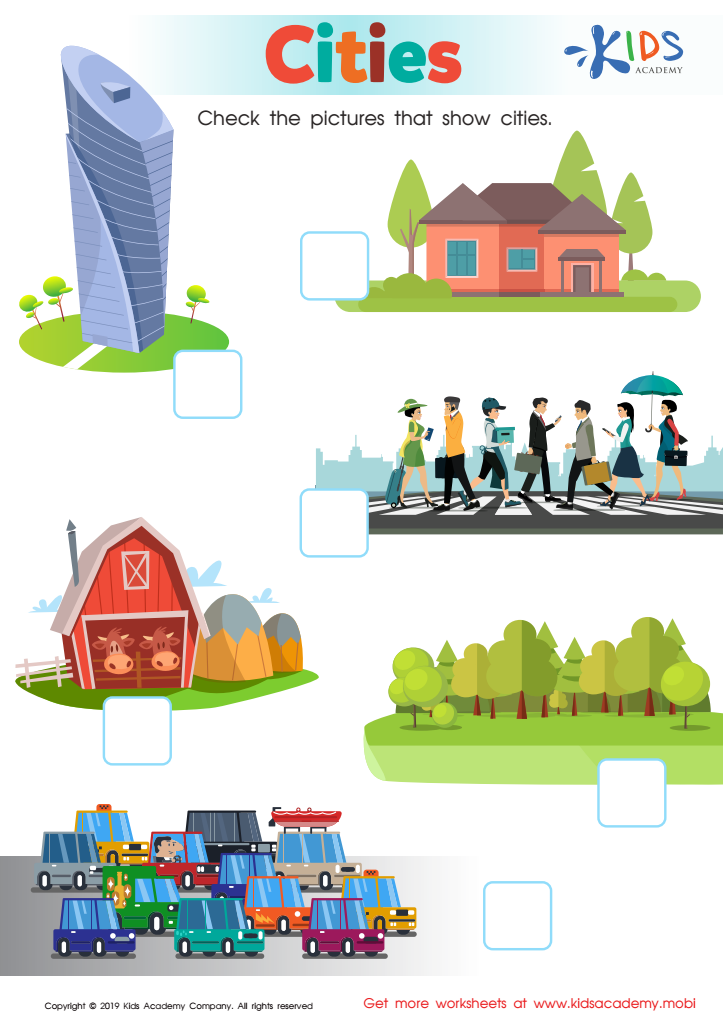
Cities Worksheet
 Assign to My Students
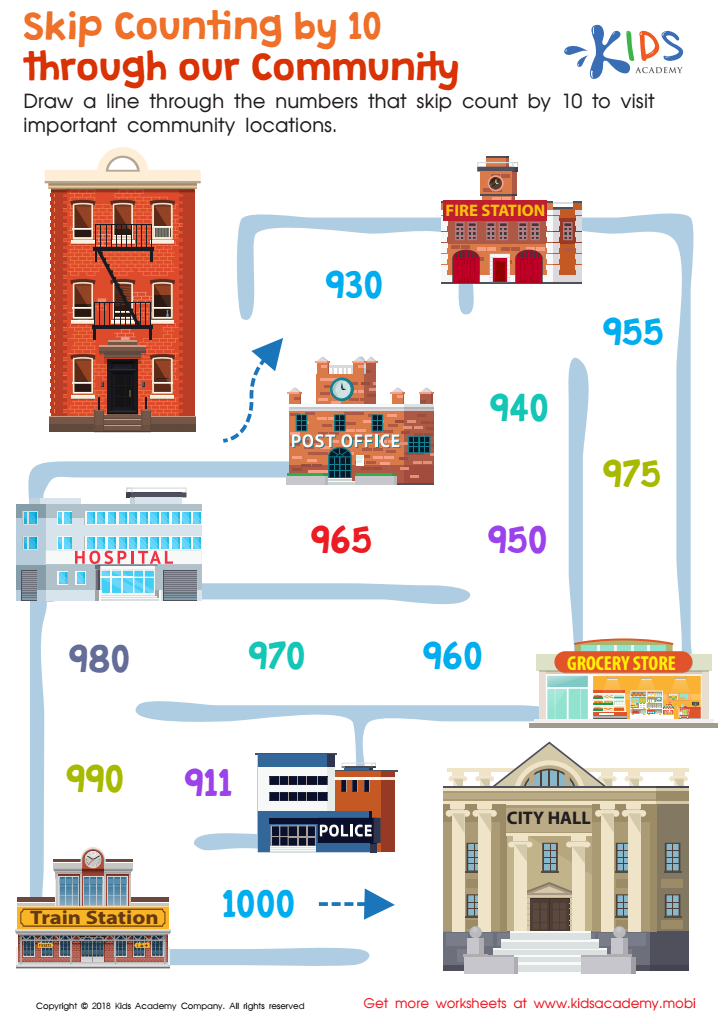
Skip Counting by 10 Through Our Community Worksheet
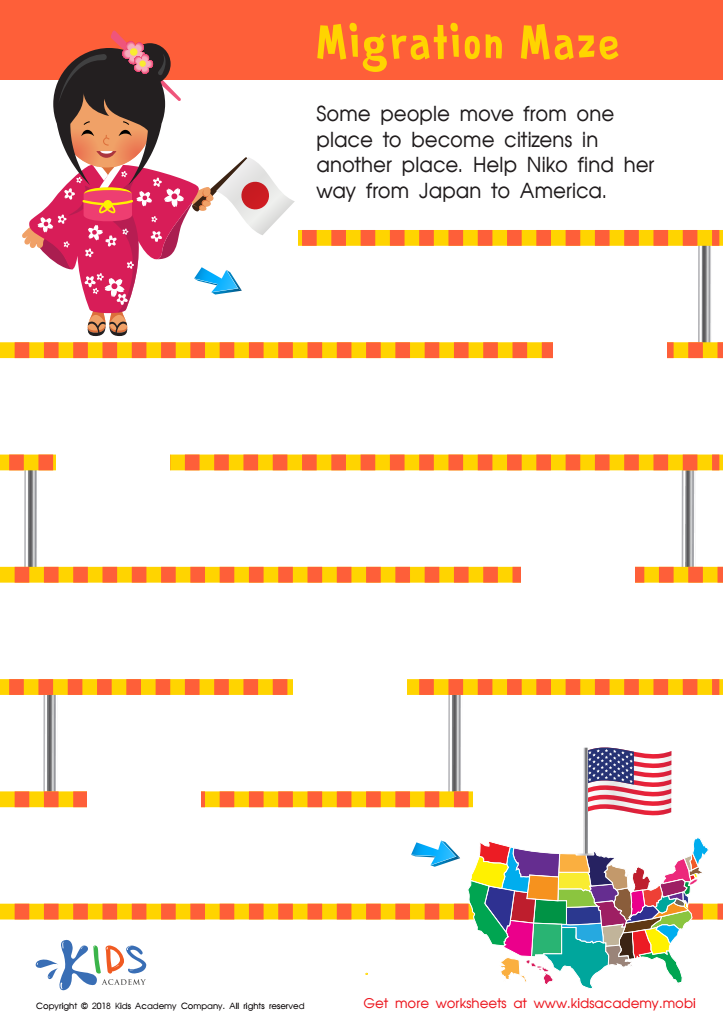
Migration Maze Worksheet








Parents and teachers should care about fostering spatial awareness in children aged 6-9 because it is a fundamental skill that underpins many aspects of learning and daily life. Spatial awareness involves understanding and interacting effectively with the space around us, and it plays a crucial role in academic subjects such as math, science, and even reading. For example, geometry requires an understanding of shapes and their properties, while reading comprehension can benefit from an ability to visualize scenes and layouts described in texts.
Beyond academics, strong spatial skills are crucial for activities such as sports, art, and everyday tasks like navigating spaces, organizing belongings, or following directions. Encouraging activities that promote spatial awareness can improve a child's problem-solving abilities and enhance their creativity.
Moreover, spatial awareness is linked to the development of motor skills and coordination. Activities that boost spatial skills can help children excel in physical activities, contributing to their overall physical health and well-being.
Engaging children in a spatial awareness community, whether through specialized programs or everyday play, provides an enjoyable and structured way for them to develop these essential skills. Involvement in such communities fosters social interactions, boosts confidence, and equips children with the tools they need for both academic success and practical life skills, creating a well-rounded foundation for future growth.








