Spelling practice Community Worksheets for Ages 6-9
4 filtered results
Difficulty Level
Grade
Age
-
From - To
Subject
Activity
Standards
Welcome to our Spelling Practice Community Worksheets designed specifically for children aged 6-9! These engaging and interactive worksheets are perfect for helping young learners enhance their spelling skills while exploring the concept of community. Each worksheet features fun exercises that encourage kids to identify, spell, and use community-related vocabulary in context. Our resources not only reinforce spelling proficiency but also foster a deeper understanding of their surroundings and social skills. With eye-catching visuals and age-appropriate activities, these worksheets make learning enjoyable. Join our community of educators and parents today to inspire your child's love for language and literacy!
Favorites
With answer key
Interactive
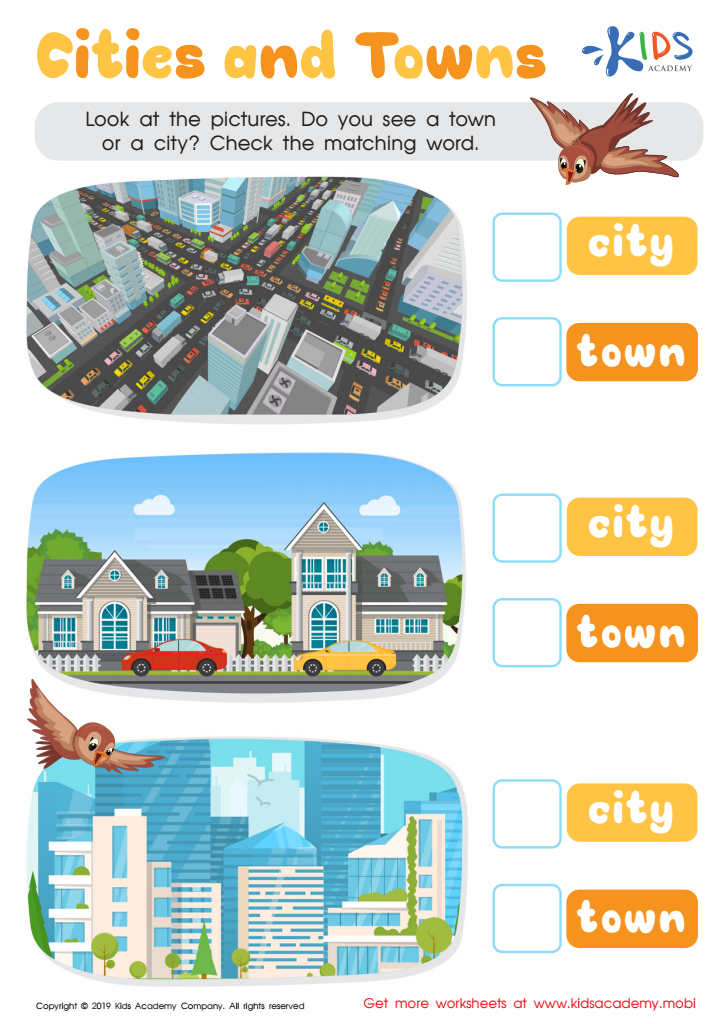
Cities and Towns Worksheet
Cities are buzzy and busy while towns tend to be peaceful. Ask your child if they can tell which one is which from a picture. This could be a great way to test their understanding of the differences between towns and cities. There are many businesses in cities, tall buildings and lots to do. Meanwhile towns are usually quieter.
 Assign to My Students
Cities and Towns Worksheet
Worksheet
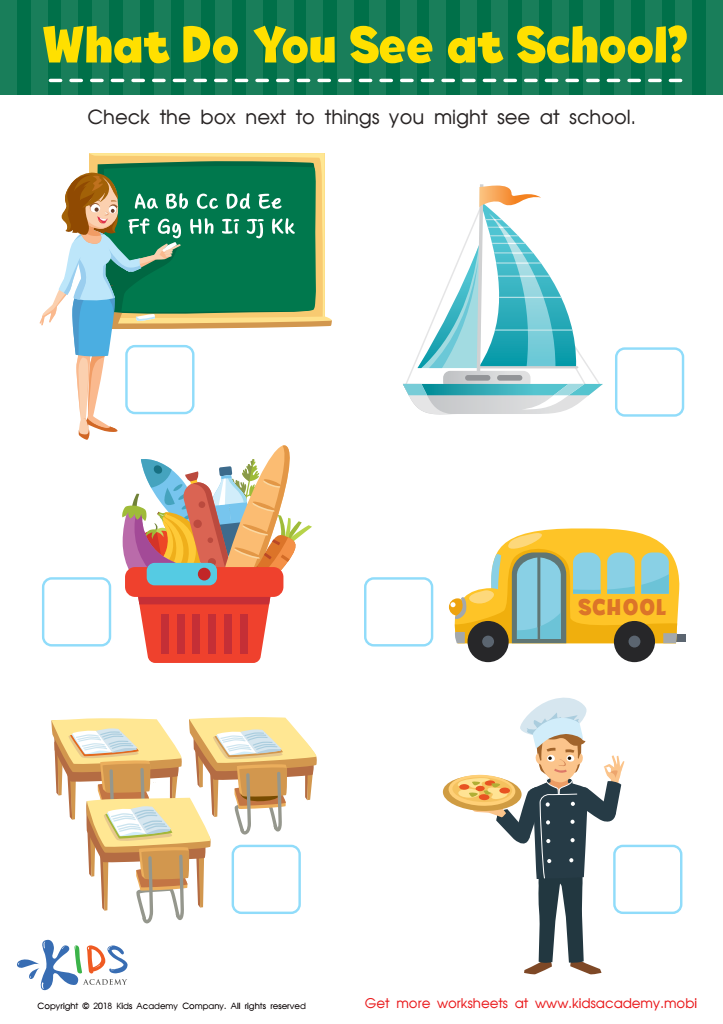
What Do you See at School? Worksheet
Have your kids give you a list of things they see at school. Then, view the worksheet together. Ask them to check the boxes next to the school items. Look for objects that can be found at school and those that don't belong. This is a great way to check their knowledge of what they see at school daily, except on weekends and holidays.
What Do you See at School? Worksheet
Worksheet
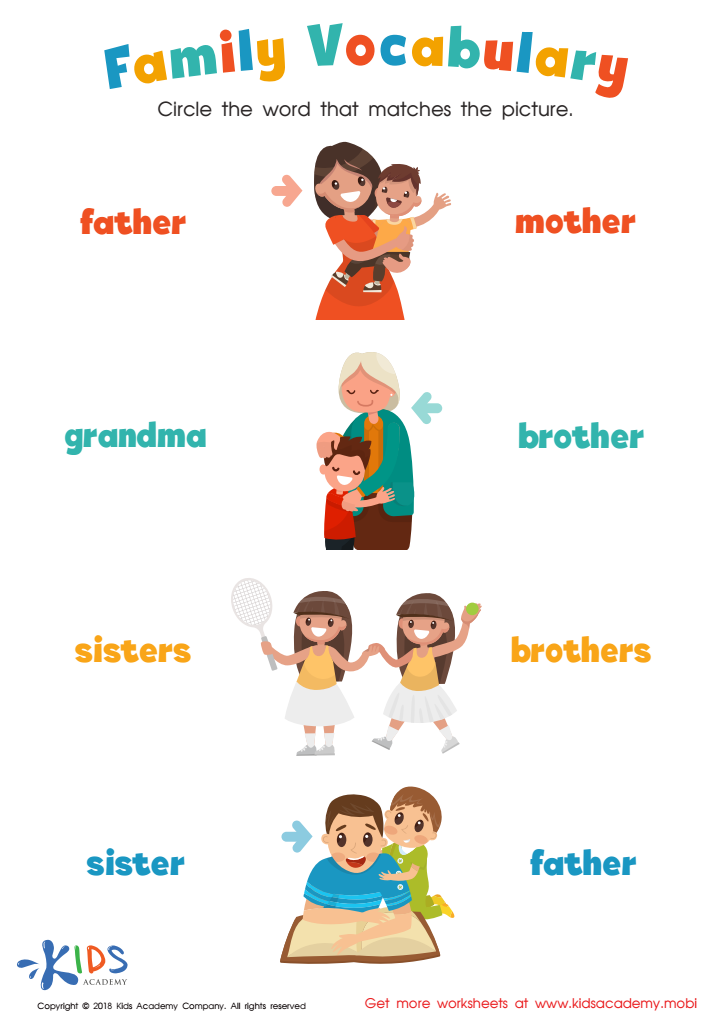
Family Vocabulary Worksheet
Students learn about families in social studies. This worksheet helps them identify family members by looking at a picture and circling the corresponding word. To extend their learning, ask them to talk about their own family members.
Family Vocabulary Worksheet
Worksheet
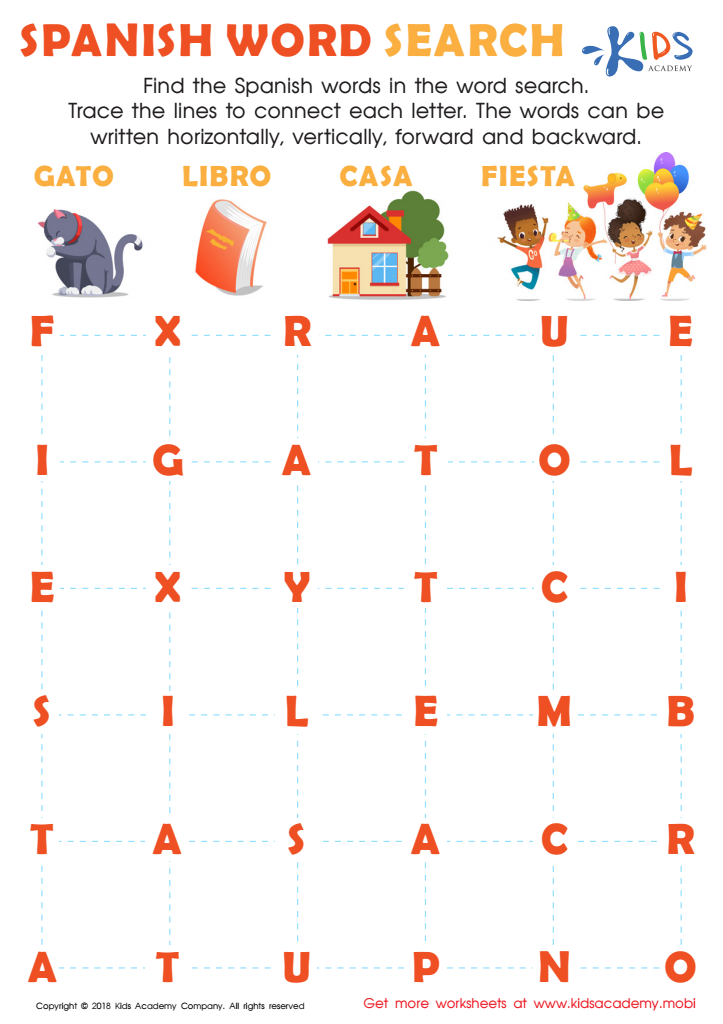
Spanish Word Search Worksheet
This free worksheet encourages students to learn Spanish words while developing visual, fine motor, and hand-eye coordination skills. Through colorful pictures and traceable lines, the task of finding words such as gato, libro, casa, and fiesta is disguised as a fun and engaging way to explore new cultures.
Spanish Word Search Worksheet
Worksheet
Join Kids Academy for Free
Who is primarily going to use this learning content?








Parents and teachers should prioritize Spelling Practice Communities for children ages 6-9 because these interactions significantly enhance literacy development and social skills. At this age, children are building fundamental reading and writing skills, and effective spelling practice is crucial for their academic success. Engaging in a community with peers provides a supportive environment where children can learn together, share strategies, and motivate one another.
Furthermore, spelling practice communities encourage collaboration, which fosters essential teamwork and communication skills. Children learn important lessons about giving and receiving constructive feedback, helping to build their confidence. These early experiences in a community setting promote a love for learning and growth, making spelling less of a chore and more of an enjoyable group effort.
Additionally, parents and teachers can facilitate differentiated learning experiences by incorporating games and activities tailored to various skill levels within the same community. This inclusivity ensures that all participants are challenged appropriately, creating a richer educational experience.
In fostering a culture of spelling practice within a community, we not only enhance children’s literacy skills but also instill a sense of belonging and shared purpose, laying a solid foundation for lifelong learning and personal growth. Balancing practice with engagement can lead to greater academic achievement and enthusiasm for literacy.