Map reading Geography Worksheets for Ages 6-9
3 filtered results
-
From - To
Explore our engaging Map Reading Geography Worksheets designed for children ages 6-9! These interactive activities help young learners master essential map skills, such as understanding symbols, legends, and directions. With vibrant illustrations and user-friendly formats, your child will discover the world in an exciting way. By working through our worksheets, students will enhance their spatial awareness and critical thinking abilities while having fun! Perfect for classrooms or home learning, our printable resources support early geography education, making it effortless for parents and teachers to nurture young explorers. Dive into a world of discovery and watch their curiosity flourish!
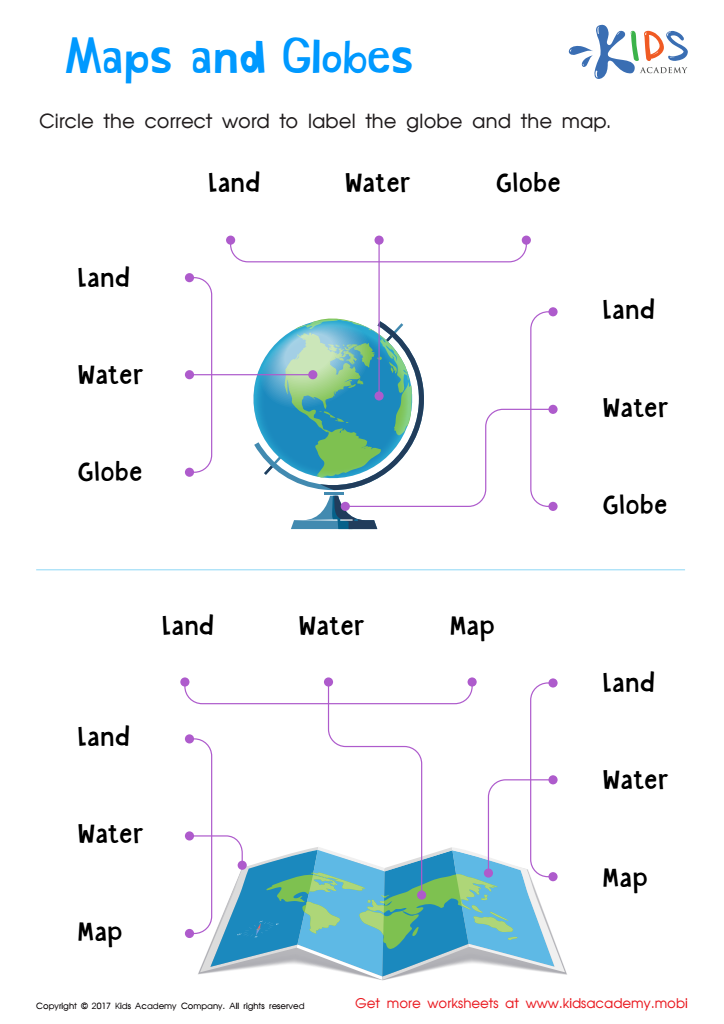
 Assign to My Students
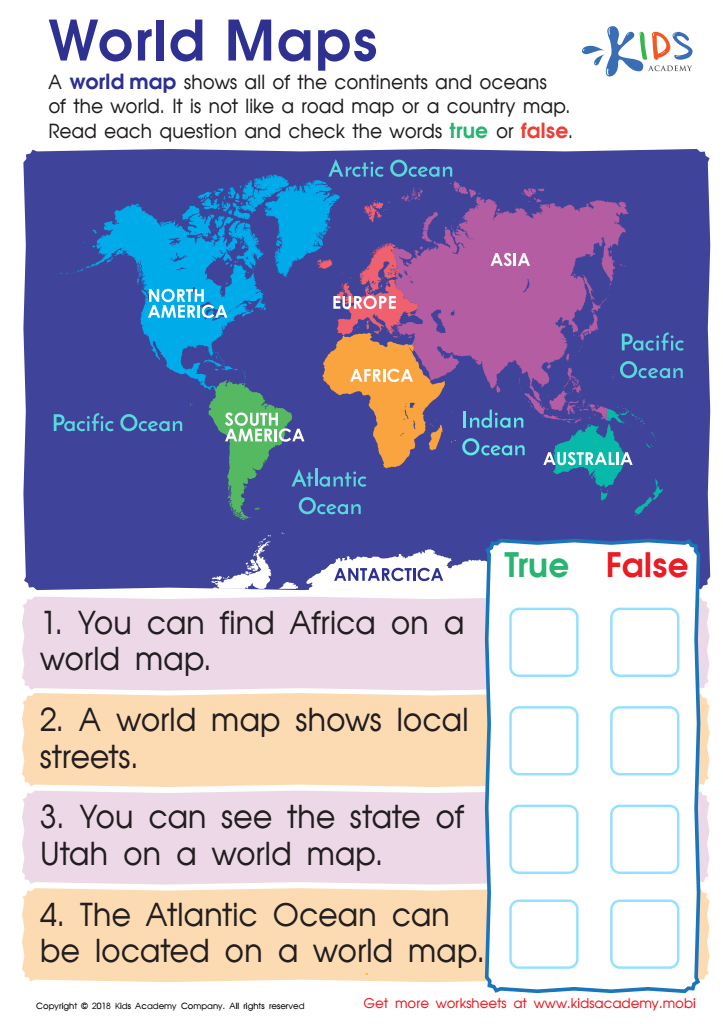
World Maps Worksheet
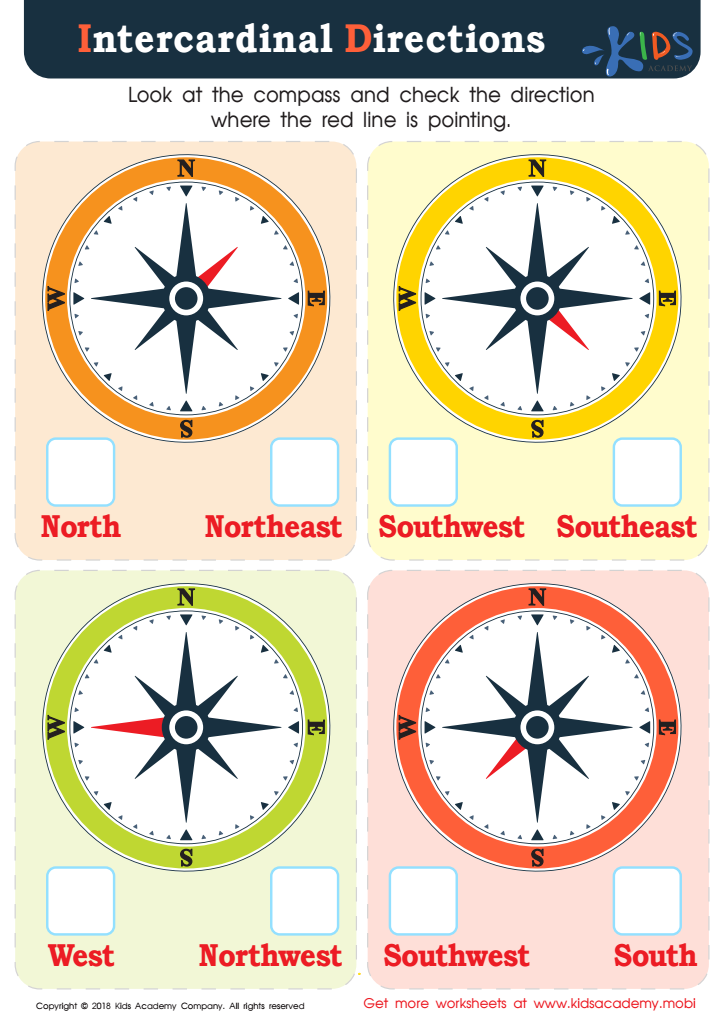
Intercardinal Directions Worksheet






Map reading is an essential skill that lays the foundation for geographic literacy in children aged 6-9. Understanding maps helps young learners develop spatial awareness and critical thinking skills vital for navigating the world around them. As children learn to read maps, they gain insights into concepts such as scale, direction, and symbols, fostering a greater appreciation for their environment.
For parents and teachers, nurturing map reading skills enhances children's ability to engage with storytelling, history, and various subjects related to geography. It encourages curiosity about different cultures, landscapes, and demographics, promoting visualization and problem-solving as students learn to interpret information. Furthermore, these skills support independence by empowering children to locate places, explore their neighborhoods, or embark on family adventures with more confidence.
Encouraging map literacy also sets the stage for collaborative learning experiences, as students can work together to interpret maps, enhancing social skills and teamwork. Ultimately, when children master these foundational skills, they are more prepared to interact thoughtfully with the world around them, making map reading an invaluable tool for both personal development and broader educational success.








