Understanding democracy Governance and Civics Worksheets for Ages 6-9
3 filtered results
-
From - To
Introduce young learners to the foundations of democracy with our "Understanding Democracy Governance and Civics Worksheets for Ages 6-9." These engaging, printable activities from Kids Academy make learning about government and citizenship both fun and educational. Designed specifically for children aged 6 to 9, our worksheets cover essential topics like voting, leadership, and community involvement through interactive exercises. By exploring these concepts, students gain a solid understanding of their role in society and the importance of civic participation. Enhance your child's social studies education with resources that inspire curiosity and foundational knowledge in democracy and governance.
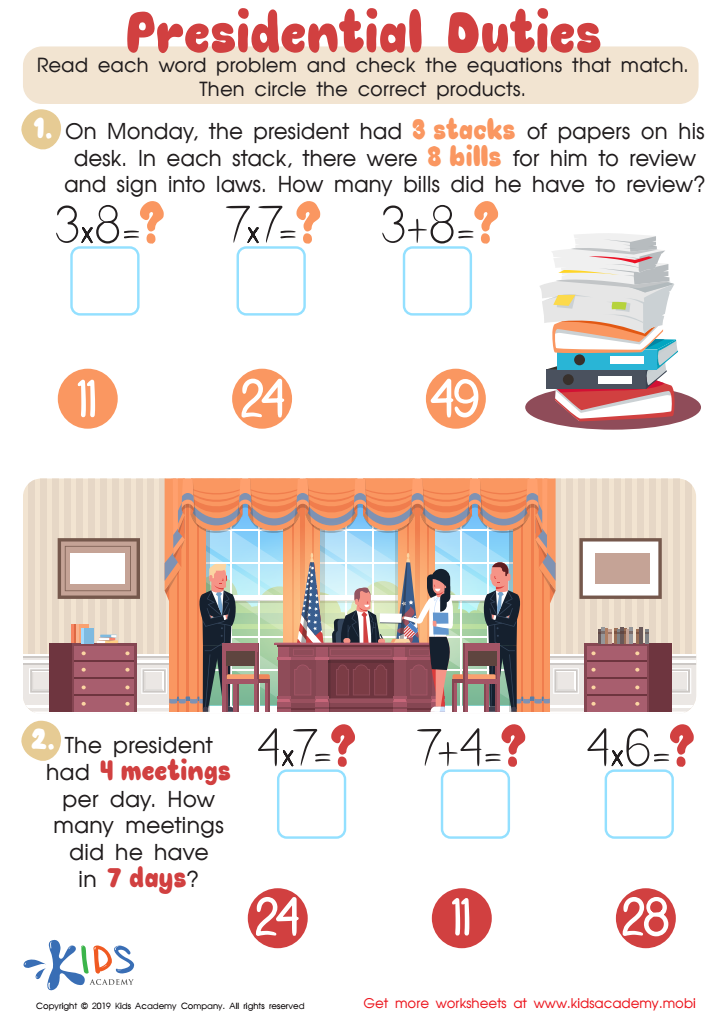
Presidential Duties Worksheet
 Assign to My Students
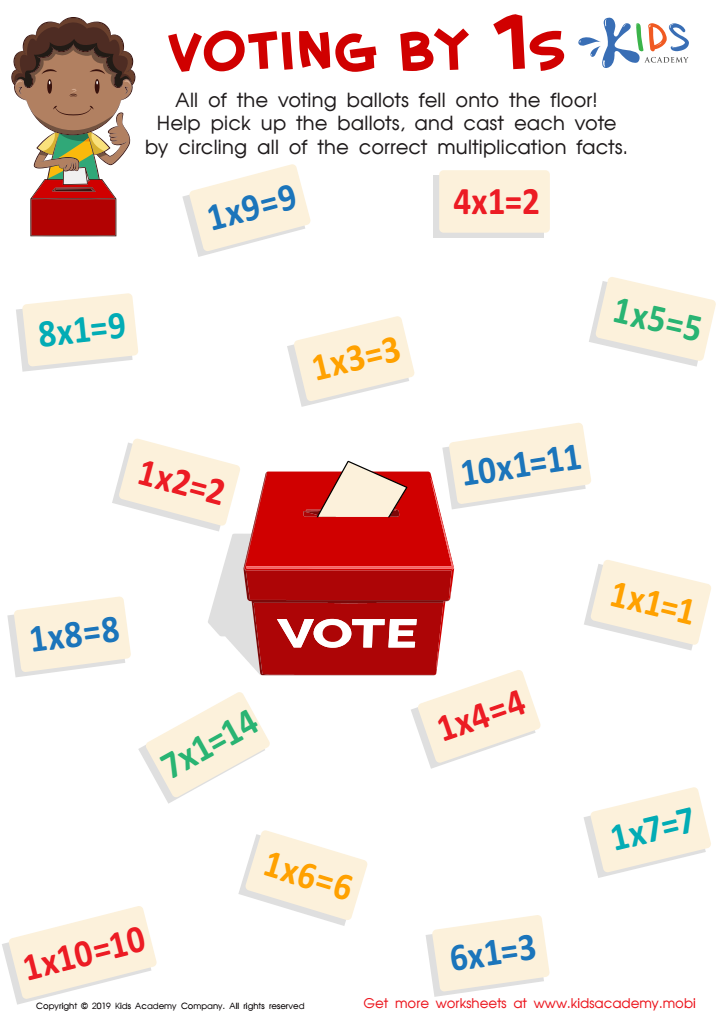
Voting by 1s Worksheet
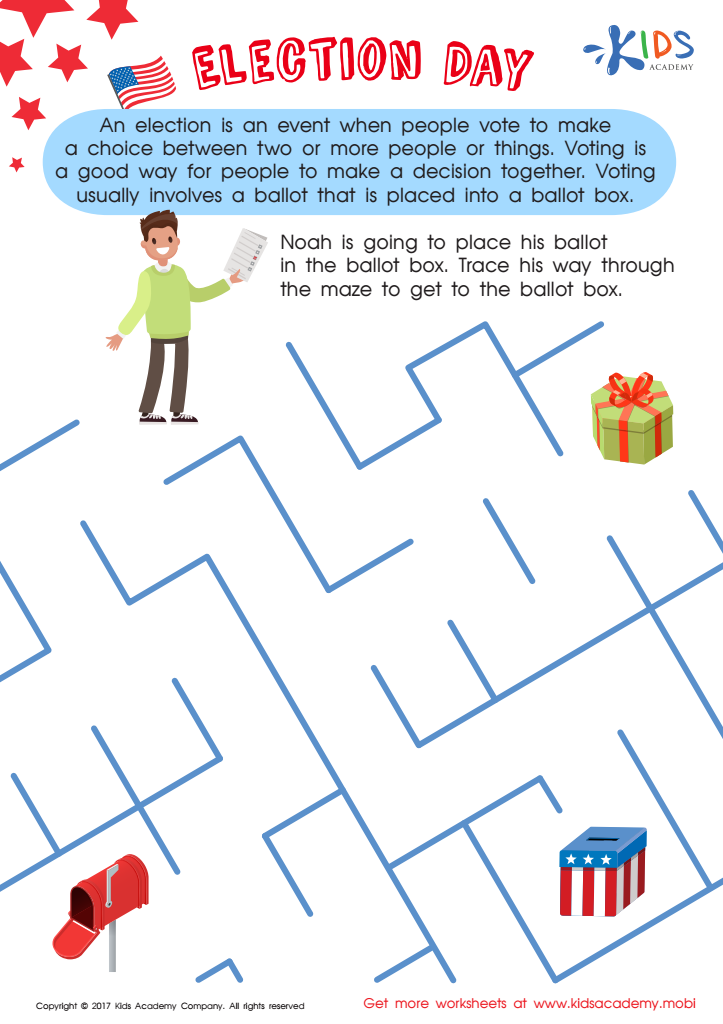
Election Day Worksheet


Understanding democracy, governance, and civics at an early age is crucial as it lays a foundation for responsible citizenship. Children aged 6-9 are at a stage where they are highly impressionable and curious, making it an ideal time to introduce basic concepts of democracy and governance.
Firstly, early education in these areas helps instill a sense of fairness and justice. When children understand the importance of rules, voting, and leadership, they begin to recognize the value of everyone's voice and the significance of making fair decisions. This forms the cornerstone of empathy and respect for others, teaching them that different perspectives should be valued.
Secondly, learning about civics promotes community awareness. Children start to understand how communities operate and the roles individuals play in contributing to society's well-being. They become aware that their actions have an impact on others, cultivating a sense of responsibility from a young age.
Moreover, early civic education empowers children. It provides them with the tools to express their opinions, understand their rights, and comprehend the importance of fulfilling their duties. This empowerment fosters critical thinking and problem-solving skills, as kids learn to engage in discussions, deliberate on issues, and make informed decisions.
In conclusion, teaching democracy, governance, and civics to young children nurtures informed, responsible, and empathetic future citizens. It prepares them to participate actively and meaningfully in their communities and beyond.








