Event sequencing Social Studies Worksheets for Ages 6-9
3 filtered results
-
From - To
Discover our engaging Event Sequencing Social Studies Worksheets designed specifically for ages 6-9. These worksheets help young learners develop essential skills in understanding the order of events, promoting critical thinking and comprehension in social contexts. Through fun activities, children will practice organizing events chronologically, enhancing their narrative skills and strengthening their grasp of timelines in history and daily life. Our worksheets incorporate vibrant illustrations and relatable scenarios to keep students motivated and involved. Ideal for classroom use or at-home learning, these resources will nurture your child's understanding of social studies while making learning an enjoyable adventure.
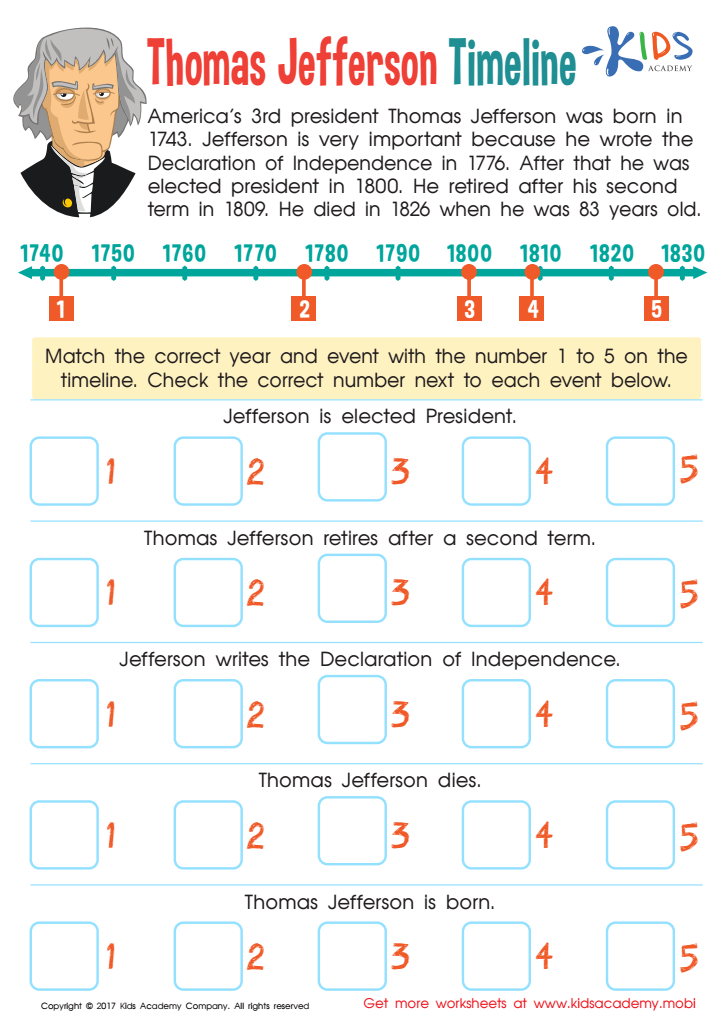
Thomas Jefferson Timeline Worksheet
 Assign to My Students
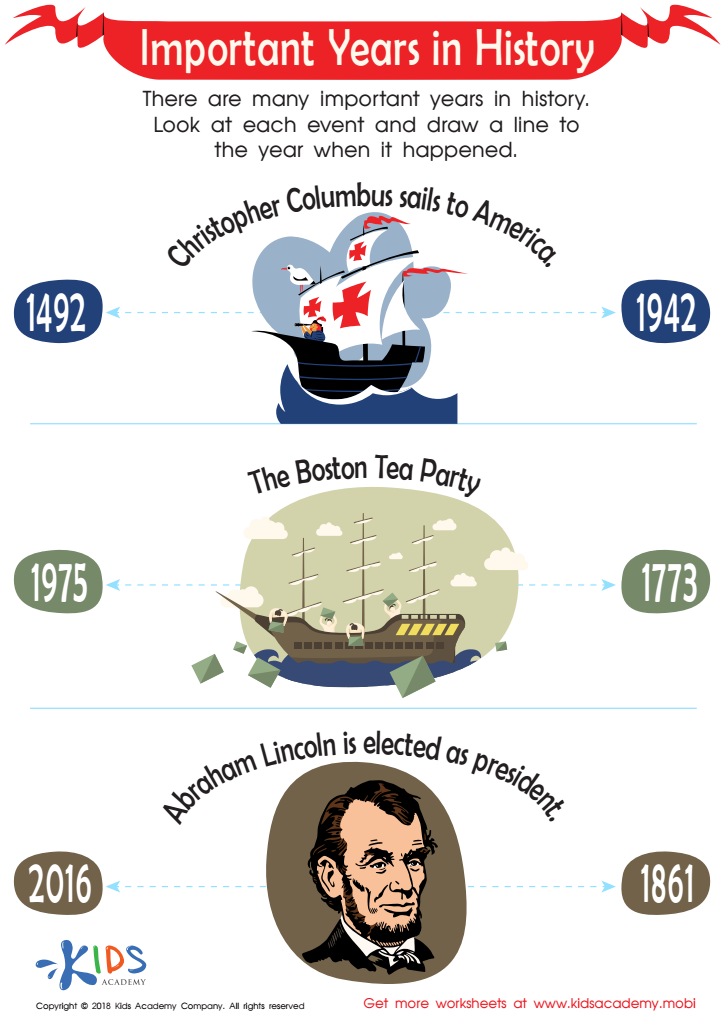
Important Years in History Worksheet
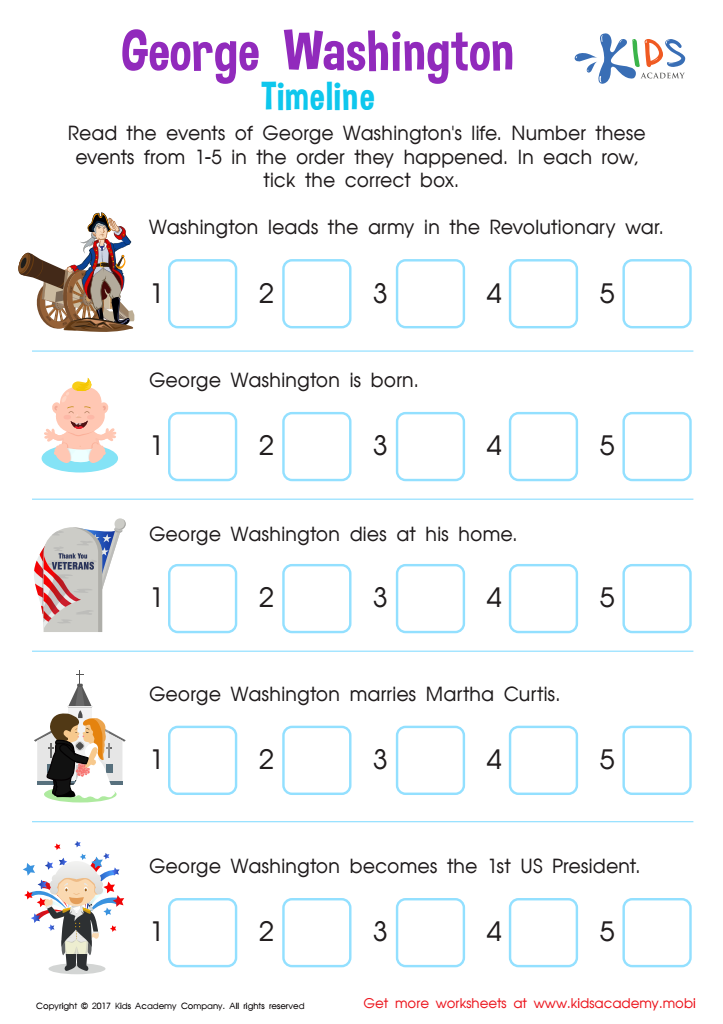
George Washington Timeline Worksheet








Event sequencing in Social Studies is an important thematic approach for children aged 6-9, as it fosters their understanding of historical timelines and cause-and-effect relationships. Parents and teachers should care about this concept because it aligns with key developmental goals in early education. Firstly, it helps children develop critical thinking skills by encouraging them to analyze and interpret events in a structured manner. When children learn to sequence events, they grasp the chronological order of historical figures, significant events, and societal changes, providing them with a framework for understanding the past.
Moreover, event sequencing supports literacy and comprehension skills. As children engage with stories about historical events or cultural narratives, they learn to identify beginnings, middles, and ends, enhancing their overall narrative understanding. This process sparks curiosity and builds a sense of history, which is crucial for instilling civic awareness and a sense of community.
Additionally, mastering event sequencing can enhance academic performance across subjects, as it promotes organizational skills that are critical in mathematics and science. Ultimately, fostering these skills early on prepares children for more complex social studies concepts, making it essential for parents and teachers to prioritize event sequencing in the curriculum.