Map reading Social Studies Worksheets for Ages 6-9
3 filtered results
-
From - To
Discover our engaging Map Reading Social Studies Worksheets designed for ages 6-9 on Kids Academy. These valuable resources help young learners explore the world of maps, enhancing their geographical skills and spatial awareness. Through fun, interactive activities, children will learn to read symbols, understand cardinal directions, and interpret different types of maps. Ideal for building foundational knowledge, our worksheets incorporate various exercises that stimulate curiosity and foster confidence in navigating their surroundings. Perfect for classroom use or at-home practice, these worksheets make learning about maps an enjoyable and educational experience for young explorers.
 Assign to My Students
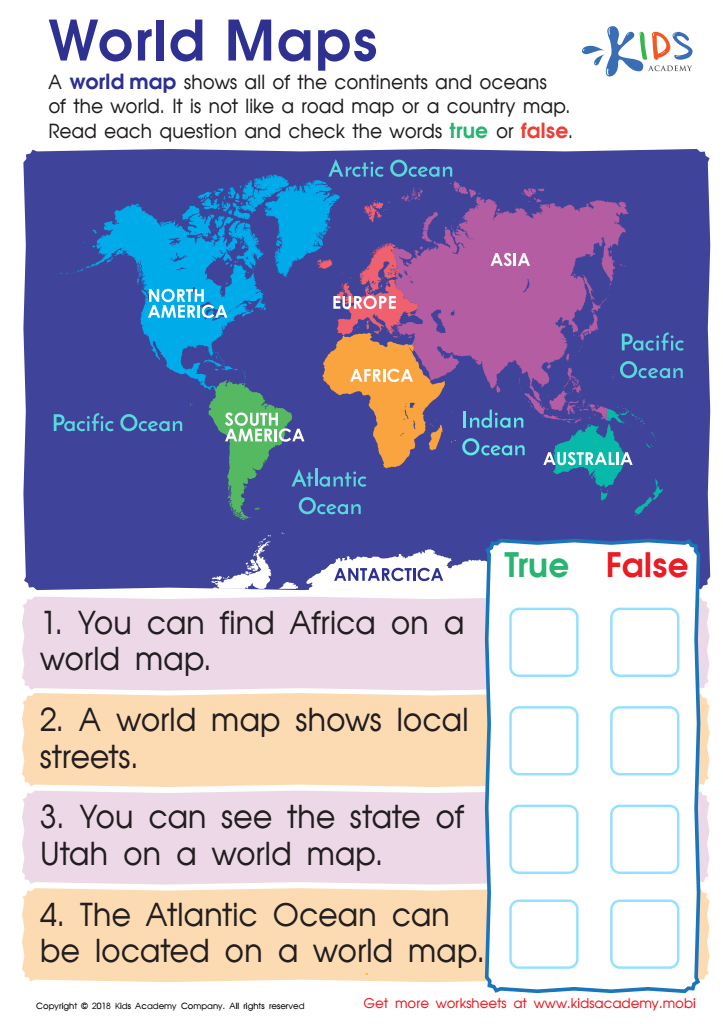
World Maps Worksheet
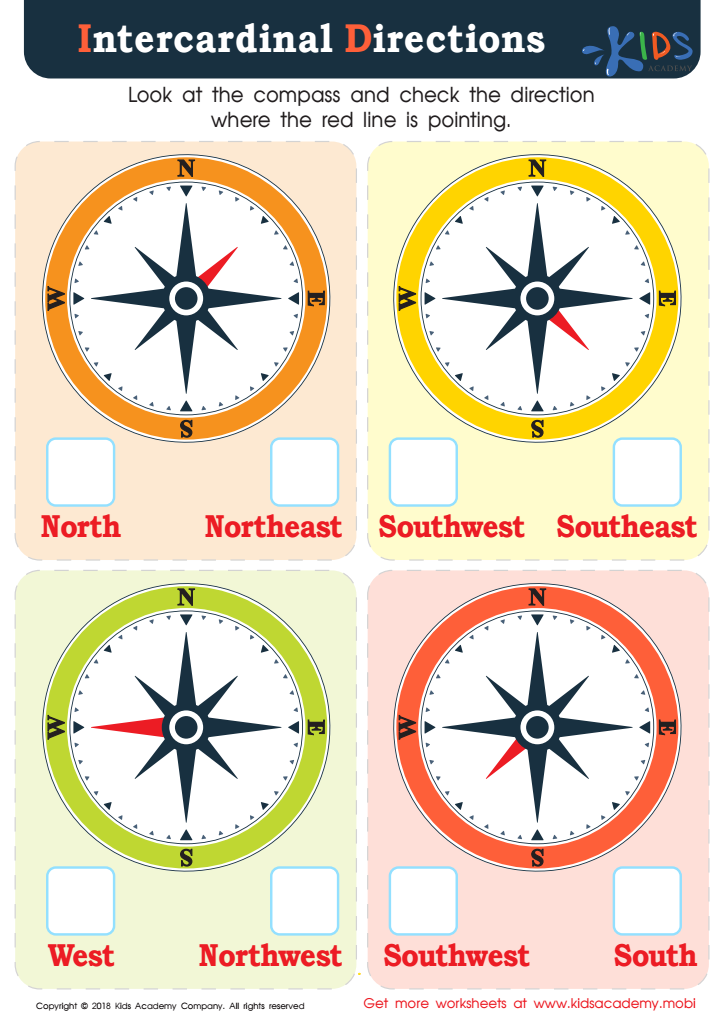
Intercardinal Directions Worksheet





Map reading in Social Studies is a crucial skill for children ages 6-9, opening a window to understanding the world around them. At this developmental stage, kids are naturally curious about their surroundings and the broader world. By learning to read maps, they can visualize geography, understand spatial relationships, and gain a foundational sense of direction, which are critical skills for both academic and everyday life.
For parents, incorporating map reading can mean a more enriching and engaging educational experience for their children. It broadens their perspective, improves their memory, and builds analytical skills. For instance, children learn to interpret symbols and legends, understand scales, and eventually navigate independently, fostering a sense of adventure and self-confidence.
Teachers, on the other hand, benefit by integrating map reading into the curriculum to create interdisciplinary links. Geography lessons can also connect with history, science, and even mathematics, making learning more holistic and interactive. Using maps can make socio-cultural discussions more vivid and concrete for young students, who may otherwise find such topics abstract.
Incorporating map reading into early education helps in the development of a well-rounded, worldly, and informed individual. It nurtures critical thinking, boosts problem-solving skills, and instills a global awareness—qualities highly desirable in the fast-paced, interconnected world we live in.