
Critical Thinking Grammar Worksheets for Ages 6-9
3 filtered results
Difficulty Level
Grade
Age
-
From - To
Subject
Activity
Standards
Enhance your child's language skills with our Critical Thinking Grammar Worksheets for Ages 6-9. Perfect for young learners, these engaging activities promote critical thinking while building a strong grammar foundation. Each worksheet is creatively designed to capture children's interest, help them analyze language patterns, and apply grammar rules in context. By solving these fun exercises, kids can improve their writing abilities and logical reasoning simultaneously. Our expertly crafted resources provide a comprehensive, interactive approach to learning, making grammar enjoyable and effective. Ideal for both classroom and home use, transform your child’s learning experience today!
Favorites
With answer key
Interactive
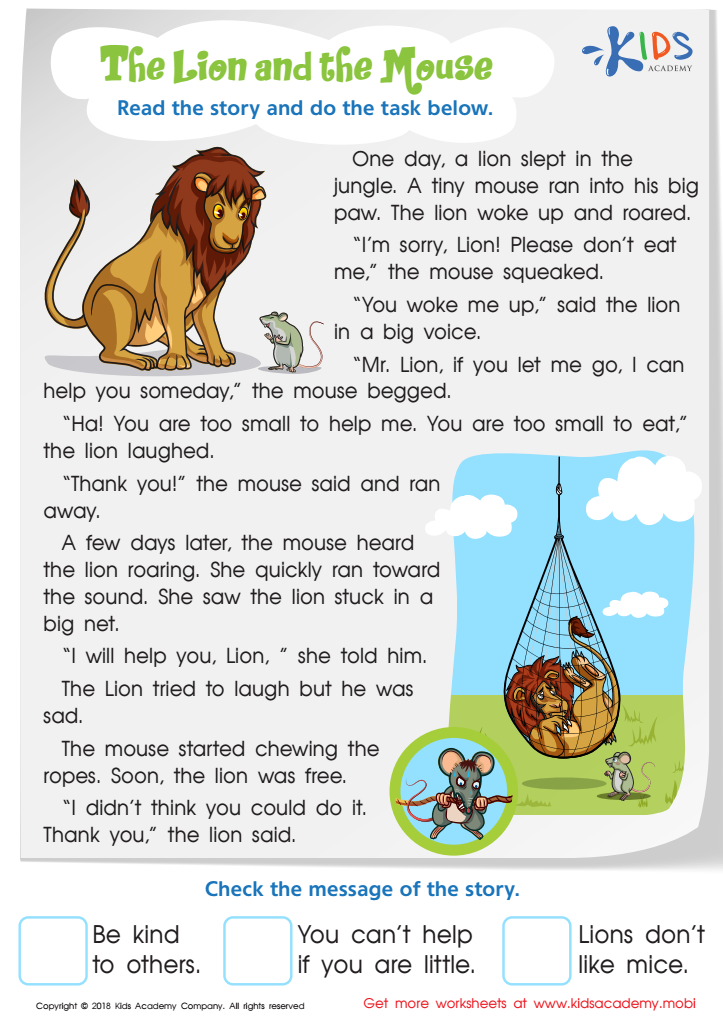
The Lion and the Mouse Worksheet
Writers often have a hidden message or theme in their stories. This printable worksheet helps readers uncover these themes by looking at what characters do and say in "The Lion and the Mouse". It's a great practice resource for learning to interpret stories.
 Assign to My Students
The Lion and the Mouse Worksheet
Worksheet
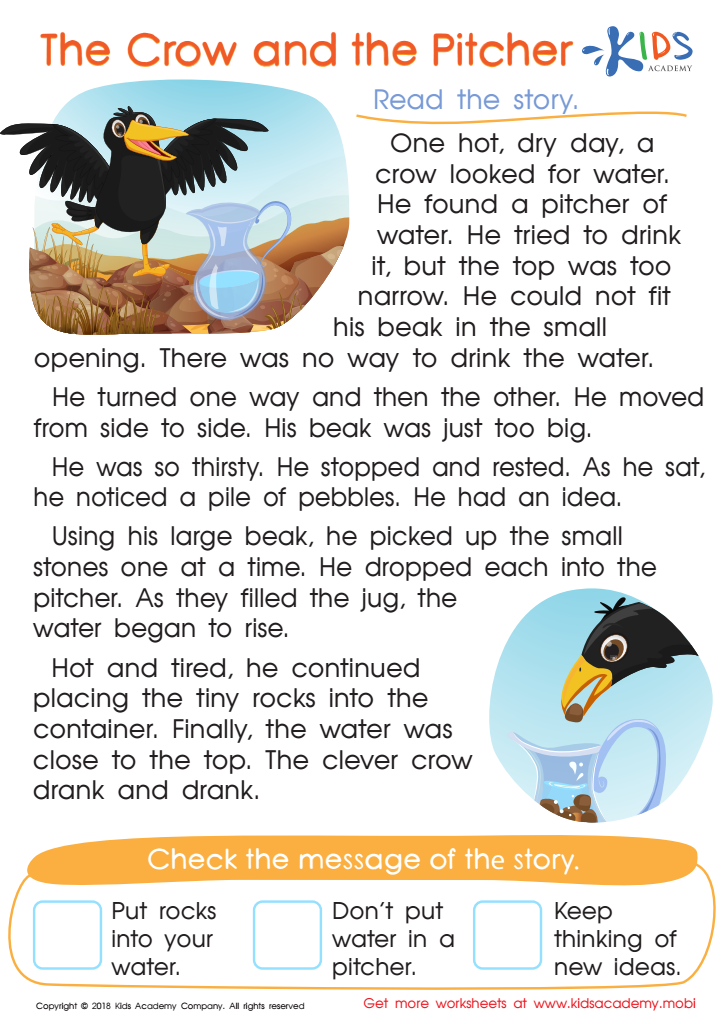
The Crow and the Pitcher Worksheet
Introduce your child to reading comprehension with this fascinating worksheet from Kids Academy! Featuring Aesop's fable of a thirsty crow, your child will enjoy reading and determining the central theme of the passage. This worksheet is a great way to give your child a purpose for reading while helping to build their comprehension skills.
The Crow and the Pitcher Worksheet
Worksheet
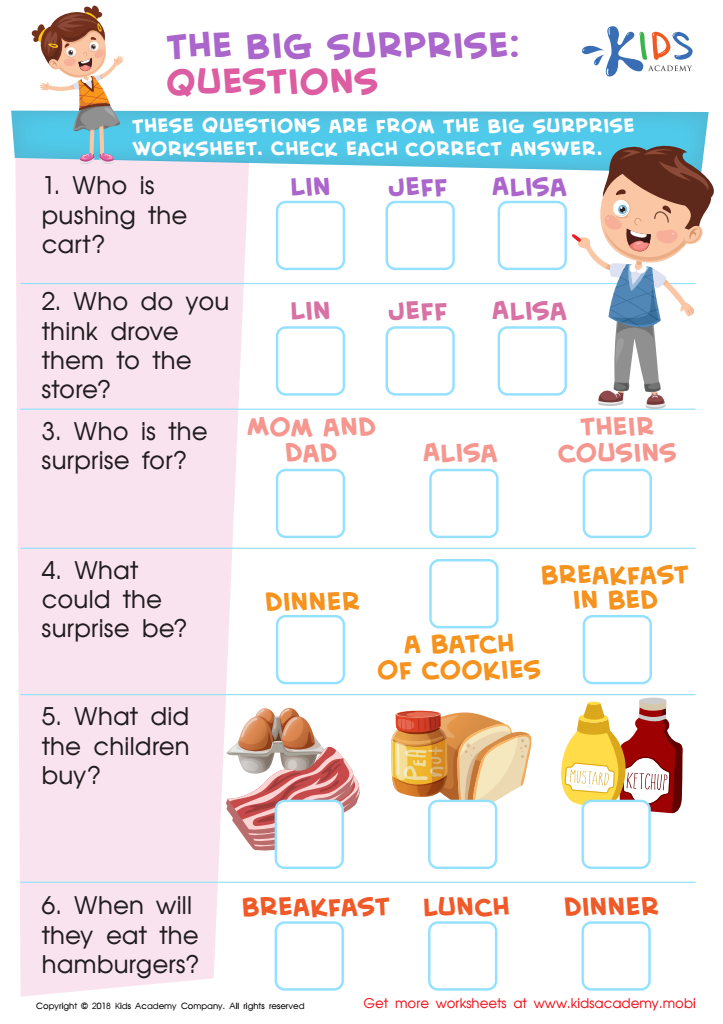
The Big Surprise: Questions Worksheet
Have your child read or listen to The Big Surprise. Ask them the questions in the printable, help check the answers and discuss the story. Keep it to 80 words.
Have your child read or listen to The Big Surprise, then ask them the questions in the printable. Discuss the story and help them check the answers.
The Big Surprise: Questions Worksheet
Worksheet
Join Kids Academy for Free
Who is primarily going to use this learning content?







Parents and teachers should care about Critical Thinking Grammar for children aged 6-9 because it lays a foundational bedrock for effective communication and analytical skills. By introducing grammar principles alongside critical thinking exercises, children develop a deeper understanding of language structure and usage, which enhances reading comprehension, writing clarity, and articulate speaking. At this developmental stage, kids are naturally curious and capable of absorbing complex concepts when presented in an engaging and accessible manner.
Critical Thinking Grammar encourages young learners to ask "why" and "how" questions about sentence construction and word choice, promoting cognitive skills such as problem-solving, reasoning, and logical thinking. This integrated approach not only improves academic performance in subjects like English and reading but also strengthens their ability to grasp complex ideas in other disciplines such as math and science, where precise language is crucial.
Furthermore, these skills prepare children for future academic challenges and real-world situations where they must analyze information critically, articulate thoughts clearly, and make informed decisions. Investing in this aspect of a child's education nurtures confident, competent communicators who are equipped to navigate the increasingly information-rich and connected digital world. Hence, focusing on Critical Thinking Grammar sets young learners on a path to lifelong learning and success.








