Phonics recognition Grammar Worksheets for Ages 6-9
5 filtered results
-
From - To
Enhance your child's reading and writing skills with our engaging Phonics Recognition Grammar Worksheets designed specifically for ages 6-9! These worksheets provide a fun and interactive way for young learners to improve their phonics understanding, enhance vocabulary, and apply grammar rules effectively. Each worksheet is thoughtfully crafted to reinforce essential skills through varied exercises, including matching sounds, identifying words, and constructing sentences. With vibrant illustrations and clear instructions, your child will stay motivated while mastering crucial language concepts. Perfect for home or classroom use, our phonics worksheets are an invaluable resource for fostering a solid foundation in literacy. Start your journey to reading success today!
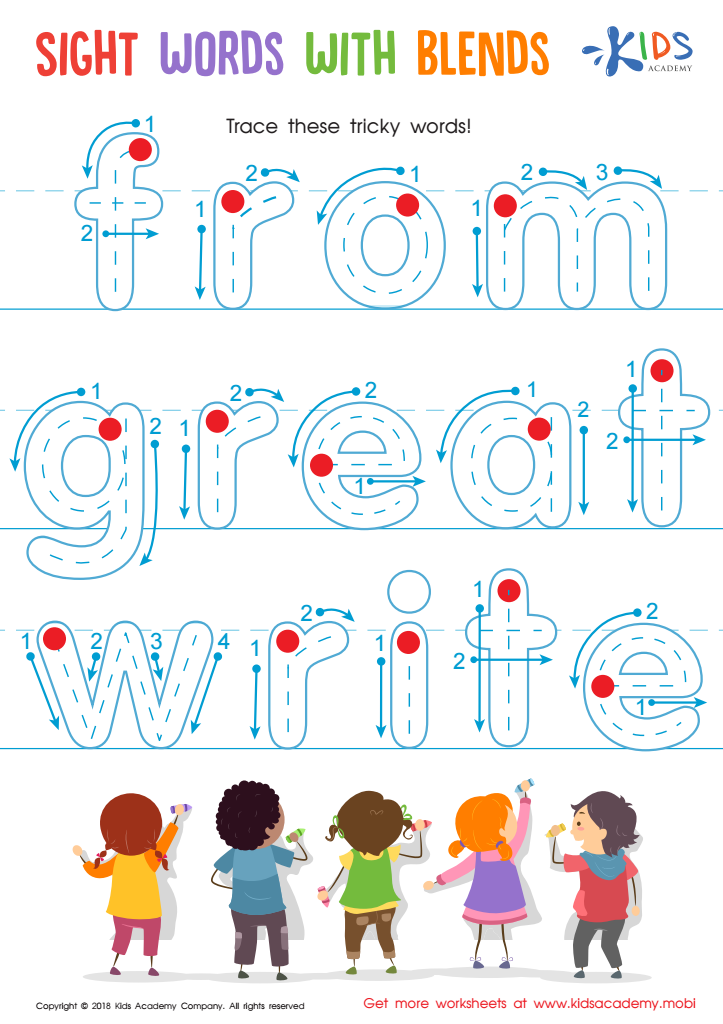
Sight Words with Blends Worksheet
 Assign to My Students
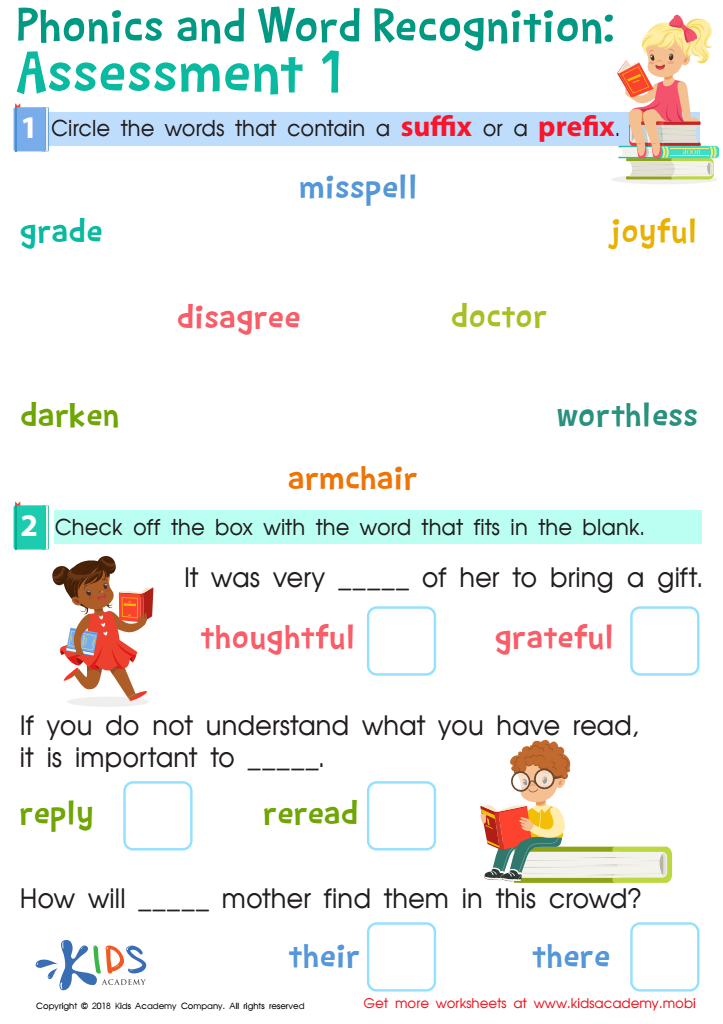
Phonics and Word Recognition: Assessment 1 Worksheet
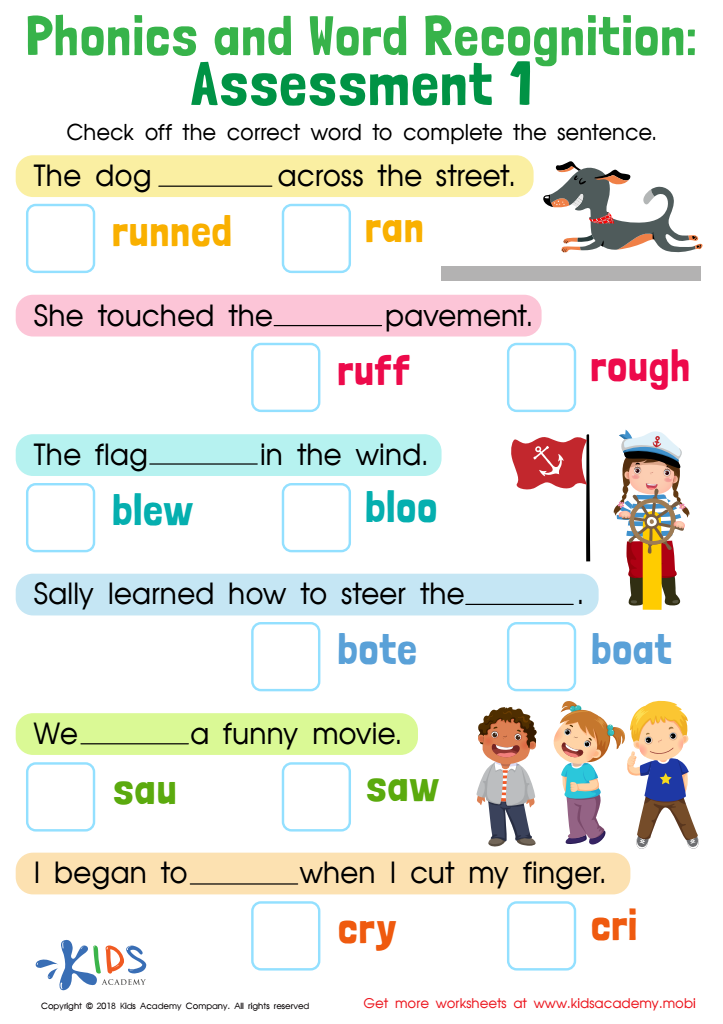
Phonics and Word Recognition: Assessment 1 Worksheet
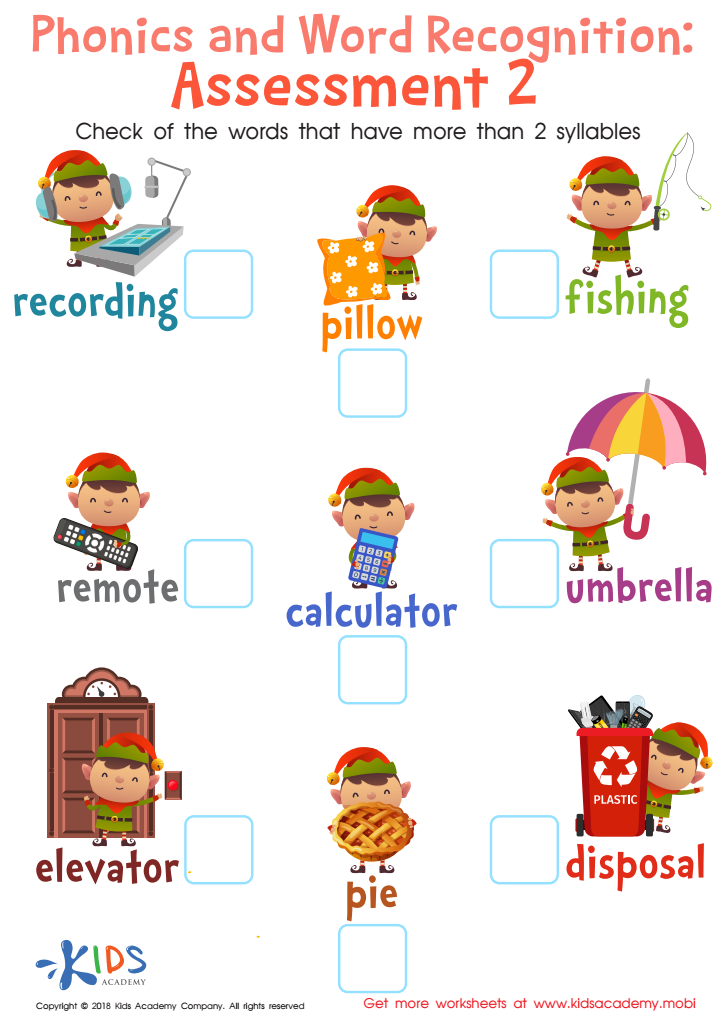
Phonics and Word Recognition: Assessment 2 Worksheet
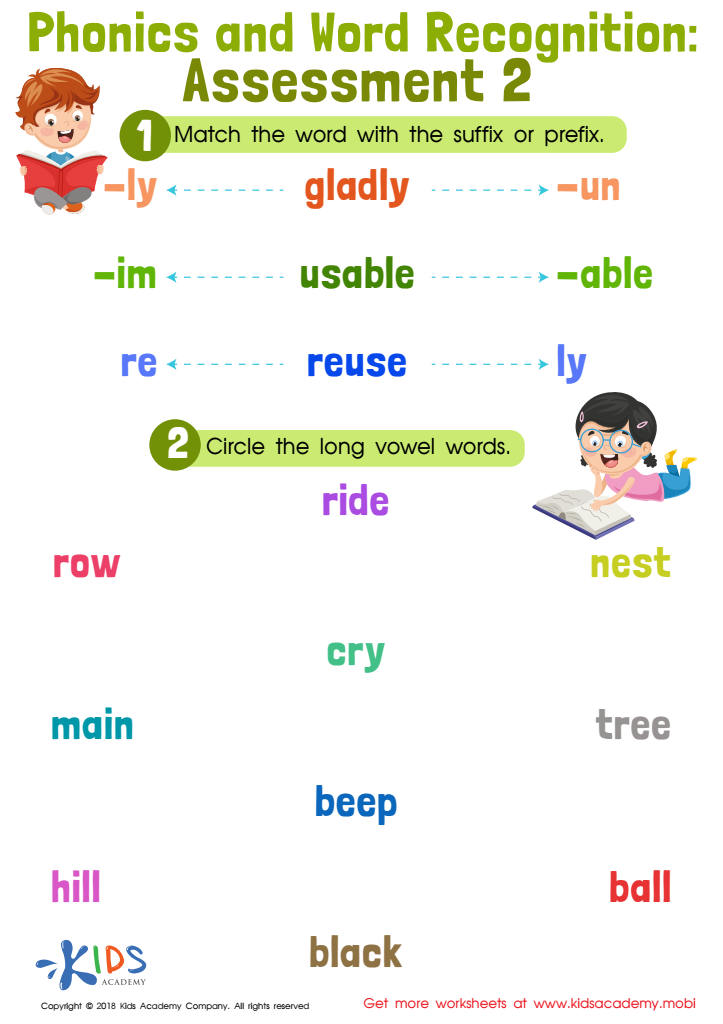
Phonics and Word Recognition: Assessment 2






Phonics recognition and grammar skills are essential components of literacy development for children aged 6-9. At this critical stage, children transition from learning to read to reading to learn. Understanding phonics, or the relationship between sounds and their corresponding letters, enables children to decode words, facilitating reading fluency and comprehension. When parents and teachers emphasize phonics, children gain the ability to tackle unfamiliar words confidently, which fosters a greater love for reading.
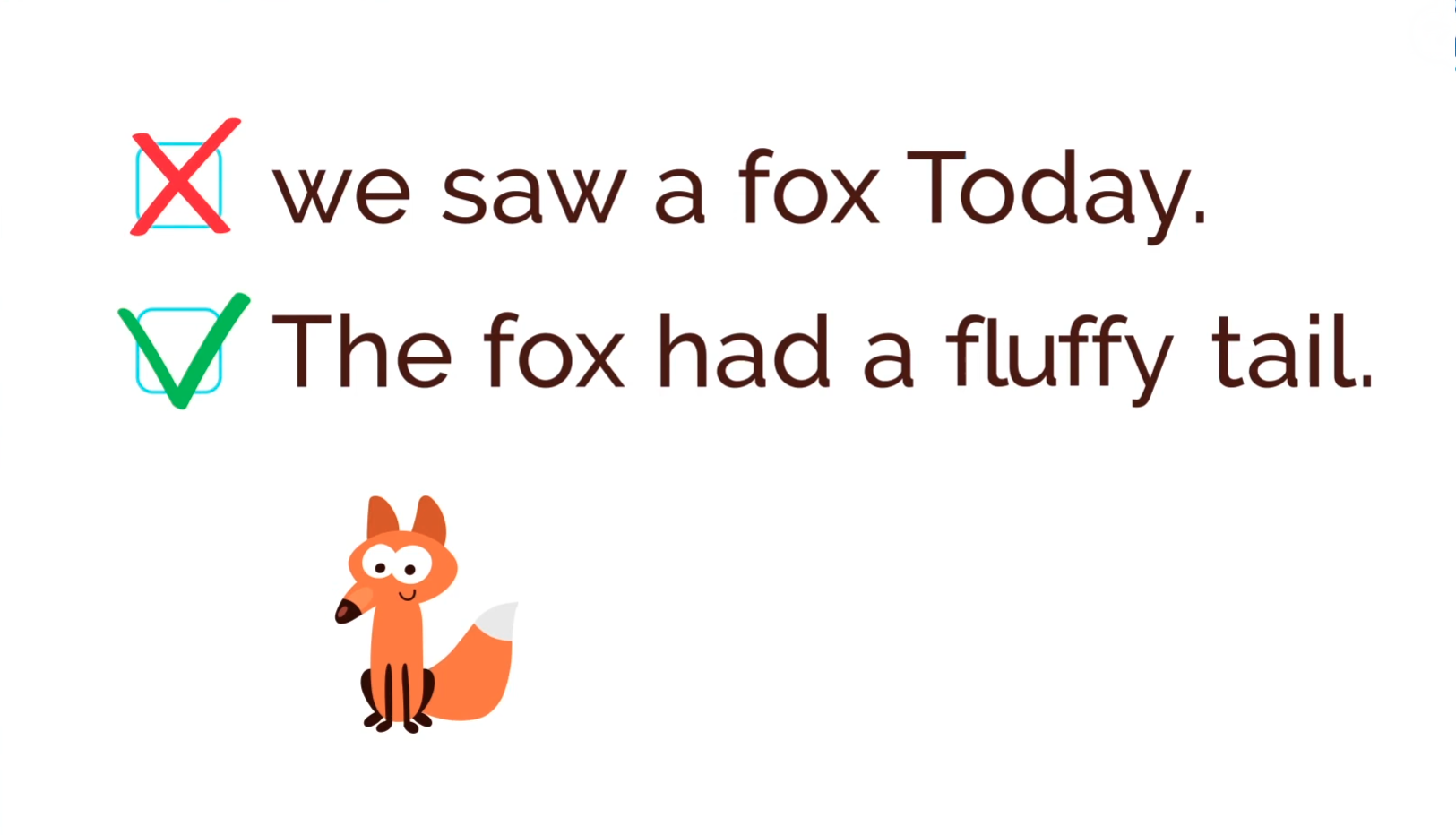
Grammar is equally important, as it helps children formulate and articulate their thoughts clearly. Proficiency in grammar aids children in understanding sentence structure, punctuation, and the rules that govern language. This foundational knowledge is crucial for effective communication, both written and verbal, and is necessary for academic success in all subjects.
Furthermore, a strong foundation in phonics and grammar during these formative years prepares children for more complex language skills in the future, aiding their development as skilled readers and writers. Parents and teachers who prioritize these skills not only enhance children's academic achievement but also cultivate critical thinking and creativity, encouraging lifelong learning and self-expression. Investing time in phonics and grammar can lead to profound improvements in a child's overall educational journey.








