Syllable identification Grammar Worksheets for Ages 6-9
5 filtered results
-
From - To
Introducing our "Syllable Identification Grammar Worksheets for Ages 6-9"! Perfectly crafted to develop early language and literacy skills, these worksheets engage young learners with fun and educational activities. Children will delight in breaking down words into syllables, enhancing both their decoding and spelling abilities. These worksheets feature colorful illustrations and varied exercises to keep kids motivated and interested. Ideal for classroom use or at-home practice, our syllable worksheets provide a strong foundation in grammar and phonological awareness, setting the stage for future reading and writing success. Help your child become a confident reader and writer today!
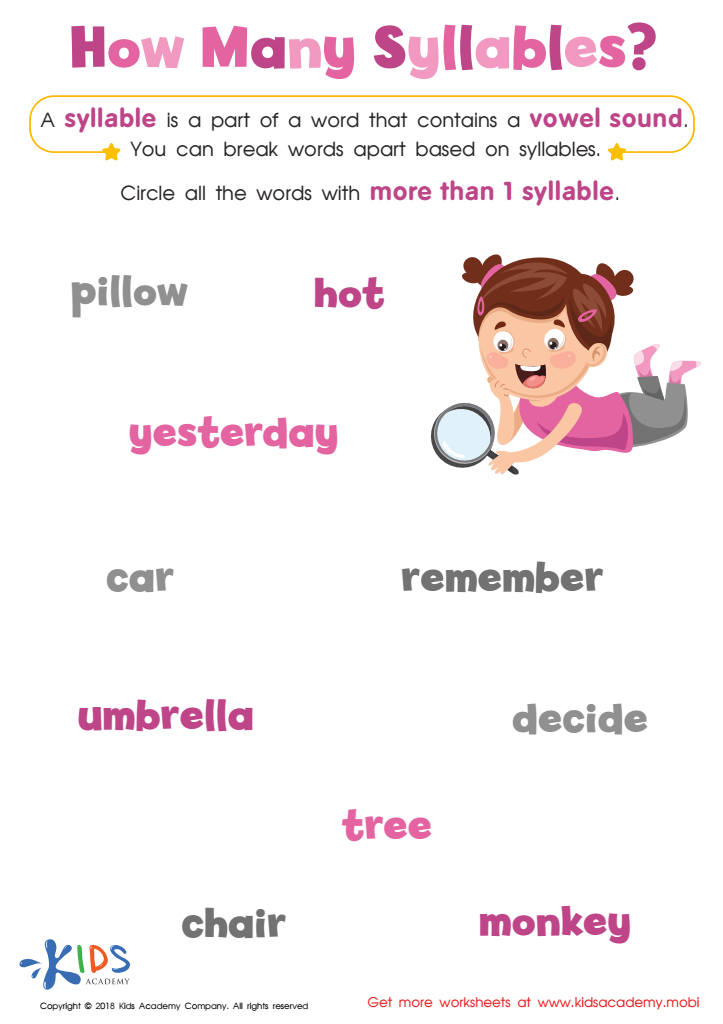
Reading: How Many Syllables Worksheet
 Assign to My Students
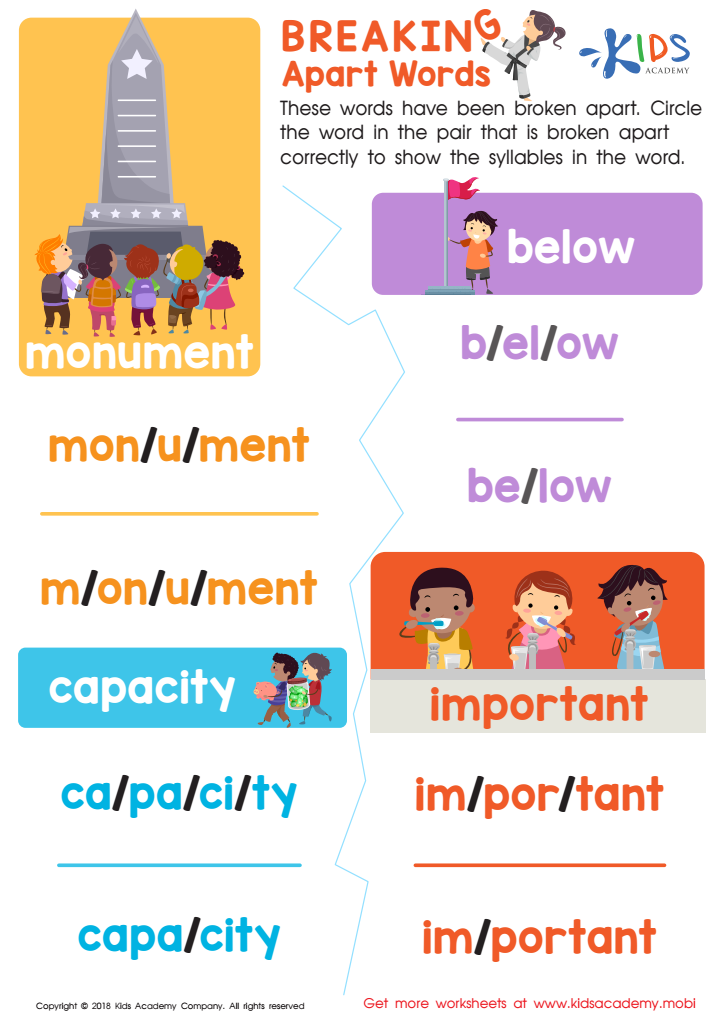
Breaking Apart Words Worksheet
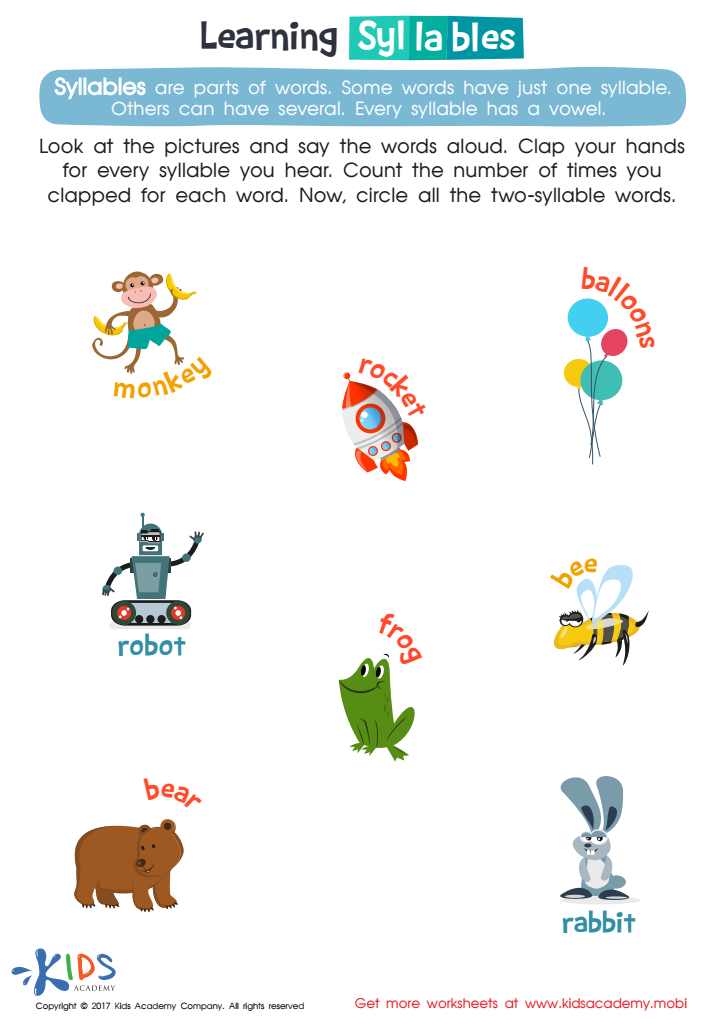
Learning Syllables Word Structure Worksheet
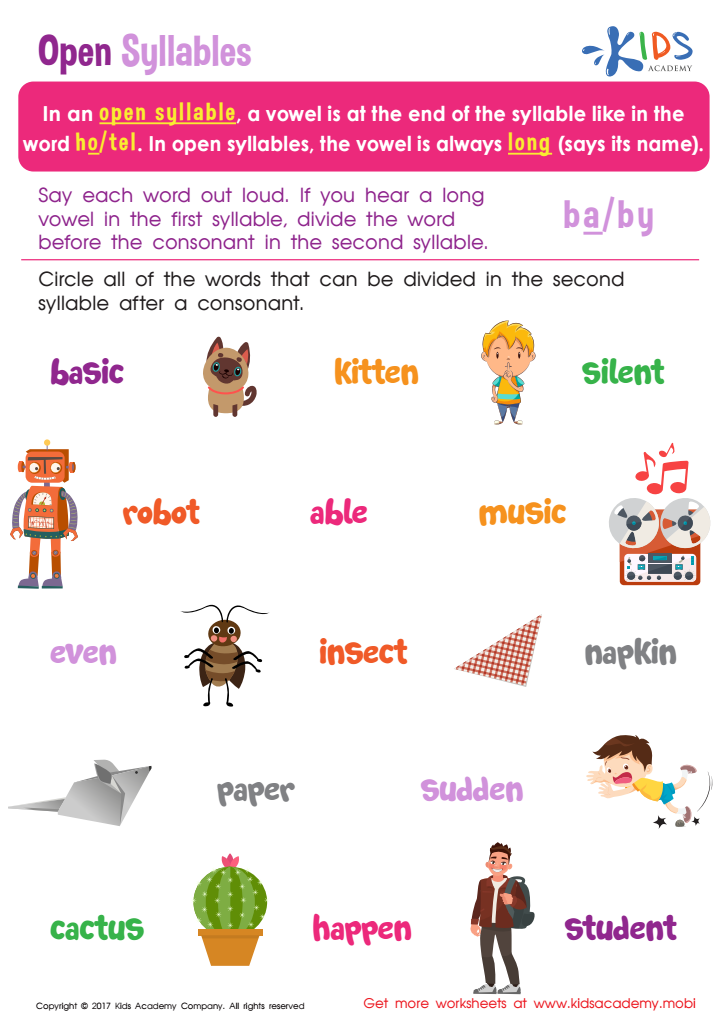
Open Syllable Printable Worksheet
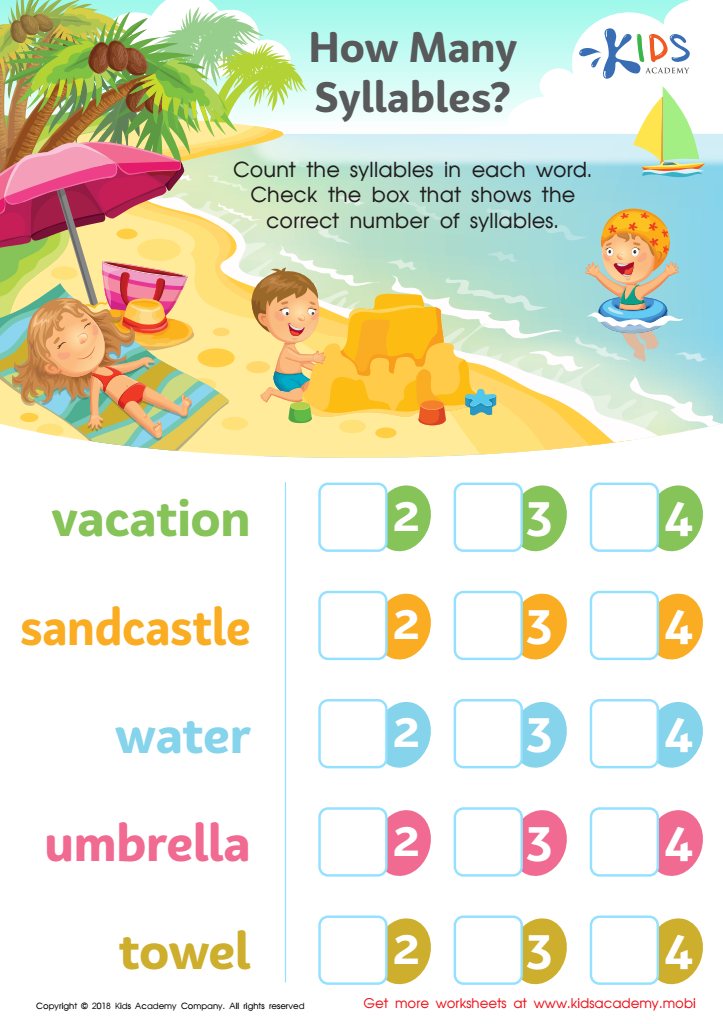
How Many Syllables Worksheet




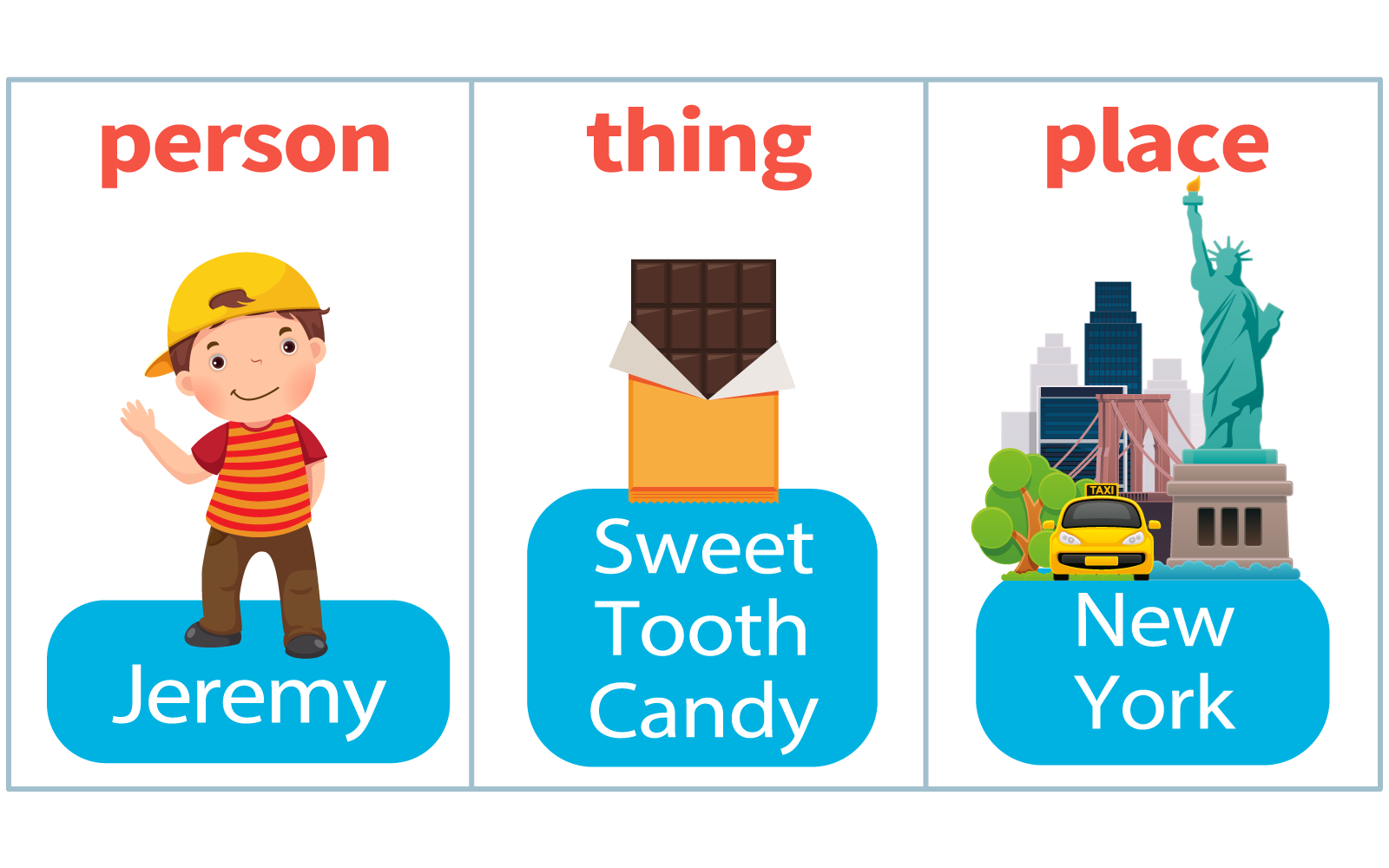


Syllable identification and grammar comprehension are fundamental building blocks in early childhood education, particularly for children aged 6-9. Understanding syllables helps children in deciphering and pronouncing words correctly which in turn aids reading fluency, a crucial aspect of literacy development. When children can break down words into syllables, they find it easier to spell, which boosts their writing skills and overall communication effectiveness. Syllable identification also plays a role in enhancing vocabulary as children learn to recognize patterns in language, making new words less daunting and easier to remember.
Grammar comprehension at this age sets the stage for effective communication skills. By grasping the basics of sentence structure, parts of speech, and correct punctuation, children gain the ability to express their thoughts more accurately and coherently. Proper grammar usage elevates their writing from basic sentence construction to more complex creative expression. Additionally, a foundational knowledge in grammar supports the understanding of other languages, paving the way for bilingual or multilingual education.
Parents and teachers should care about these foundational skills because they are instrumental to a child’s educational growth and academic success. These skills don’t only contribute to performance in school but also build confidence, supporting children to become better and more engaged learners.








