Comprehension skills Writing Worksheets for Ages 6-9
4 filtered results
-
From - To
Enhance your child's reading and writing abilities with our Comprehension Skills Writing Worksheets for ages 6-9. Our interactive and engaging worksheets are designed to boost young learners' understanding and critical thinking skills. From the fundamentals of reading comprehension to mastering written responses, these resources offer a comprehensive approach to developing essential literacy skills. Perfect for at-home practice or classroom use, our worksheets are tailored to support kids in gaining confidence and proficiency in comprehending and conveying written information. Empower your child to excel in school with these expertly crafted comprehension exercises.
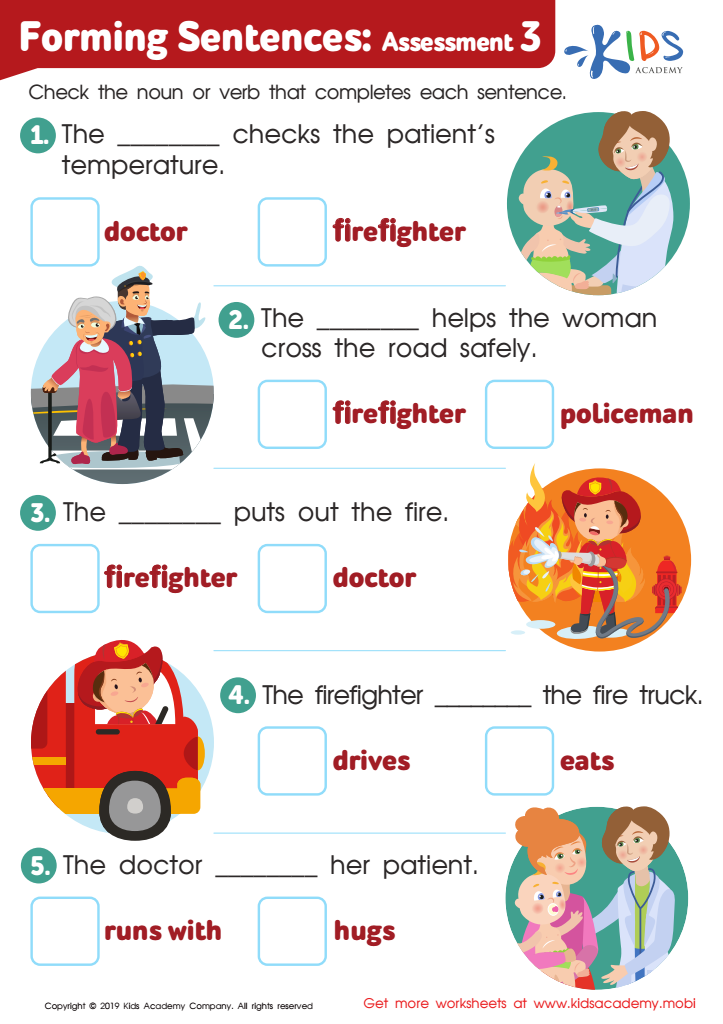
Forming Sentences: Assessment 3 Worksheet
 Assign to My Students
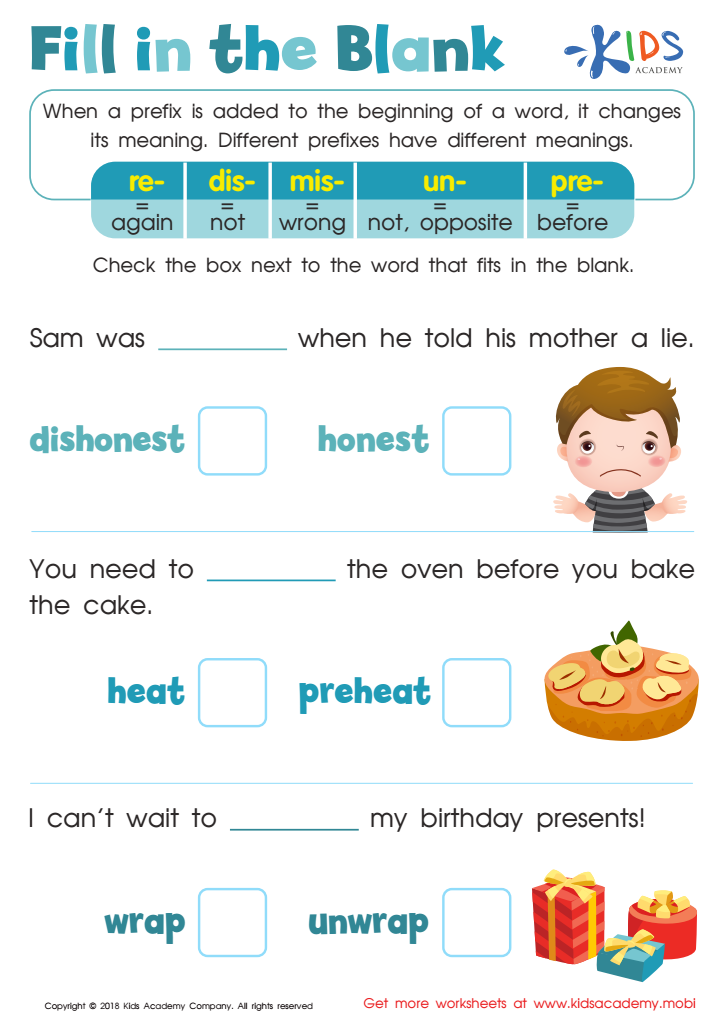
Reading: Fill in the Blank Worksheet
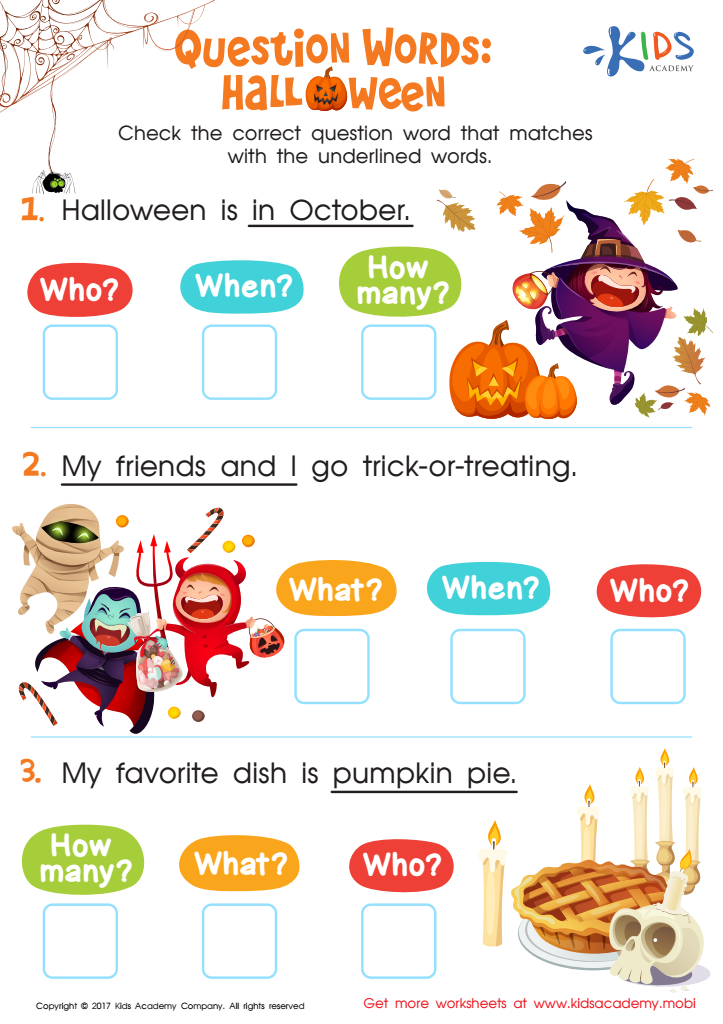
Question Words: Halloween Worksheet
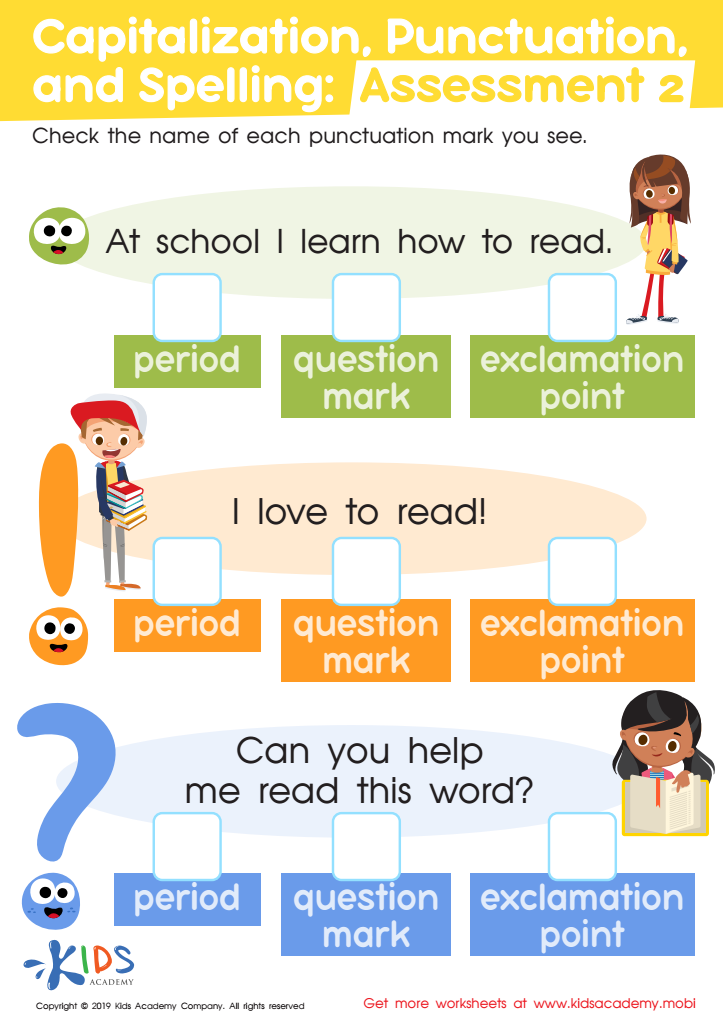
Capitalization. Punctuation. Spelling: Assessment 2 Worksheet





Comprehension skills are the building blocks of a child's academic success, especially for those aged 6-9. During these formative years, children transition from learning to read to reading to learn. Strong comprehension skills enable children to understand, process, and engage with the content they read, which is crucial for their overall learning experience across various subjects.
Parents and teachers should emphasize the development of comprehension skills because they foster critical thinking, enhance vocabulary, and improve communication abilities. When children comprehend what they read, they can make connections to their own lives, draw inferences, and ask meaningful questions, all of which are seeds for intellectual curiosity and lifelong learning.
Moreover, writing about what they understand reinforces their comprehension. Writing tasks related to reading materials encourage children to organize their thoughts, articulate their understanding clearly, and strengthen their memory of the subject matter. This interplay between reading and writing nurtures a deeper cognitive process that benefits all areas of study, including science, social studies, and mathematics.
By prioritizing comprehension skills and writing practice, parents and teachers empower children with the tools necessary for academic success and personal growth. These skills not only enhance educational outcomes but also build a strong foundation for effective communication and problem-solving in everyday life.








