
Enhancing Reading Comprehension Writing Worksheets for Ages 6-9
5 filtered results
Difficulty Level
Grade
Age
-
From - To
Subject
Activity
Standards
Boost your child's reading comprehension skills with our engaging worksheets designed for ages 6-9. Our expertly crafted printables combine fun activities with targeted practice to enhance understanding and retention of the material. With a variety of exercises including story analysis, vocabulary building, and critical thinking prompts, these worksheets help young learners develop essential comprehension skills and a love for reading. Perfect for use in classrooms or at home, our resources provide a solid foundation for academic success. Start exploring today and watch your child's confidence soar as they become proficient, thoughtful readers.
Favorites
With answer key
Interactive
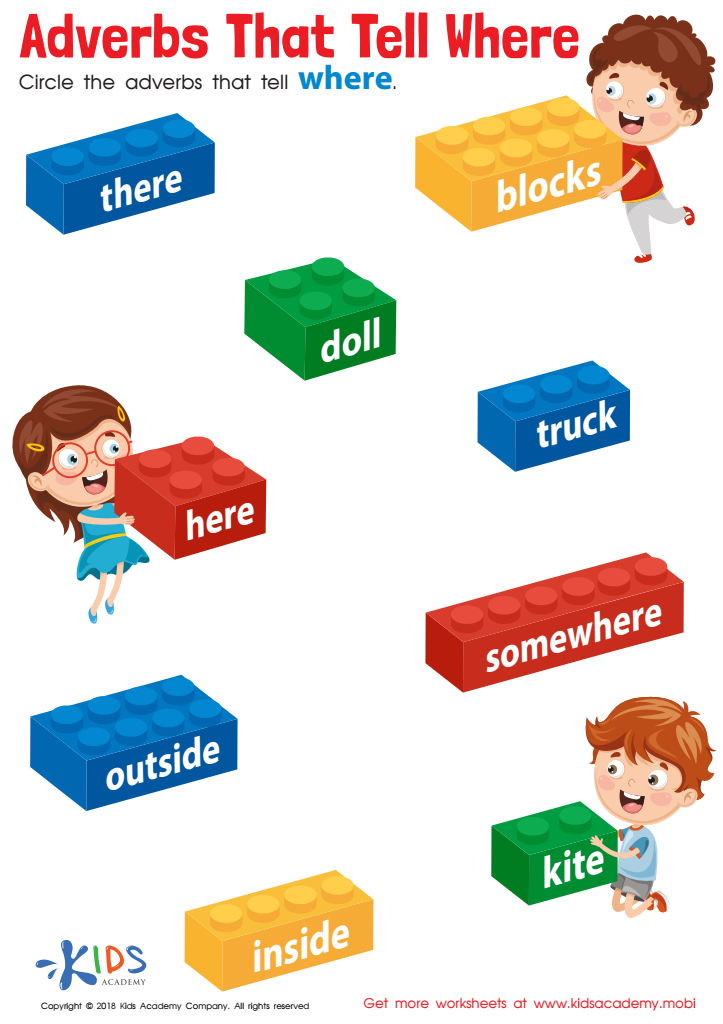
Adverbs That Tell Where Worksheet
Help your kids identify adverbs with a fun worksheet. Read the words aloud and ask them to circle the adverbs showing 'where.' Give them easy examples, like 'the girl stood over there.' See if they can create their own examples. This activity makes learning adverbs fun!
 Assign to My Students
Adverbs That Tell Where Worksheet
Worksheet
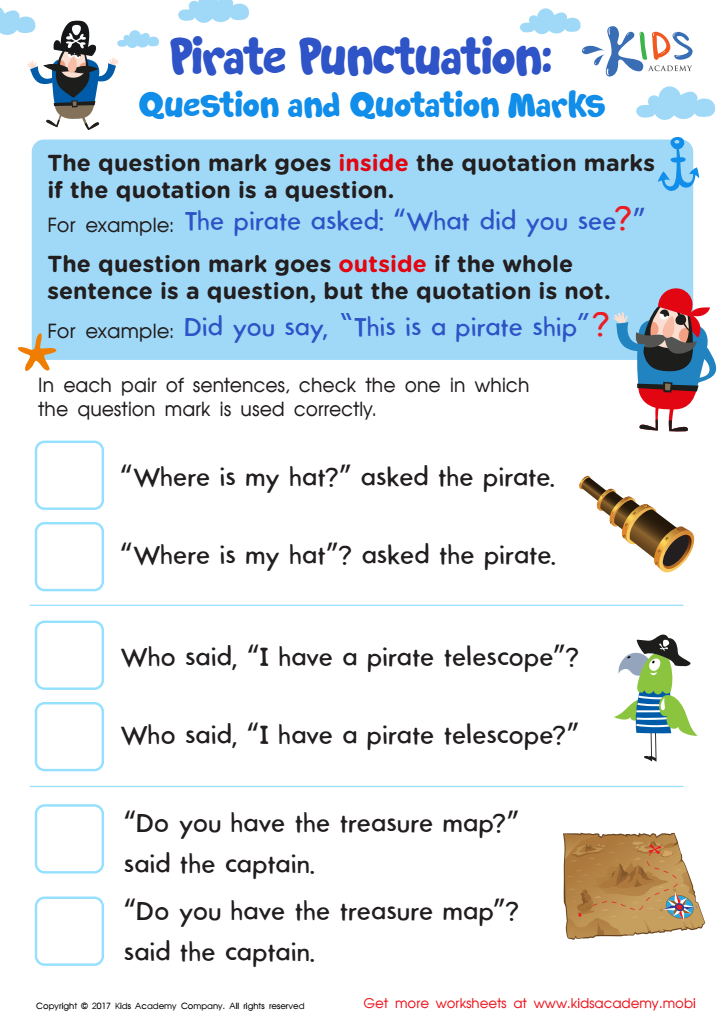
Question and Quotation Marks Worksheet
Adults often struggle to remember the rules for placement of question marks with quotation marks. This practice worksheet can help build the writing conventions needed.
Question and Quotation Marks Worksheet
Worksheet
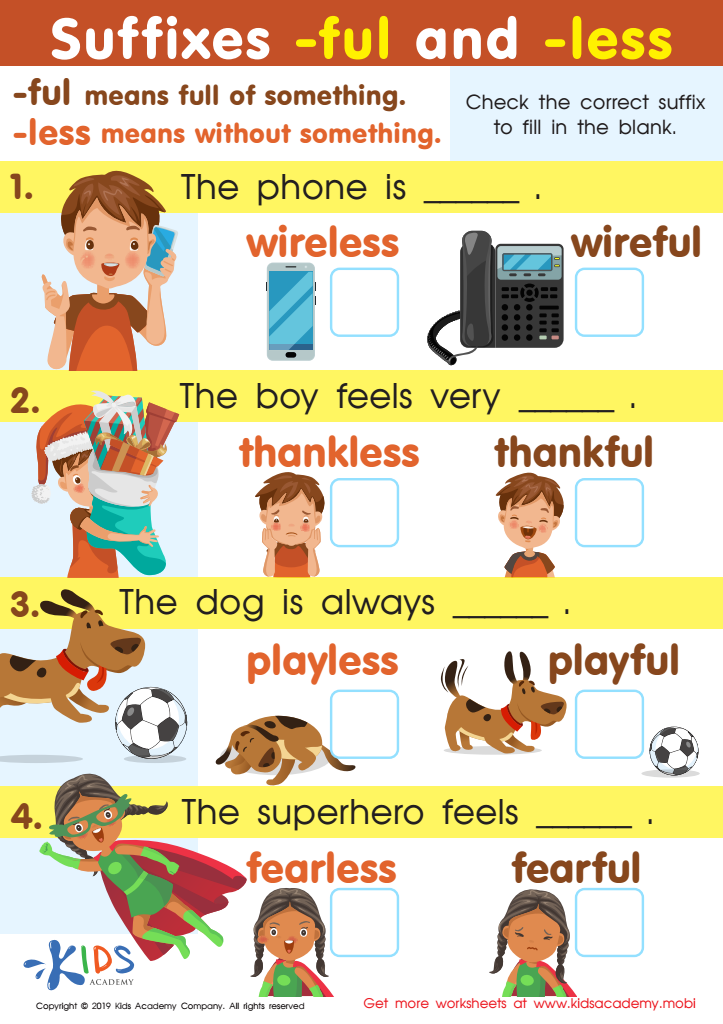
Suffixes –ful and –less Worksheet
Before you start this worksheet, make sure your kids know about suffixes. Explain that they're added to the end of words to change their meaning. In the worksheet, kids will learn about the suffixes –ful and –less. Look at the sentences in the picture with them, and help them to choose the right one for each blank.
Suffixes –ful and –less Worksheet
Worksheet
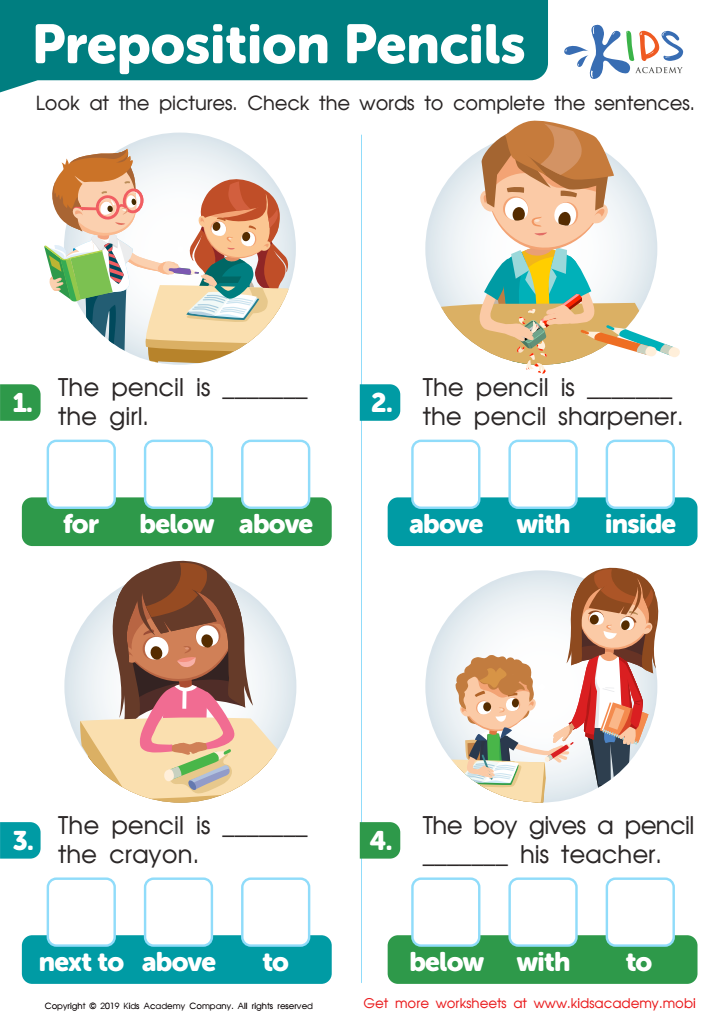
Preposition Pencils Worksheet
Constructing sentences follows rules. Parts of speech like nouns, verbs, adverbs, pronouns, and prepositions help. This worksheet focuses on prepositions. Explain prepositions to your child, then examine the pictures together and help them complete the sentences.
Preposition Pencils Worksheet
Worksheet
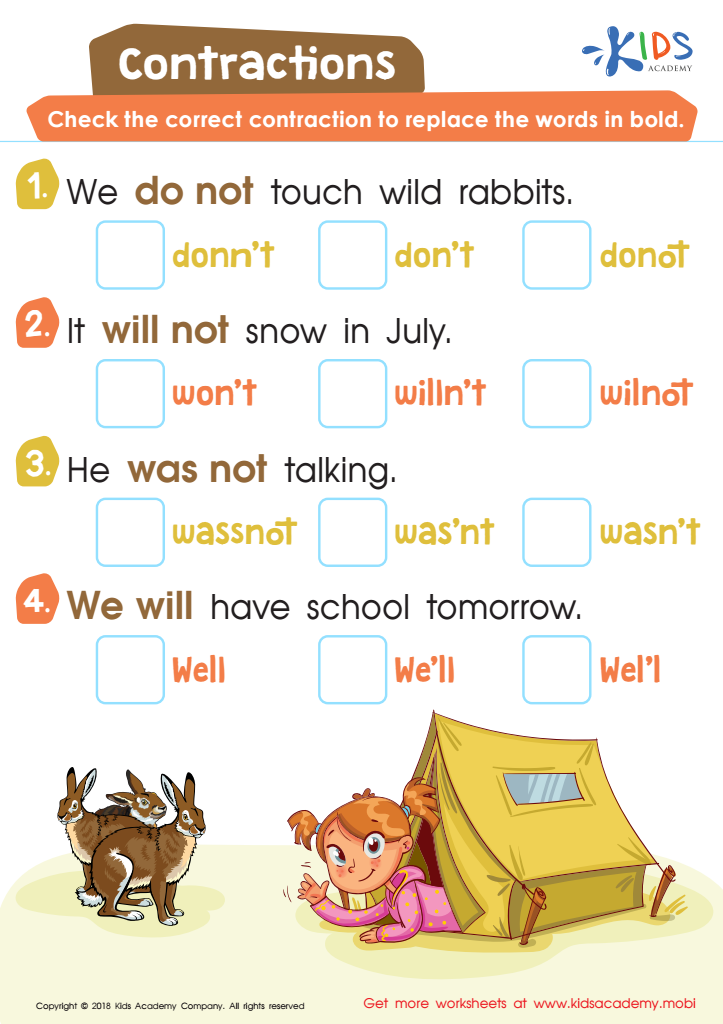
Contractions Worksheet
Contractions are popular in English and make writing/reading easier. For example: I'm, they're, she's. Ask your students to give more examples. Then, read the sentences in this worksheet and help them check the correct contraction to replace the words in bold.
Contractions Worksheet
Worksheet
Join Kids Academy for Free
Who is primarily going to use this learning content?


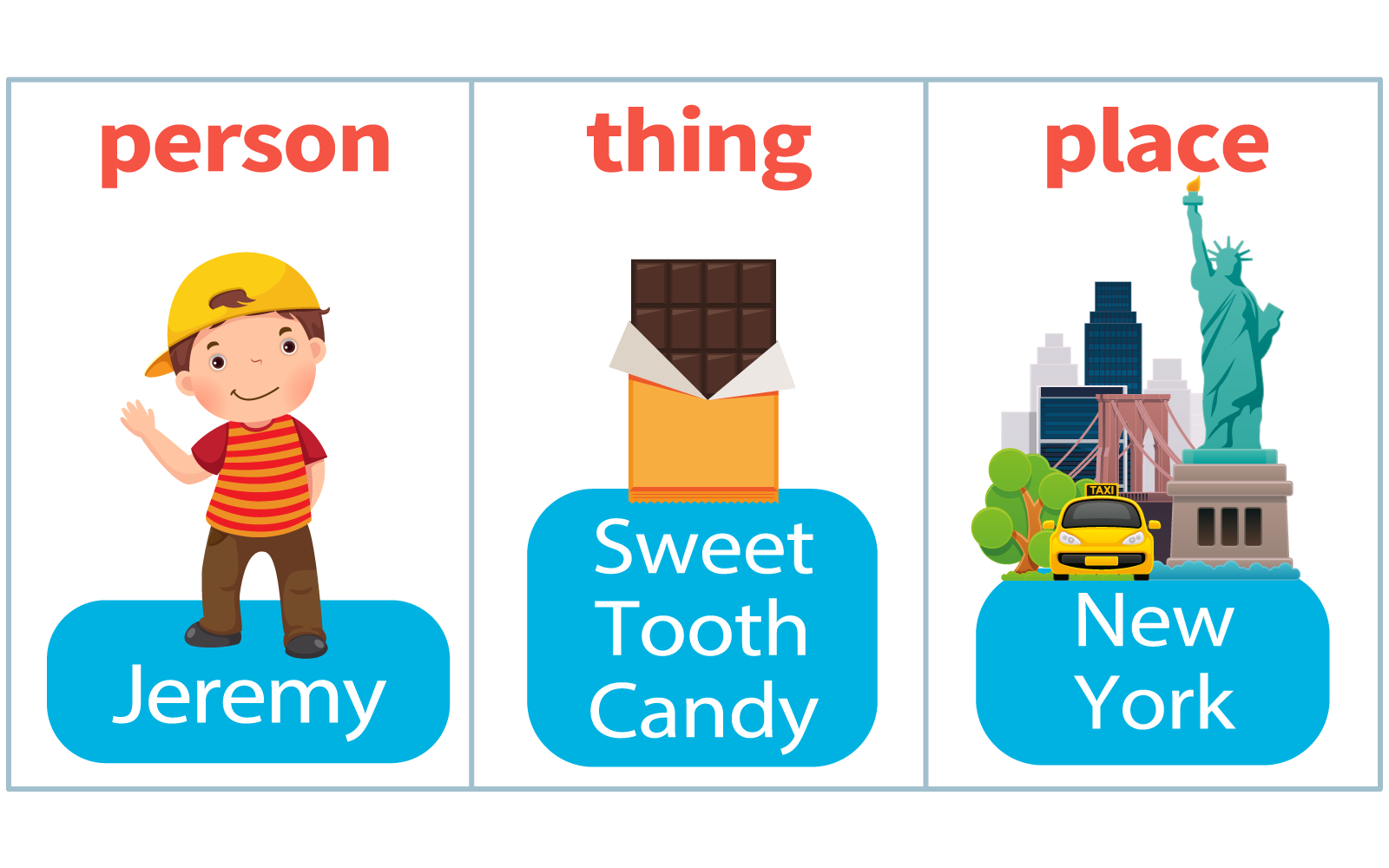




Enhancing reading comprehension and writing skills in children aged 6-9 is crucial for several reasons. At this developmental stage, kids transition from learning to read to reading to learn. By improving these skills, parents and teachers set a foundation for academic success and lifelong learning.
Reading comprehension is not merely about understanding words; it involves grasping ideas, following narratives, identifying main ideas and details, and making inferences. Strong comprehension aids critical thinking and problem-solving, skills essential across all subjects. It cultivates a child's curiosity and imagination, fostering a love for reading that extends beyond the classroom.
Writing skills complement reading comprehension. Writing enables children to express their thoughts clearly and logically. It reinforces their reading experiences, helps organize ideas, and improves spelling and grammar. When children write about what they read, it deepens their comprehension, strengthens their retention of information, and enhances their ability to communicate effectively.
For parents and teachers, focusing on these skills nurtures confident and motivated learners. Early proficiency in reading and writing can lead to better academic outcomes and a more enriching educational journey. Emphasizing these skills aligns with supporting overall cognitive and emotional development, making it a fundamental priority in early childhood education.








