Letter recognition Writing Worksheets for Ages 6-9
5 filtered results
-
From - To
Discover our "Letter Recognition Writing Worksheets for Ages 6-9," designed to enhance your child's literacy skills in a fun and engaging way. These worksheets focus on identifying, writing, and understanding letters in both uppercase and lowercase forms. With colorful illustrations and interactive activities, children will build confidence in their writing abilities while mastering letter recognition. Perfect for homeschooling or classroom use, these resources cater to various learning styles and paces. Explore a rich collection of exercises that make learning letters enjoyable and effective, laying a strong foundation for your child's future reading and writing success! Get started today!
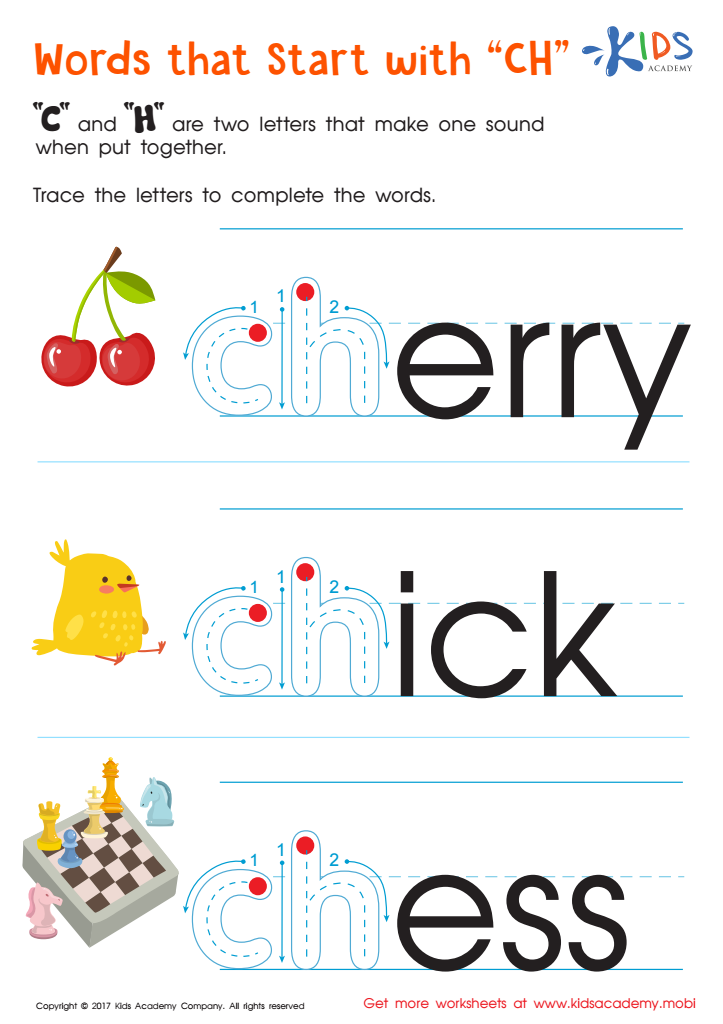
Words That Start with "ch" Spelling Worksheet
 Assign to My Students
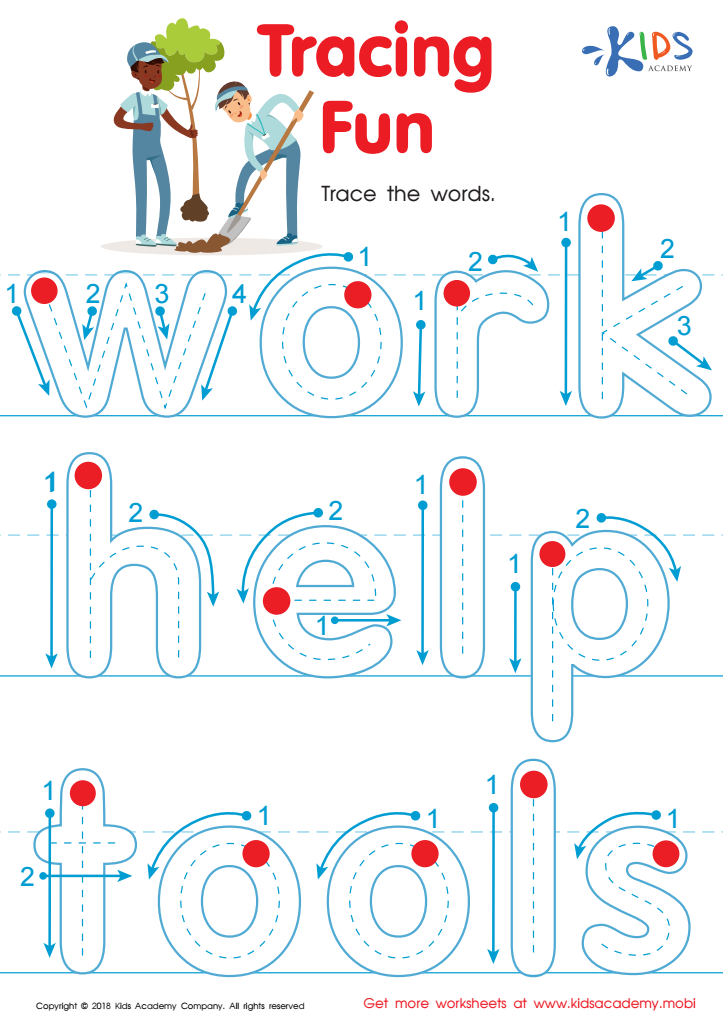
Tracing Fun Worksheet
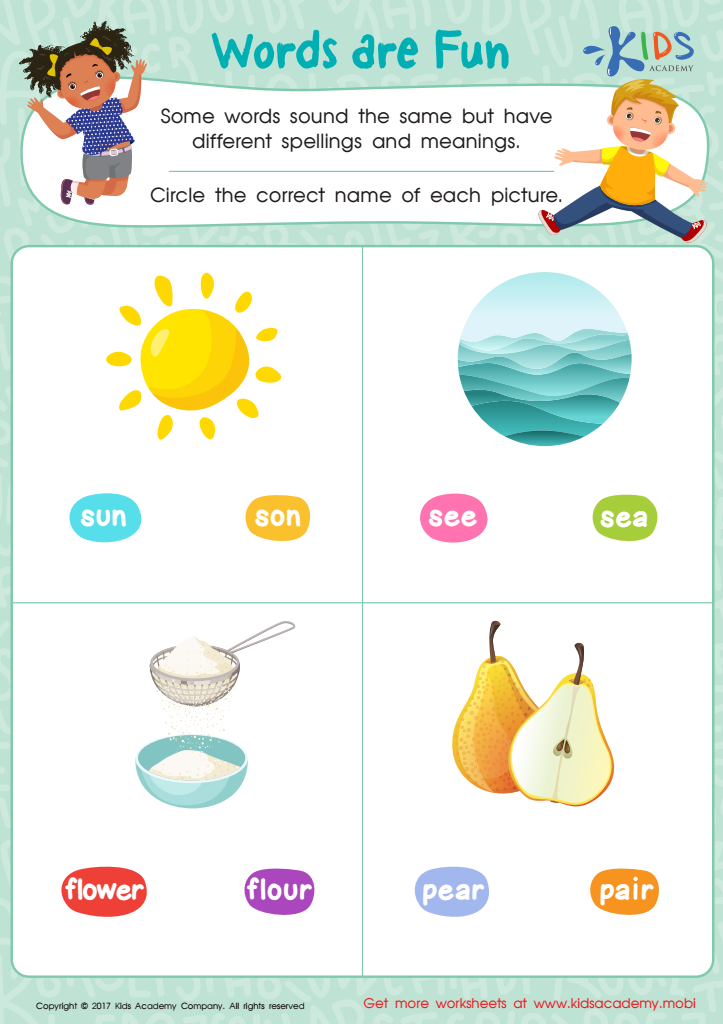
Words Are Fun Worksheet
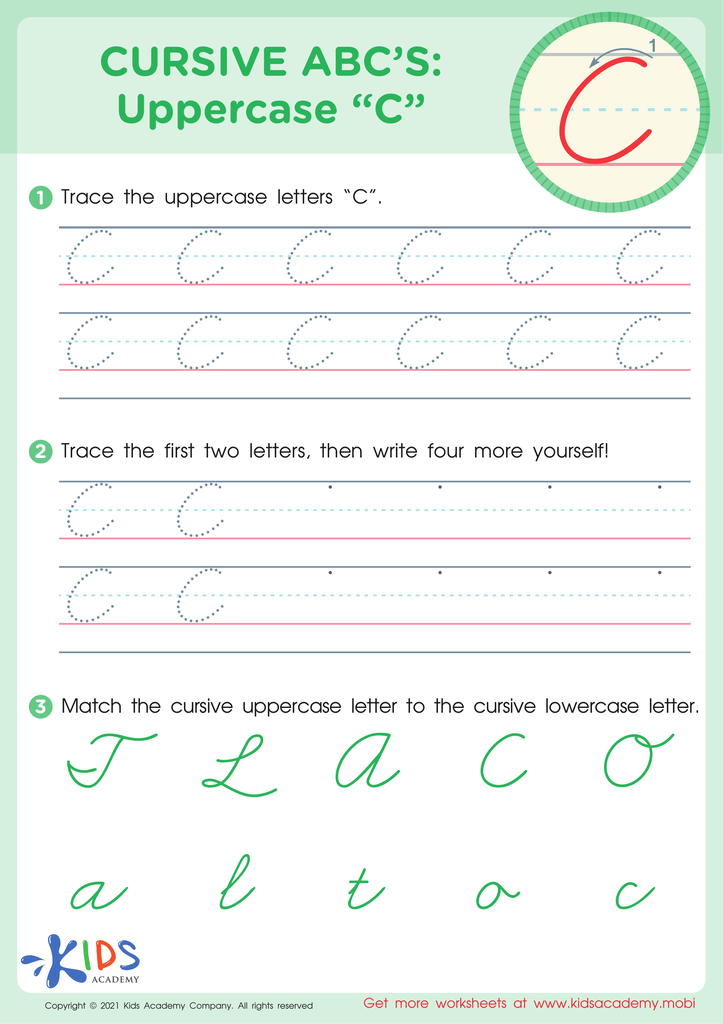
Cursive ABCs: Uppercase C
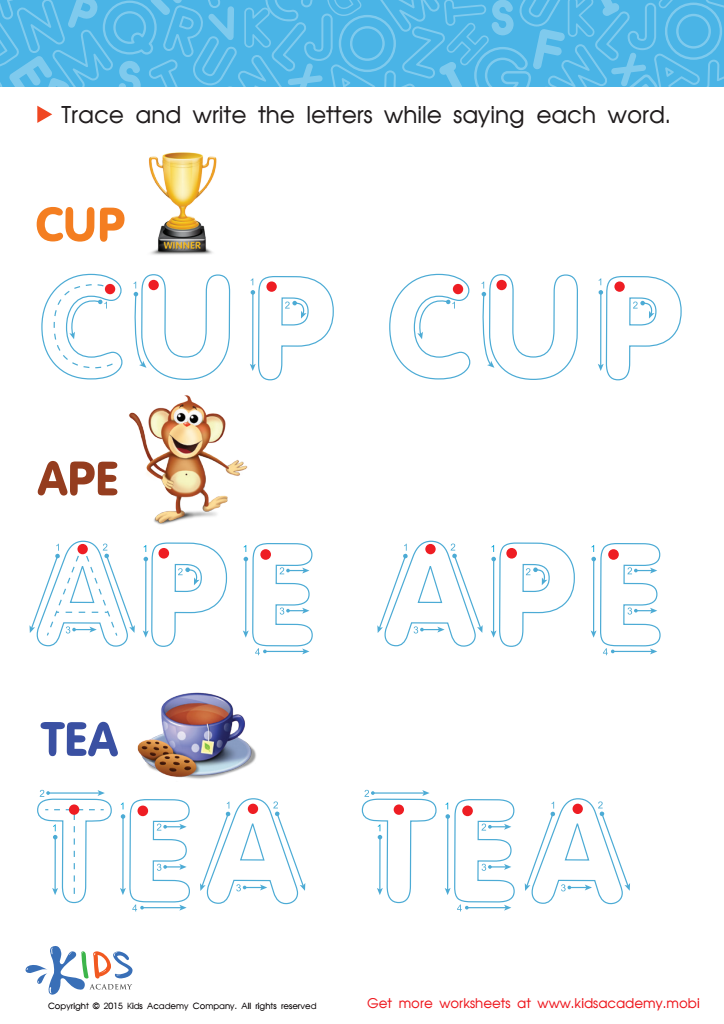
A Cup, an Ape and Tea Spelling Worksheet







Letter recognition and writing are fundamental skills for children aged 6-9, playing a crucial role in their literacy development. During this age, children transition from learning to read to reading to learn, making strong foundational skills essential. Letter recognition helps children identify letters, both uppercase and lowercase, which is critical for early reading success. When children recognize letters, they can decode words, fostering their ability to comprehend texts effectively.
Handwriting, on the other hand, reinforces memory and muscle coordination. Formulating letters by hand promotes cognitive engagement, allowing children to internalize their shapes and sounds more deeply. Moreover, effective writing skills bolster self-expression, enabling children to communicate their thoughts clearly, which is vital for academic achievement and personal development.
Parents and teachers should care about these skills because they set the stage for lifelong literacy. Children with strong letter recognition and writing skills are more likely to perform well academically and develop a love for reading and writing. Additionally, at this age, children are beginning to build their confidence in these areas, making supportive environments and practices crucial. Encouraging letter recognition and writing skills can lead to happier, more engaged learners equipped for future challenges.








