
Sentence structure understanding Writing Worksheets for Ages 6-9
4 filtered results
Difficulty Level
Grade
Age
-
From - To
Subject
Activity
Standards
Our "Sentence Structure Understanding Writing Worksheets for Ages 6-9" are designed to help young learners master the basics of sentence construction. Engaging activities guide children in identifying, forming, and perfecting sentences, blending learning with fun. These printable resources enhance grammar skills, improve writing proficiency, and boost confidence in forming coherent sentences. Ideal for both classroom and home use, each worksheet is crafted to align with educational standards, ensuring young writers build a solid foundation. Foster your child's writing abilities today with our expertly designed worksheets tailored to ages 6-9.
Favorites
With answer key
Interactive
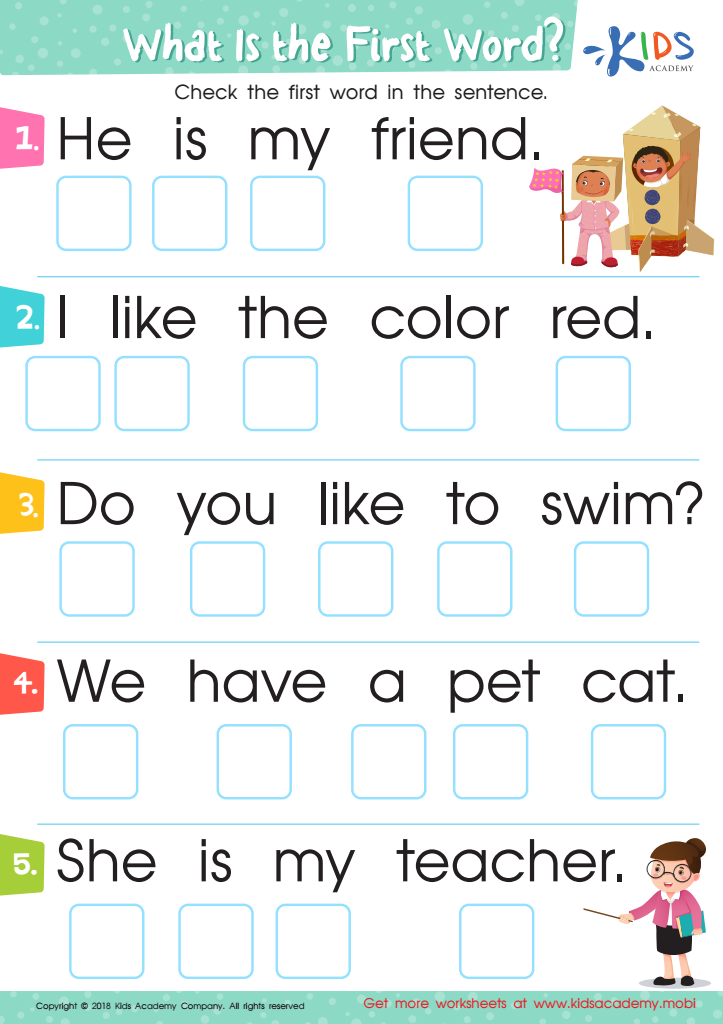
What is the First Word? Worksheet
Help your students test their sentence-reading skills with this printout! After teaching the alphabet, have them identify and write the first word in each sentence. With this exercise, they'll gain reading proficiency and be better prepared to write their own sentences.
What is the First Word? Worksheet
Worksheet
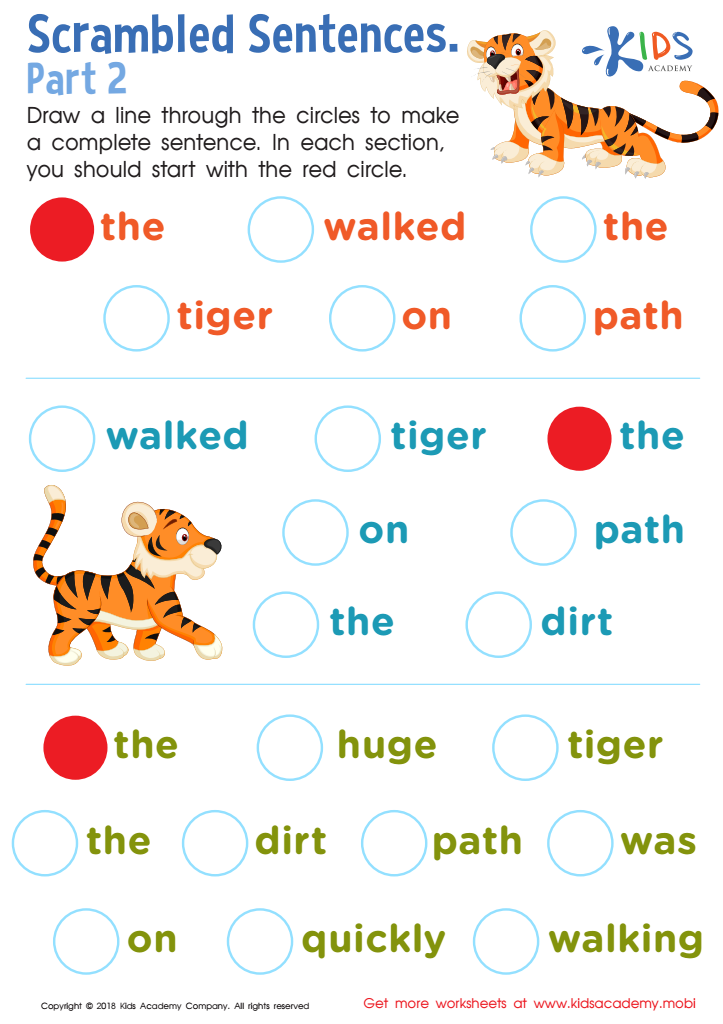
Scrambled Sentences Part 2 Worksheet
This printable worksheet helps kids construct simple, correct sentences. Introduce them to making sentences if they're new to it. Have them draw a line through the circles to form a sentence, starting with the red circle. After completing this exercise, they'll be able to craft short sentences with confidence.
Scrambled Sentences Part 2 Worksheet
Worksheet
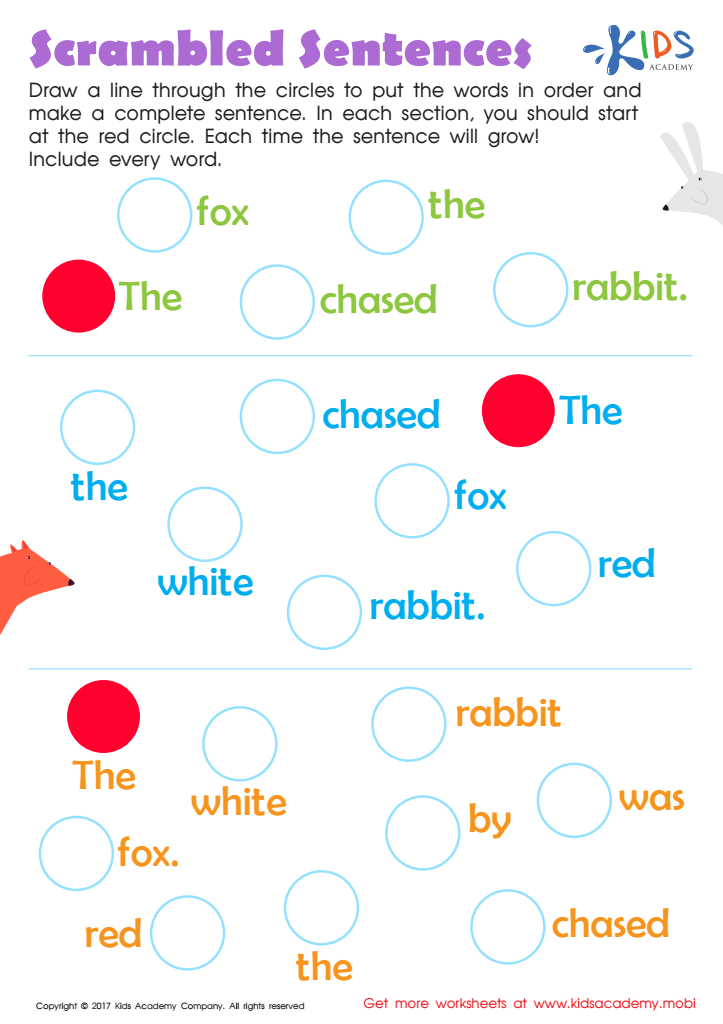
Scrambled Sentences Worksheet
Kids will have fun with the scrambled sentences worksheet: draw lines to make complete sentences. As the sentence grows, they'll learn sentence structure and word order. Easy instructions included!
Scrambled Sentences Worksheet
Worksheet
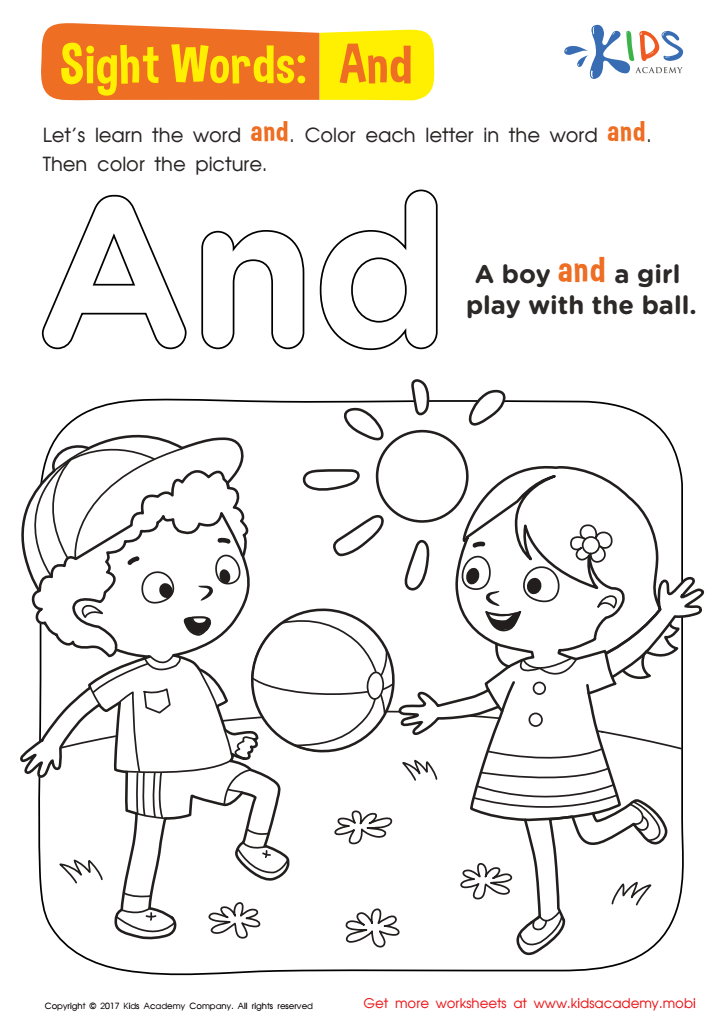
And Worksheet Sight Words Worksheet
Help your child get a jumpstart on reading with sight words! Print out this fun worksheet and get your child to read the sentence. Point out the word "and", then color the word and enjoy the rest of the scene! It's a great way to introduce sight words and get their early reading skills going!
Download (PDF)
 Assign to My Students
Assign to My Students
And Worksheet Sight Words Worksheet
Worksheet
Join Kids Academy for Free
Who is primarily going to use this learning content?




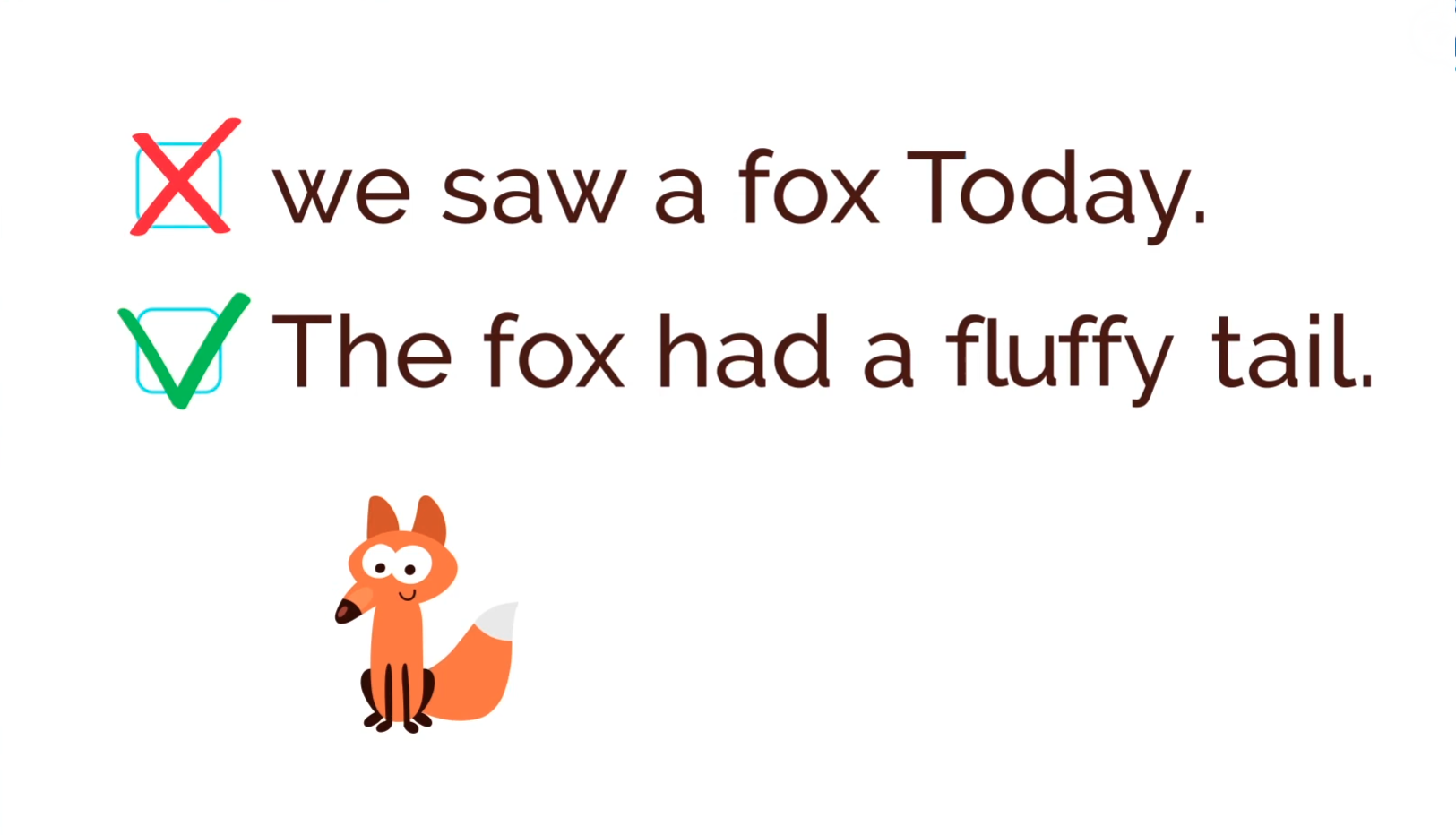


Understanding sentence structure at an early age is crucial for children aged 6-9 because it forms the foundation of effective communication. At this developmental stage, kids transition from simple to more complex sentences, enhancing their ability to express ideas clearly and accurately. Proper sentence structure helps with both written and oral communication, which are essential skills not just in school but in everyday life.
When children understand how to construct sentences correctly, they can better organize their thoughts. This leads to improved reading comprehension, as they become capable of grasping more complex texts. Teachers can better assess the children’s progress and areas needing improvement, and parents can support their learning at home.
Sentence structure also directly affects other areas of learning. For instance, in mathematics, they need to comprehend and follow written instructions. It also promotes cognitive development because structuring sentences requires logical thinking and problem-solving skills. Understanding grammar, punctuation, and syntax early on paves the way for more advanced literacy skills, making future learning more accessible and enjoyable.
Ultimately, fostering a strong grasp of sentence structure helps build children's confidence in their abilities to communicate, understand, and engage with the world, fulfilling both academic and social aspects of their growth.








