Understanding adjectives Writing Worksheets for Ages 6-9
5 filtered results
-
From - To
Enhance your child's writing skills with our "Understanding Adjectives Writing Worksheets" designed specifically for ages 6-9. These engaging worksheets encourage young learners to explore the exciting world of adjectives, helping them describe nouns more vividly. Through fun exercises, kids will identify, compare, and use adjectives effectively, boosting their vocabulary and creativity. Perfect for home or classroom use, these worksheets include various activities that make learning enjoyable. Watch as your child gains confidence in their writing while mastering this essential part of speech. Unlock the potential of your budding writer today with our comprehensive and interactive worksheets!
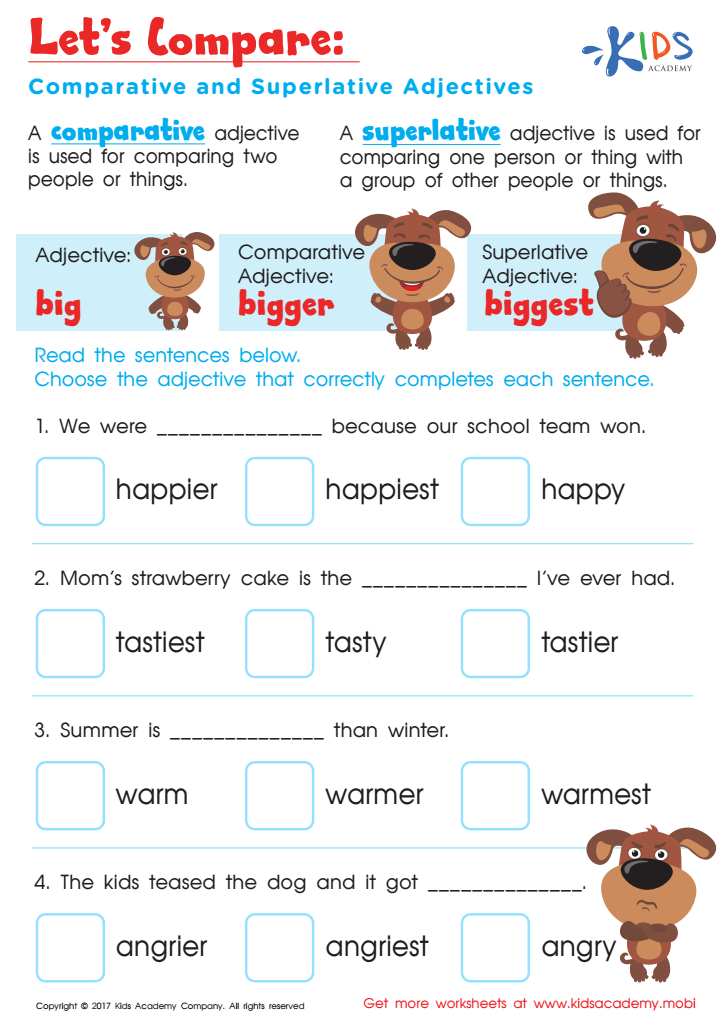
Comparative and Superlative Worksheet
 Assign to My Students
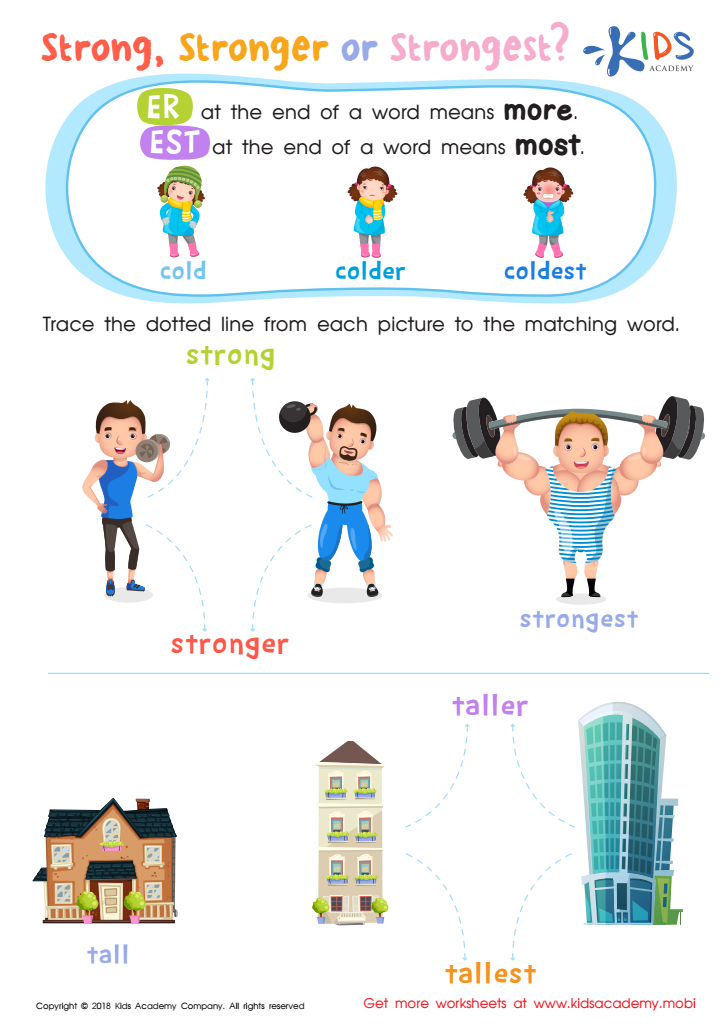
Strong or Stronger? Worksheet
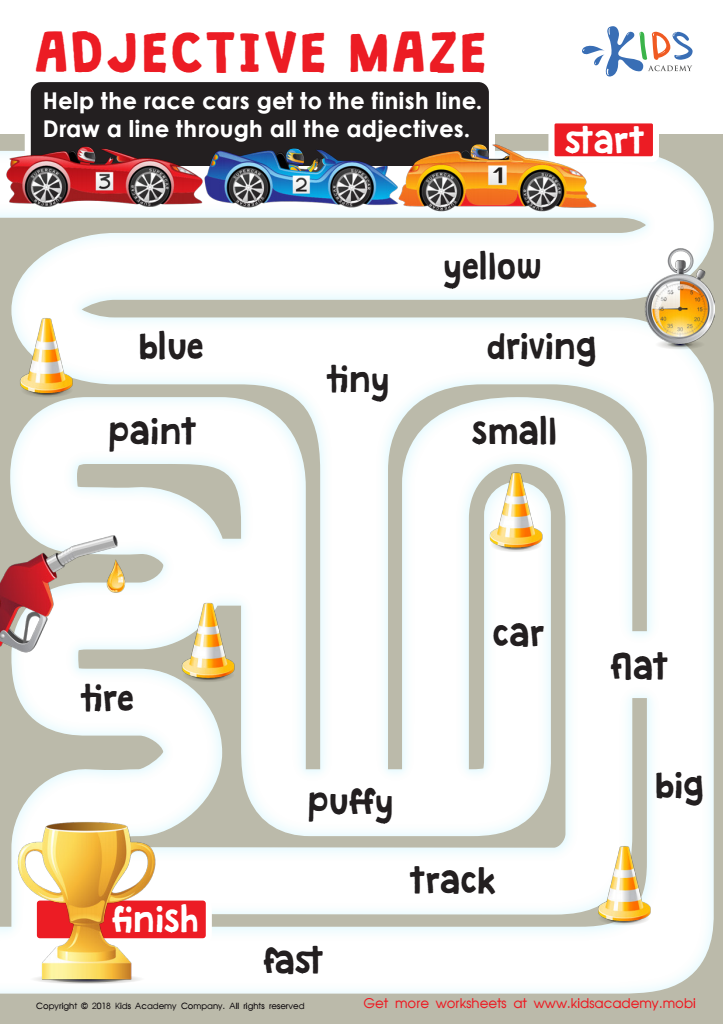
Adjective Maze Worksheet
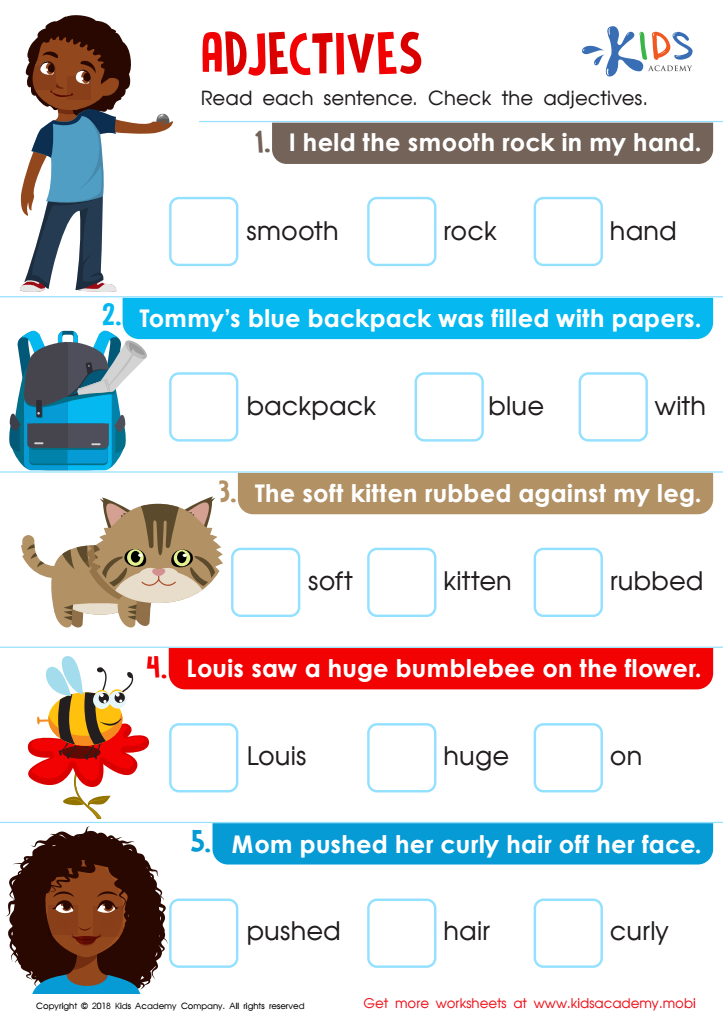
Adjectives Worksheet
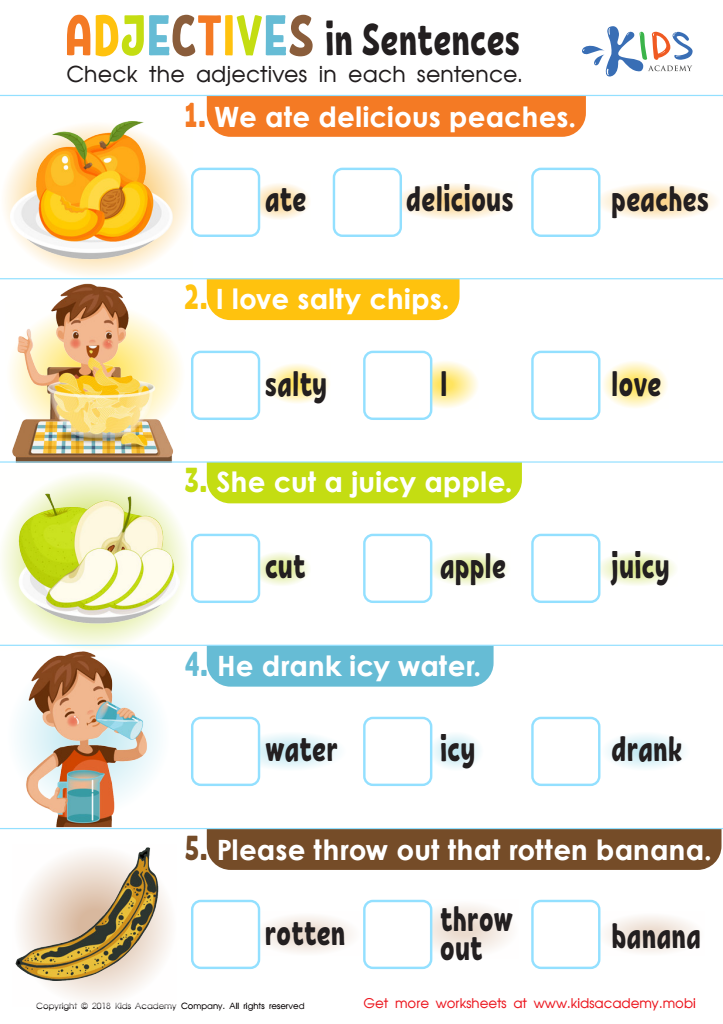
Adjectives in Sentences Worksheet







Understanding adjectives is crucial for children aged 6 to 9, and parents and teachers should prioritize this aspect of language development. Adjectives are words that describe or modify nouns, providing detail and depth to our communication. By grasping adjectives, children learn to express themselves more vividly and accurately, turning simple sentences into more engaging narratives.
For teachers, integrating adjectives into the curriculum enriches writing skills. When children learn to use adjectives effectively, their writing becomes more colorful and imaginative, allowing them to paint pictures with words. This skill not only enhances creative writing but also fosters critical-thinking abilities as they ponder how best to describe their experiences or ideas.
Parents play a vital role in this learning journey by encouraging children to explore adjectives during conversations and storytelling at home. Engaging in interactive activities, such as descriptive games or creative arts, can make learning adjectives fun and memorable.
Ultimately, fostering an understanding of adjectives supports literacy development, boosts vocabulary, and enhances comprehension. These skills are essential for academic success and everyday communication, making it imperative for parents and teachers to actively engage children in adjective usage and appreciation from an early age.








