Verb recognition Writing Worksheets for Ages 6-9
4 filtered results
-
From - To
Discover our engaging Verb Recognition Writing Worksheets designed specifically for children ages 6-9! These printable resources help young learners enhance their understanding of verbs through fun exercises that promote recognition and usage. With a variety of activities, including fill-in-the-blank sentences, matching games, and creative writing prompts, these worksheets provide a comprehensive approach to grammar skills. They encourage children to explore action words in context, boosting their writing confidence and vocabulary. Perfect for classroom or home use, our Verb Recognition Writing Worksheets are ideal for budding writers eager to elevate their language skills in an enjoyable and interactive way!
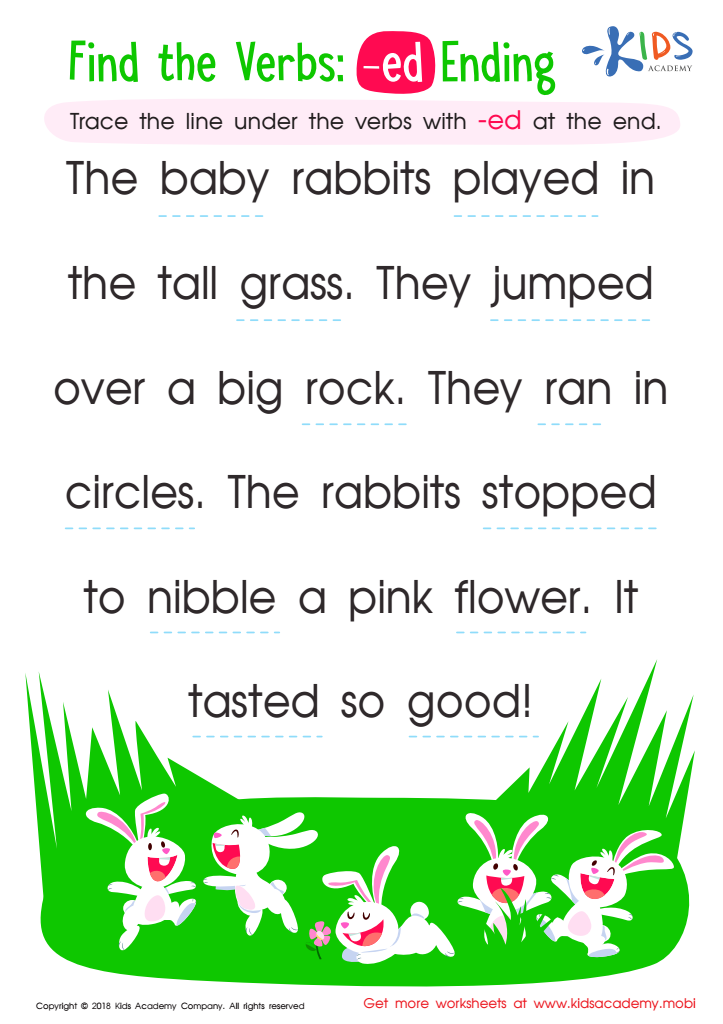
Find The Verbs: -ed Ending Worksheet
 Assign to My Students
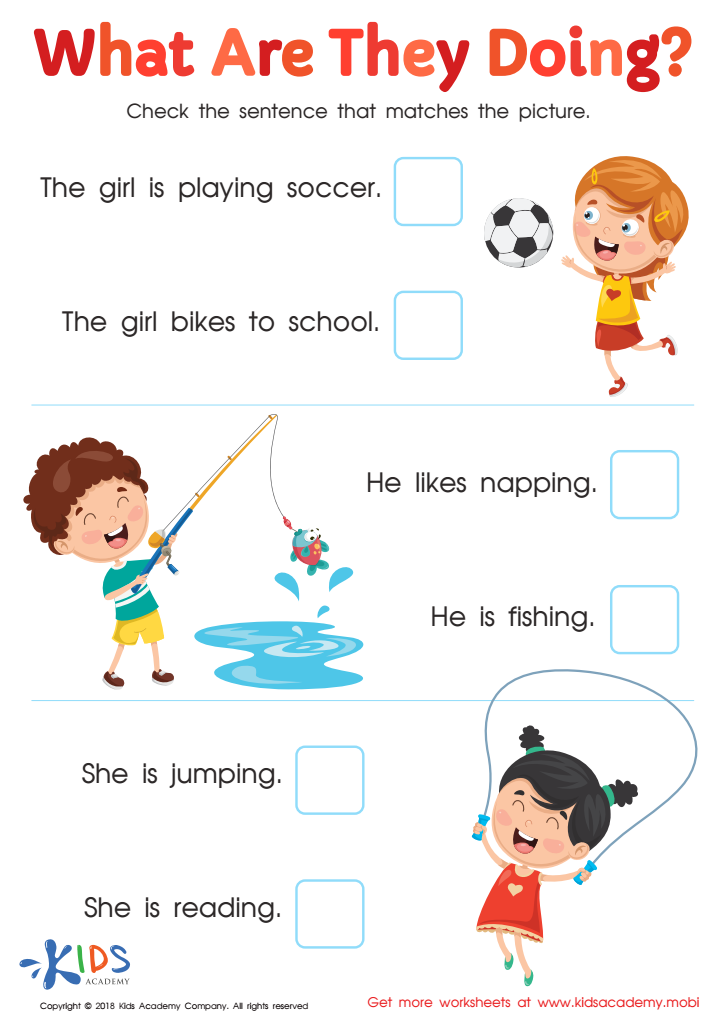
What Are They Doing? Worksheet
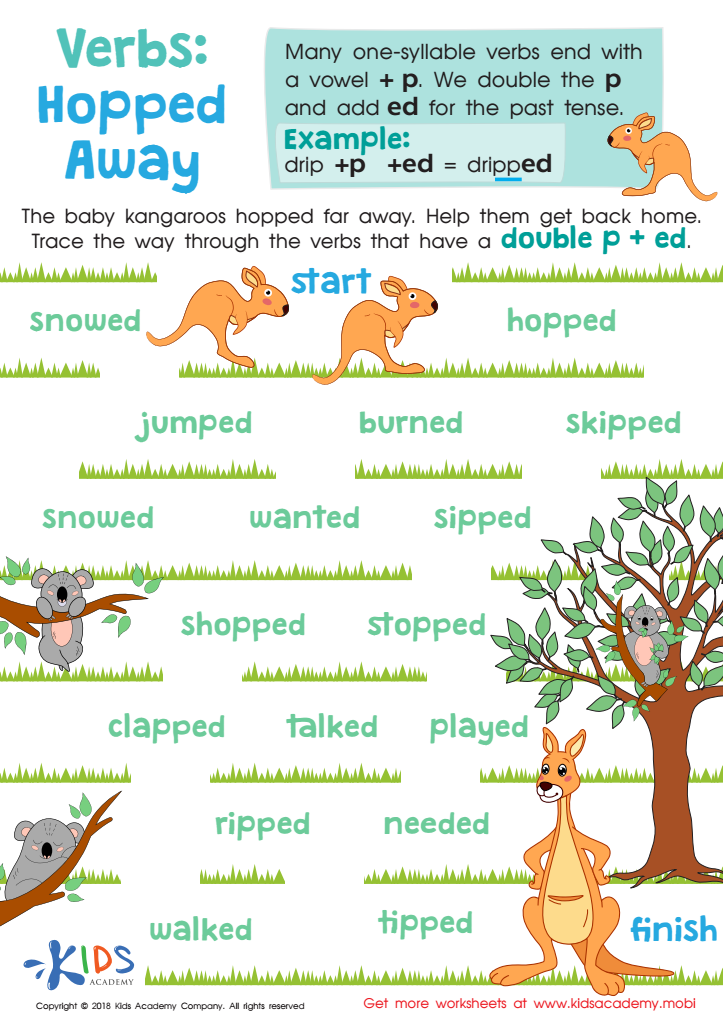
Verbs: Hopped Away Worksheet
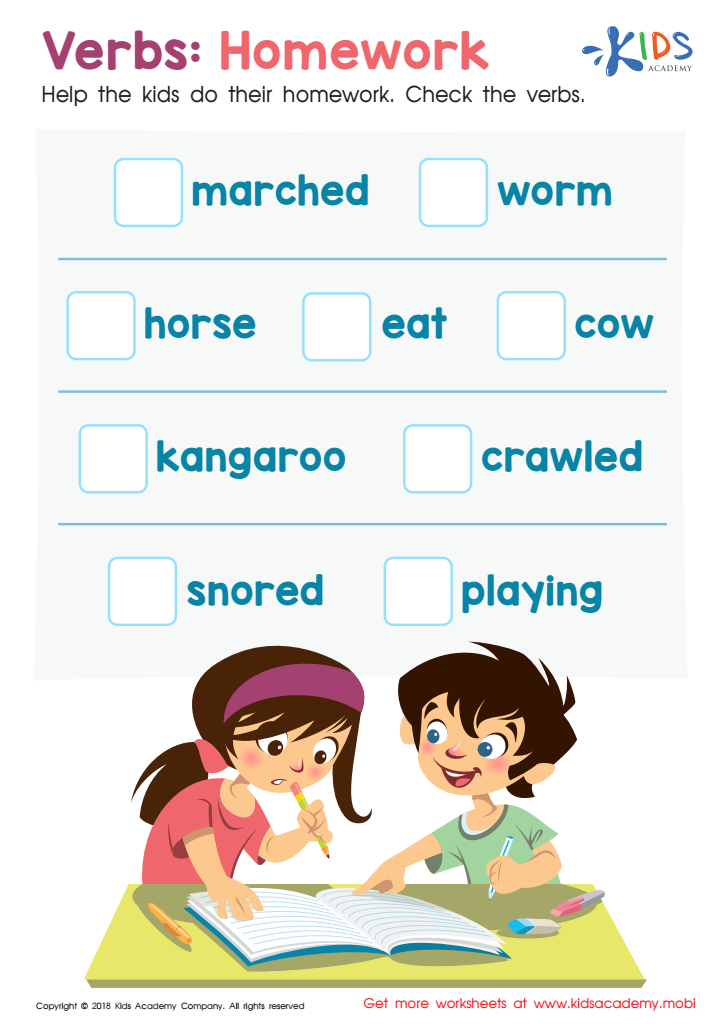
Verbs Homework Worksheet






Verb recognition is essential for children ages 6-9, as it forms a cornerstone of language development. Recognizing and understanding verbs helps young learners grasp the foundations of sentence structure and communication. Verbs represent actions and states of being, making them critical for expressing thoughts and ideas clearly. By focusing on verb recognition, parents and teachers can enhance children's reading comprehension, spelling, and writing skills.
In this age group, children are beginning to write more complex sentences, and a solid grasp of verbs helps them convey their intended messages effectively. Recognizing different verb tenses also supports cognitive development, fostering an understanding of time in storytelling.
Engaging activities that promote verb recognition can make learning fun and interactive. By incorporating games, storytelling, and creative writing exercises, educators can encourage children to explore and experiment with verbs. Additionally, recognizing and using a variety of verbs can enrich vocabulary, empowering children to express themselves in nuanced and interesting ways.
Ultimately, prioritizing verb recognition in young learners not only enhances their immediate literacy skills but also lays a strong foundation for future academic success and effective communication throughout their lives. It is an investment in their overall linguistic and cognitive development that pays dividends for years to come.








