Handwriting improvement ABC Letters Worksheets for 6-Year-Olds
3 filtered results
-
From - To
Enhance your child’s handwriting skills with our Handwriting Improvement ABC Letters Worksheets designed specifically for 6-year-olds! These engaging worksheets offer a fun and effective way for young learners to practice letter formation and develop fine motor skills. Each page features colorful illustrations to capture attention while guiding children through tracing and writing both uppercase and lowercase letters. Our worksheets foster confidence and promote a love for writing, making learning enjoyable. Perfect for use at home or in the classroom, these resources support early literacy development and ensure your child is ready for academic success. Start your handwriting journey today!
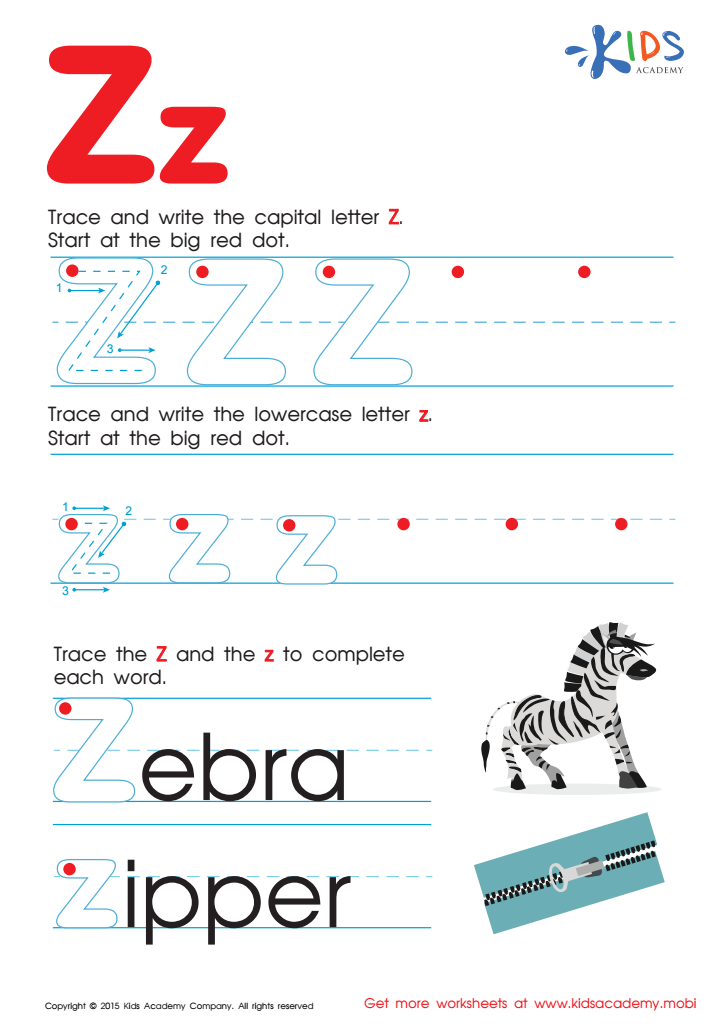
Letter Z Tracing Page
 Assign to My Students










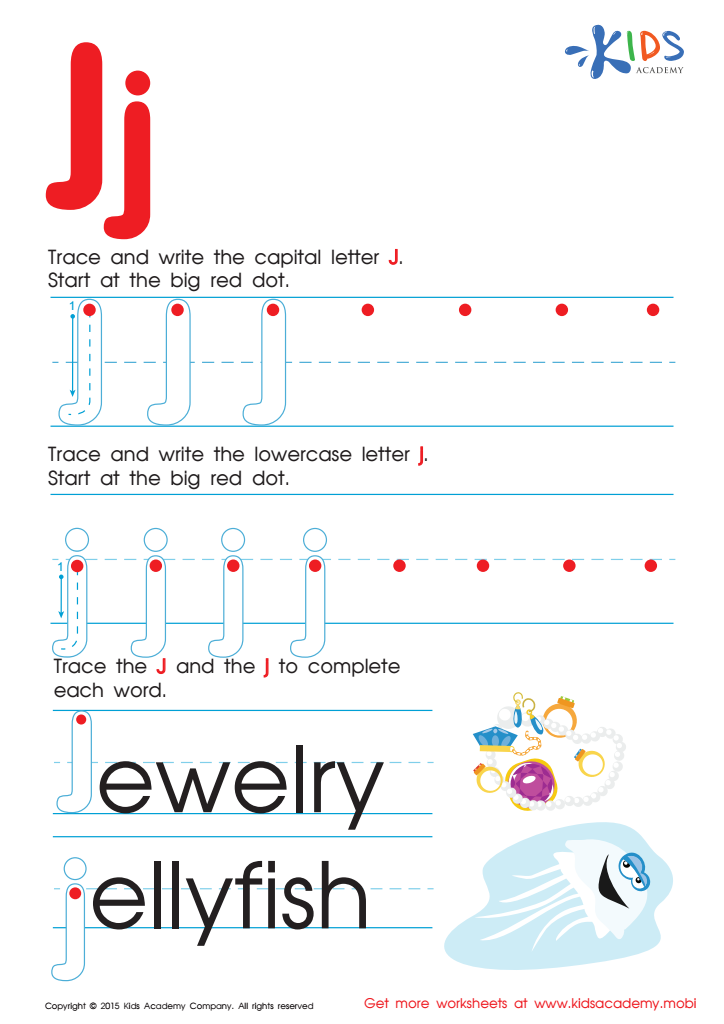
Letter J Tracing Page
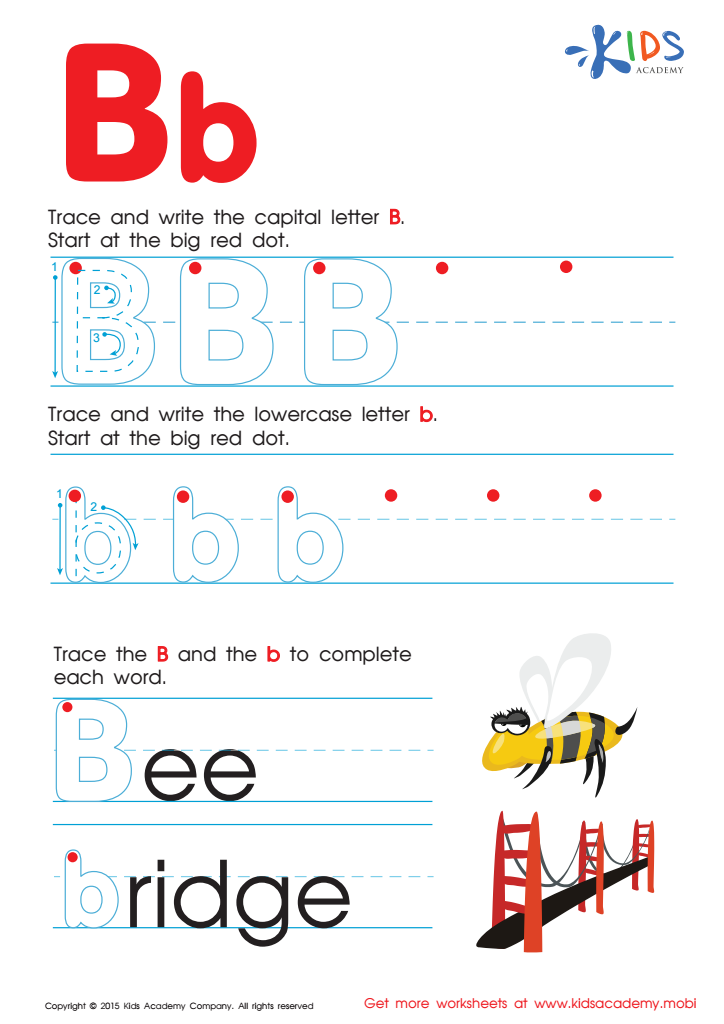
Letter B Tracing Page







Handwriting skills are crucial for 6-year-olds as they lay the foundation for future academic success. Parents and teachers should care about improving handwriting for several reasons. Firstly, legible writing enhances communication skills. When children can write clearly, their thoughts and ideas are better conveyed, boosting their confidence in expressing themselves.
Secondly, developing fine motor skills is essential at this age. Handwriting involves coordination and control of small muscles in the hands and fingers, which contributes to overall physical development. Mastering fine motor skills also helps with other tasks, such as using scissors or fastening buttons.
Additionally, handwriting improvement encourages cognitive development. The process of forming letters and words engages brain functions tied to memory and learning. Moreover, good handwriting promotes better organization of thoughts. It helps children focus on spelling and grammar as they write, leading to improved literacy skills.
Lastly, in an increasingly digital world, handwriting remains a vital skill. Building strong handwriting habits early will help children keep pace with written tasks they encounter later in school. Therefore, prioritizing handwriting improvement not only fosters essential learning abilities but also prepares children for effective communication throughout their lives.







