
Handwriting Skills ABC Letters Worksheets for 6-Year-Olds
8 filtered results
Difficulty Level
Grade
Age
-
From - To
Subject
Activity
Standards
Boost your child's writing confidence with our "Handwriting Skills ABC Letters Worksheets for 6-Year-Olds". Designed to blend fun with learning, these engaging worksheets support early literacy by teaching the ABCs through interactive handwriting exercises. Each sheet provides ample space for practicing letter formation, ensuring young learners can develop neat and legible handwriting. Perfect for enhancing fine motor skills, our worksheets also include fun tracing and writing activities, advancing your child's reading and writing readiness. Ideal for at-home practice or classroom use, these worksheets make mastering the alphabet an enjoyable and rewarding experience for every 6-year-old.
Favorites
With answer key
Interactive
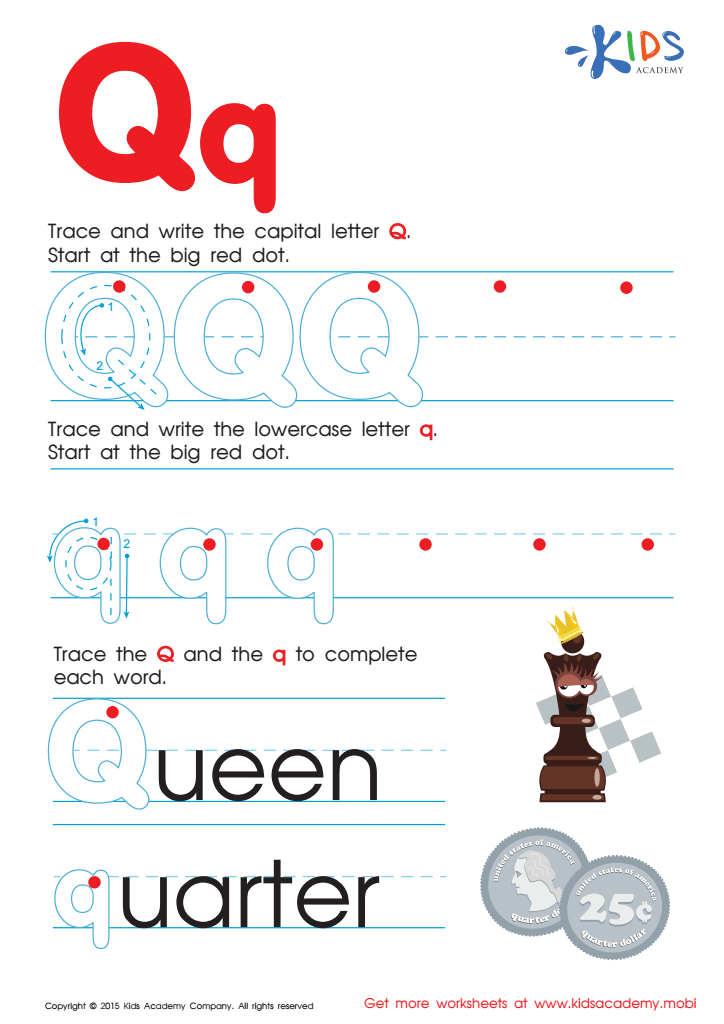
Letter Q Tracing Page
Learn the letter "Q"! Trace and write it a few times in upper and lowercase. Then help the Queen by writing her initial letter. Finally, write "quarters" and practice with more alphabet worksheets.
Letter Q Tracing Page
Worksheet

Letter W Tracing Page
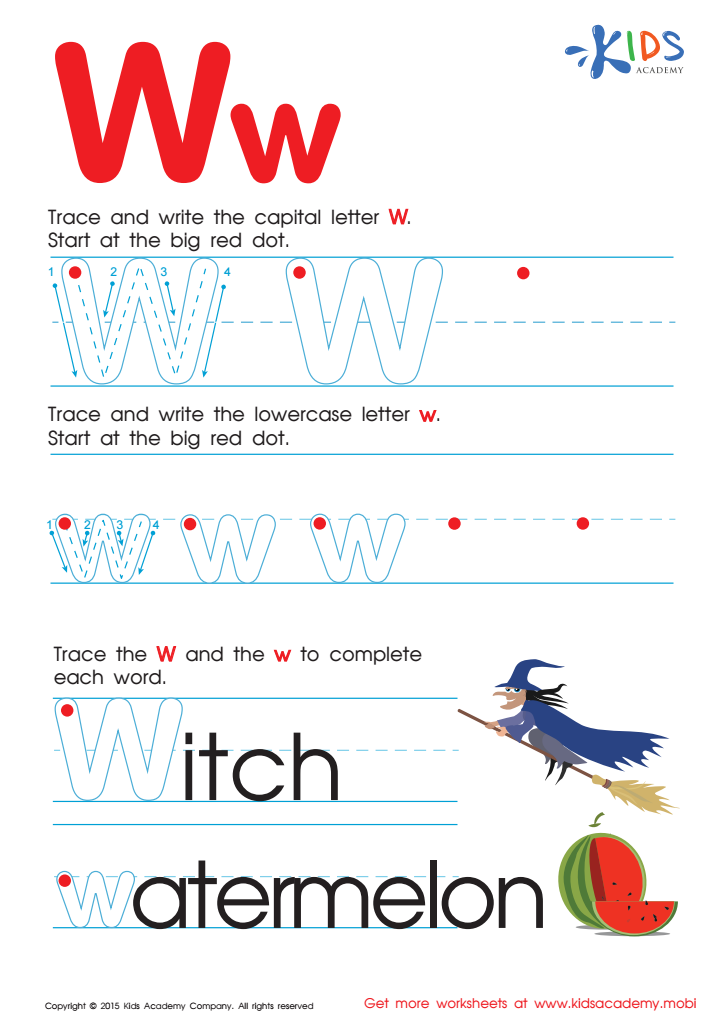
Trace and write the capital and lowercase letter W with this free letter tracing worksheet by Kids Academy. Complete the words "Witch" (capital) and "watermelon" (lowercase). Check out our other kindergarten alphabet worksheets!
Letter W Tracing Page
Worksheet
Letter L Tracing Page
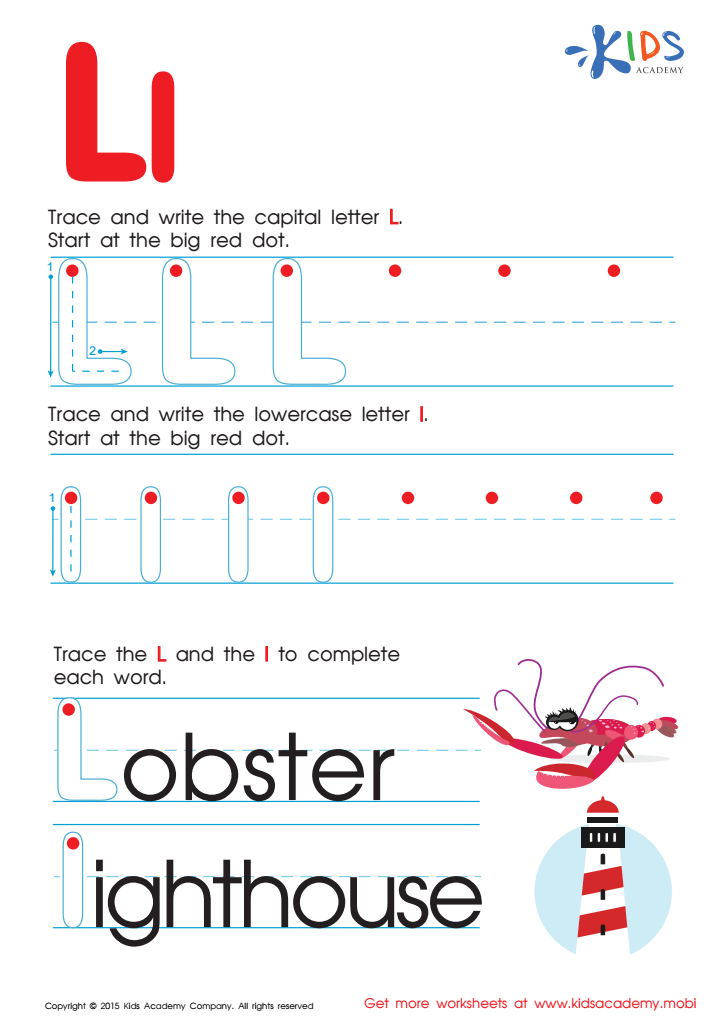
Trace uppercase and lowercase letters to practice writing. Pay attention to the lowercase letters, like the "L", that are not as tall as an uppercase "I" or as short as a lowercase "i". Words like "lobster" and "lighthouse" are waiting to be completed. Enjoy!
Letter L Tracing Page
Worksheet
Letter E Tracing Page
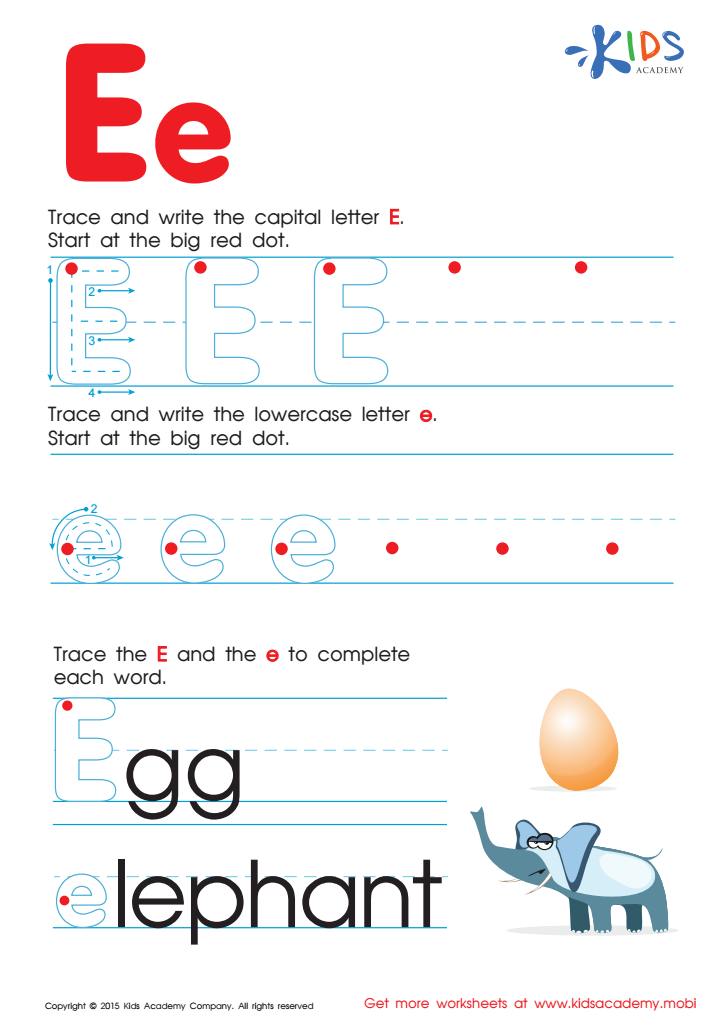
Trace and write the uppercase and lowercase "E" starting at the big red dot. Complete words to perfect letter writing. Egg and Elephant must be written carefully. More alphabet worksheets for kindergarten are available for download to spend more time with your children learning.
Letter E Tracing Page
Worksheet
Letter Q Coloring Sheet
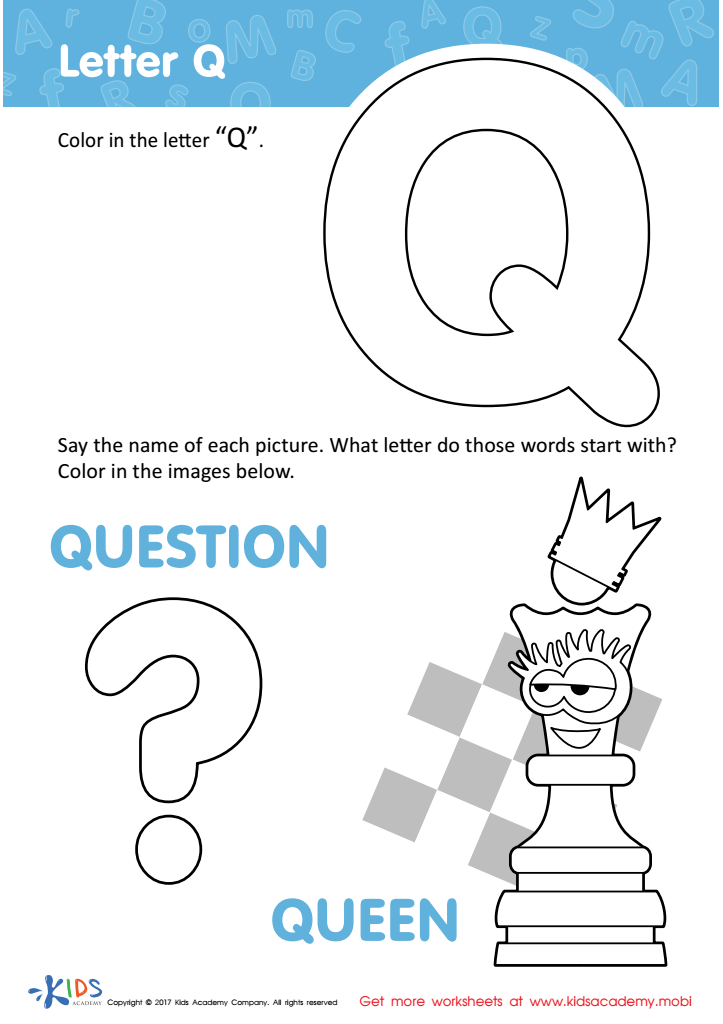
Kids need practice with letters not seen often. Give your child a boost with this letter "Q" coloring page! Have them color in the queen and question mark, while learning the sound "Q" makes. Fun and educational!
Download (PDF)
 Assign to My Students
Assign to My Students
Letter Q Coloring Sheet
Worksheet
Letter K Tracing Page
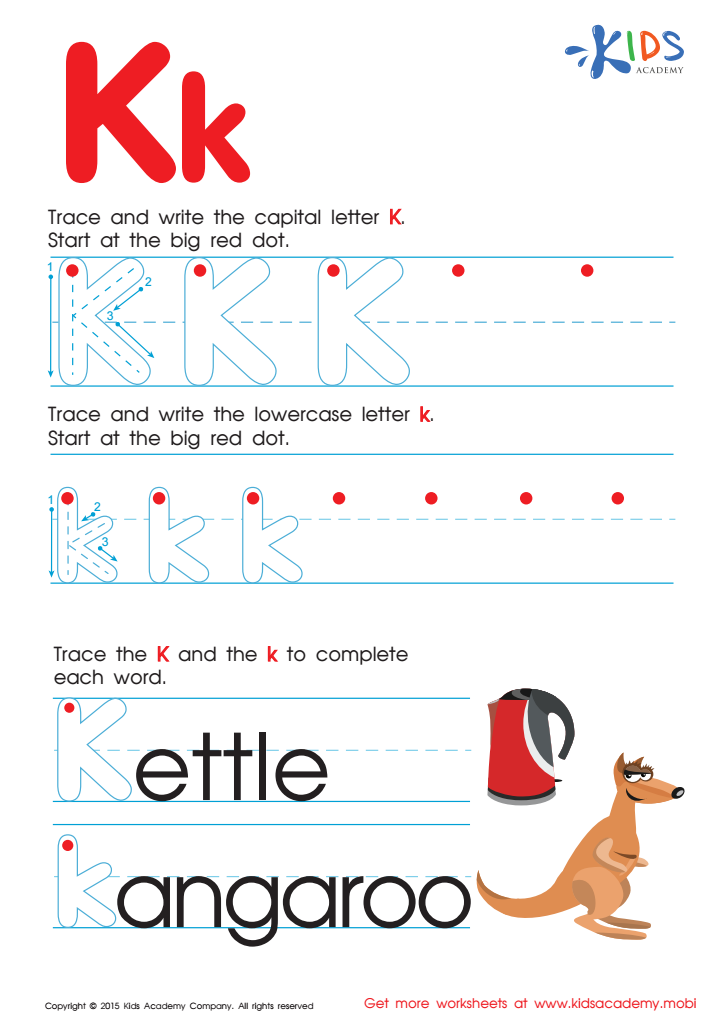
Trace and write the letter K; start at the big red dot. Use it to complete words like "Kettle" and "Kangaroo". Visit Kids Academy for more free alphabet worksheets for kindergarten.
Letter K Tracing Page
Worksheet
Letter F Tracing Page
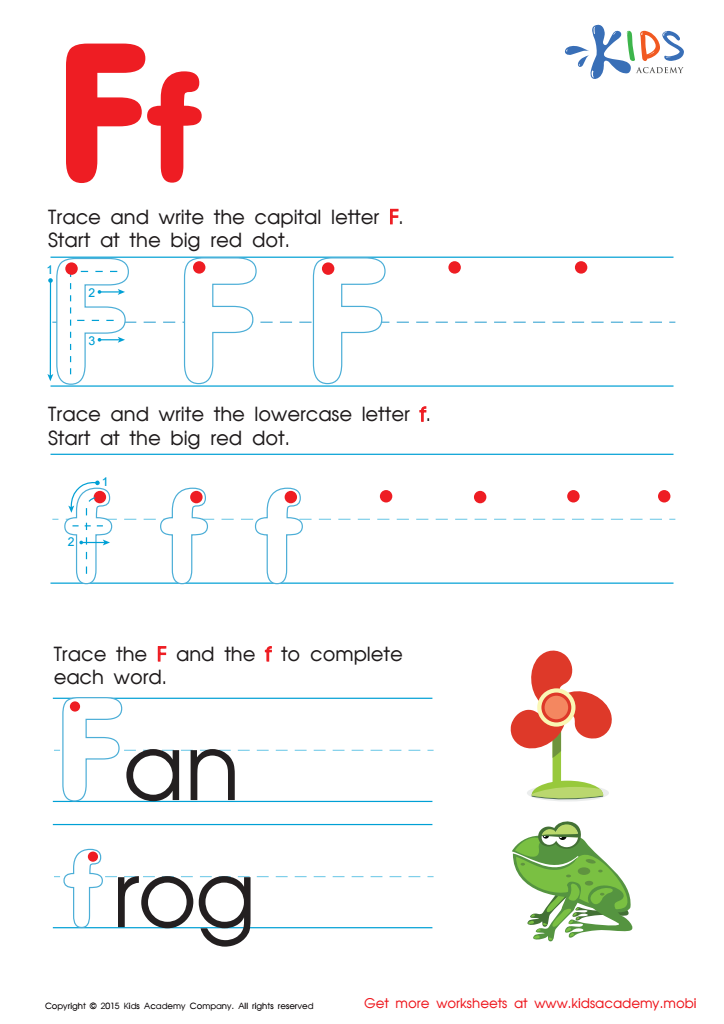
Trace "F" with your pencil! Start at the red dot and draw lines — it's fun! Check it out — it looks great! Keep practicing to make it even better. Then, try completing words. Help out the broken fan and funny frog! Get free alphabet worksheets and activities for your kids. Come see our new tracing pages!
Letter F Tracing Page
Worksheet
Letter T Tracing Page
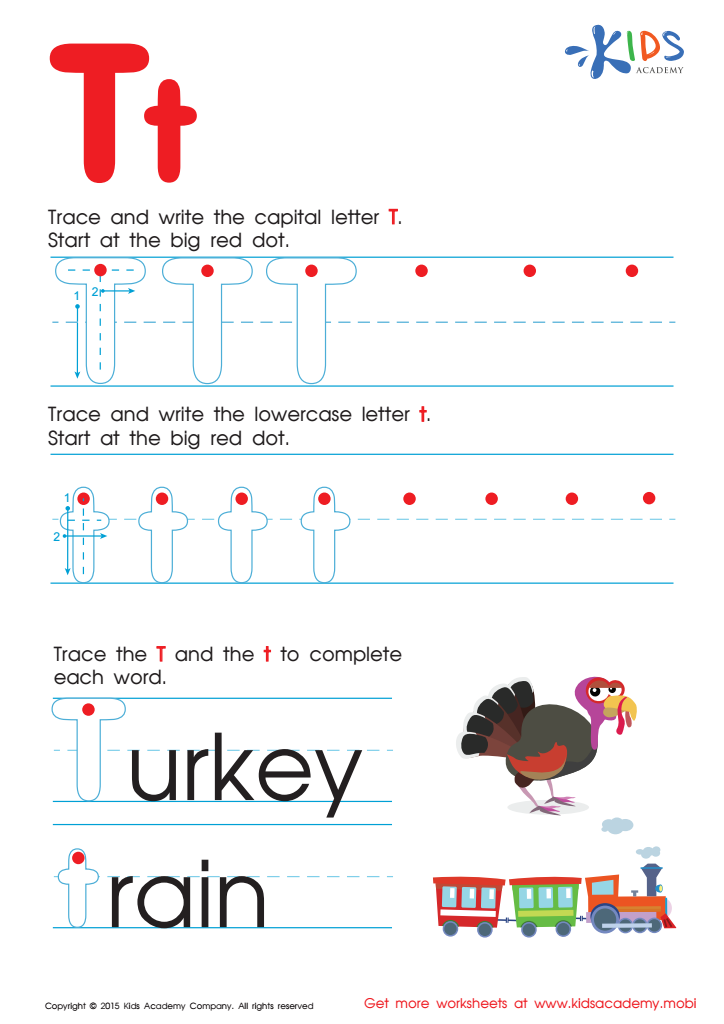
Trace letters, complete words, draw pictures and see your kids having fun!
Kids Academy offers alphabet tracing worksheets to learn to write letters. Start with the big red dot, trace the letter, then write it. Practice uppercase and lowercase. Have fun completing words with a Turkey or a rain-train and draw pictures. Get more printable worksheets to make learning enjoyable.
Letter T Tracing Page
Worksheet
Join Kids Academy for Free
Who is primarily going to use this learning content?








Handwriting skills, especially learning ABC letters, play a crucial role in the development of 6-year-olds. At this age, children are starting to build academic foundations that are vital for their future learning. For many young learners, the physical act of writing helps to reinforce their understanding of letters and sounds, which supports reading skills. When children practice forming letters, they are simultaneously developing fine motor skills, which are essential for tasks like buttoning clothes, tying shoes, and even using utensils correctly.
Moreover, good handwriting skills contribute to a child’s cognitive abilities by improving memory and recall capabilities. Children learn to process visual information more effectively when they form letters by hand, rather than just recognizing them on screen. This act of writing stimulates different areas of the brain, promoting better biological growth.
Beyond the developmental benefits, mastering handwriting boosts self-esteem and confidence. As children become more proficient in writing letters, they feel a greater sense of accomplishment, which energizes them to take on new challenges in school. Teachers and parents who prioritize handwriting skills are setting children up for academic success, supporting fine motor development, and fostering a lifelong love of learning. Essentially, cultivating these skills will create a supportive bridge to more advanced literacy tasks.







