
Alphabet familiarity Letter Recognition Worksheets for 6-Year-Olds
7 filtered results
Difficulty Level
Grade
Age
-
From - To
Subject
Activity
Standards
Enhance your child's reading journey with our "Alphabet Familiarity Letter Recognition Worksheets for 6-Year-Olds." Designed to boost alphabet knowledge and improve letter recognition, these fun, engaging worksheets guide young learners through various activities. Children can practice identifying, tracing, and writing both uppercase and lowercase letters, developing essential literacy skills. Vibrant illustrations and playful exercises keep kids motivated and attentive. With consistent practice, these worksheets help solidify foundational language abilities, setting the stage for future reading success. Perfect for homeschooling or supplementary practice, they're an invaluable resource for any early learner striving to master the alphabet.
Favorites
With answer key
Interactive
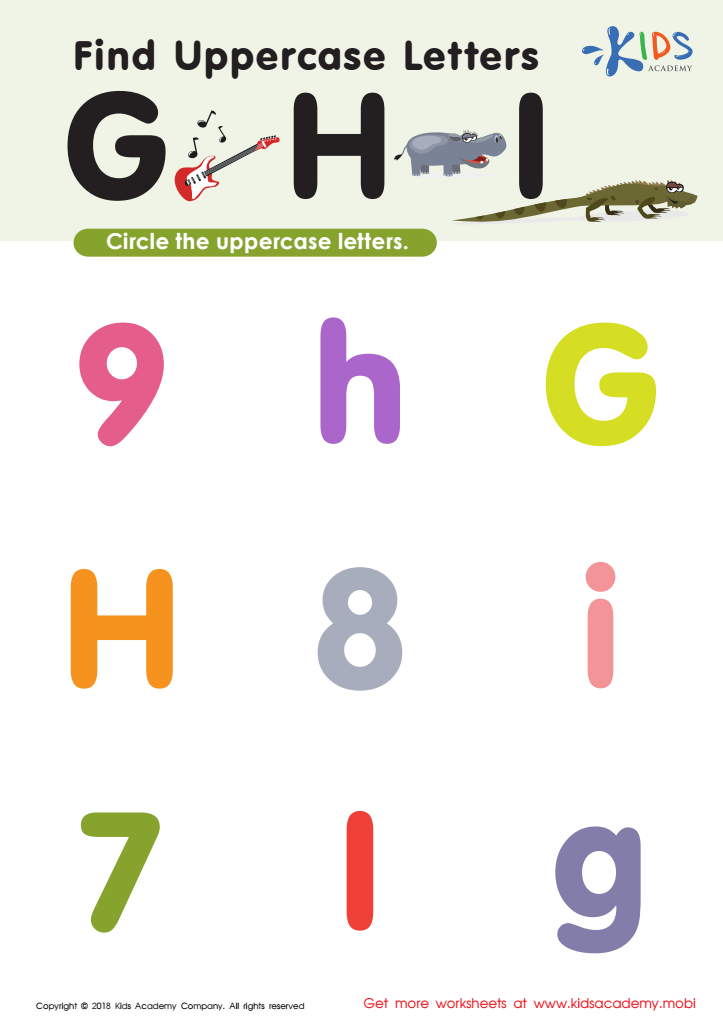
Find Uppercase Letters G, H, and I Worksheet
Find G, H, and I in uppercase with this downloadable worksheet! Numbers are included to challenge your kindergartener's letter recognition skills. Plus, practice G, H, and I sounds using the cute graphics. Perfect for learning letter case recognition!
 Assign to My Students
Find Uppercase Letters G, H, and I Worksheet
Worksheet
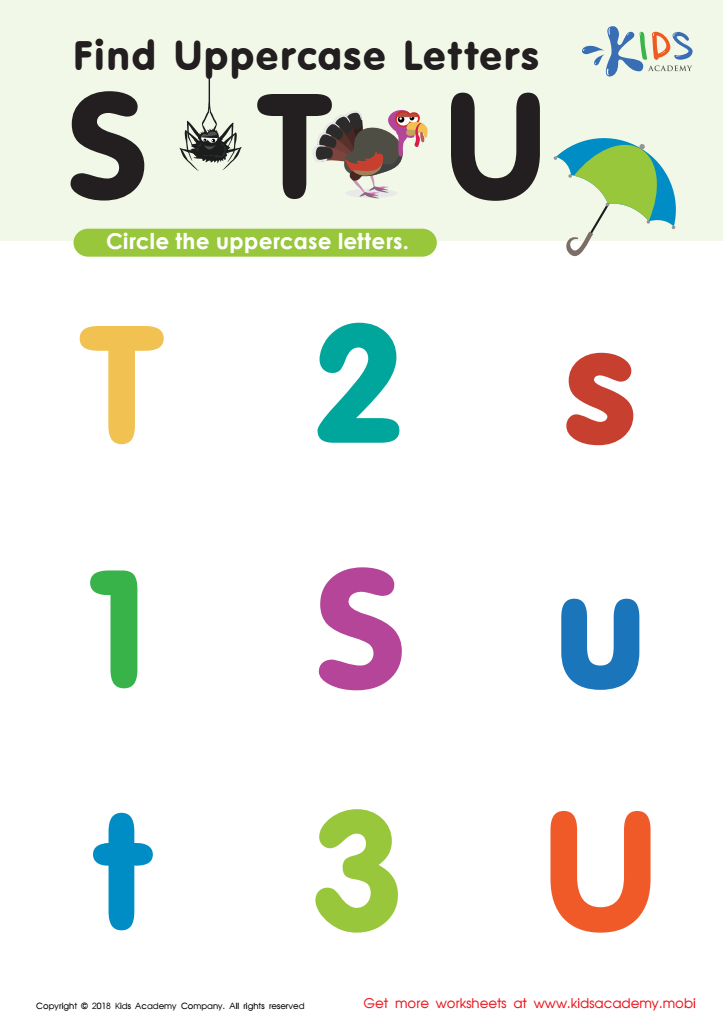
Find Uppercase Letters Worksheet
What level is your kid at now? Can they tell the difference between small and uppercase letters? Ask them to name words beginning with S, T and U, then help them find and circle the uppercase letters S, T and U in a mix of small letters, numbers and uppercase letters.
Find Uppercase Letters Worksheet
Worksheet
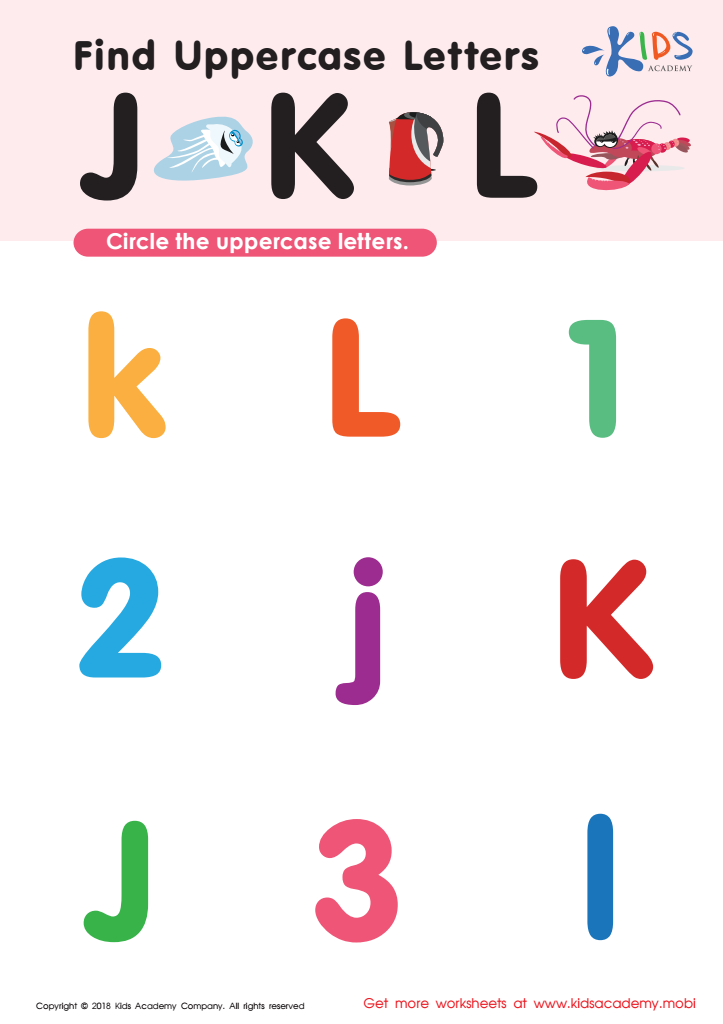
Find Uppercase Letters J, K, and L Worksheet
Search for the uppercase letters J, K, and L in this fun worksheet! Help your child identify the starting sound of each picture, then look for the letters. Keep an eye out for numbers that look like letters. Swim with the jellyfish and solve this delightful puzzle!
Find Uppercase Letters J, K, and L Worksheet
Worksheet
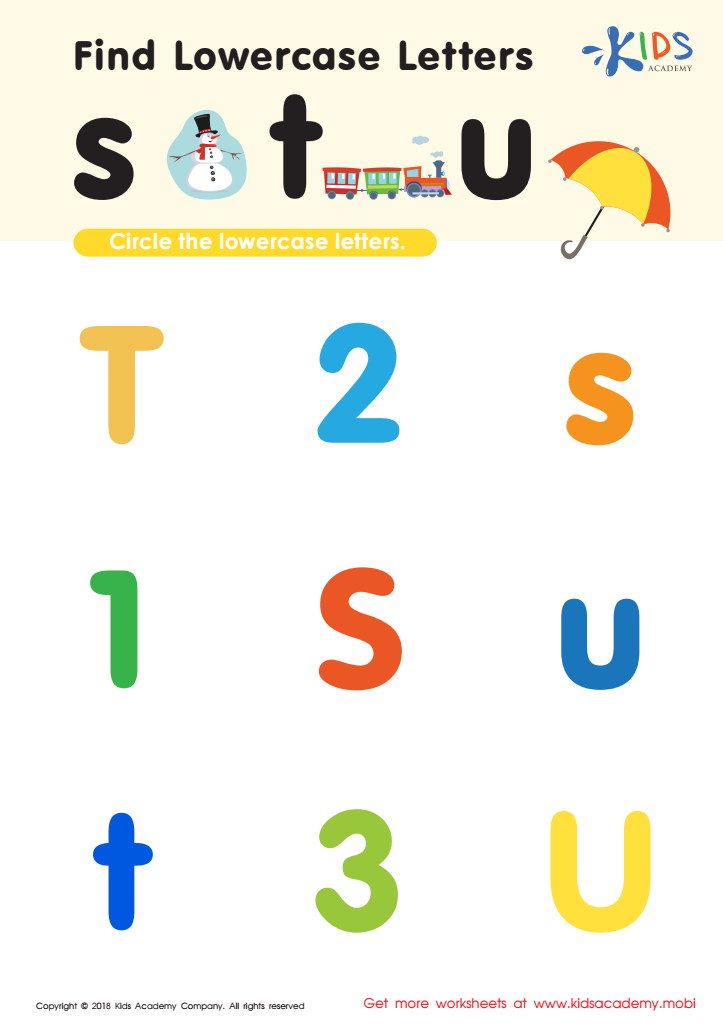
Find lowercase Letters s t u Worksheet
Puzzles are great for boosting your child's thinking skills. Can they identify lowercase letters s, t and u? This free printout contains the letters mixed in with uppercase letters and numbers, all presented in a fun, colorful format - sure to keep them entertained as they learn!
Find lowercase Letters s t u Worksheet
Worksheet

Find Uppercase Letters A, B, and C Worksheet
Check out this PDF worksheet and spot all the capital letters! Arranged as a puzzle, this exercise will test little learners to read and recognize uppercase letters and tell the difference between letters and numbers. To help them, use the pictures on top of the page to practice the sounds A, B and C make! 80 words.
Find Uppercase Letters A, B, and C Worksheet
Worksheet
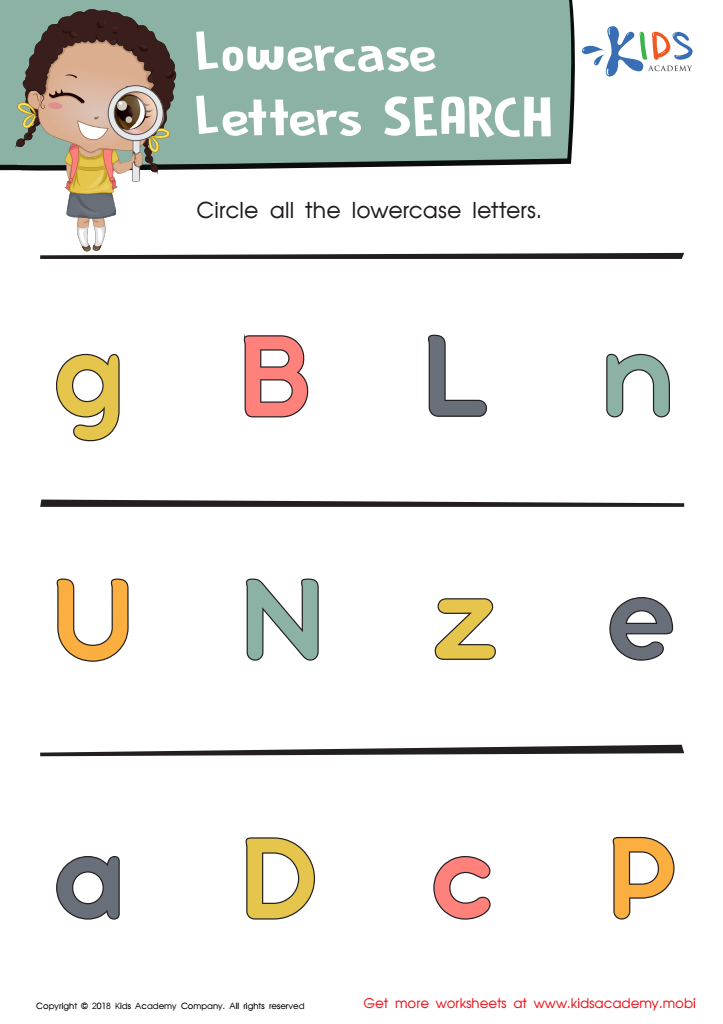
Lowercase Letters Search: Assessment Worksheet
Circle all the lowercase letters in this worksheet. Identify them among a mix of uppercase and lowercase letters. Your child will have fun with this exercise thanks to its bright primary colors. Enjoyment and learning go hand-in-hand!
Lowercase Letters Search: Assessment Worksheet
Worksheet
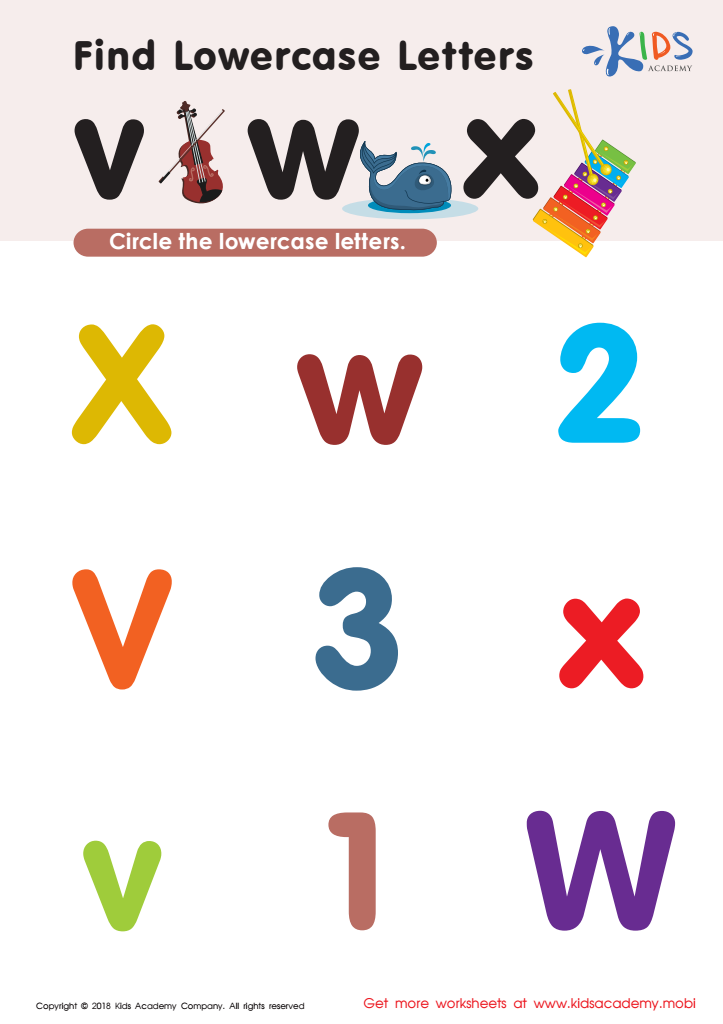
Find Lowercase Letters v w x Worksheet
If your child doesn't know the alphabet, get them this helpful worksheet. It's an easy exercise to build their understanding of the alphabet and lowercase letters. Find the letters v, w, and x among other uppercase letters and numbers in the downloadable PDF.
Find Lowercase Letters v w x Worksheet
Worksheet
Join Kids Academy for Free
Who is primarily going to use this learning content?








Alphabet familiarity and letter recognition are foundational skills crucial for a child's early literacy development. At the age of six, children are at a prime stage for this learning, which sets the groundwork for reading and writing abilities. Parents and teachers should care about these skills because they serve as the building blocks for more advanced literacy competencies.
Firstly, identifying letters and their corresponding sounds (phonemic awareness) enables children to decode words, establish vocabulary, and comprehend texts more effectively. Children who struggle with letter recognition can face challenges with reading fluency and comprehension, potentially leading to difficulties in other academic areas.
Secondly, fluency in letter recognition is linked to better spelling and writing skills. When children can quickly identify letters, they can more easily learn word patterns, recall word structure, and understand writing in context. This fluency fosters confidence, encouraging a positive attitude towards learning and schoolwork.
Furthermore, early literacy skills are often predictors of future academic success. Familiarity with the alphabet gives children a head start, making the transition into more complex reading and writing tasks smoother. Since literacy is integral to all subjects, well-developed early reading skills can positively impact overall educational outcomes.
Thus, parents and teachers should prioritize alphabet familiarity to support a child's holistic cognitive development, setting them up for long-term academic and personal success.







