Hand-eye Coordination Long Vowels Worksheets for 6-Year-Olds
3 filtered results
Difficulty Level
Grade
Age
-
From - To
Subject
Activity
Standards
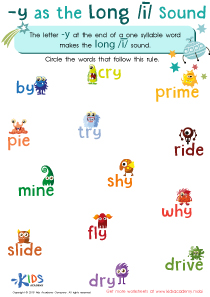
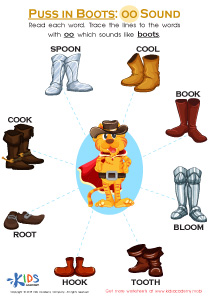
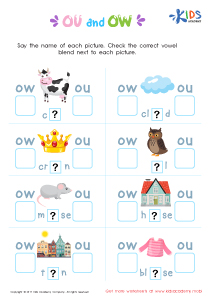
Enhance your child's reading skills with our Hand-eye Coordination Long Vowels Worksheets designed for 6-year-olds! Our engaging and educational worksheets combine fun activities with crucial learning objectives. These printable worksheets are crafted to improve your child's recognition and usage of long vowels while simultaneously developing their hand-eye coordination. Perfect for young learners, our exercises include tracing, matching, and colorful illustrations that keep kids entertained while reinforcing key literacy skills. Ideal for classroom use or at-home practice, these worksheets support your child's academic growth in a playful and effective way. Download now and let the learning begin!
Favorites
With answer key
Interactive
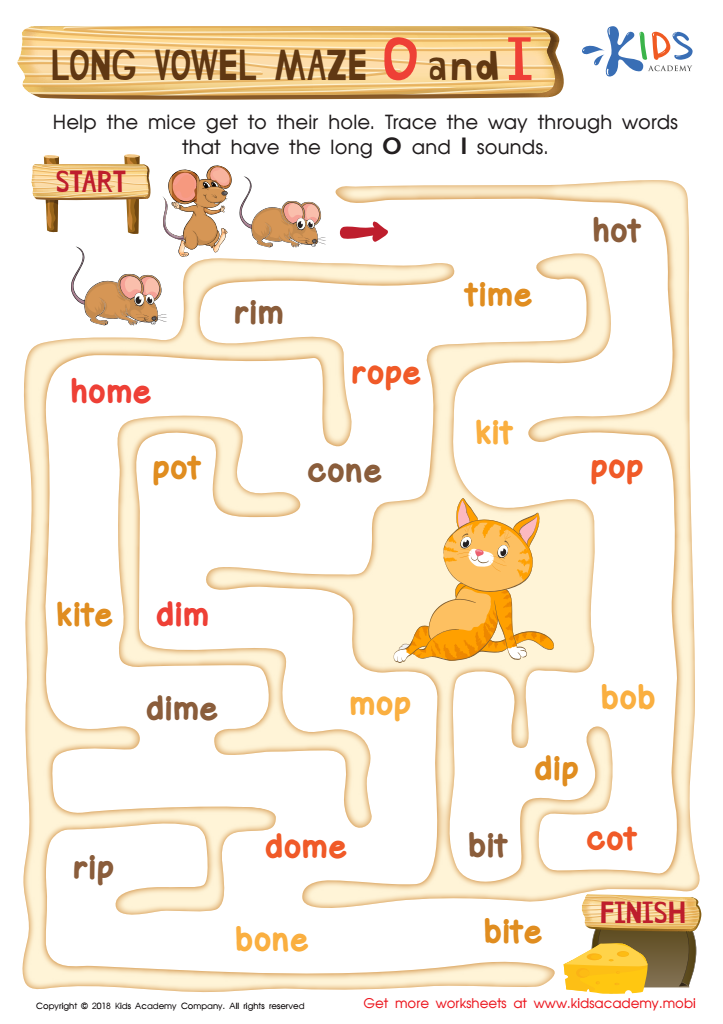
Long Vowel Maze /o/ and /i/ Worksheet
Help your new readers have fun and build their sight word vocabulary! Guide the mice to their prize cheese by having them trace the route on the worksheet, using words with the long o and long i sounds. But watch out for the kitty!
Long Vowel Maze /o/ and /i/ Worksheet
Worksheet
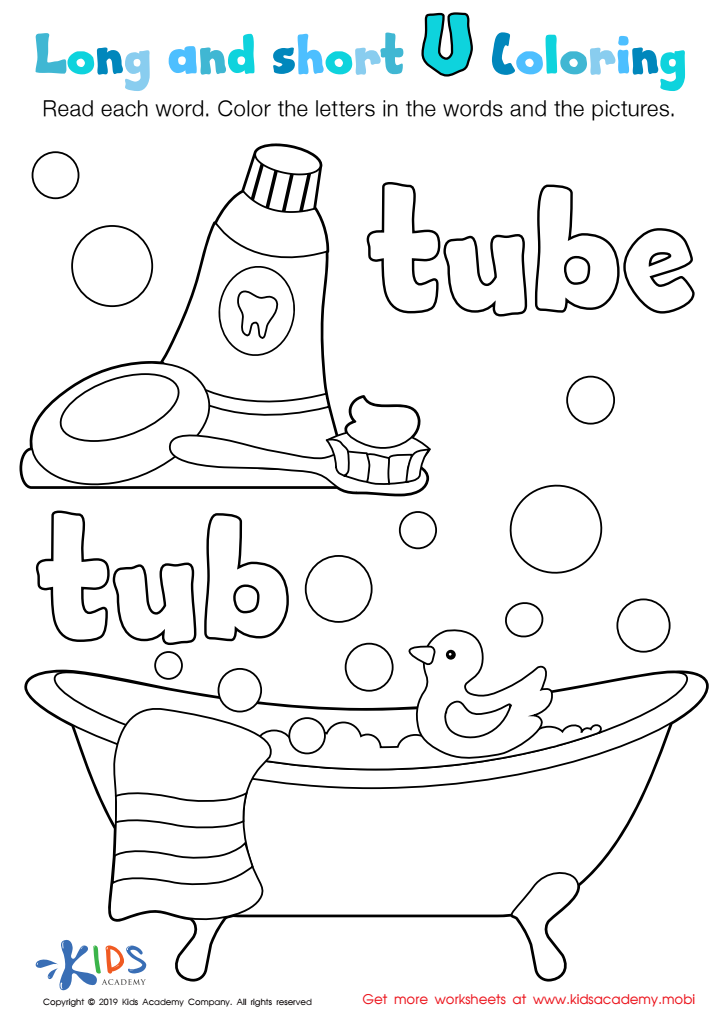
Long and Short U Worksheet
Revised: Spice up your lesson on long and short vowels with this fun printout! Kids read the words "tube" and "tub," then reinforce the sound by coloring in the words and pictures. It's a great way to make phonics class enjoyable!
Download (PDF)
 Assign to My Students
Assign to My Students
Long and Short U Worksheet
Worksheet

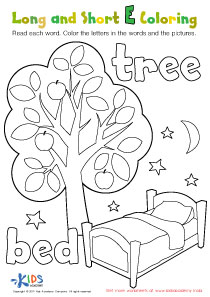
Long and Short E Worksheet
This fun printout makes learning phonics enjoyable for Grade 3 students. Get them to read the words “tree” and “bed” to recognize the different sounds of the letter “E”. After hearing the words they can color the words and the pictures to understand differences between long and short vowels.
Download (PDF)
Assign to My Students
Assign to My Students
Long and Short E Worksheet
Worksheet
Join Kids Academy for Free
Who is primarily going to use this learning content?



Hand-eye coordination and understanding long vowels are crucial skills for 6-year-olds, and parents or teachers have a significant role in fostering these abilities.
Hand-eye coordination involves the harmonious interaction between eyesight and hand movements, essential for many daily activities. For children, developing this skill enhances tasks like writing, drawing, and playing sports, which in turn builds their fine motor skills and overall physical development. Moreover, effective hand-eye coordination improves a child’s ability to participate in classroom activities with confidence, thereby positively influencing their academic performance.
Long vowels, on the other hand, form a fundamental aspect of language development. Understanding long vowels helps children with reading fluency and pronunciation, vital for effective communication. Mastery of long vowels fosters comprehension skills, as it aids in recognizing patterns within words, helping children decode and construct meaning more accurately while reading. Furthermore, it builds a foundation for more advanced literacy skills, including vocabulary expansion and competent spelling, essential for future academic success.
Therefore, focusing on hand-eye coordination and long vowel recognition not only supports immediate educational engagement but also lays the groundwork for continued intellectual and physical development, making it critical for parents and teachers to nurture these skills in young learners.