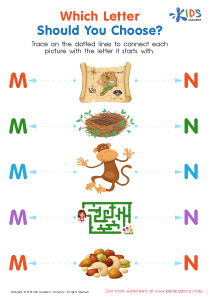
Lowercase identification Lowercase/Small Letters Worksheets for 6-Year-Olds
5 filtered results
-
From - To
Explore our engaging Lowercase Identification Worksheets designed for 6-year-olds! These fun and interactive printables provide young learners with the opportunity to practice identifying and recognizing lowercase letters in an enjoyable way. Each worksheet features colorful illustrations and a variety of activities, such as tracing, matching, and coloring, making learning both effective and entertaining. Perfect for homeschooling or classroom use, our resources are aligned with early literacy skills, helping your child build a strong foundation in reading and writing. Download and print these worksheets today to boost your child's confidence in lowercase letter recognition!
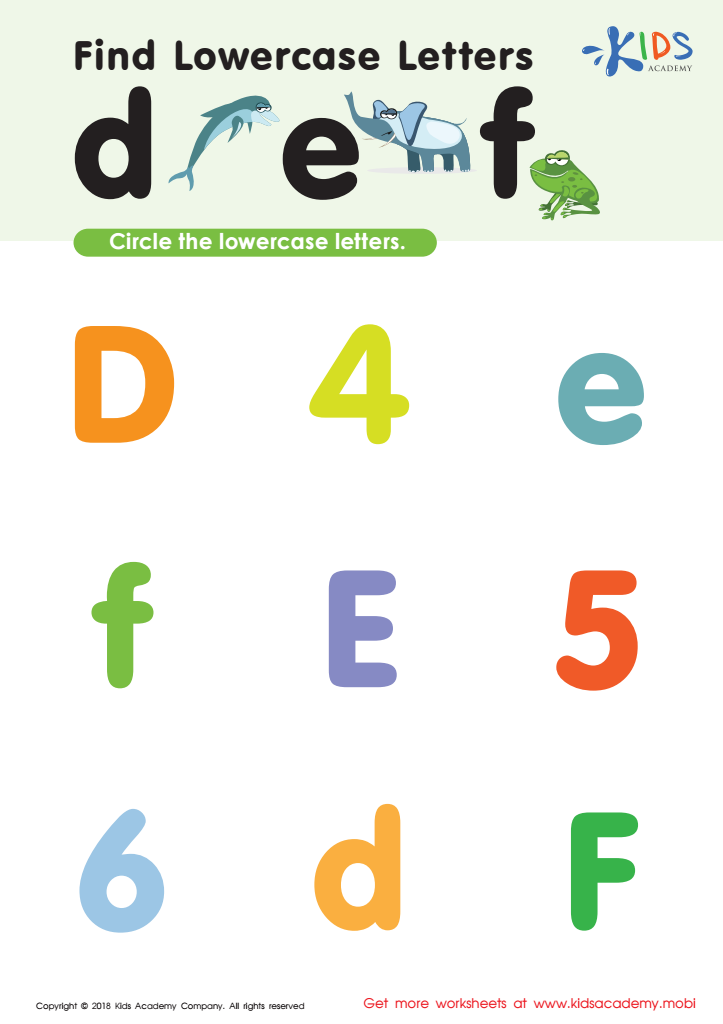
Find Lowercase Letters d e f Worksheet
 Assign to My Students
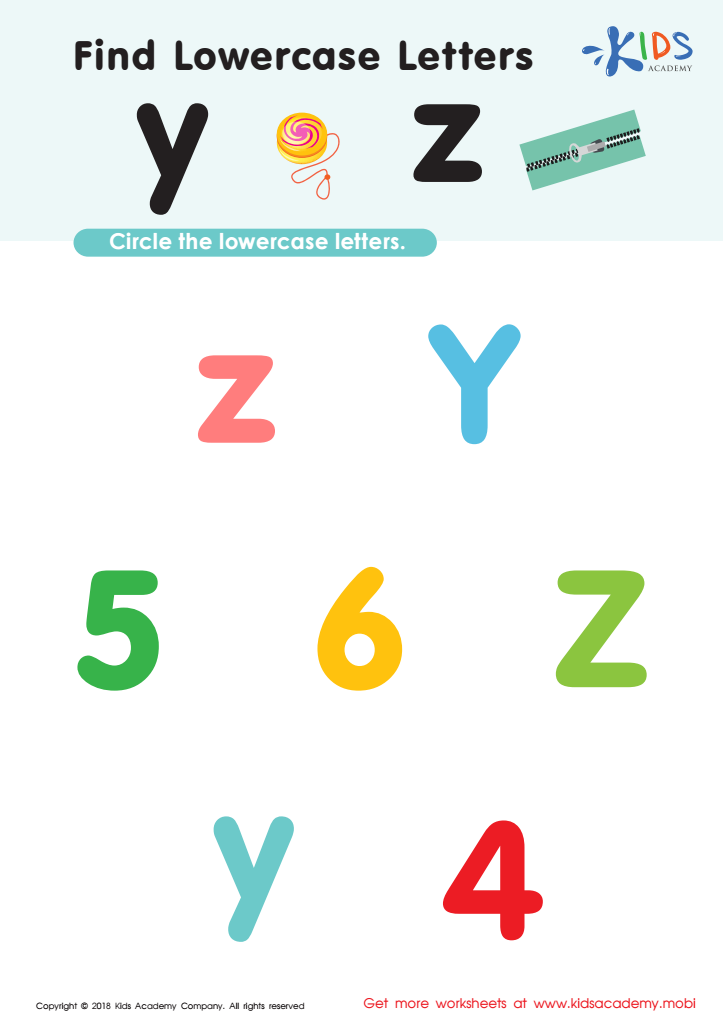
Find Lowercase Letters y z Worksheet
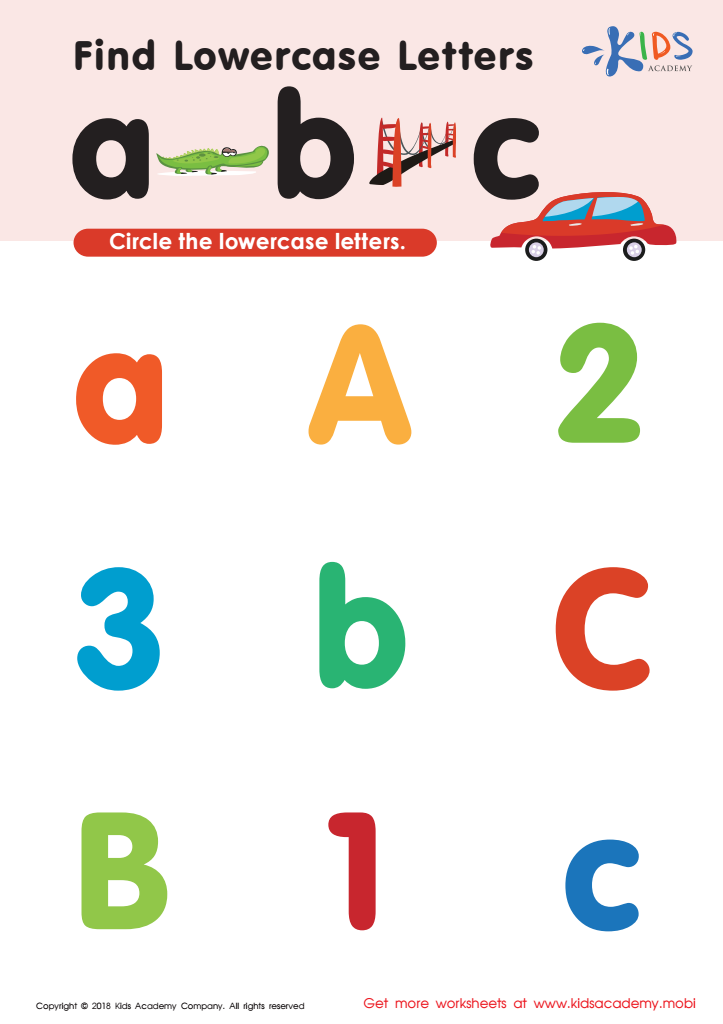
Find lowercase letters a b c Worksheet
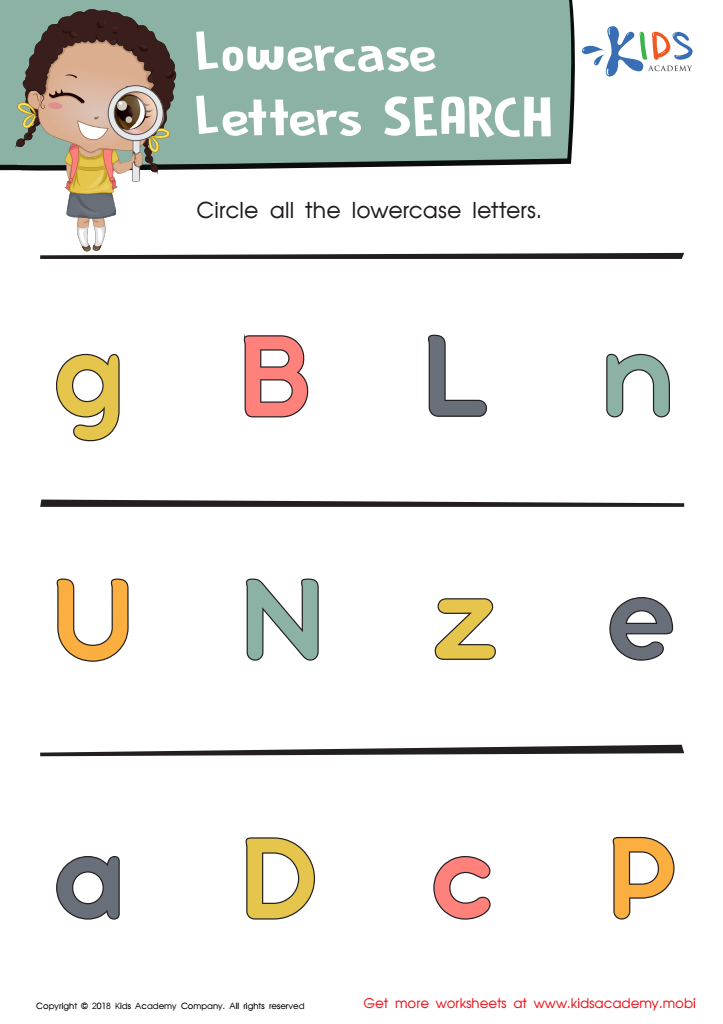
Lowercase Letters Search: Assessment Worksheet
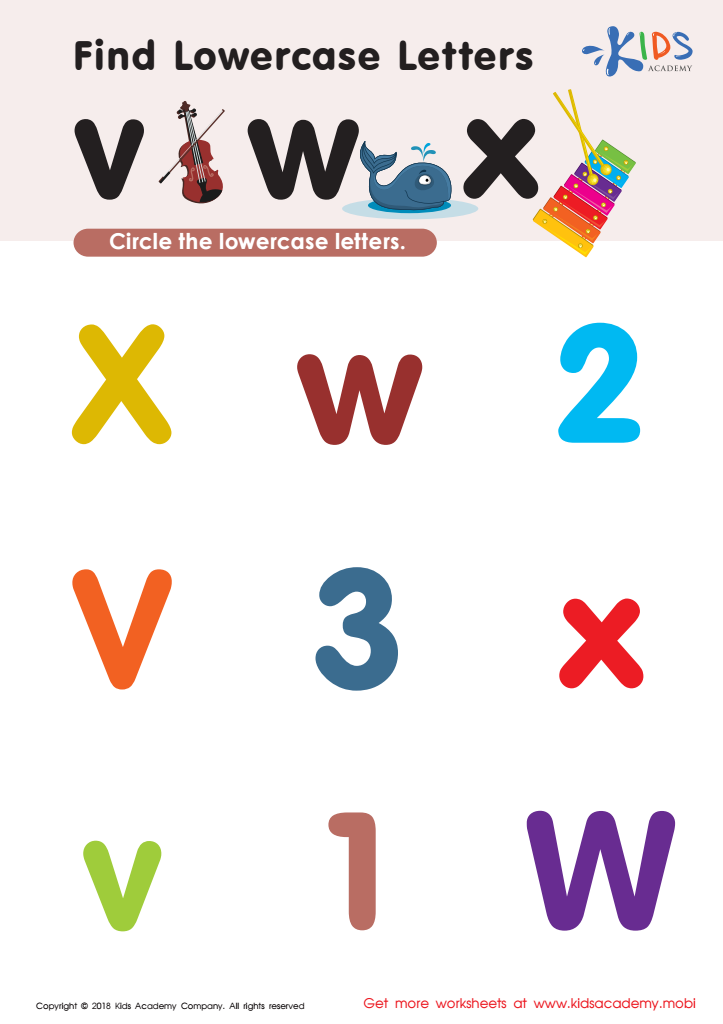
Find Lowercase Letters v w x Worksheet


Lowercase letter identification is a crucial skill for 6-year-olds as it lays the foundation for reading and writing proficiency. At this developmental stage, children are learning to navigate the written word, and understanding lowercase letters forms the backbone of their literacy journey. Recognizing these letters enables them to decode words effectively, enhancing their ability to read simple texts, which is essential for comprehension and communication.
Parents and teachers should prioritize lowercase letter identification because it not only supports academic success but also fosters confidence and a love for learning. When children can identify and use lowercase letters, they can participate more fully in classroom activities, contributing to a sense of belonging and accomplishment. Early mastery of these letters also simplifies writing tasks, allowing young learners to express their thoughts and ideas with ease.
Additionally, awareness of lowercase letters assists in developing phonemic awareness, an important skill for spelling and vocabulary expansion. By fostering proficiency in recognizing lowercase letters, parents and teachers equip children with the tools they need for a successful transition into reading and writing, ultimately nurturing lifelong learning habits. Supporting this skill is not only beneficial academically, but it also enhances a child’s overall development and self-esteem.