
Phonics recognition Phonics Worksheets for 6-Year-Olds
11 filtered results
Difficulty Level
Grade
Age
-
From - To
Subject
Activity
Standards
At Kids Academy, our Phonics Recognition Worksheets are perfectly designed for 6-year-olds, helping them build essential reading skills through fun, engaging activities. These worksheets focus on letter-sound relationships, blending, and segmenting words to create a strong phonics foundation. With colorful illustrations and interactive tasks, children can explore the wonderful world of reading at their own pace, developing confidence and proficiency. Ideal for both classroom and home use, our worksheets support young learners in their early reading journey, making phonics practice enjoyable and effective. Bring learning to life with Kids Academy and give your child the tools they need to succeed!
Favorites
With answer key
Interactive
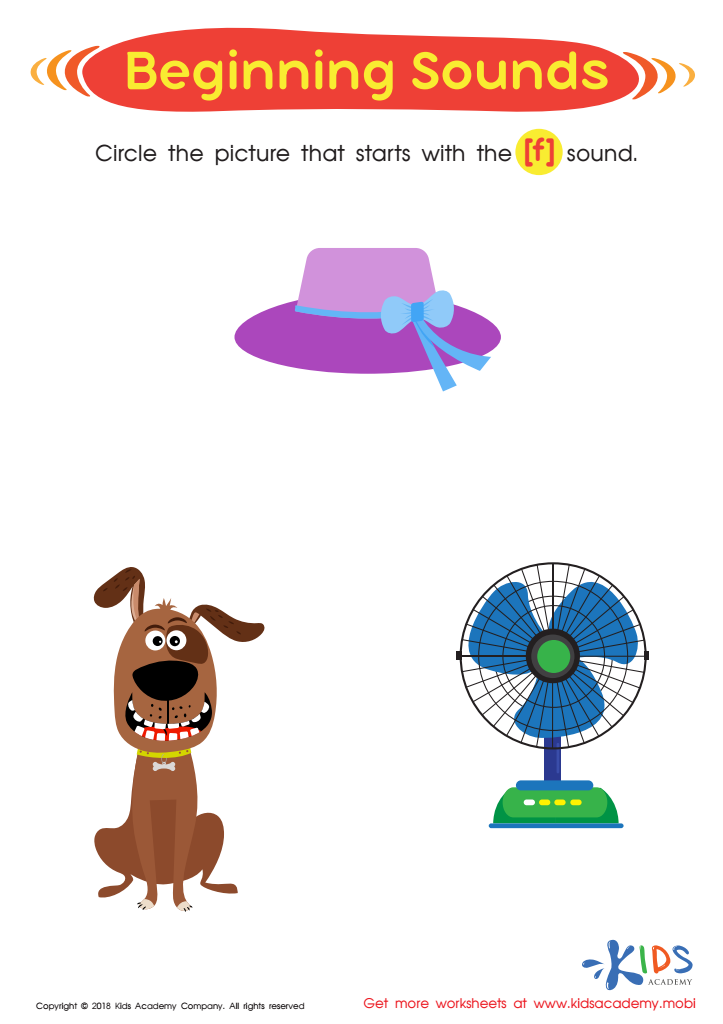
Beginning Sounds Assessment Printable
Test your child's knowledge of the alphabet. Ask them to recite the whole alphabet and the words for each letter. For example: A for apple, B for boy. Identify objects on this worksheet, then ask your child which one starts with the letter "f" and have them circle it.
 Assign to My Students
Beginning Sounds Assessment Printable
Worksheet
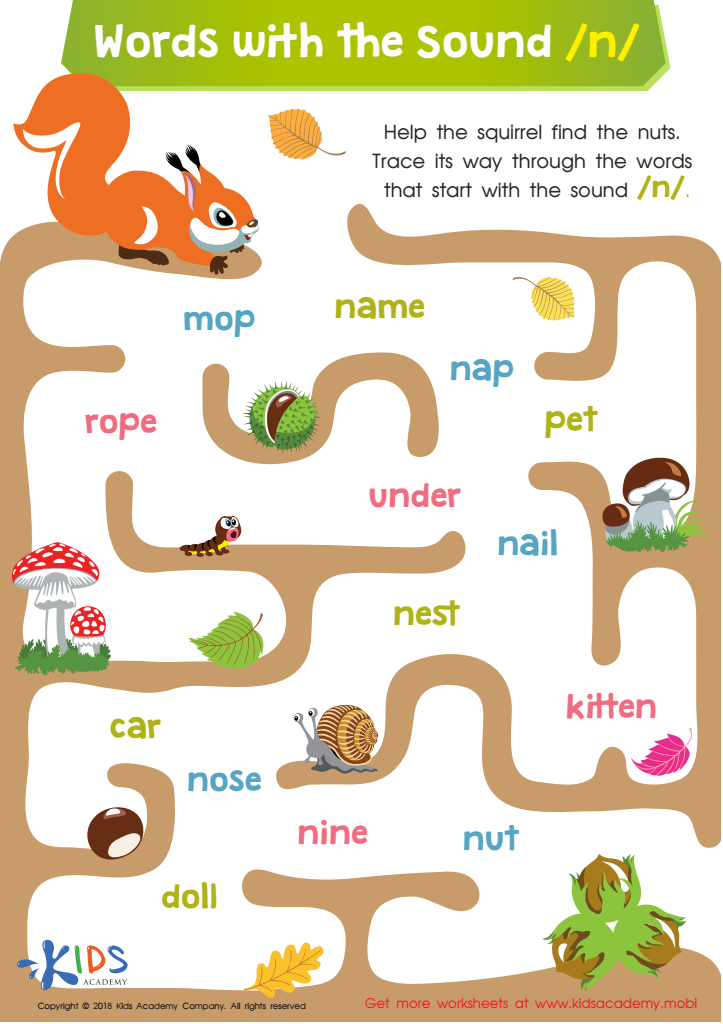
Words with Sound N Reading Worksheet
Young readers will love the colourful pictures and simple sight words on this download worksheet. They can trace their way through the maze as they help the cute squirrel reach his acorns, finding words with the sound "n" as they go. It's a fun way to work on reading skills - they won't even realise they're learning!
Words with Sound N Reading Worksheet
Worksheet
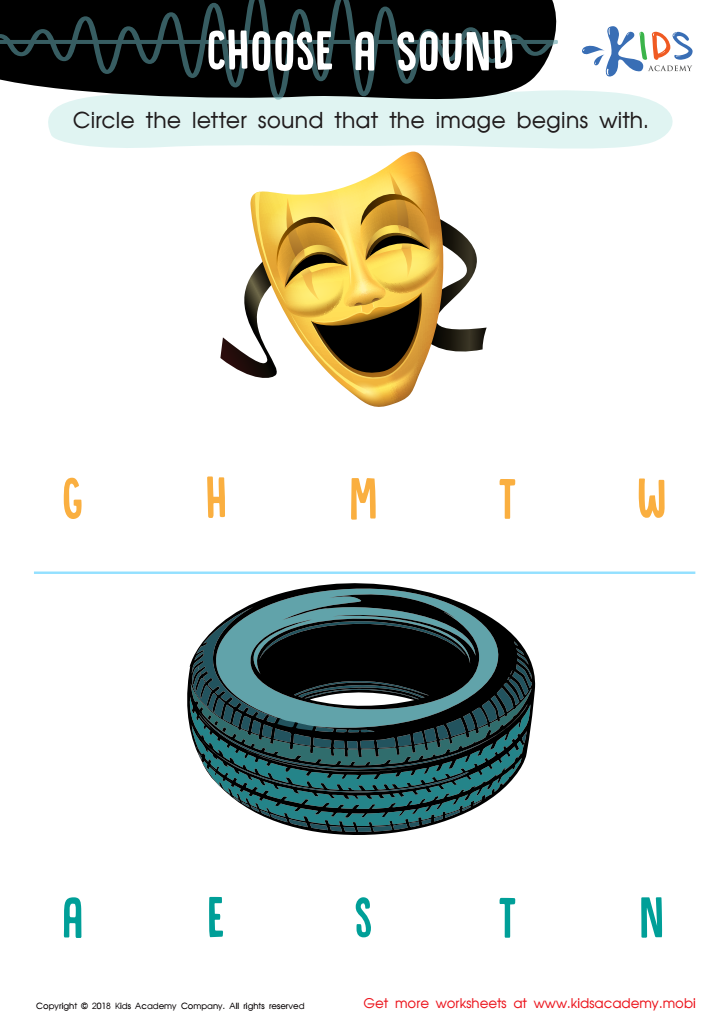
Choose a Sound Worksheet
Help your child hone pre-reading skills with this colorful worksheet! They'll practice tracing letter sounds, develop phoneme awareness, and gain confidence. Plus, it's a fun way to work on their fine motor skills.
Choose a Sound Worksheet
Worksheet
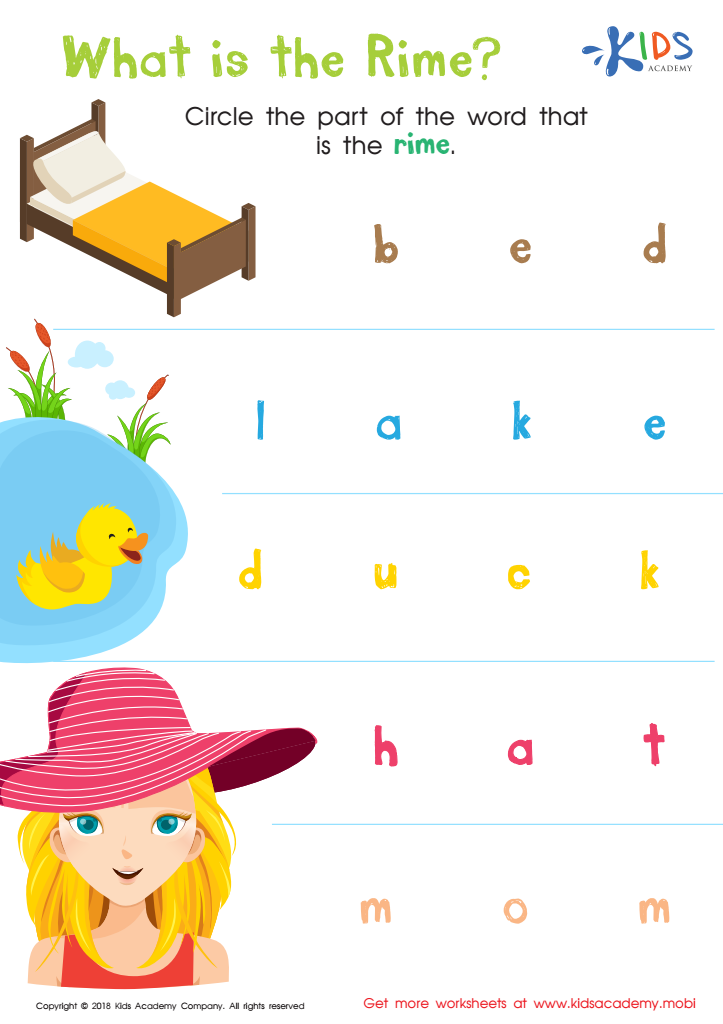
What Is the Rime? Worksheet
Kids will love this PDF worksheet that boosts their reading skills and fine motor skills as they trace the correct rimes for each picture. Knowing onset and rime is key to decoding and fluency, and this worksheet makes it fun! They won't even know they're learning and will be asking for more.
What Is the Rime? Worksheet
Worksheet
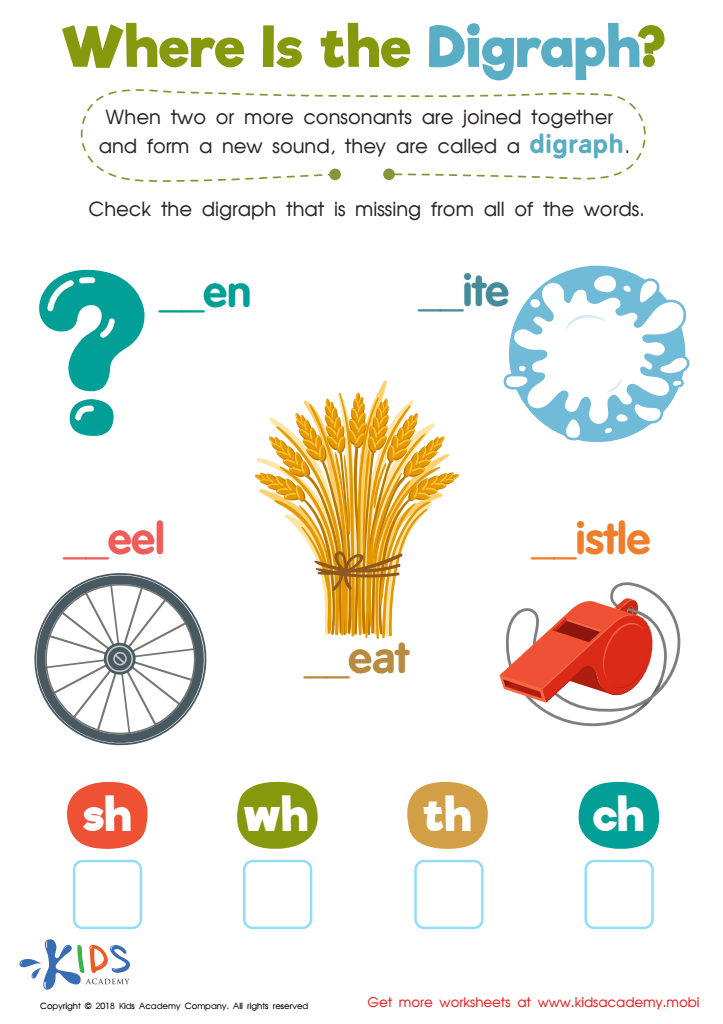
Where Is the Digraph? Worksheet
Teach your child about digraphs - two or more consonants that form one sound, like /wh/, /sh/, and /ch/. Show them words with these sounds and use this worksheet to help. Ask them which digraph is missing from the words and point out the pictures. 80 words.
Where Is the Digraph? Worksheet
Worksheet
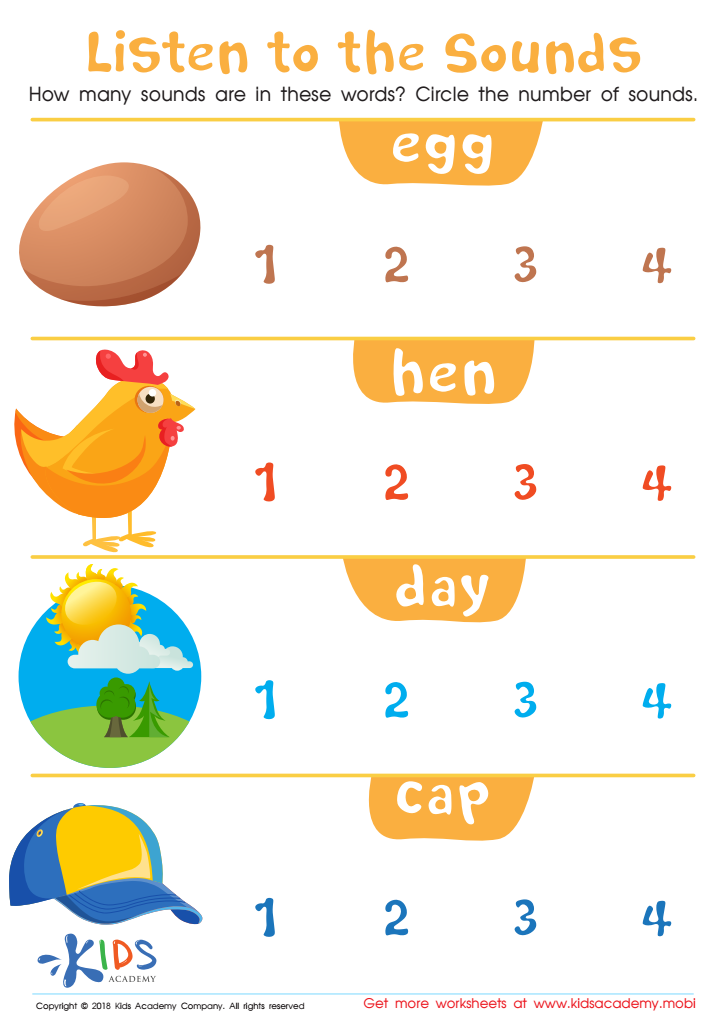
Listen to the Sounds Worksheet
This worksheet builds emerging readers' skills in using sounds for reading and spelling. It helps strengthen auditory processing by having them count the sounds in each word, then trace the corresponding number. Fun and cheerful!
Listen to the Sounds Worksheet
Worksheet
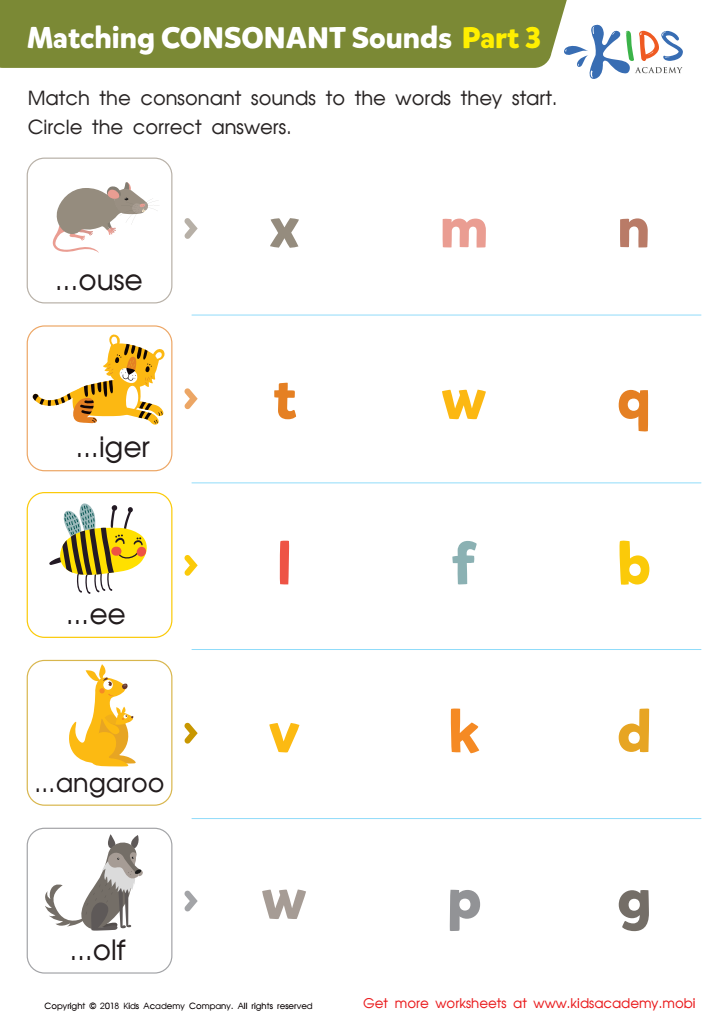
Matching Consonant Sounds: Part 3 Worksheet
Help your early learner match consonant sounds to words with this fun worksheet! Have them name the pictures and try out each letter in the corresponding column. When they hear the sound that matches, circle it. Have them write the letter in the box to complete the word. Work their way down the page until the critters' names all match with consonants!
Matching Consonant Sounds: Part 3 Worksheet
Worksheet
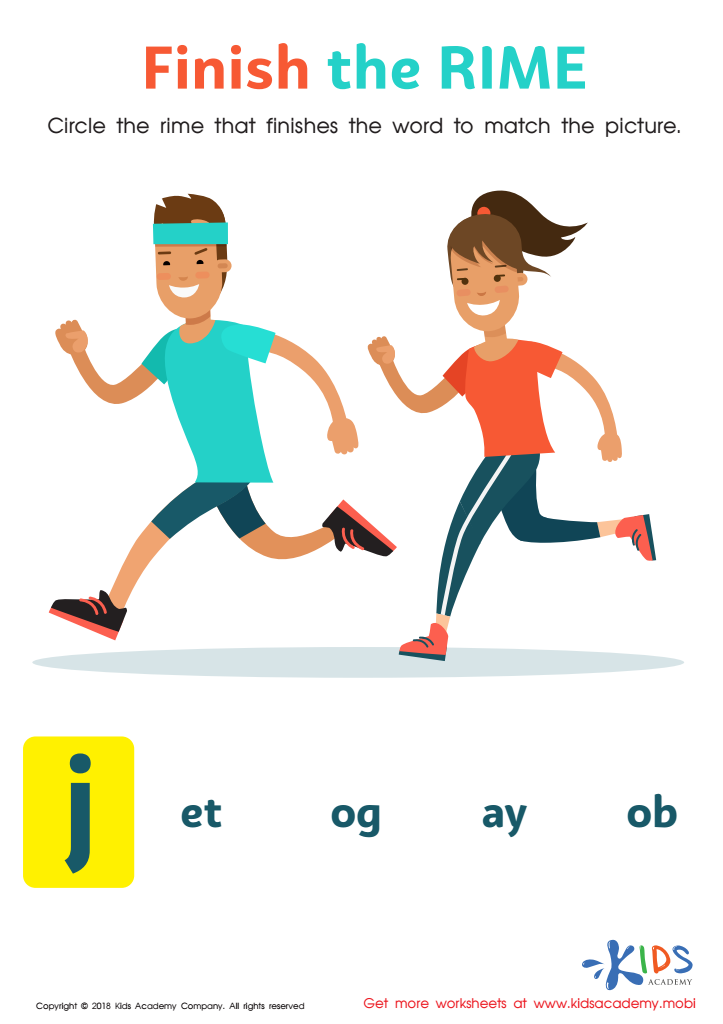
Finish the Rime Worksheet
Rimes help kids learn word families and spelling strategies. This PDF worksheet gives new readers practice with initial consonants, pictures, colors and motor skills. It's fun and cheery, and a great way to boost phonological awareness and rime identification.
Finish the Rime Worksheet
Worksheet
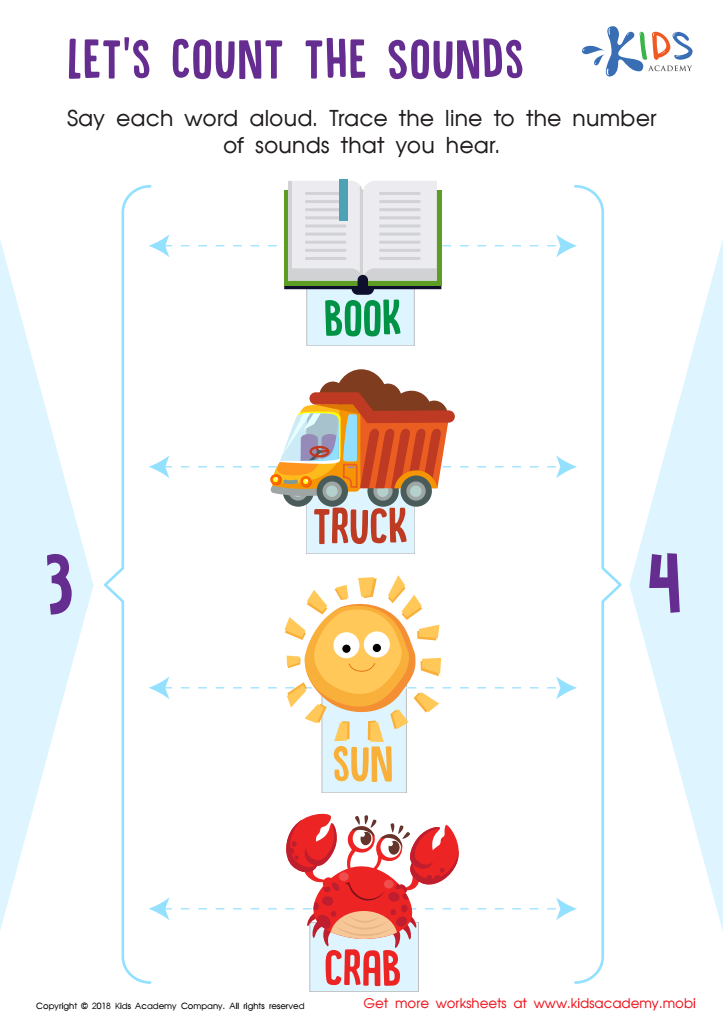
Let's Count the Sounds Worksheet
This bright and cheery traceable worksheet encourages children to practice auditory discrimination and phonological awareness. Using picture clues, they read each word and trace the line that represents the number of sounds heard. This builds decoding skills and helps them become successful readers.
Let's Count the Sounds Worksheet
Worksheet
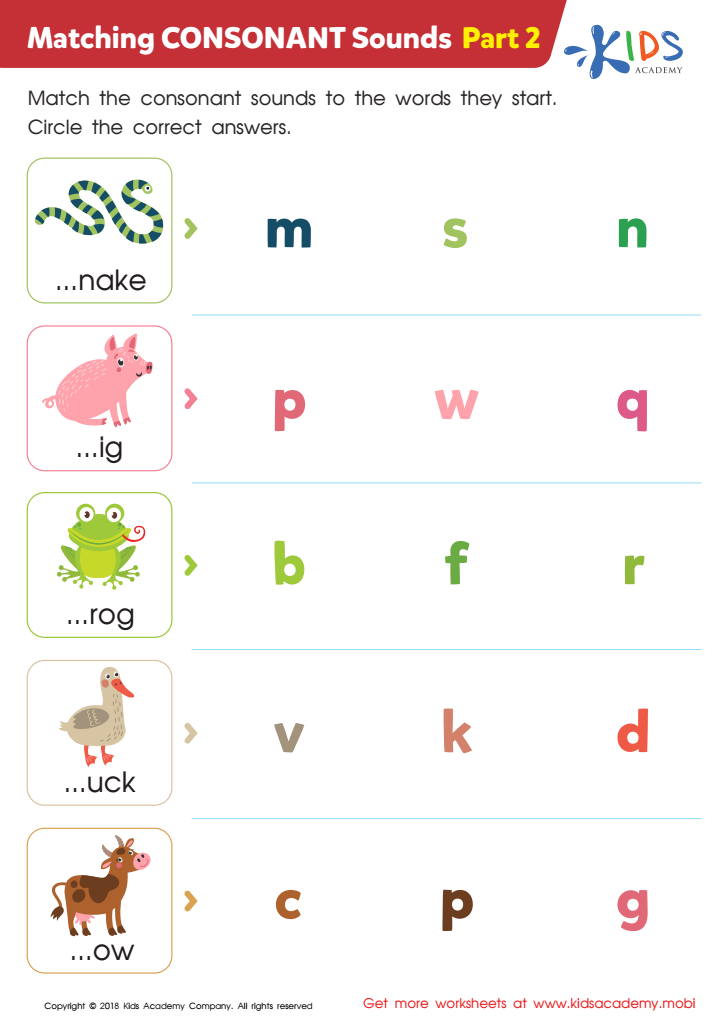
Matching Consonant Sounds: Part 2 Worksheet
Look at the picture, say the word and match the consonant sound with the letter. Coach your child to name the animal and complete the word. For extra challenge, write the missing letter in the box! This PDF worksheet helps kids learn to read words with familiar animal pictures.
Matching Consonant Sounds: Part 2 Worksheet
Worksheet
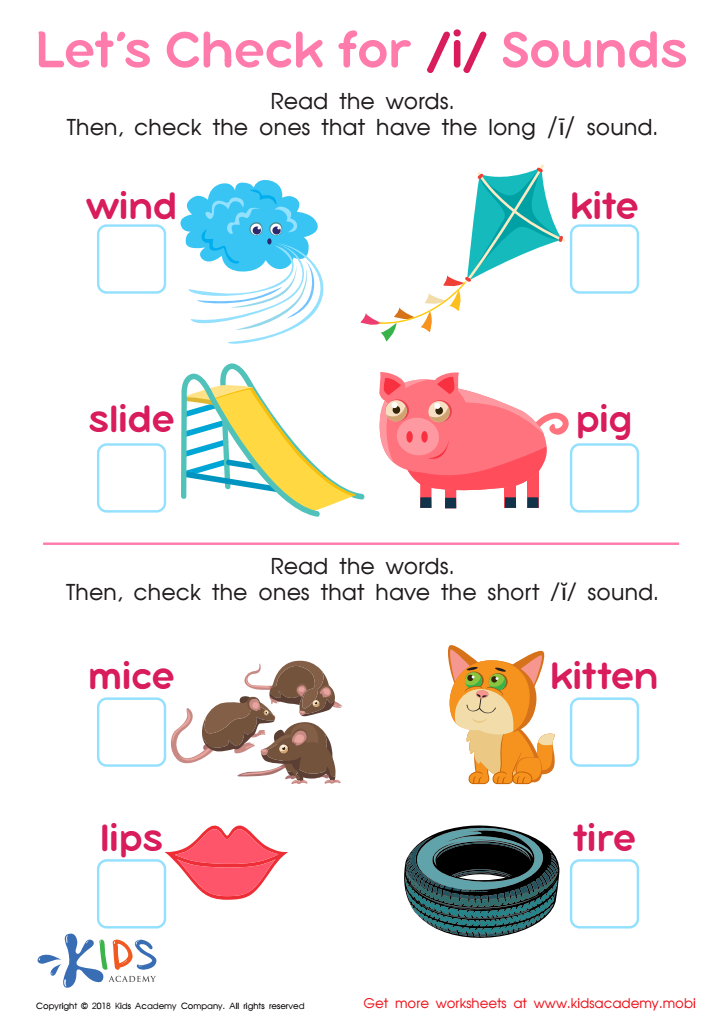
Let's Check for «i» Sounds Worksheet
This fun worksheet with pictures boosts phonics skills - differentiating between long «ī» and short «i» sounds in 1- and 2-syllable words. Kids use picture clues to read words, then check off the correct ones. It's a great way for new readers to practice early reading skills and find success on their own.
Let's Check for «i» Sounds Worksheet
Worksheet
Join Kids Academy for Free
Who is primarily going to use this learning content?








Phonics recognition is crucial for young learners, especially 6-year-olds, because it lays the foundation for reading proficiency. By understanding the relationship between letters and sounds, children can effectively decode words, an essential skill for fluent reading. Early mastery of phonics allows them to quickly grasp unfamiliar words, facilitating better comprehension and fostering a love for reading.
For parents and teachers, supporting phonics instruction means actively contributing to a child’s academic success and lifelong learning. Phonics skills lead to improved reading speed and accuracy, which are directly linked to academic achievement in other subjects. Early reading skills often correlate with better performance in writing, math, and comprehension tasks as children progress through their education.
Moreover, phonics recognition fosters self-confidence and independent learning. When children can independently read and understand texts, they gain a sense of accomplishment and are more likely to engage with educational materials willingly. This engagement encourages a positive attitude toward learning and perseverance in challenging tasks.
In summary, prioritizing phonics for 6-year-olds equips them with critical reading skills, boosts their academic performance, and develops their confidence and independent learning abilities, making it a vital component of early education for parents and teachers to support enthusiastically.







