
Reading practice Phonics Worksheets for 6-Year-Olds
3 filtered results
Difficulty Level
Grade
Age
-
From - To
Subject
Activity
Standards
Discover our engaging collection of Reading Practice Phonics Worksheets designed specifically for 6-year-olds! These interactive worksheets help young learners master essential phonics skills, laying a strong foundation for confident reading. Kids will enjoy fun, colorful activities that teach letter sounds, blending, and word recognition. Each worksheet combines education with entertainment, making learning an exciting adventure. Perfect for both classroom and home use, our resources support various learning styles, ensuring every child reaches their reading potential. Boost your child's literacy journey today with our expertly crafted phonics worksheets available at Kids Academy!
Favorites
With answer key
Interactive
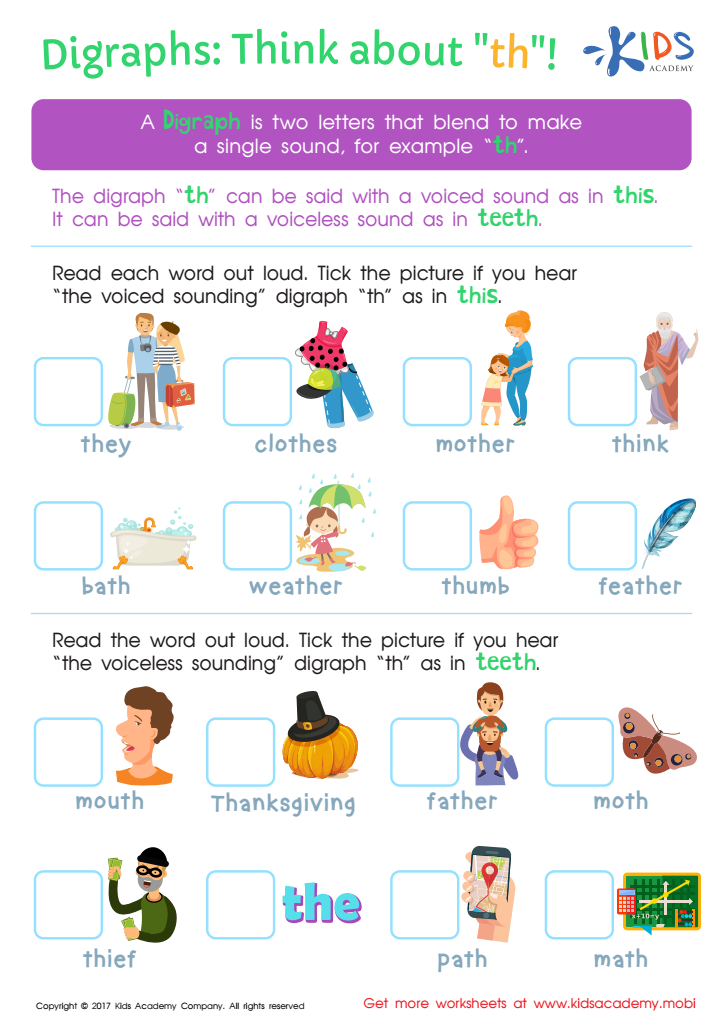
Digraphs: Think About "th" Worksheet
Help your child master phonics with this illustrated digraph Th printable worksheet. It will help recognize "Th" words, differentiate voiced and voiceless sounds and understand key concepts. Use similar words while they work to reap its full benefits!
 Assign to My Students
Digraphs: Think About "th" Worksheet
Worksheet
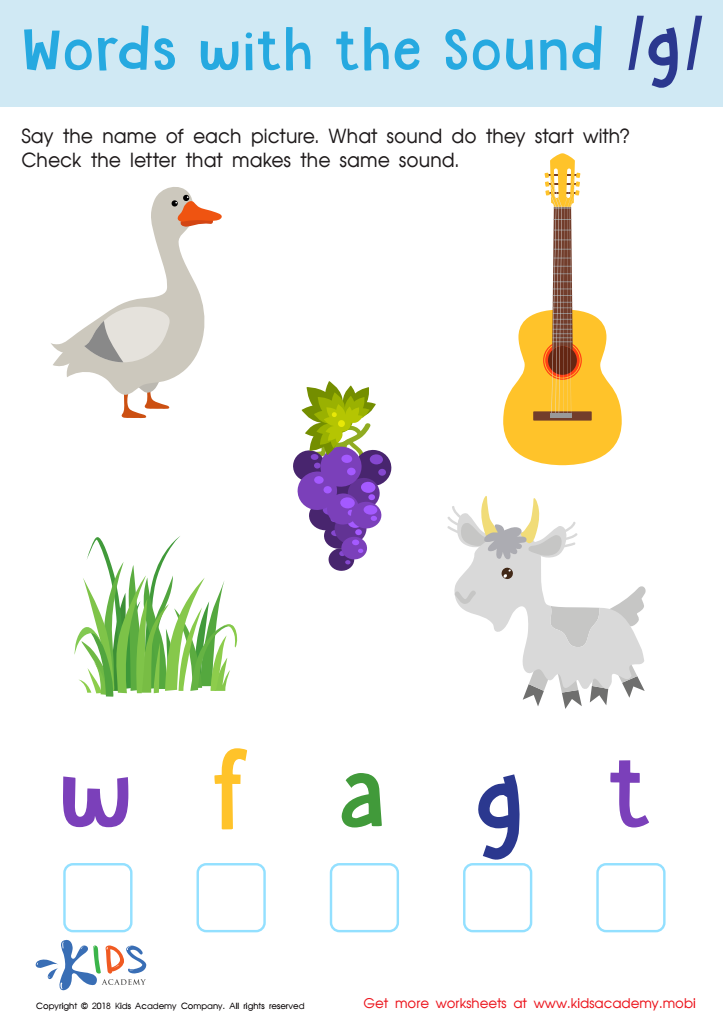
Words with sound g Reading Worksheet
Help your child learn the soft "g" sound with this phonics worksheet. Ask them to name each picture, then identify the letter sound it begins with. If it's "g", they can check the box. Have them repeat each word, listening for the soft "g" sound before moving on to the next page.
Words with sound g Reading Worksheet
Worksheet
Join Kids Academy for Free
Who is primarily going to use this learning content?








Parents and teachers should be deeply invested in reading practice and phonics for 6-year-olds because these foundational skills are critical for future academic success and overall literacy. At this age, children are in a crucial stage of cognitive development where they can absorb and internalize language rules more effectively. Phonics, which involves linking sounds to letters and understanding spelling patterns, empowers young readers to decode new words—a fundamental step in becoming proficient readers.
By engaging in regular reading practice and phonics instruction, children can develop stronger decoding and word recognition skills. This is vital because struggling with these basics can lead to ongoing difficulties in comprehension, slowing the overall learning process. Furthermore, early success in reading boosts a child's confidence and encourages a lifelong love of learning, which is associated with better educational outcomes.
From a broader perspective, being literate allows children to access and understand information, communicate effectively, and think critically. Ensuring children become proficient readers from a young age lays the groundwork for their achievements in other subjects, from science to social studies, where comprehension is key.
In summary, prioritizing reading practice and phonics helps 6-year-olds build a strong literacy foundation, facilitating academic success, boosting self-esteem, and opening up a world of opportunities for future learning and personal growth.







