Rhyme recognition Phonics Worksheets for 6-Year-Olds
3 filtered results
-
From - To
Mastering the magic of rhymes is fun with our Rhyme Recognition Phonics Worksheets for 6-Year-Olds! Designed to enhance early reading skills, these engaging activities help children identify rhyming words and improve phonemic awareness. Each worksheet captivates kids with colorful illustrations and exciting exercises that make learning delightful. Perfect for both classroom and home use, our worksheets support young learners in developing essential literacy skills, boosting their confidence, and fostering a love for reading. Discover the joy of rhyming with our expertly crafted phonics worksheets and watch your child’s reading abilities soar!
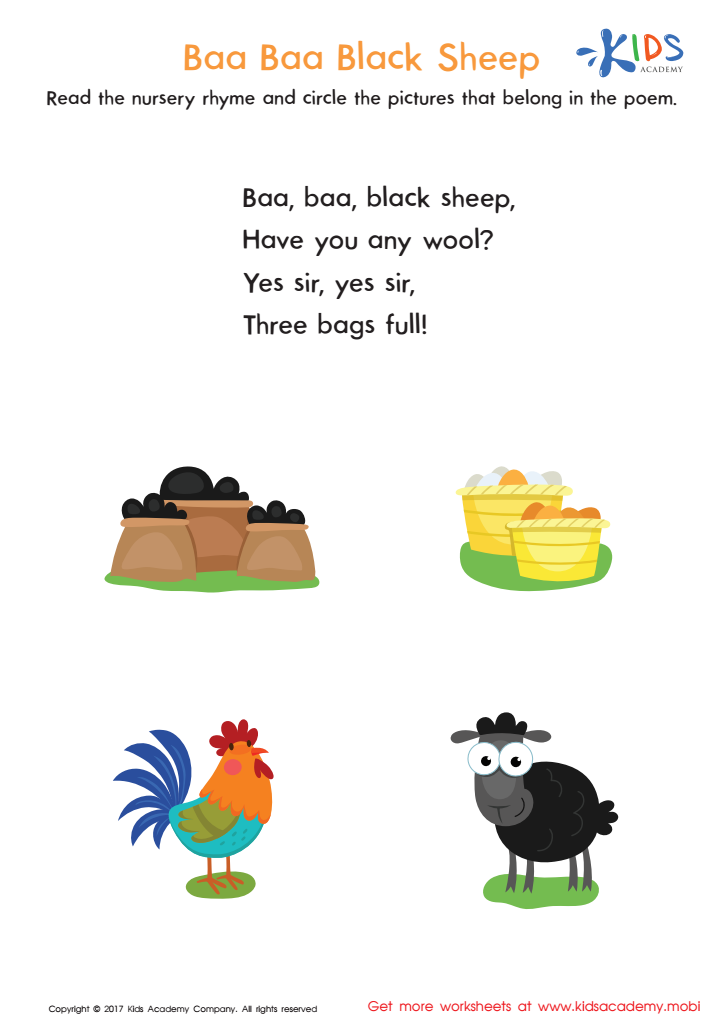
Baa Baa Black Sheep Printable
 Assign to My Students
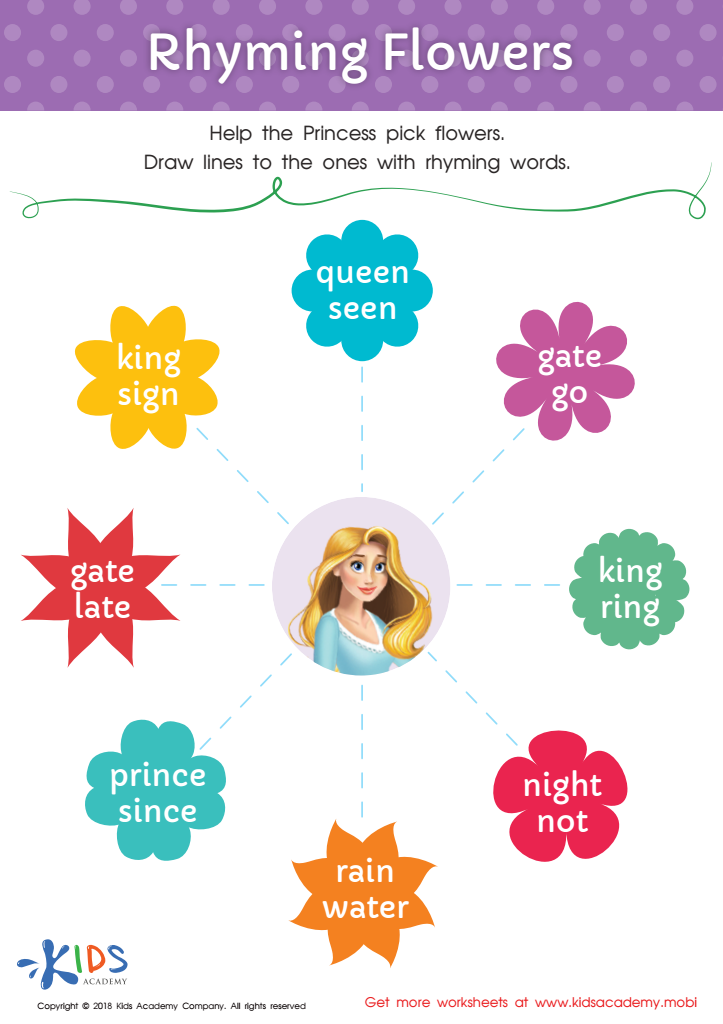
Rhyming Flowers Worksheet
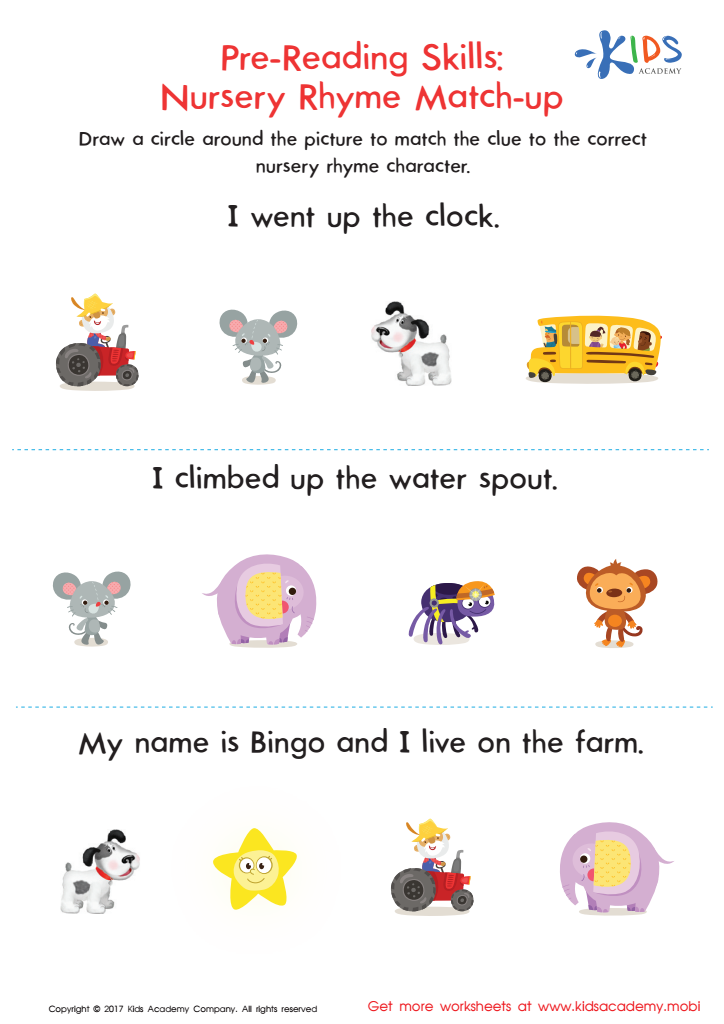
Nursery Rhyme Match–Up Worksheet








Rhyme recognition and phonics are crucial building blocks in early literacy development for 6-year-olds. Recognizing rhymes helps children understand the sound patterns in language, which is a fundamental skill for reading. When kids can detect rhyming words, they learn to identify phonemes—distinct units of sound—that form the basis of word construction.
For parents and teachers, focusing on rhyme recognition phonics is essential because it strengthens the auditory discrimination needed for reading. By playing rhyming games or engaging in activities that highlight rhymes, children become adept at hearing the similarities and differences in word sounds. This skill is directly linked to their ability to decode words and read fluently.
Phonics, the method of teaching reading through the relationship between letters and sounds, complements rhyme recognition. This method teaches children to match spoken sounds with written symbols, immensely improving their spelling and reading capabilities. When children grasp the phonetic structure of words through engaging and interactive methods, they become more confident readers who are eager to explore new texts.
In summary, parents and teachers should invest time in rhyme recognition phonics activities because these pave the way for proficient reading and writing skills, setting the stage for future educational success.







