Handwriting practice Uppercase Letters Worksheets for 6-Year-Olds
6 filtered results
Difficulty Level
Grade
Age
-
From - To
Subject
Activity
Standards
Boost your child's handwriting skills with our "Handwriting Practice Uppercase Letters Worksheets for 6-Year-Olds." These engaging, easy-to-use worksheets from Kids Academy are designed to help young learners master the formation of uppercase letters. Each worksheet offers plenty of space for tracing and independent practice, promoting fine motor skills and letter recognition. Ideal for classroom use or at-home learning, our handwriting practice sheets support early literacy development with fun, educational activities. Give your child the confidence they need to write beautifully and legibly with our expertly crafted resources. Join us at Kids Academy and watch your child's handwriting skills soar!
Favorites
With answer key
Interactive
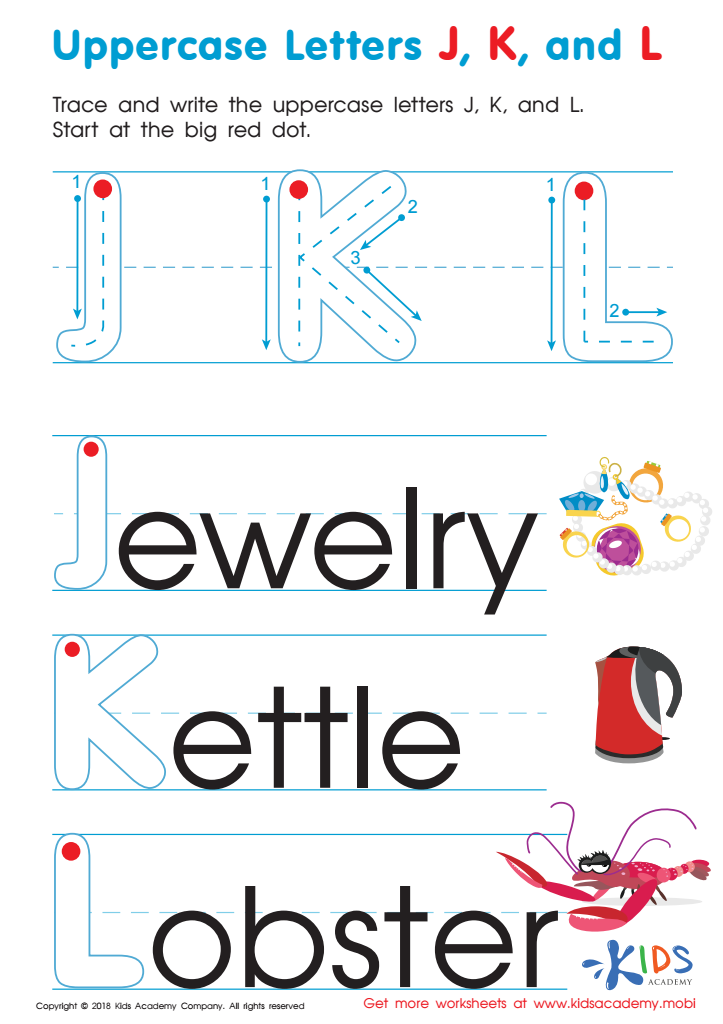
Uppercase Letters J, K, and L Worksheet
Jewelry, kettle and lobster share a common trait: their names start with J, K and L, 3 letter neighbors found in the middle of the alphabet. This traceable worksheet helps kids learn letter sounds and practice writing. Arrows and tracing lines make it easy to form neat pencil strokes. Red dot shows where kids should start. Perfect for preschoolers and kindergarteners!
 Assign to My Students
Uppercase Letters J, K, and L Worksheet
Worksheet
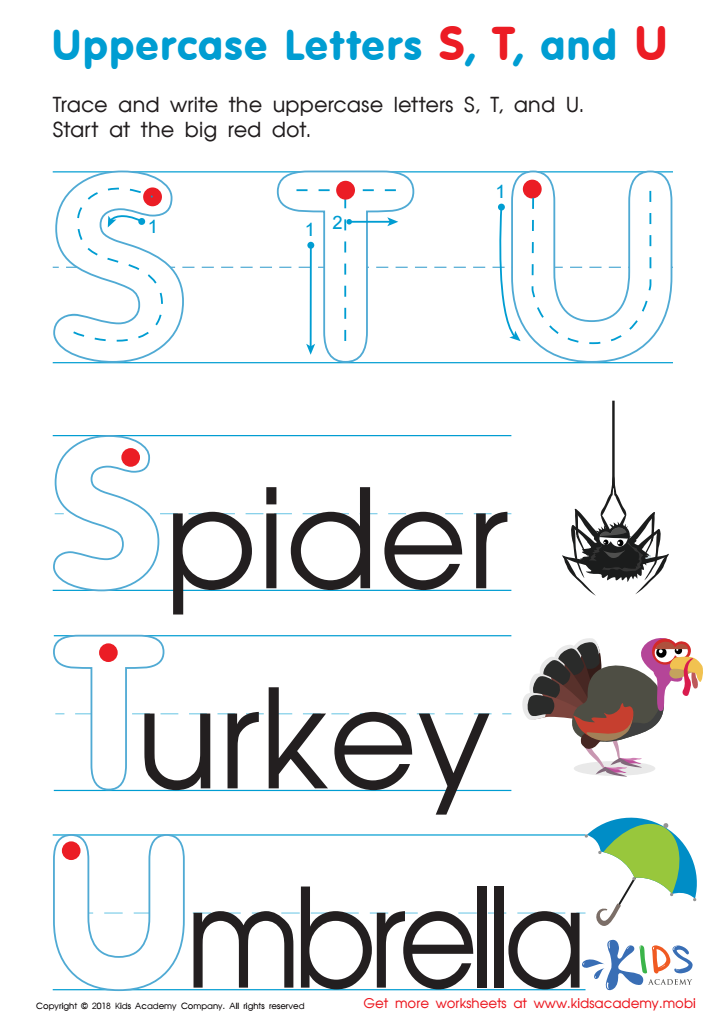
Uppercase Letters S, T, and U Worksheet
Help your kids learn to write upper-case letters with this fun tracing sheet. Start at the big red dot for each letter: S, T, and U. Show them the pictures and ask what letter each word starts with. Guide their hand and watch them learn!
Uppercase Letters S, T, and U Worksheet
Worksheet
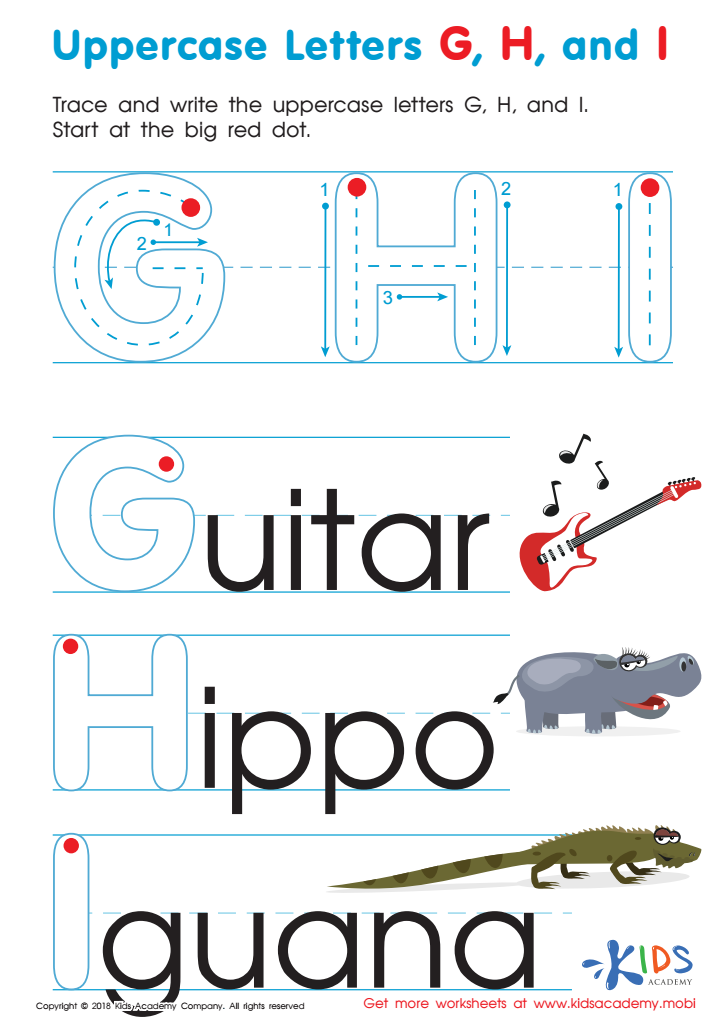
Uppercase Letters G, H, and I Worksheet
Trace each letter with the big red dot, connecting them to sounds as you go. Then write G to I. Congrats on a job well done! Rock on with a cute hippo and iguana while working on this delightful kindergarten worksheet!
Uppercase Letters G, H, and I Worksheet
Worksheet
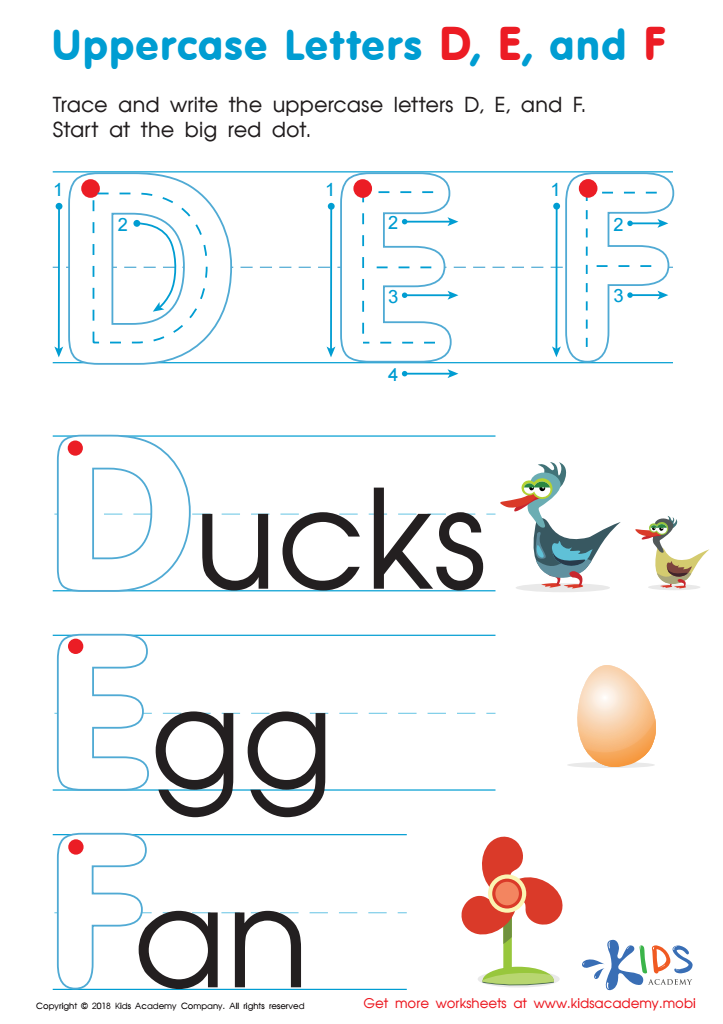
Uppercase Letters D, E, and F Worksheet
A-F are important letters! Get kids tracing with this free printable worksheet. Help them learn the right pencil strokes by following the tracing lines, starting at the big red dot. Reinforce letter sounds with the colorful pictures. 80 words.
Uppercase Letters D, E, and F Worksheet
Worksheet
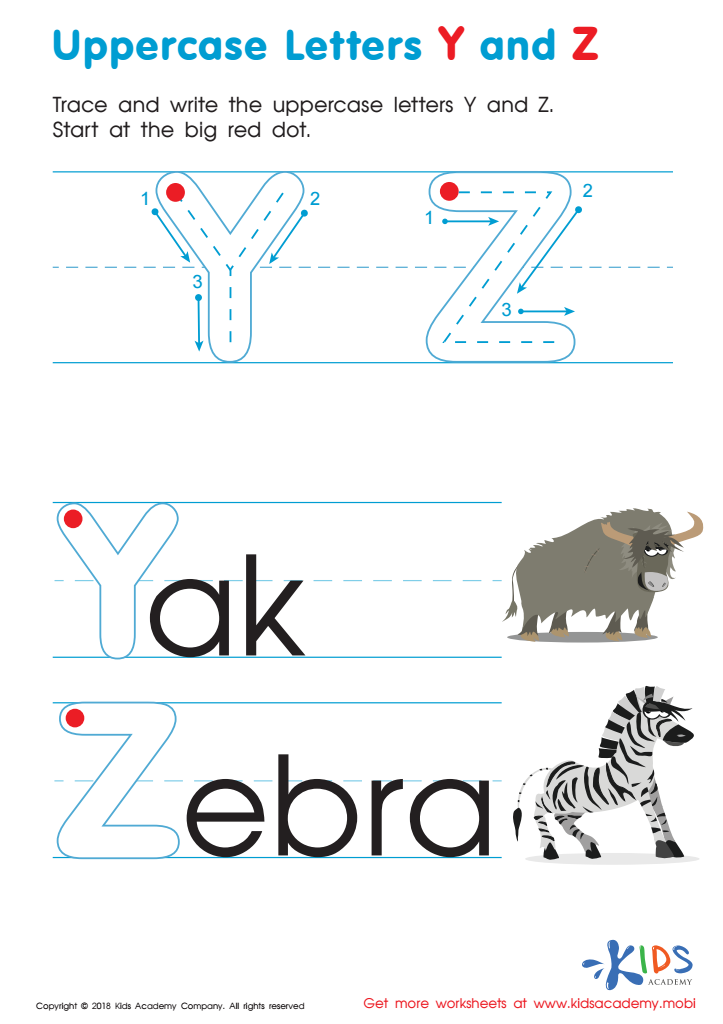
Uppercase Letters Y Z Worksheet
Help your child learn their ABCs with this fun tracing activity! They must trace and write Y and Z in uppercase form, starting from the red dot. Kids will love the fun images for extra engagement. Guiding their hand carefully will help them practice and perfect their writing skills.
Uppercase Letters Y Z Worksheet
Worksheet
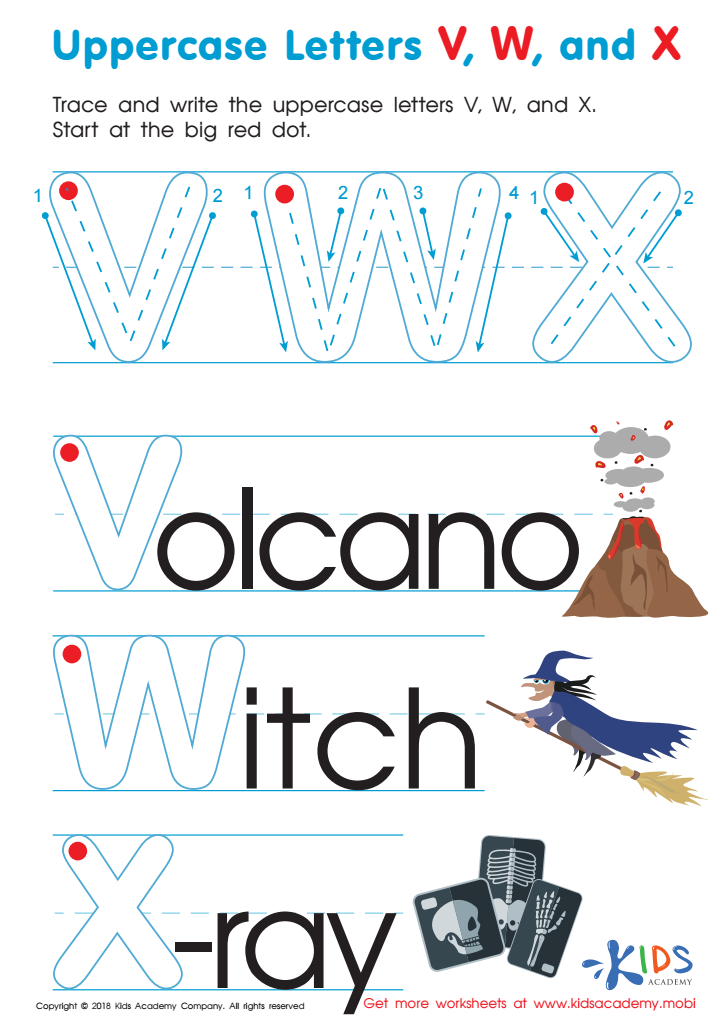
Uppercase Letters V, W, and X Worksheet
This worksheet is perfect for kids struggling to write uppercase letters V, W, and X. Warm up their brains first by having them name words starting with these letters. Then, help them trace and write each letter from the big red dot. With your assistance, they will quickly sharpen their writing skills.
Uppercase Letters V, W, and X Worksheet
Worksheet
Join Kids Academy for Free
Who is primarily going to use this learning content?








Handwriting practice for uppercase letters is crucial for 6-year-olds since it lays the foundation for future academic success and overall cognitive development. Learning to write uppercase letters enhances fine motor skills, helping children improve hand-eye coordination and dexterity. This is not only essential for writing but also for other activities requiring precise hand movements, such as drawing and buttoning clothes.
Furthermore, practicing uppercase letters reinforces letter recognition and phonemic awareness, which are essential components of early reading skills. By mastering these letters, children can more easily decode words and start reading with greater confidence.
It also fosters a sense of discipline and focus. Since handwriting is a task that demands attention and repetition, children learn to be patient and build their concentration skills. This focus is transferable to other subjects and tasks, laying the groundwork for good study habits.
Moreover, neat handwriting boosts a child’s confidence and self-esteem. When their writing is legible, they are more likely to take pride in their work and be willing to share it, whether it’s a story they’ve written or a school assignment.
In essence, handwriting practice is a multifaceted activity that supports physical, cognitive, and emotional development. By encouraging this practice, parents and teachers provide children with essential skills that will benefit them throughout their academic journey and beyond.