Problem-solving abilities Chess Worksheets for 6-Year-Olds
3 filtered results
-
From - To
Enhance your child's critical thinking and problem-solving skills with our engaging Chess Worksheets designed for 6-year-olds. Perfect for beginners, these worksheets provide a fun and interactive approach to learning chess basics while boosting strategic thinking. Kids will improve their concentration, planning, and analytical abilities through various activities and challenges tailored to their age group. Our worksheets make learning enjoyable, encouraging children's natural curiosity and helping them develop essential cognitive skills early on. Ideal for classroom use or at-home practice, these worksheets foster a love for chess that can benefit your child's overall academic success.
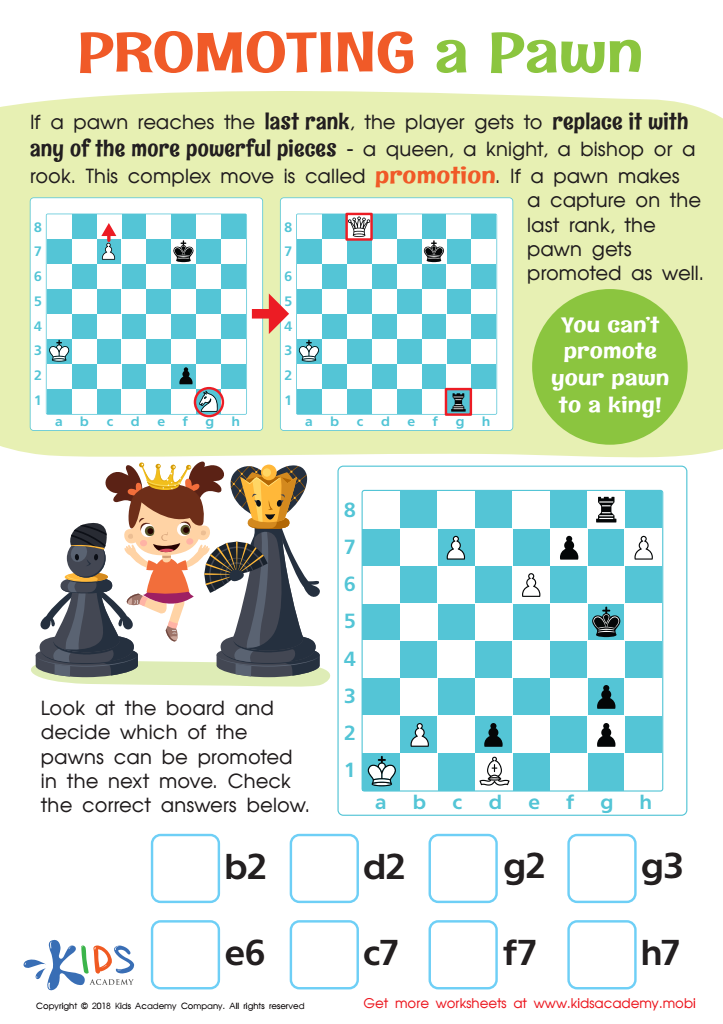
Promoting a Pawn Worksheet
 Assign to My Students
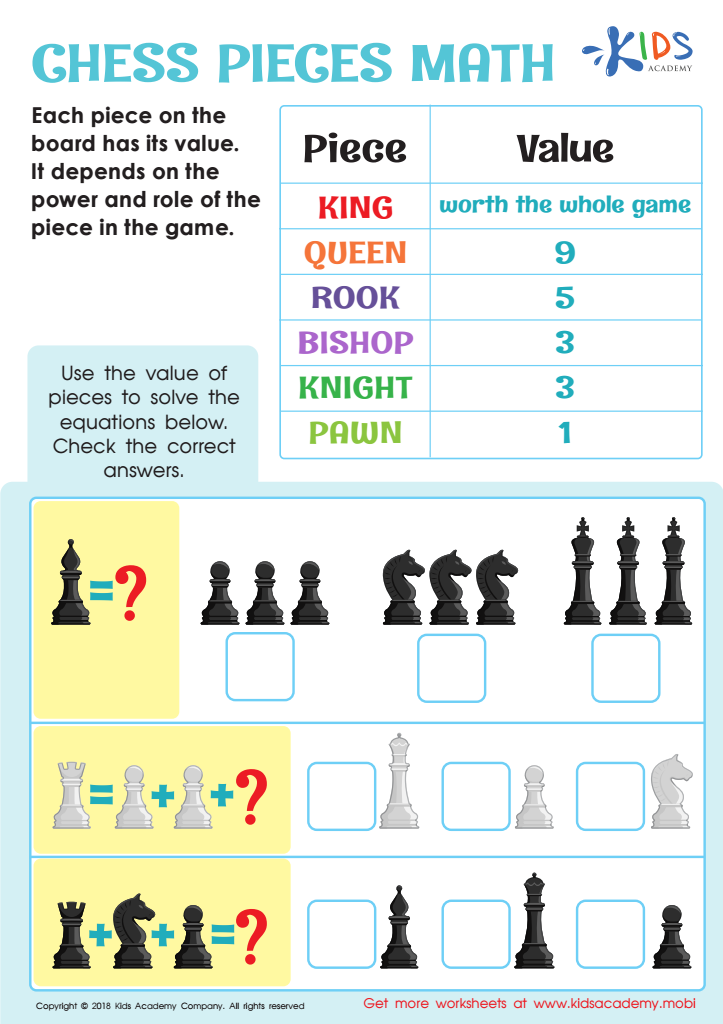
Chess Pieces Math Worksheet
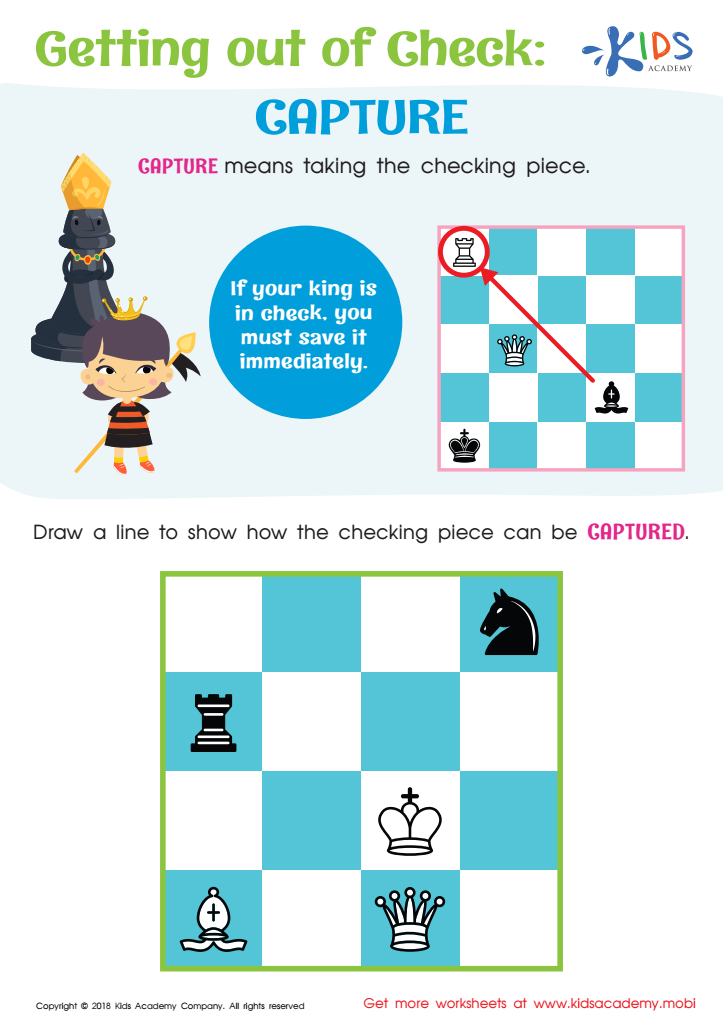
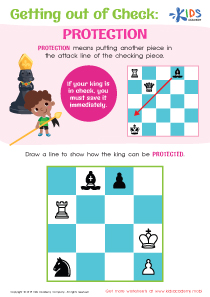
Getting out of Check: Capture


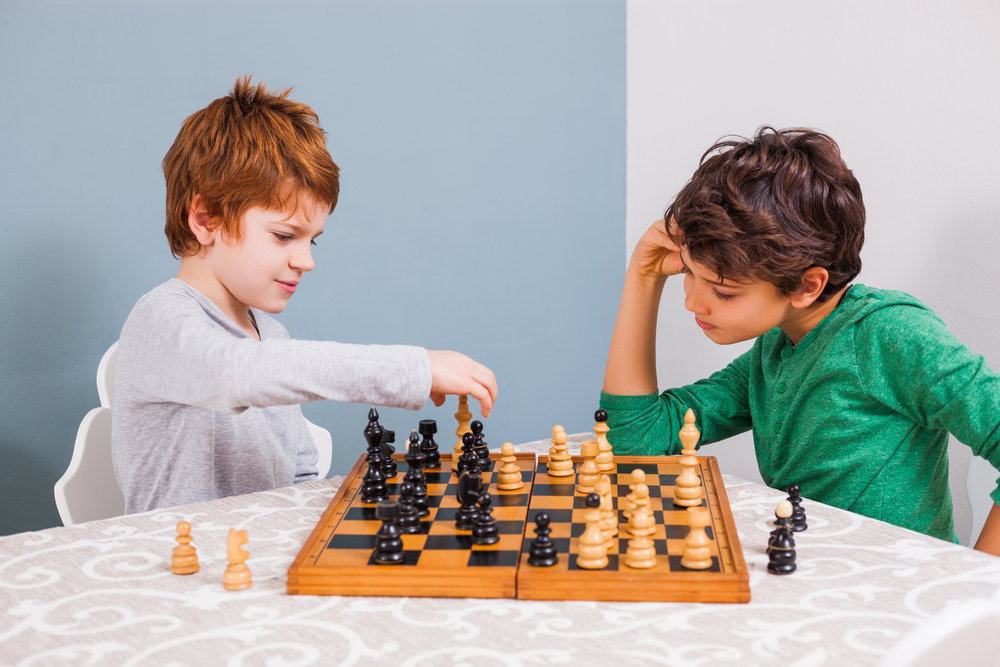




Parents and teachers should care about fostering problem-solving abilities through chess for 6-year-olds because these skills form the bedrock of future academic and personal success. Chess engages young minds in a strategic, rule-based environment that enhances critical thinking, planning, and foresight. At an age when cognitive development is rapidly occurring, chess’s systematic approach to problem-solving cultivates efficient mental processes that can be applied broadly across various disciplines.
Children learning chess are constantly analyzing situations, predicting outcomes, and making decisions. This not only sharpens their logical and deductive reasoning but also fosters patience and concentration, which are essential for tackling academic challenges. Moreover, chess encourages the understanding of consequences and strategic planning, skills integral to subjects like mathematics and science.
Problem-solving in chess, with its structured and rule-based nature, mirrors many real-life scenarios where identifying patterns and thinking several steps ahead can result in better outcomes. By introducing chess at a young age, parents and teachers can provide a fun, engaging way to enhance cognitive abilities that extend well beyond the chessboard. This early investment in a child’s development promotes an adaptable, resilient mindset, equipping them with tools to navigate complex problems throughout their education and into adulthood.