Basic geometry knowledge Worksheets for 6-Year-Olds
3 filtered results
-
From - To
Explore our engaging "Basic Geometry Knowledge Worksheets for 6-Year-Olds" designed to introduce young learners to fundamental geometric concepts. These worksheets feature colorful illustrations and interactive tasks that make learning fun and effective. Children will practice recognizing shapes, understanding spatial relations, and developing critical thinking skills through various exercises. Our resources foster a strong foundation in geometry, encouraging kids to identify circles, squares, triangles, and more in their environment. Perfect for home or classroom use, these worksheets support early math education while promoting creativity and problem-solving. Get your little ones excited about shapes and spatial awareness today!
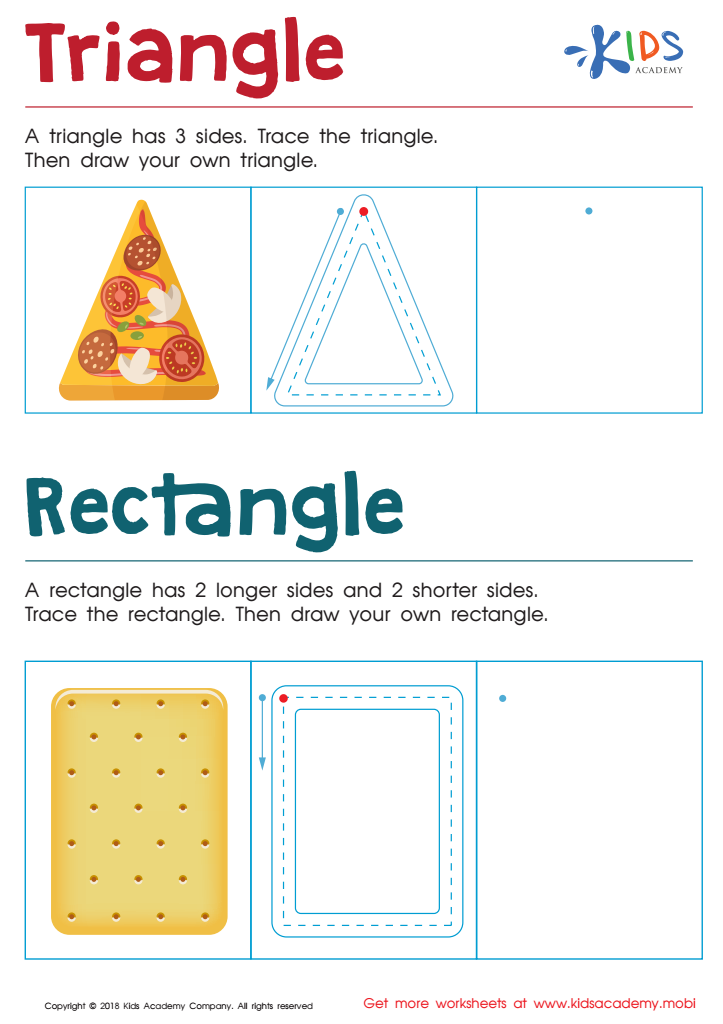
Triangle Rectangle Worksheet
 Assign to My Students
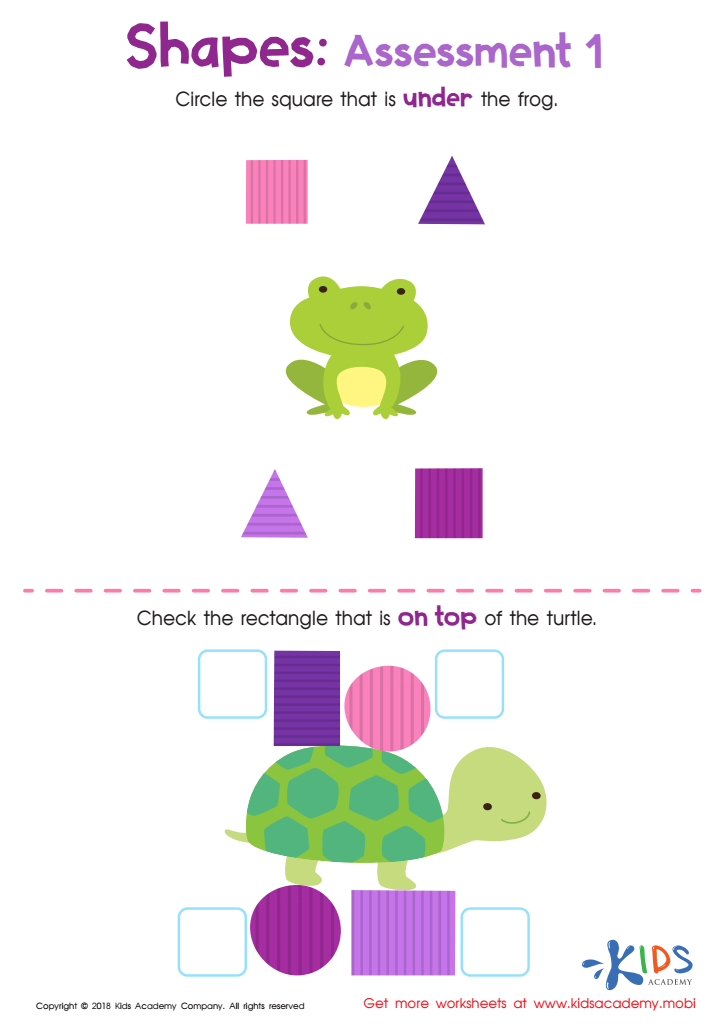
Geometry – Assessment 1 Worksheet
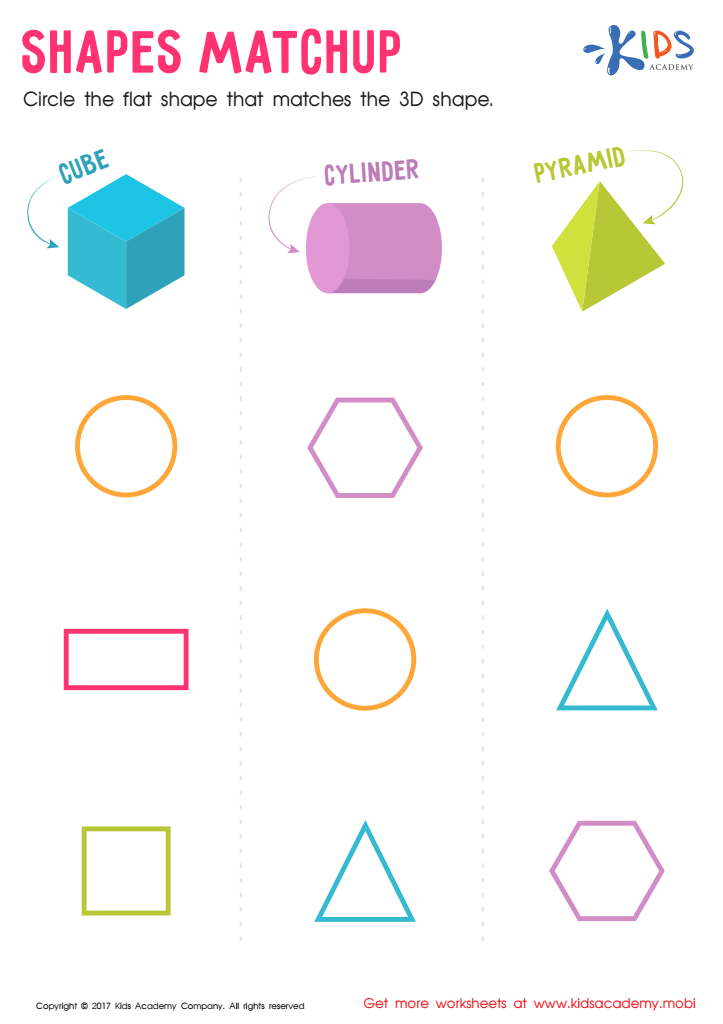
Shapes Matchup Worksheet







Understanding basic geometry is essential for 6-year-olds as it lays the foundation for critical thinking and problem-solving skills. At this age, children are naturally curious, and geometry offers a fun way to explore shapes, sizes, and spatial relationships. This exploration enhances cognitive development and promotes visual learning, which are crucial as they progress in mathematics.
Moreover, knowledge of basic geometry aids in everyday life skills. It helps children recognize shapes in their environment, understand directions, and make sense of more complex concepts as they mature. Engaging with geometric concepts also fosters math fluency, which is vital for future academic success.
Additionally, learning geometry at this early stage can enhance communication skills. Children learn to describe characteristics of shapes, create patterns, and discuss relationships between different geometric figures, enhancing their vocabulary and reasoning abilities.
Moreover, early exposure to geometry can spark creativity and introduce concepts of balance and symmetry, found in art and nature. For parents and teachers, supporting children's understanding of basic geometry not only provides immediate educational benefits but also cultivates a lifelong appreciation for math and how it applies to the world around them. Therefore, it is crucial to integrate geometry into learning experiences for young children.








