Basic physics concepts Worksheets for 6-Year-Olds
3 filtered results
-
From - To
Introduce your child to the wonder of science early with our Basic Physics Concepts Worksheets for 6-Year-Olds. Carefully crafted to engage young minds, these worksheets provide a fun and interactive way to explore fundamental physics principles. Through colorful illustrations and age-appropriate activities, kids will start understanding concepts like motion, gravity, and energy. Our worksheets help build a solid foundation in critical thinking and problem-solving skills. Designed by educational experts, these learning tools turn complex ideas into simple, enjoyable tasks, making science both fun and accessible for young learners. Prepare your child for a lifelong love of learning with our engaging physics worksheets!
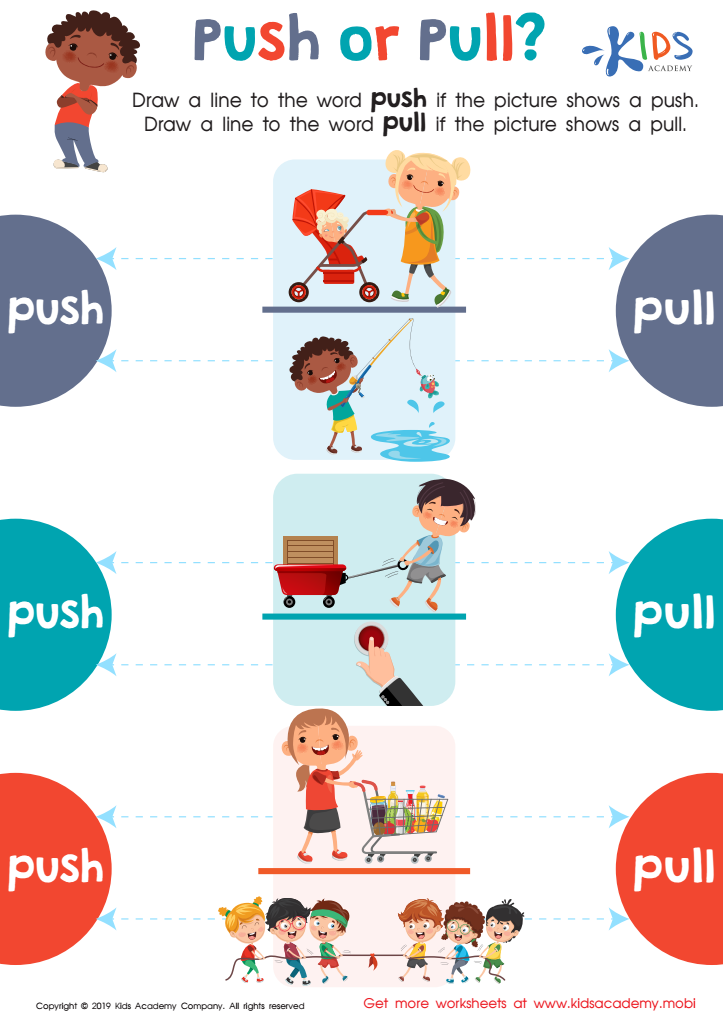
Push or Pull? Worksheet
 Assign to My Students
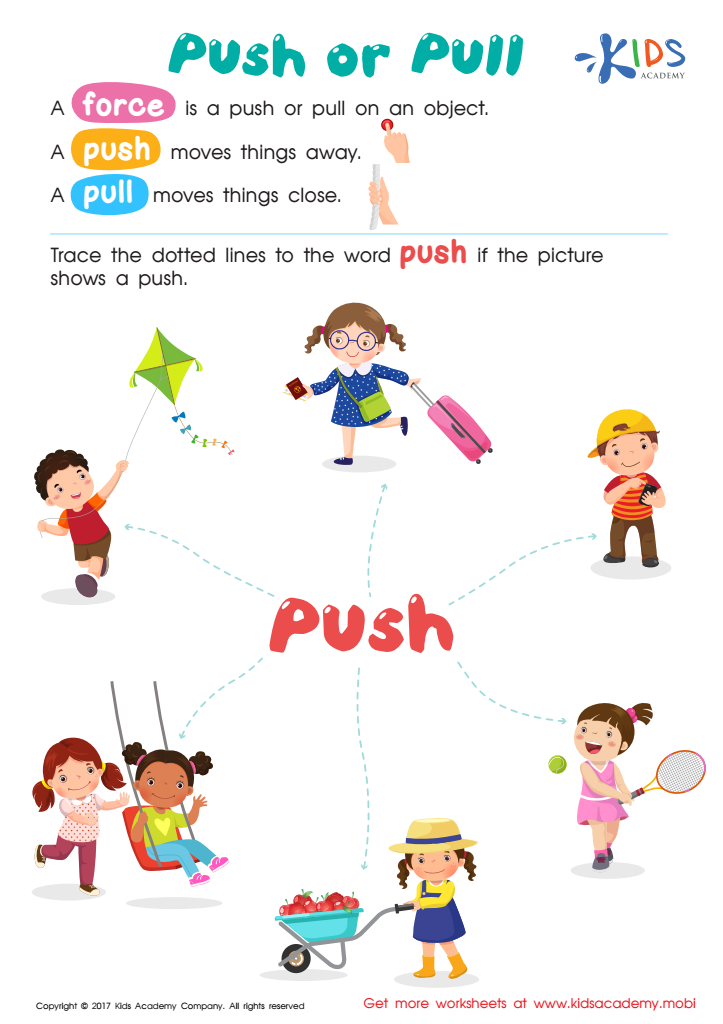
Push or Pull Worksheet
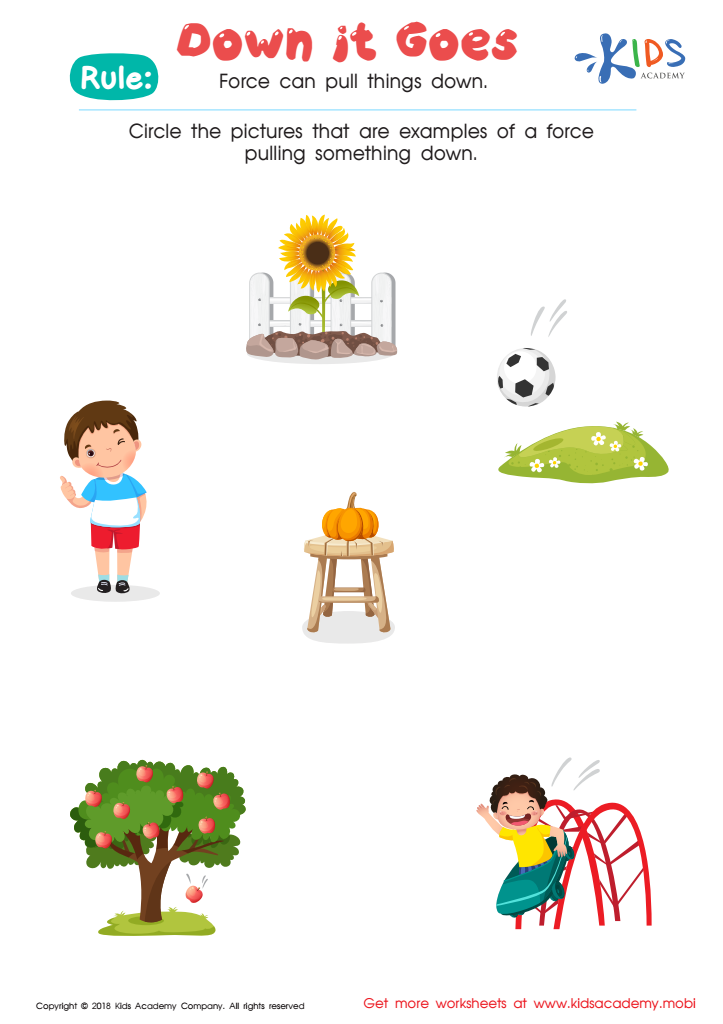
Down it Goes Worksheet








Introducing basic physics concepts to 6-year-olds is essential for several reasons that serve both their immediate educational needs and their long-term intellectual development. First and foremost, young children are naturally curious about the world around them. Simple explanations of physics can satisfy this curiosity, promoting a love for learning and scientific inquiry that can last a lifetime. Furthermore, understanding basic concepts like gravity, motion, and energy helps children make sense of everyday experiences, from why a ball bounces to how slides work.
Incorporating physics into early education also enhances critical thinking and problem-solving skills. When children experiment with how different objects move or interact, they learn to make predictions, observe outcomes, and draw conclusions—skills that are fundamental across all academic disciplines. Physics activities often involve hands-on experiments, fostering teamwork, communication, and fine motor skills.
Moreover, early exposure to physics lays the groundwork for more complex scientific learning in later grades. By understanding basic principles early on, children can more easily grasp advanced concepts in middle and high school. This foundation can unlock future educational and career opportunities in STEM (Science, Technology, Engineering, and Mathematics) fields. Therefore, it's in the interest of both parents and teachers to integrate basic physics concepts into the learning experiences of young children.








