
Chess rules understanding Worksheets for 6-Year-Olds
4 filtered results
Difficulty Level
Grade
Age
-
From - To
Subject
Activity
Standards
Unlock the magic of strategy and critical thinking with our Chess Rules Understanding Worksheets, designed specifically for 6-year-olds. These engaging worksheets from Kids Academy make learning the game of chess both fun and educational for young minds. Our colorful, easy-to-follow activities guide children through the basics of chess rules and moves. By working through these printables, kids will improve their problem-solving skills, enhance concentration, and build a solid foundation in one of the world's most beloved board games. Perfect for beginners, these worksheets provide a stimulating and enriching experience for budding chess enthusiasts. Start your child's chess journey today!
Favorites
With answer key
Interactive
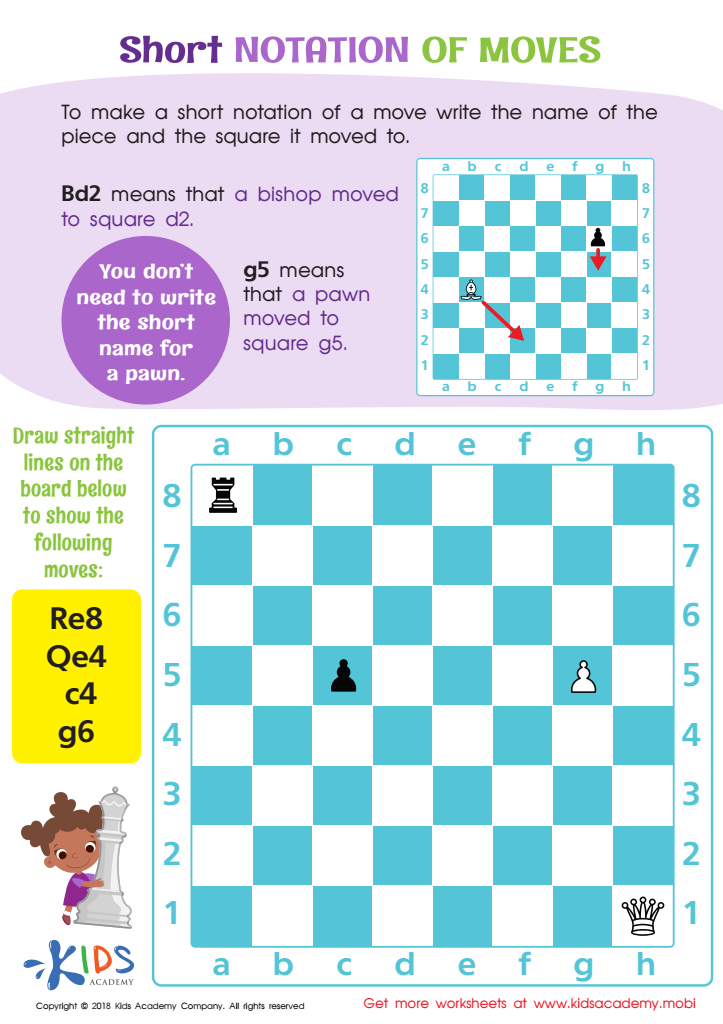
Short Notation of Moves Worksheet
To master chess, you need more than just knowing the pieces and their moves - you need to be able to make notations of your moves. To make a short notation, write the piece name and square it moved to; for example, Bd2 for bishop on d2. Pawns don't need the piece name, just the square; e.g. g5. Show your kids how to draw lines to the board for the moves given.
 Assign to My Students
Short Notation of Moves Worksheet
Worksheet
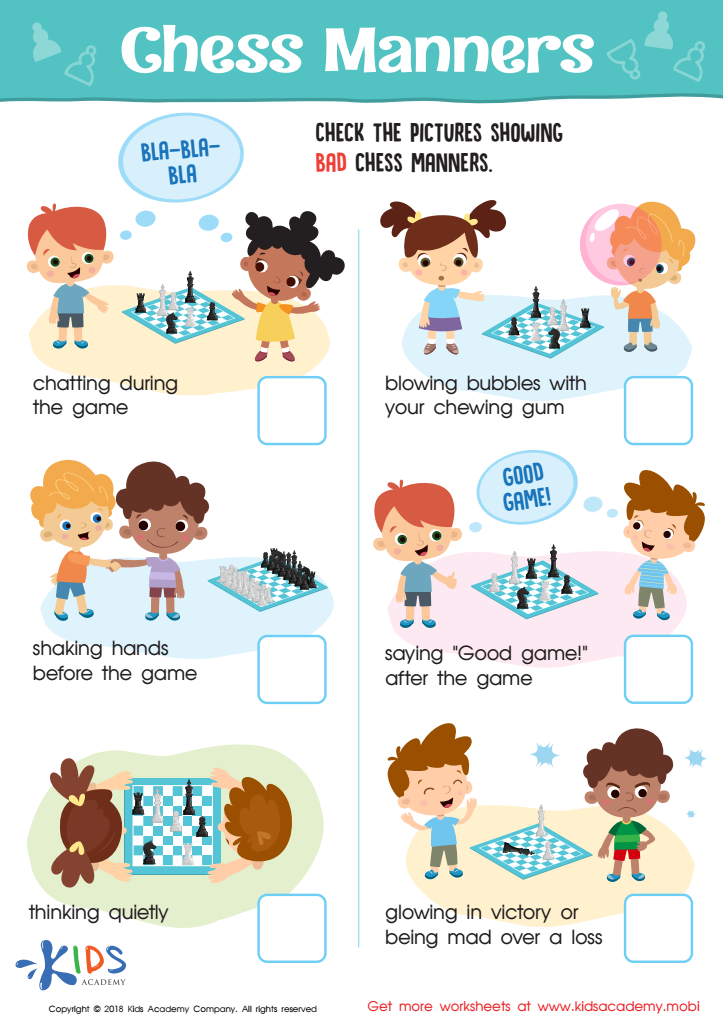
Chess Manners Worksheet
Teach your child chess manners in addition to table and social ones. Chess has clear rules and etiquette which must be followed for a proper game. Review this worksheet with your kid and discuss the pictures that show inappropriate behaviours. This will help them understand how to play the game correctly and with good manners.
Chess Manners Worksheet
Worksheet
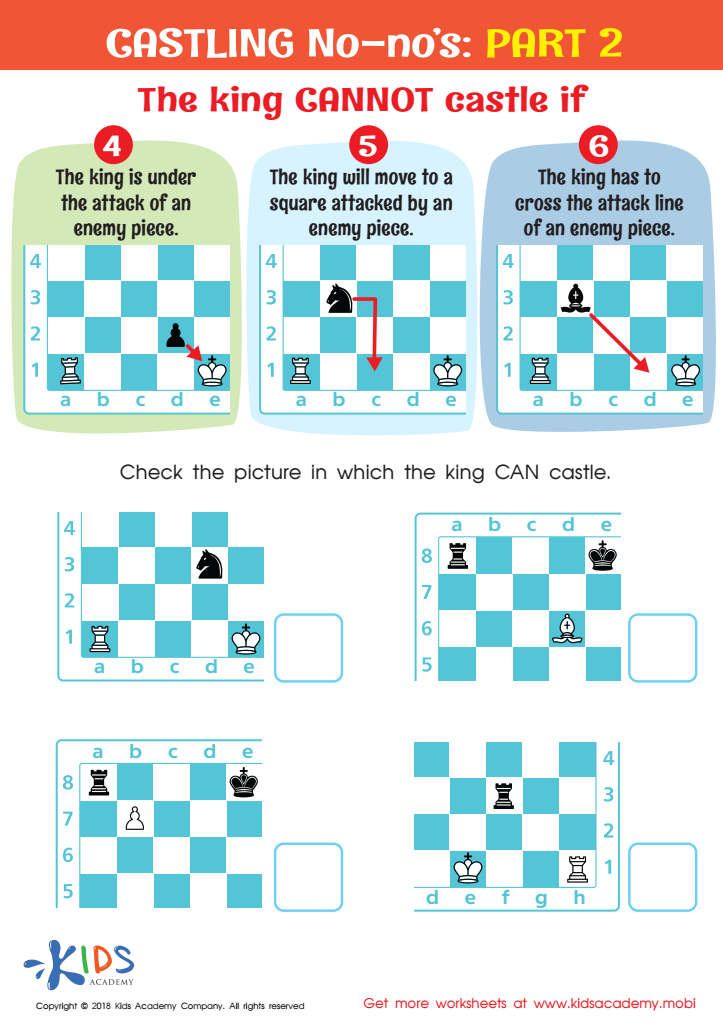
Castling No - no's: Part 2 Worksheet
Teach your child the rules of castling: no castling if the king is under attack or will move onto an attacked square, or cross an attack line. To prepare for a game of chess, help your child complete the exercise of identifying when the king can castle – check the pictures.
Castling No - no's: Part 2 Worksheet
Worksheet
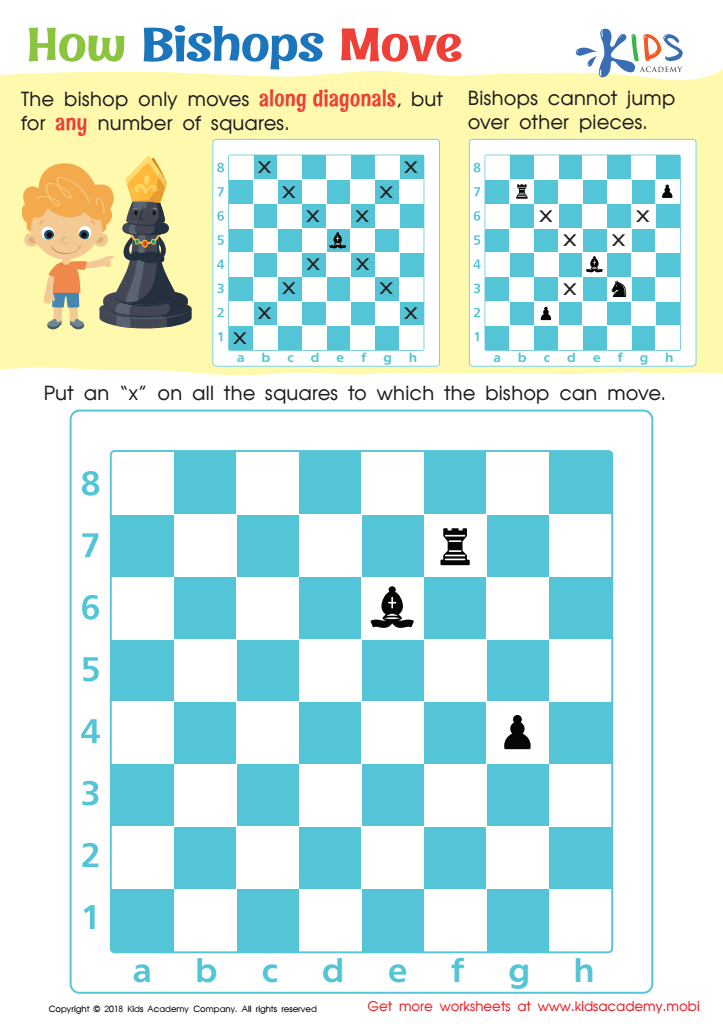
How Bishops Move Worksheet
There is no such thing as too much sharpening of skills. Encourage your child to learn more about chess technicalities with this simple worksheet. It shows them how a bishop moves: along diagonals any number of squares, but it can't jump over other pieces.
How Bishops Move Worksheet
Worksheet
Join Kids Academy for Free
Who is primarily going to use this learning content?








Understanding chess rules at the age of six can offer numerous developmental benefits that can potentially shape a child's cognitive and social skills positively. Firstly, chess is a game of strategy, which helps young children develop critical thinking and problem-solving skills. Learning the rules necessitates understanding the consequences of each move, teaching children to anticipate future challenges and think several steps ahead.
Cognitive development aside, chess also cultivates important life skills such as patience, concentration, and discipline. Children who grasp the rules of chess early on often learn the value of careful planning versus impulsive decisions, fostering their decision-making abilities in general scenarios.
Socially, chess can be quite advantageous. It is a universal game and can be a shared experience, encouraging social interaction and teamwork when played in a friendly environment. This helps to build communication skills and mutual respect as children follow rules and take turns.
Moreover, understanding and playing by the rules teaches children about fairness and integrity, principles that are valuable in all aspects of life. Thus, whether considered from a cognitive, social, or ethical standpoint, parents and teachers have compelling reasons to introduce and involve 6-year-olds in chess, facilitating well-rounded early development.








