Comparing quantities Worksheets for 6-Year-Olds
7 filtered results
-
From - To
Nurture your child's budding math skills with our "Comparing Quantities Worksheets for 6-Year-Olds." These engaging printables are specifically designed to help first graders develop a strong foundation in comparing numbers, understanding more and less, and honing their analytical abilities. Each worksheet provides colorful, fun activities that capture attention and make learning enjoyable. From comparing groups of objects to understanding numerical differences, these resources support your child's early math journey. Boost confidence and proficiency in math with high-quality worksheets, perfectly aligned with educational standards—ideal for at-home practice or classroom reinforcement!
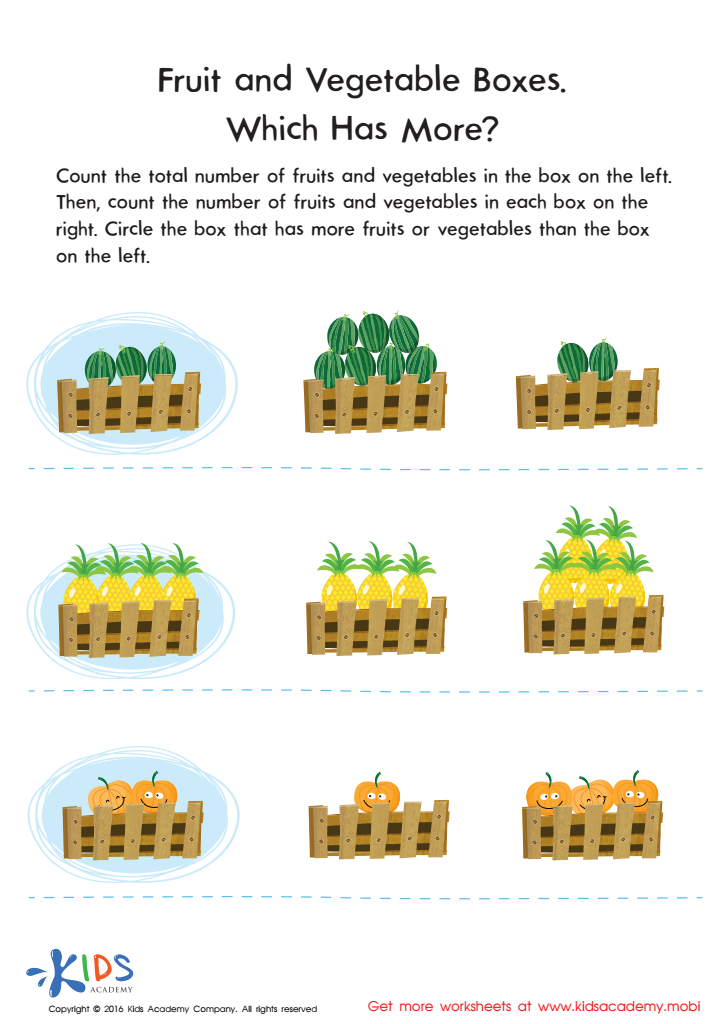
Which Has More? Size Worksheet
 Assign to My Students
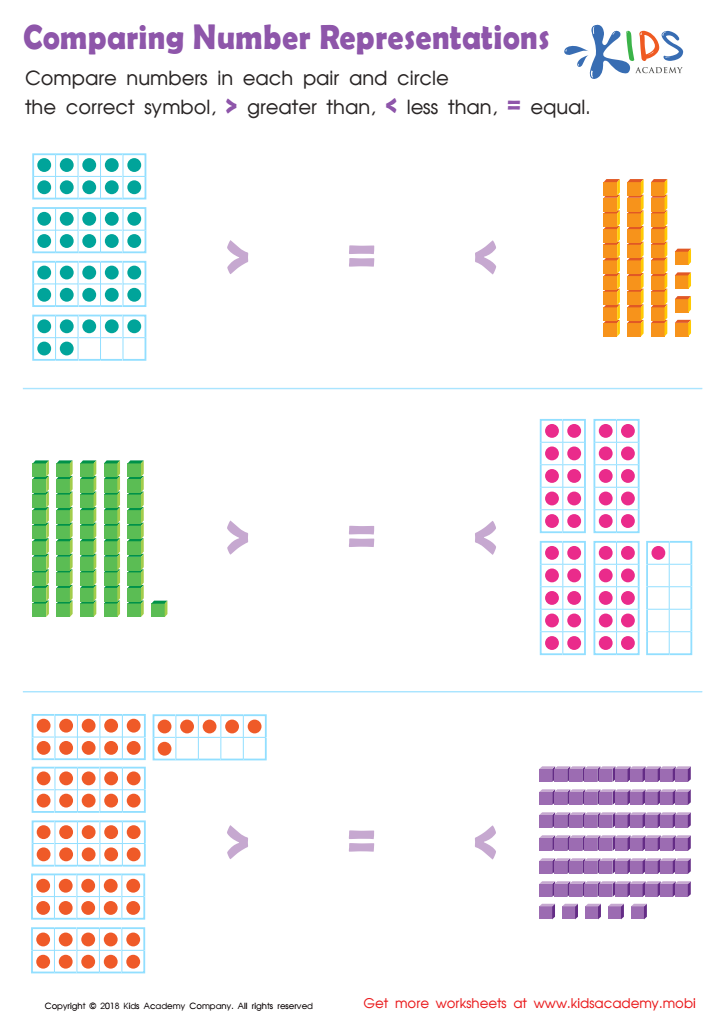
Comparing Number Representations Worksheet
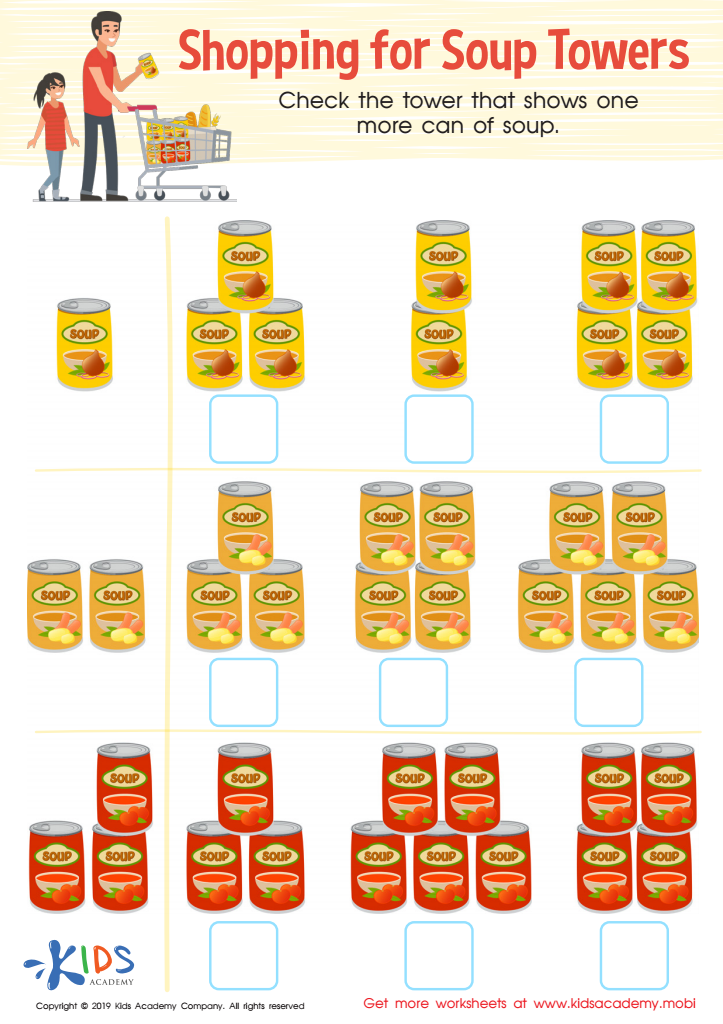
Soup Towers Worksheet
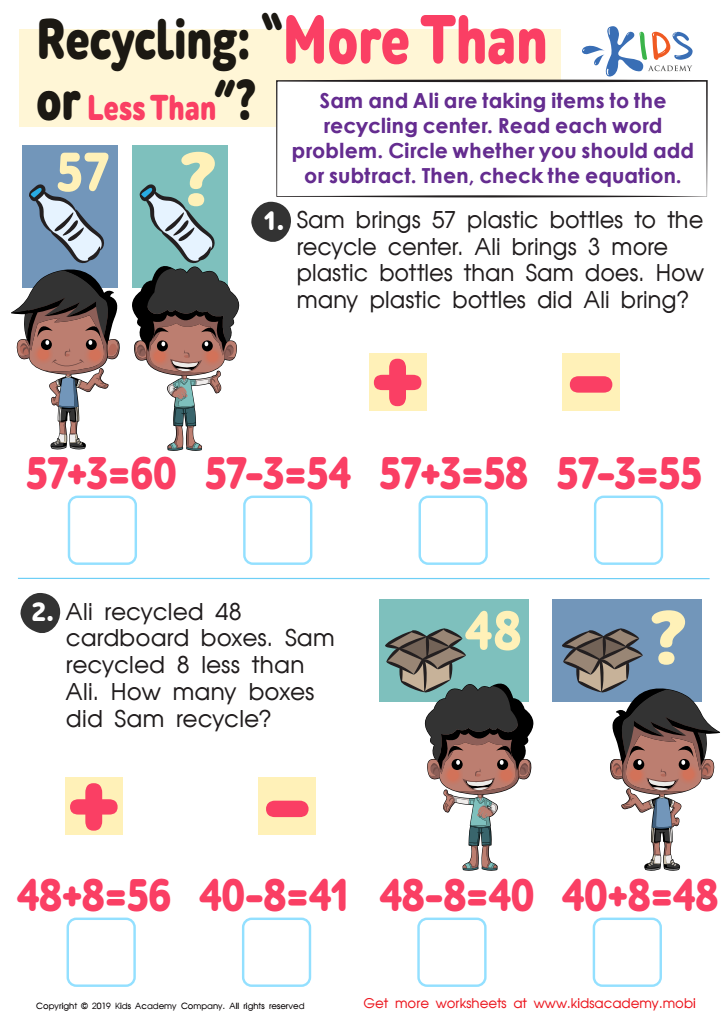
Recycling - More or Less Worksheet
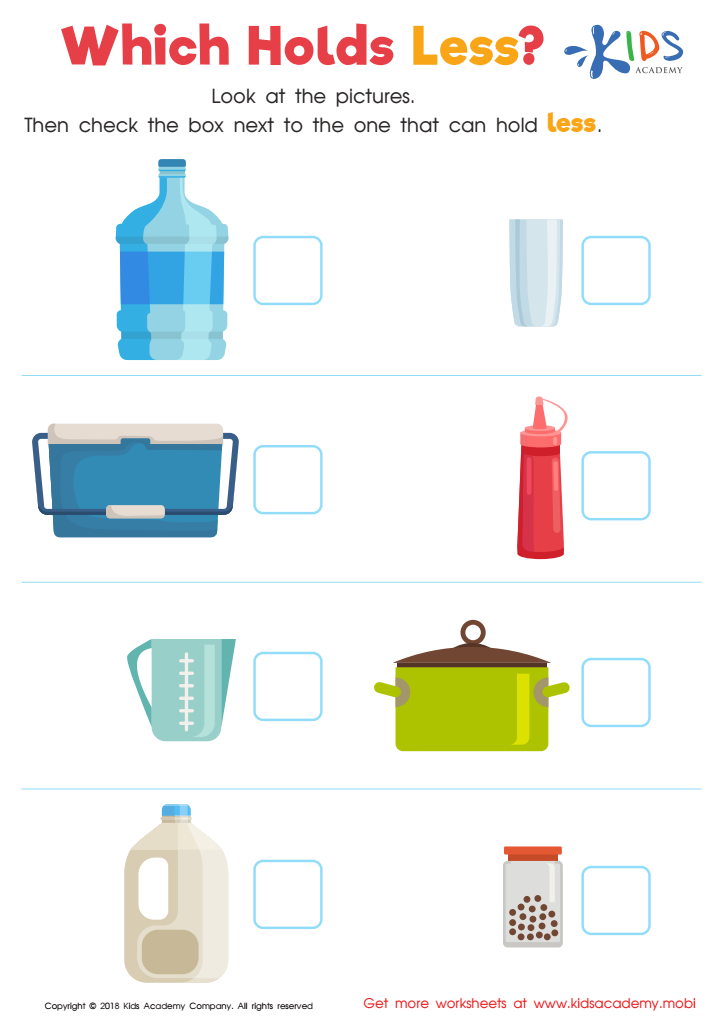
Which Holds Less? Worksheet


.jpg)




Understanding comparing quantities is crucial for 6-year-olds as it lays the foundation for future mathematical and logical reasoning skills. When parents and teachers emphasize this concept, they help children develop critical thinking abilities that will be instrumental throughout their educational journey and beyond. Comparing quantities involves understanding terms like "more," "less," "greater," "fewer," and "equal," which are fundamental concepts in both mathematics and everyday decision-making.
At this age, children are beginning to make sense of the world around them. By comparing quantities, they can start to comprehend patterns, sequences, and relationships between different sets of items. This skill is not only vital for mathematics but also for science and critical thinking. For example, understanding that 6 apples are more than 4 apples helps them with basic arithmetic concepts such as addition and subtraction.
Moreover, mastery of comparing quantities encourages confidence in problem-solving and can make learning new and more complex mathematical concepts like fractions and measurements easier as they move into higher grades.
Parents and teachers play a pivotal role in fostering this skill through playful learning activities such as games, puzzles, and interactive exercises that make comparisons. This proactive approach equips children with the tools they need to succeed academically and makes learning an engaging and enjoyable experience.








