Develop problem-solving abilities Worksheets for 6-Year-Olds
5 filtered results
-
From - To
Unlock your child's potential with our engaging Problem-Solving Abilities Worksheets designed specifically for 6-year-olds! These worksheets provide a fun and interactive way for young learners to enhance their critical thinking skills while enjoying hands-on activities. Our carefully crafted exercises focus on developing logical reasoning and creative approaches to challenges, promoting confidence in problem-solving. From puzzles and riddles to scenarios that encourage thoughtful solutions, each worksheet is designed to captivate and inspire. Foster a love for learning while helping your child navigate through various dilemmas with ease. Explore our collection today and empower your young learner with essential skills for future success!
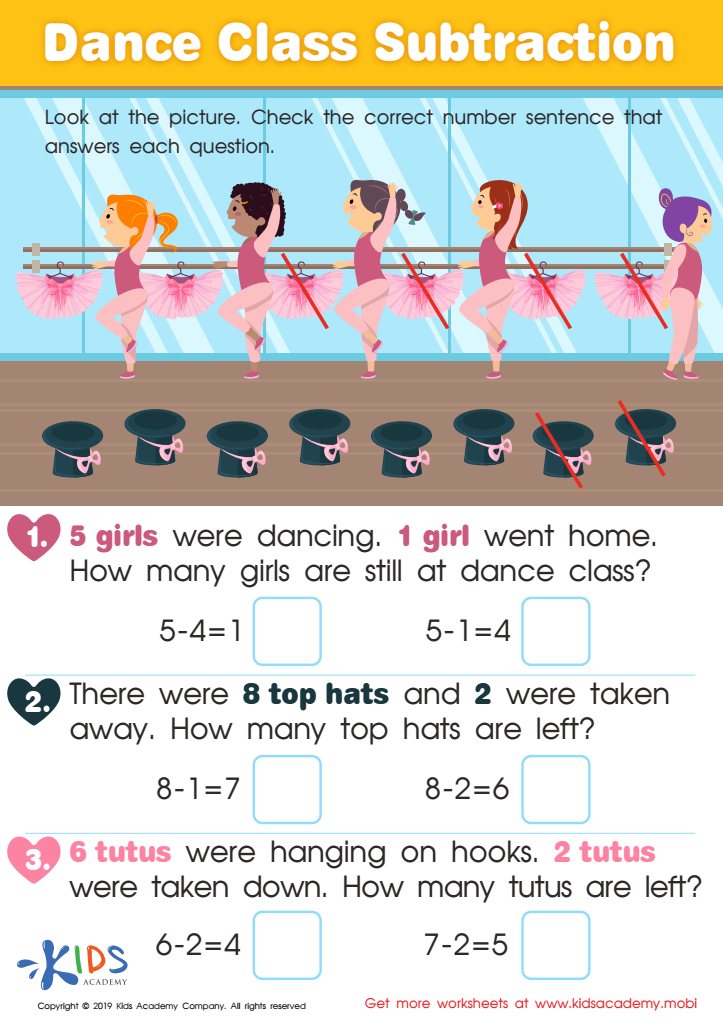
Dance Class Subtraction Worksheet
 Assign to My Students
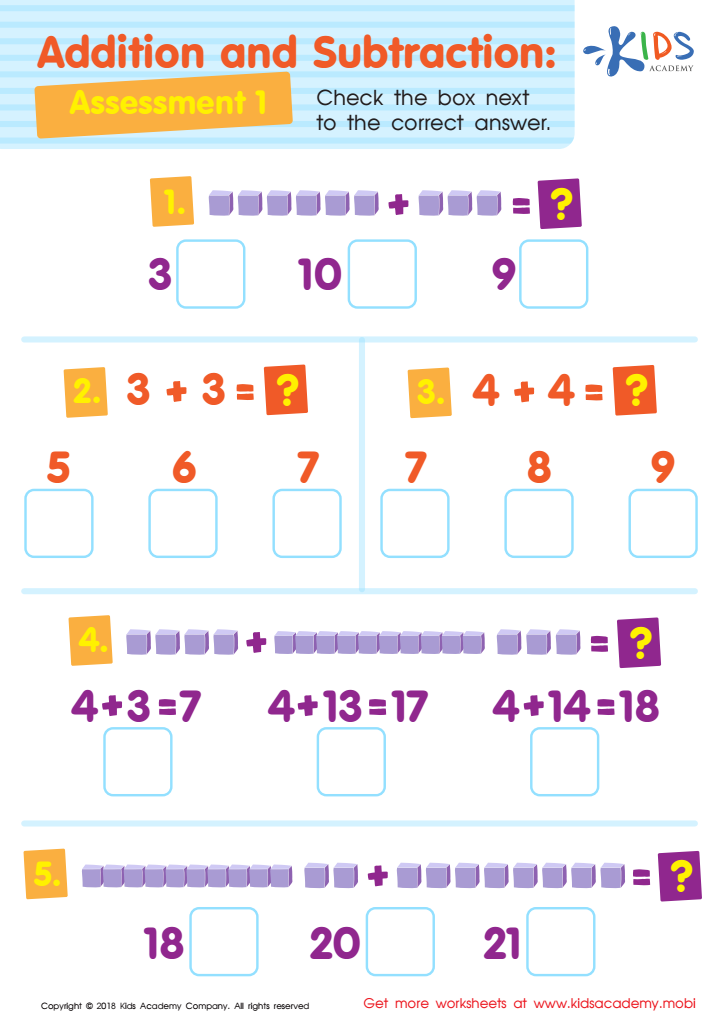
Addition and Subtraction Assessment 1 Worksheet
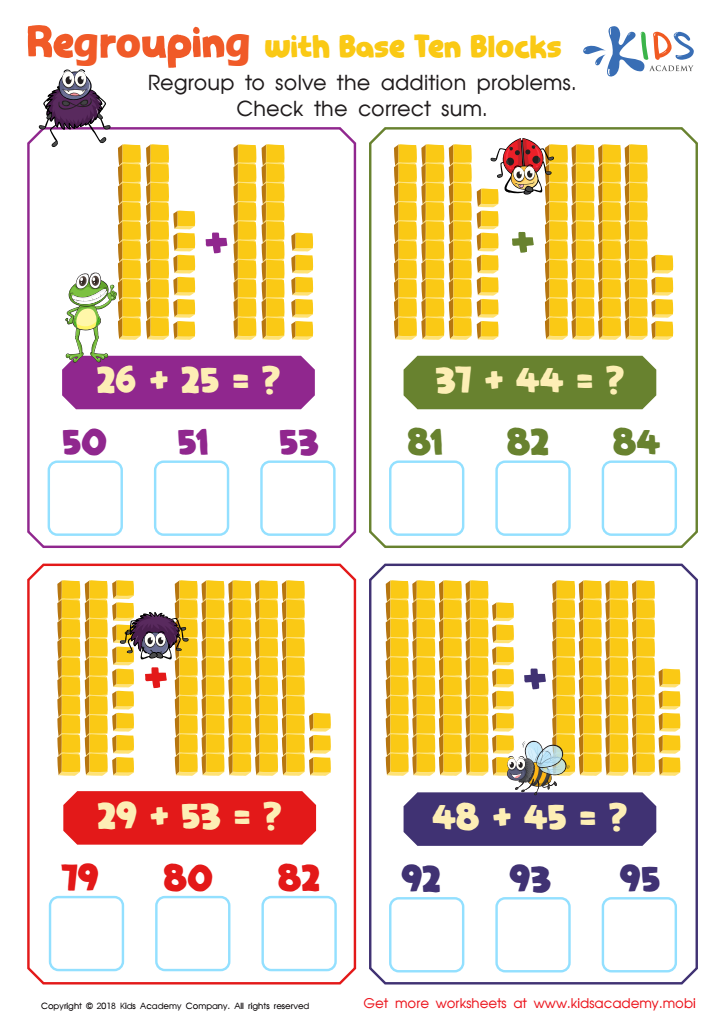
Regrouping With Base Ten Blocks Worksheet
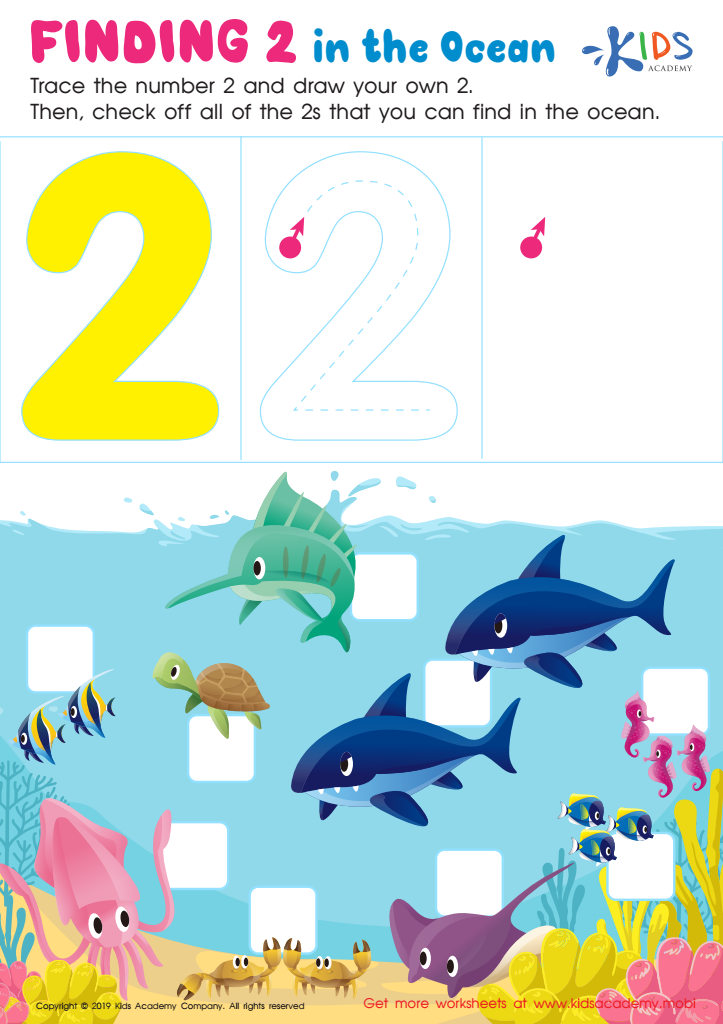
Finding 2: In the Ocean Worksheet




%20(1).jpg)


.jpg)
Developing problem-solving abilities in 6-year-olds is crucial for several reasons. First, this age marks a significant stage in cognitive development, where children begin to think critically and independently. By encouraging problem-solving skills, parents and teachers help children learn to analyze situations, identify challenges, and brainstorm solutions. This fosters a sense of independence and boosts their confidence in tackling various tasks.
Secondly, problem-solving abilities are foundational skills that support academic success across subjects. For example, in mathematics, children are required to manipulate numbers and apply strategies to solve problems. Furthermore, creative problem-solving encourages innovative thinking, which is vital in our rapidly changing world.
Additionally, these skills are essential for emotional and social development. As children navigate interpersonal conflicts or group work, they learn to communicate effectively, consider diverse perspectives, and work collaboratively.
By nurturing problem-solving abilities, parents and teachers prepare children not just for school success but for lifelong learning and resilience. Being equipped with strong problem-solving skills will enable them to face challenges, adapt to new situations, and ultimately thrive in various aspects of life. Therefore, fostering these skills should be a priority for adults guiding young learners.








