Interpreting data Worksheets for 6-Year-Olds
3 filtered results
-
From - To
Welcome to our "Interpreting Data Worksheets for 6-Year-Olds" webpage! Here, young learners can enjoy fun and engaging activities designed to help them understand and analyze information visually. Our worksheets feature picture graphs, bar graphs, and simple charts, tailored to develop essential math skills and critical thinking. As children explore different data representations, they will learn to answer questions, compare information, and draw conclusions, all while enhancing their cognitive abilities. Perfect for classroom use or at-home learning, these interactive worksheets provide a solid foundation for future data interpretation skills. Foster your child's love for math and data today!
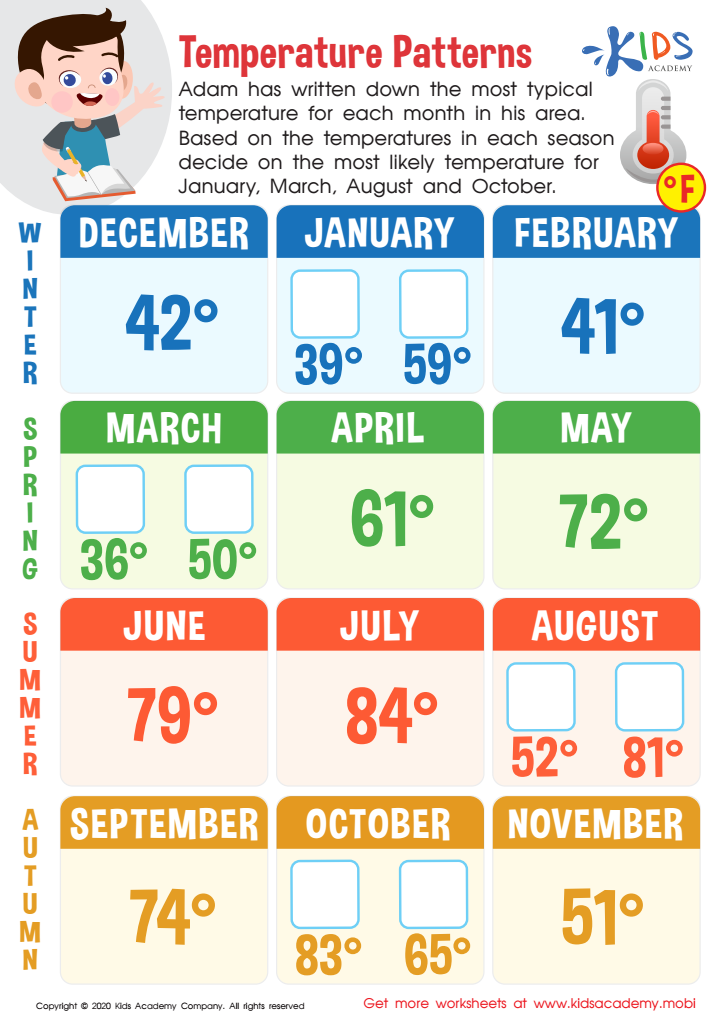
Temperature Patterns Worksheet
 Assign to My Students
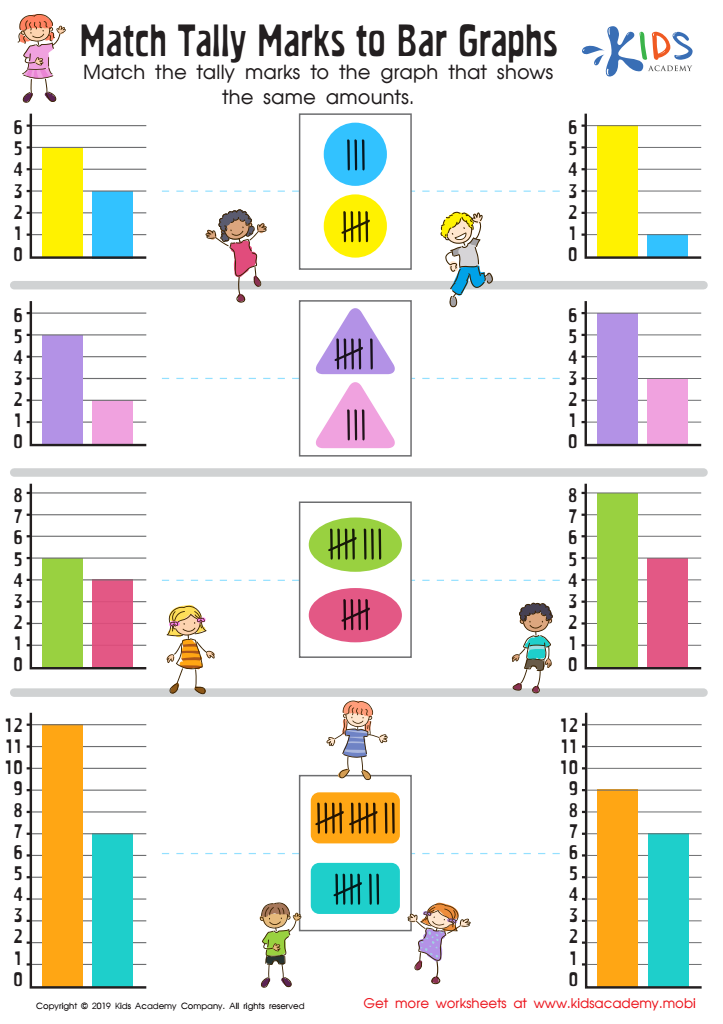
Match Tally Marks to Bar Graphs Worksheet
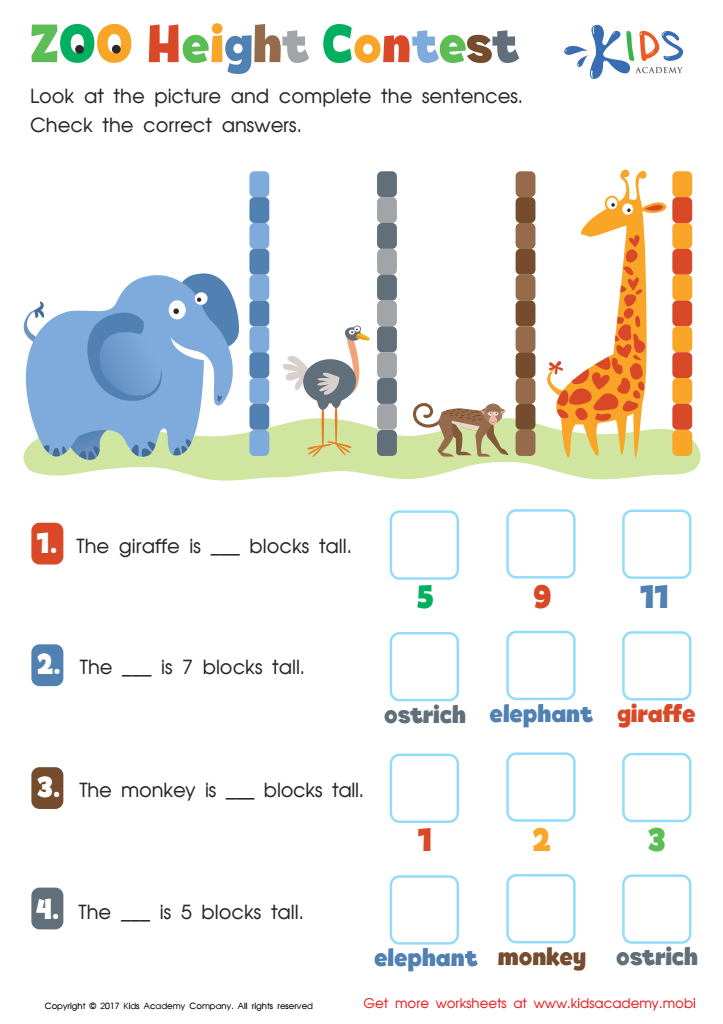
Zoo Height Contest Worksheet







Interpreting data is essential for parents and teachers of 6-year-olds because it offers valuable insights into a child's development and learning progress. At this age, children are just beginning to grasp basic concepts of measurement, comparison, and organization—skills that are foundational for future learning. By analyzing data related to their educational growth, educators can identify strengths and weaknesses in a child's skills, such as literacy and numeracy.
Understanding data helps tailor instructional methods to meet individual needs, ensuring that every child receives the appropriate support. For instance, if test scores show a child struggles with reading, targeted interventions can be implemented, fostering a more conducive learning environment.
Additionally, parents can use data to track their child's progress over time, enabling them to make informed decisions about resources, activities, and supplemental learning opportunities. By participating in this process, parents also model critical thinking and problem-solving skills.
Ultimately, effectively interpreting data empowers both teachers and parents to create nurturing environments that cultivate a child's abilities and interests, laying a strong foundation for lifelong learning. Engaging with data not only informs educational strategies but also helps build confidence and motivation in young learners.








