Knowledge application Worksheets for 6-Year-Olds
4 filtered results
-
From - To
Unlock your child's potential with our engaging Knowledge Application Worksheets for 6-Year-Olds! Designed to enhance critical thinking and problem-solving skills, these worksheets help young learners apply their knowledge in fun and creative ways. Each activity encourages cognitive development through relatable scenarios, bridging the gap between theory and practice. From interactive math challenges to reading comprehension tasks, children can explore concepts hands-on while enjoying themselves. Perfect for both home and classroom settings, our diverse range of worksheets ensures every child's learning needs are met. Dive into a world of discovery today and watch your child's confidence and skills flourish!
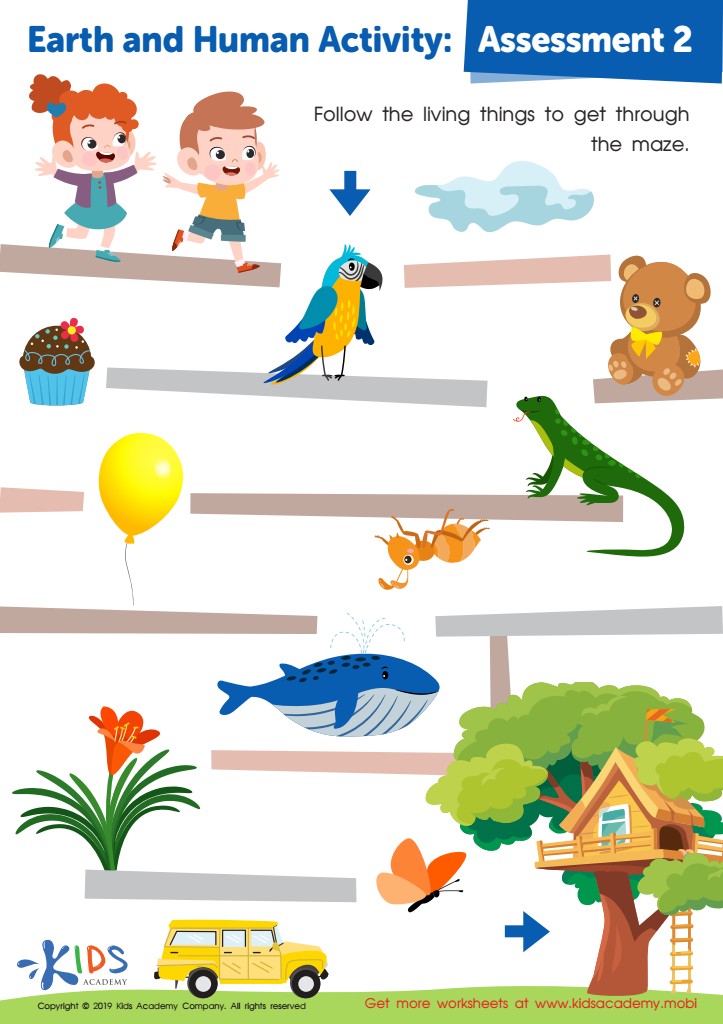
Earth and Human Activity: Assessment 2 Worksheet
 Assign to My Students
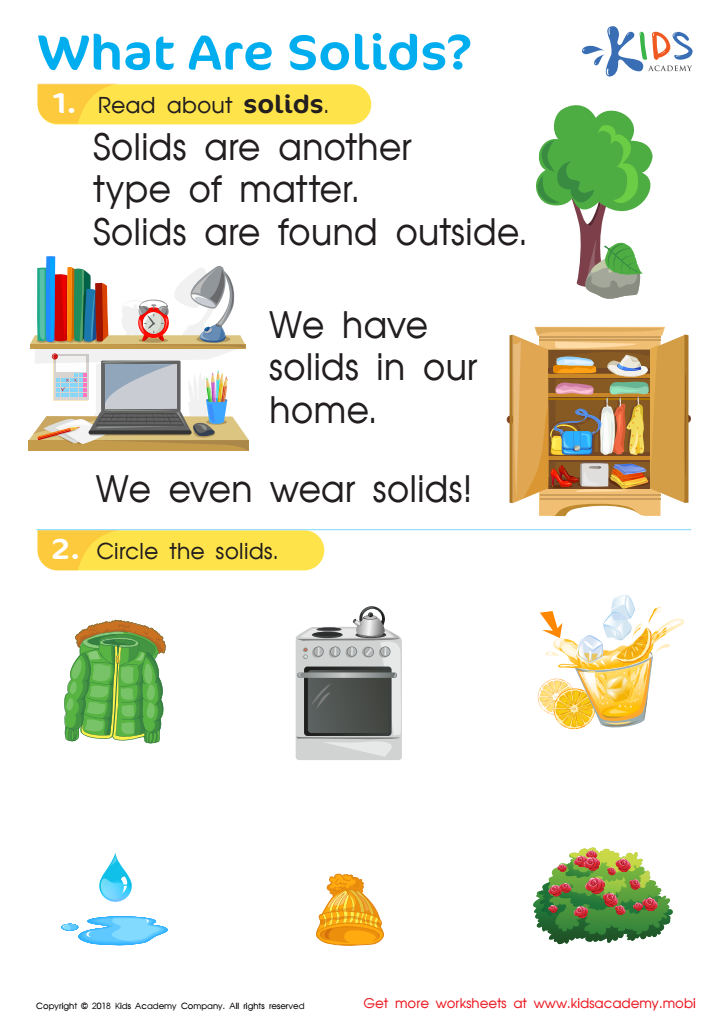
What Are Solids? Worksheet
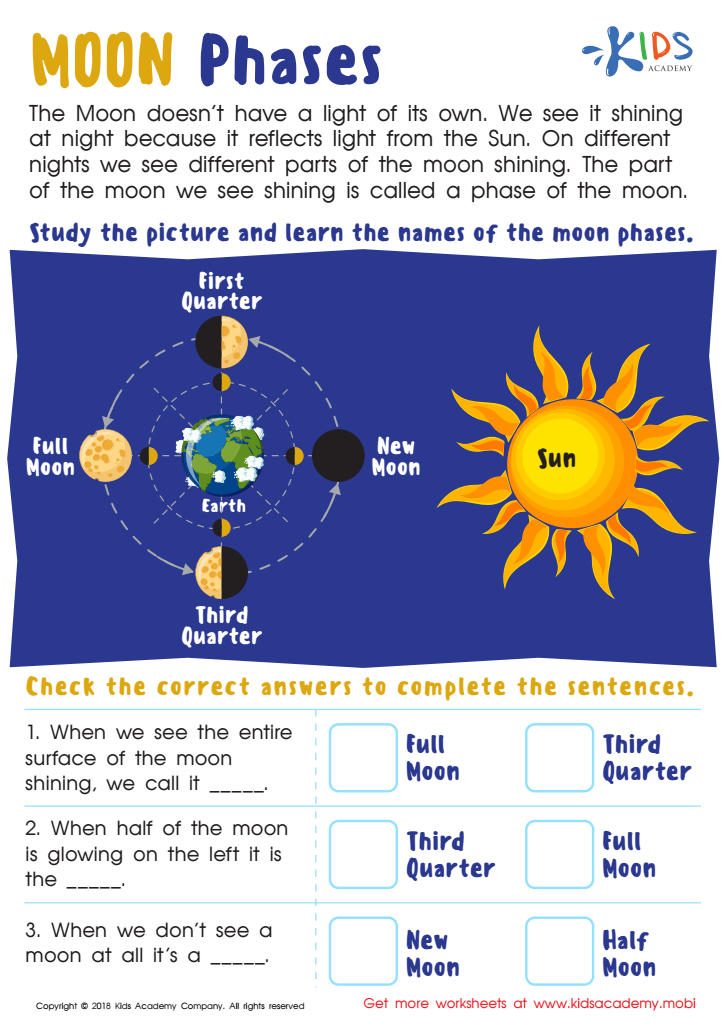
Moon Phases Worksheet
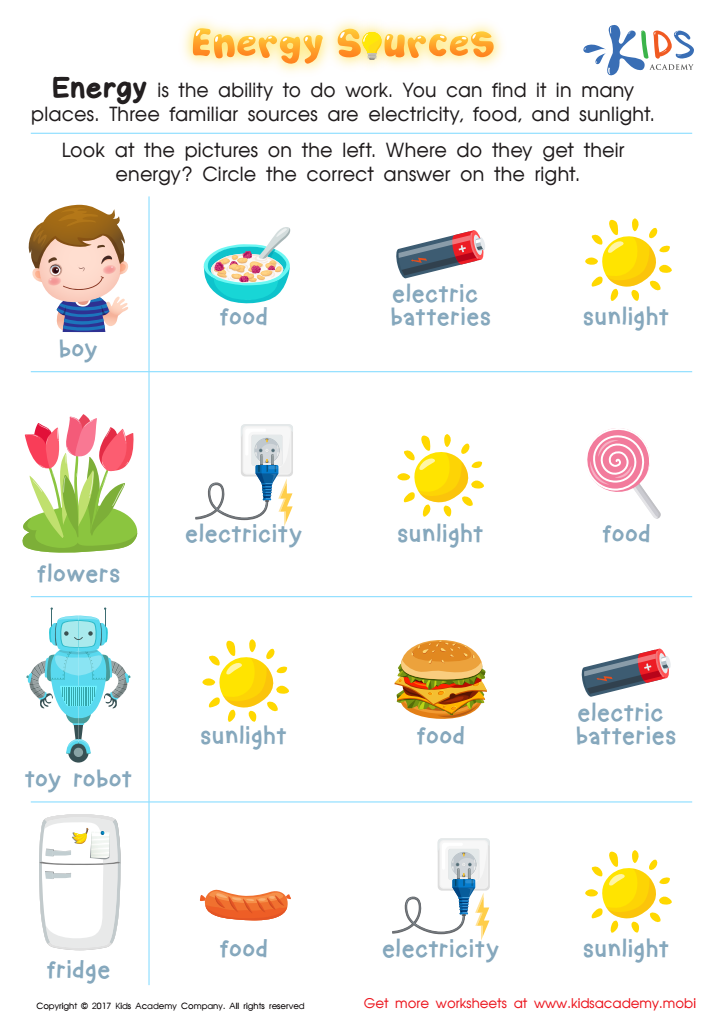
Energy Sources Printable





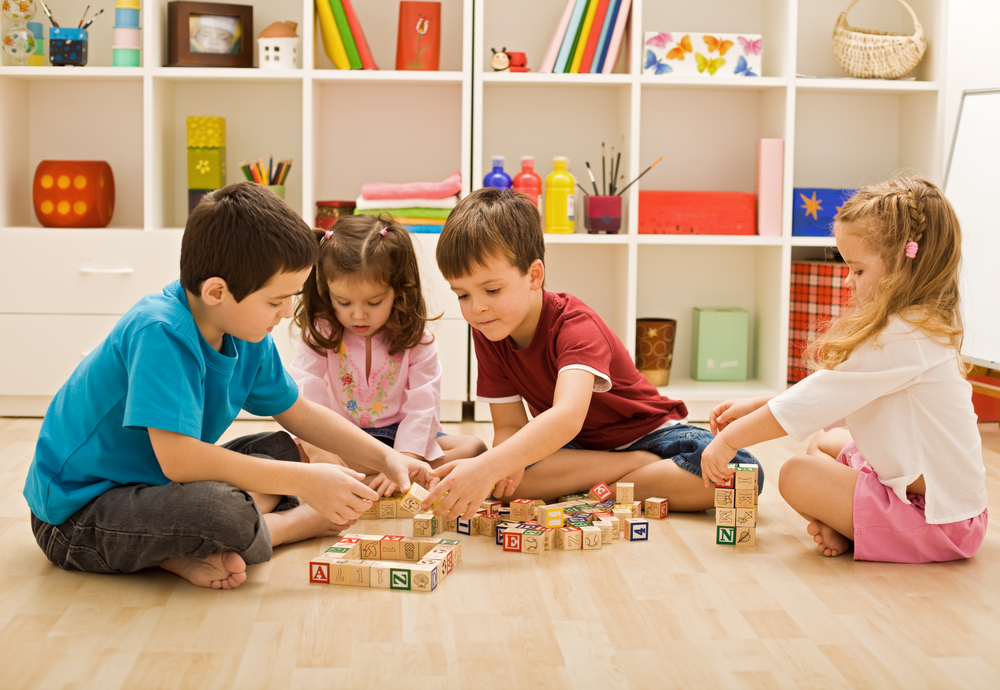

Knowledge application is crucial for 6-year-olds as it bridges the gap between acquiring information and utilizing it in real-world contexts. At this age, children are naturally curious and eager to explore their environment. By focusing on knowledge application, parents and teachers can nurture critical thinking skills, encouraging children to think beyond rote memorization and to make connections across subjects.
When 6-year-olds are taught to apply what they've learned, they develop cognitive flexibility, enabling them to solve problems creatively. This builds self-confidence, as children learn that they can take concepts and use them in various situations, whether in math, science, or social situations. Furthermore, applying knowledge connects learning with experiences, making education more meaningful and engaging.
Additionally, fostering the ability to transfer knowledge not only prepares children for academic success but also equips them with essential life skills. For instance, by understanding how to apply basic math in cooking or recognizing patterns in nature, children learn to appreciate learning as a continuous process.
Ultimately, emphasizing knowledge application lays the foundation for lifelong learning, helping children become adaptable thinkers, empathetic problem solvers, and active contributors to their communities. It’s essential for both parents and teachers to prioritize this aspect of early education.








