
Money calculation skills Worksheets for 6-Year-Olds
3 filtered results
Difficulty Level
Grade
Age
-
From - To
Subject
Activity
Standards
Enhance your 6-year-old's money calculation skills with our engaging worksheets designed to make learning fun! Our collection provides a variety of activities that teach young learners to identify coins, understand their values, and perform simple addition and subtraction using real-life scenarios. Each worksheet is carefully crafted to captivate young minds, fostering both math skills and financial literacy. The interactive format encourages hands-on practice, helping kids gain confidence in their abilities. Perfect for home or classroom use, these worksheets support developing essential skills that lay the groundwork for future academic success. Start your child's journey to mastering money management today!
Favorites
With answer key
Interactive
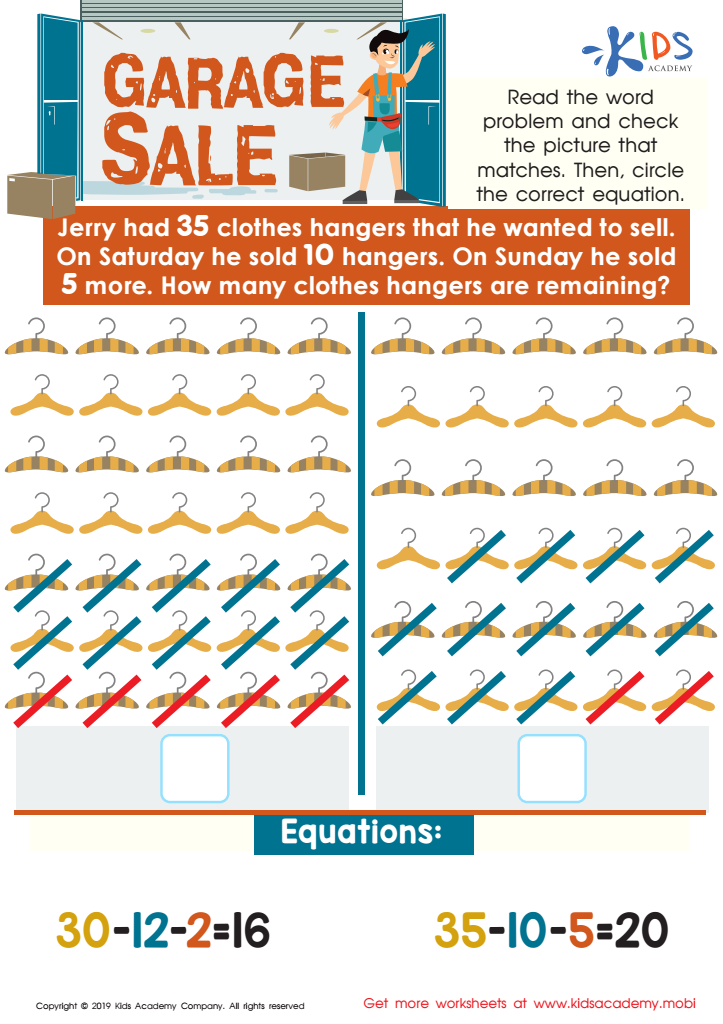
Garage Sale Worksheet
Help Jerry at his garage sale! With this worksheet, your child can practice subtraction word problems with multiple subtrahends. They'll read the problem, identify important info, circle the equation and solve it. Let your little math star have fun while helping Jerry out!
 Assign to My Students
Garage Sale Worksheet
Worksheet
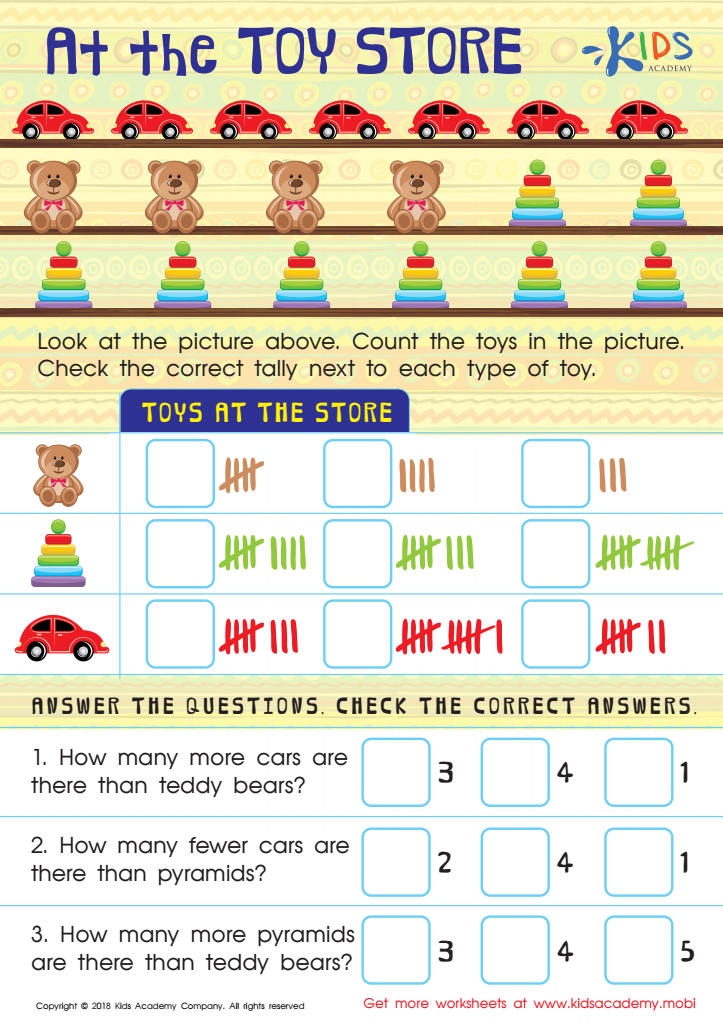
Tally Chart: At the Toy Store Worksheet
Kids Academy has a fun worksheet to help kids practice counting and using tally marks! They can think about the number of toys and compare them. At the bottom, help them answer the questions about the toys on this math page. It's an easy way to learn that one tally mark equals one item.
Tally Chart: At the Toy Store Worksheet
Worksheet
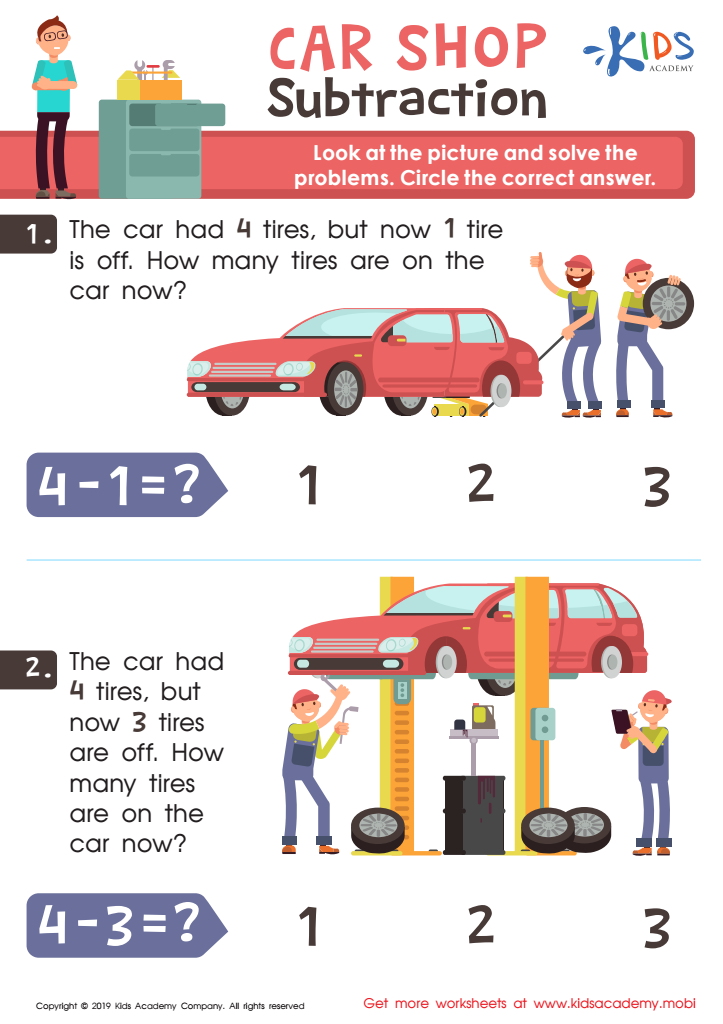
Car Shop Subtraction Worksheet
Encourage your kids to practice addition and subtraction with this worksheet. Read the word problems aloud, help them solve and check the answer from the provided options. With enough exercises and guidance, this task should be fairly easy.
Car Shop Subtraction Worksheet
Worksheet
Join Kids Academy for Free
Who is primarily going to use this learning content?







Parents and teachers should prioritize money calculation skills for 6-year-olds as these foundational skills are crucial for a child's development and future success. At this age, children are naturally curious and eager to learn, making it an ideal time to introduce financial concepts in a fun and engaging way. Understanding money reinforces not only basic arithmetic skills, such as addition and subtraction, but also enhances critical thinking and decision-making abilities.
Money management is a vital life skill, setting the stage for responsible behaviors that can prevent financial difficulties later in life. By mastering simple money calculations, children learn the importance of budgeting, saving, and making informed choices, instilling a sense of independence and confidence.
Additionally, teaching money skills at a young age can strengthen parent-child interactions through practical activities, such as grocery shopping or saving allowances. These shared experiences create lasting memories while promoting essential learning. Ultimately, equipping children with money calculation skills fosters a solid foundation for their future, encouraging lifelong financial literacy and responsible citizenship. As they grow, these skills become increasingly relevant, reinforcing the necessity for educators and parents to prioritize this critical aspect of childhood education.








