
Phonics improvement Worksheets for 6-Year-Olds
3 filtered results
Difficulty Level
Grade
Age
-
From - To
Subject
Activity
Standards
Enhance your 6-year-old's reading skills with our Phonics Improvement Worksheets! Specifically designed to engage young learners, these worksheets make phonics fun and interactive. Our carefully crafted activities focus on essential skills, including letter recognition, blending sounds, and decoding words. Each worksheet is age-appropriate, encouraging your child to practice at their own pace while reinforcing their understanding of phonetic concepts. With vibrant illustrations and varied exercises, your little reader will enjoy mastering phonics through playful learning. Perfect for home or school use, these resources will support your child's literacy development and lay a strong foundation for future reading success!
Favorites
With answer key
Interactive
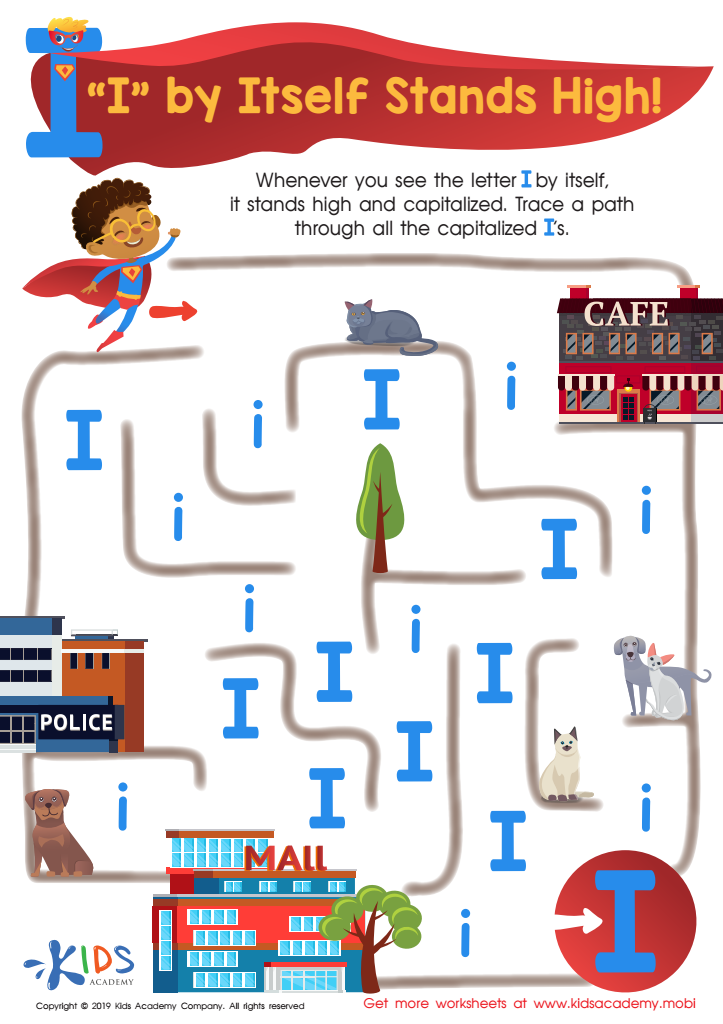
I Stands High Worksheet
Kids can use their imagination to help a superhero find the uppercase 'I's on the 'I By Itself Stands High' worksheet. This helps children learn capitalization, and they can join the superhero in flying over a city of cats, dogs and buildings to locate the needed letters.
 Assign to My Students
I Stands High Worksheet
Worksheet
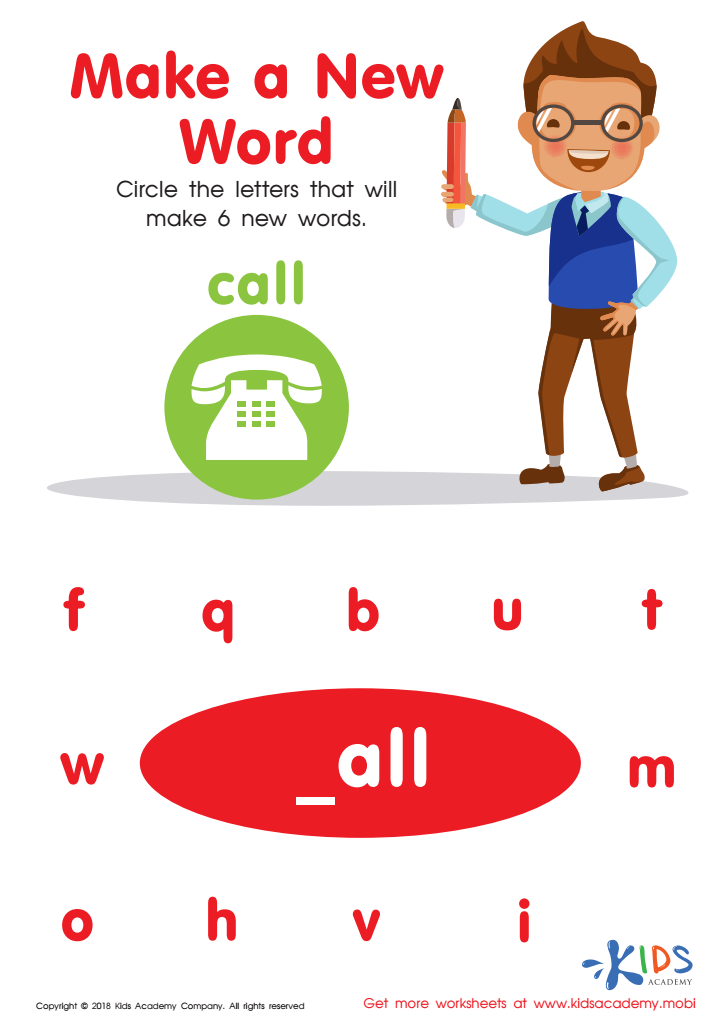
Make a New Word Worksheet
Young readers and writers can enhance their skills with this fun PDF worksheet. They'll trace letters to create new words and feel like super readers and writers after finding six words. They'll also practice building words with the "all" word family.
Make a New Word Worksheet
Worksheet
Join Kids Academy for Free
Who is primarily going to use this learning content?








Phonics improvement is crucial for 6-year-olds as it lays the foundation for their reading and writing skills. At this age, children are at a critical stage in their literacy development, and understanding phonics enables them to decode words independently. Phonics teaches children the relationship between letters and sounds, which helps them recognize patterns in words, making reading more fluent and enjoyable.
Improved phonics skills enhance children's overall literacy, boosting their confidence and encouraging a love for reading. This confidence can create a positive feedback loop; the more students read, the better they become, in turn inspiring them to read more. By focusing on phonics, parents and teachers help children develop essential skills for academic success across subjects.
Furthermore, struggling with phonics can lead to frustration and disengagement in school. Children may fall behind their peers, impacting their self-esteem and motivation. By prioritizing phonics improvement, caregivers can provide a supportive environment that fosters a growth mindset, where trying and learning is encouraged.
Engaging in phonics activities reinforces these skills in a fun and interactive way, allowing parents and teachers to form an integral part of the child’s literacy journey. Ultimately, phonics skill mastery is key to lifelong learning and communication.








