Problem-solving skills development Worksheets for 6-Year-Olds
3 filtered results
-
From - To
Discover our engaging Problem-Solving Skills Development Worksheets designed specifically for 6-year-olds! These worksheets provide a fun and interactive way for young learners to enhance their critical thinking and problem-solving abilities. With diverse activities, including puzzles, riddles, and logical challenges, children will enjoy practicing essential skills that promote cognitive development. Our resources help foster persistence and creativity, enabling kids to approach problems confidently. Perfect for home or classroom use, these worksheets serve as valuable tools in nurturing a love for learning while empowering students to tackle challenges effectively. Start your child’s problem-solving journey today!
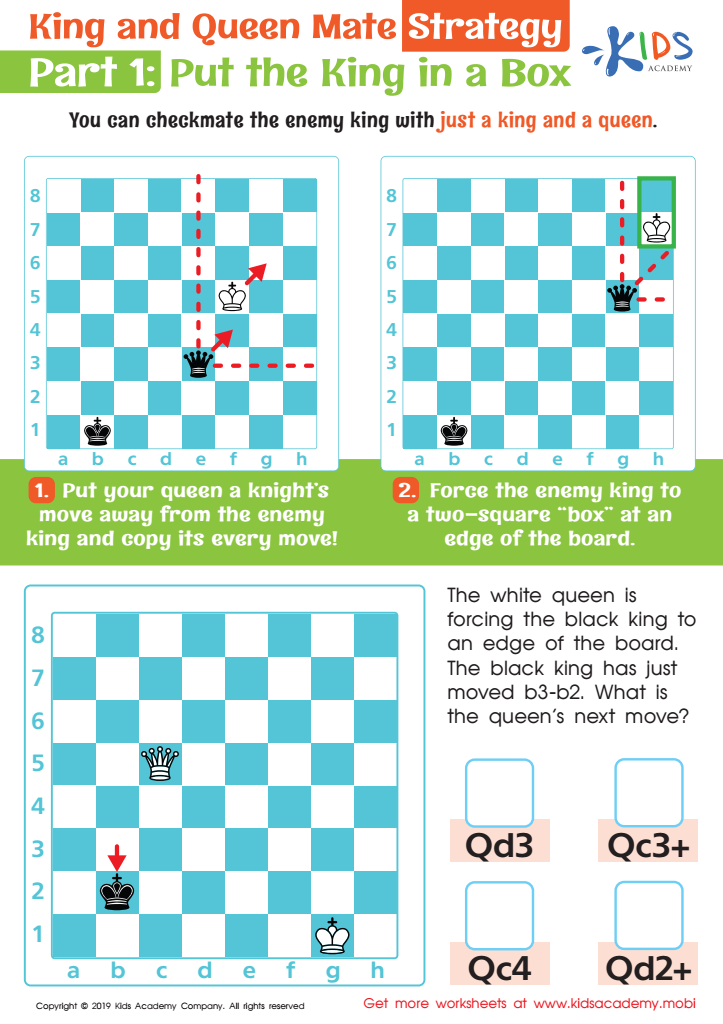
King and Queen Mate Strategy: Part 1 Worksheet
 Assign to My Students
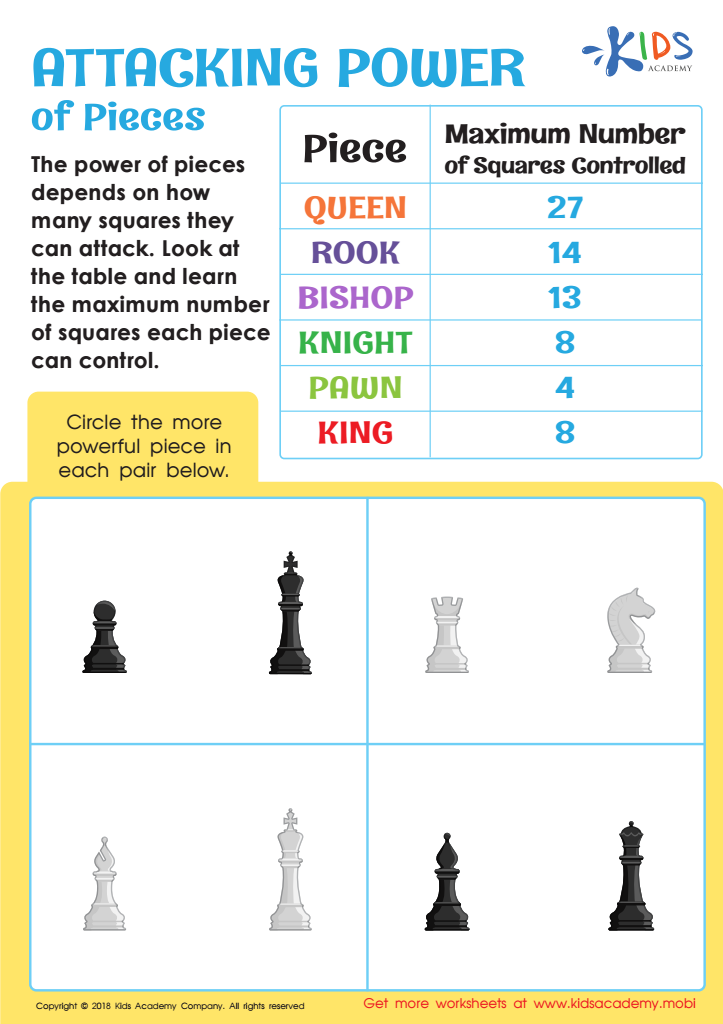
Attacking Power of Chess Pieces Worksheet
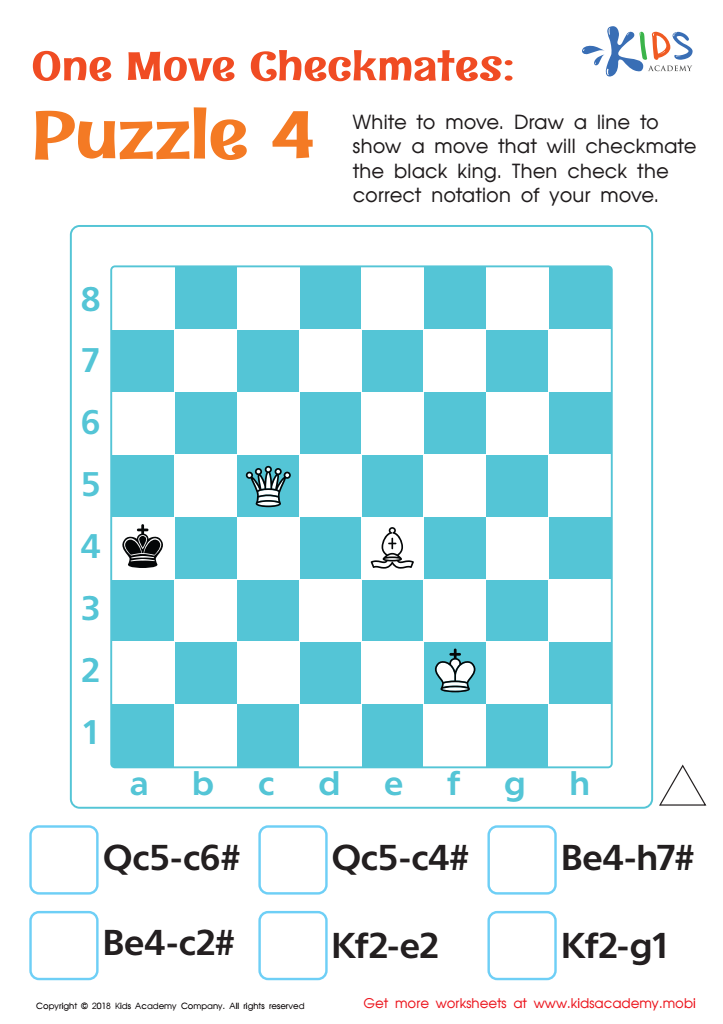
One Move Checkmates: Puzzle 4 Worksheet




Problem-solving skills development is crucial for 6-year-olds because it lays the foundation for lifelong learning and critical thinking. At this age, children are naturally curious and eager to explore their environment. Fostered effectively, this curiosity encourages them to tackle challenges creatively and independently. Parents and teachers who invest in developing these skills help instill persistence, adaptability, and resilience—qualities essential for overcoming future obstacles.
Additionally, strong problem-solving abilities enhance academic performance. As children learn to analyze situations, they improve their reasoning skills, comprehension, and decision-making, which are vital across all subjects. These skills also promote emotional intelligence, as children learn to navigate social challenges, understand different perspectives, and collaborate with peers.
Furthermore, in our rapidly changing world, equipping young learners with problem-solving skills prepares them for unforeseen challenges in a technology-driven society. They become adept thinkers capable of analyzing problems, brainstorming solutions, and taking critical steps to achieve goals.
Ultimately, fostering problem-solving skills empowers children to take charge of their learning and personal growth. It is imperative for adults to recognize this developmental phase's significance and actively engage young learners in experiences that promote critical thinking and experimentation.








