Reading analog clocks Worksheets for 6-Year-Olds
4 filtered results
-
From - To
Help your 6-year-old master the art of telling time with our engaging Reading Analog Clocks Worksheets! Specifically designed for young learners, these worksheets provide fun and interactive activities that enhance clock reading skills. Kids will learn to identify hour and minute hands, understand quarter hours, and practice drawing their own clocks. Each worksheet comes with colorful illustrations and tasks that keep children motivated and excited about learning. Perfect for use at home or in the classroom, our resources are an excellent way to build numeracy skills and boost confidence in reading analog clocks. Download now and watch your child shine!
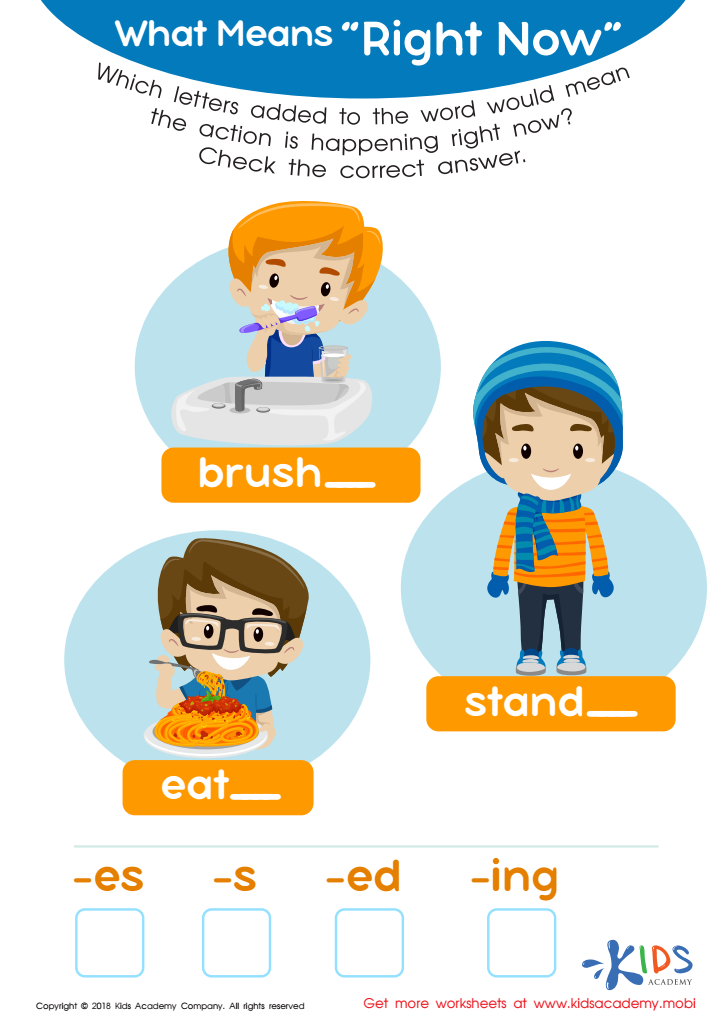
What Means "Right Now" Worksheet
 Assign to My Students
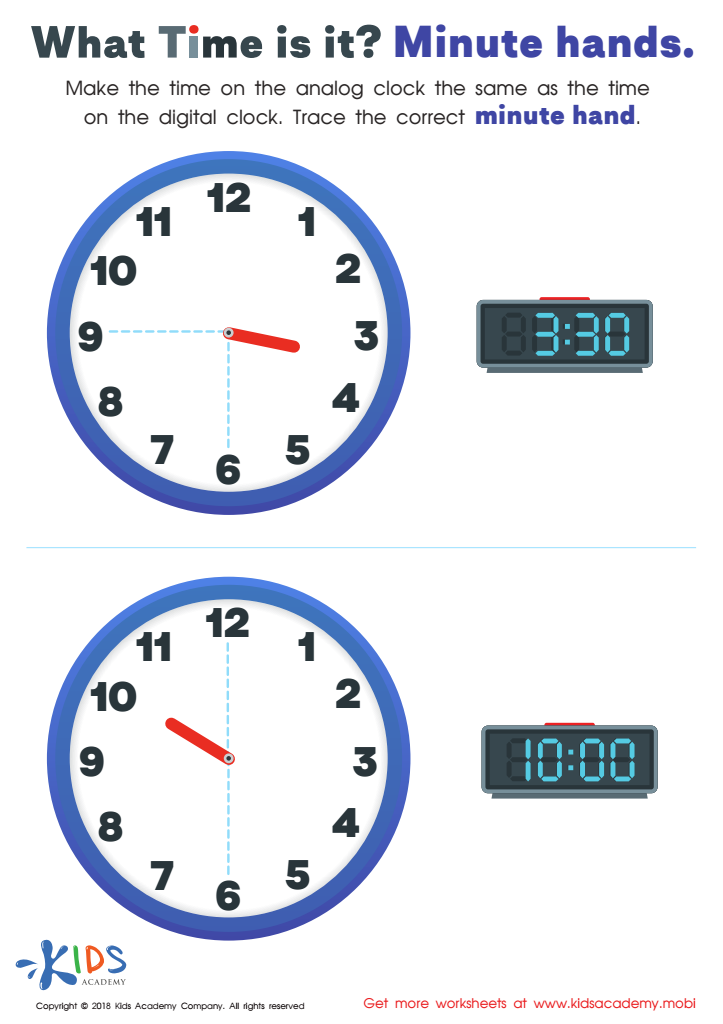
What Time Is it? Minute Hands Worksheet
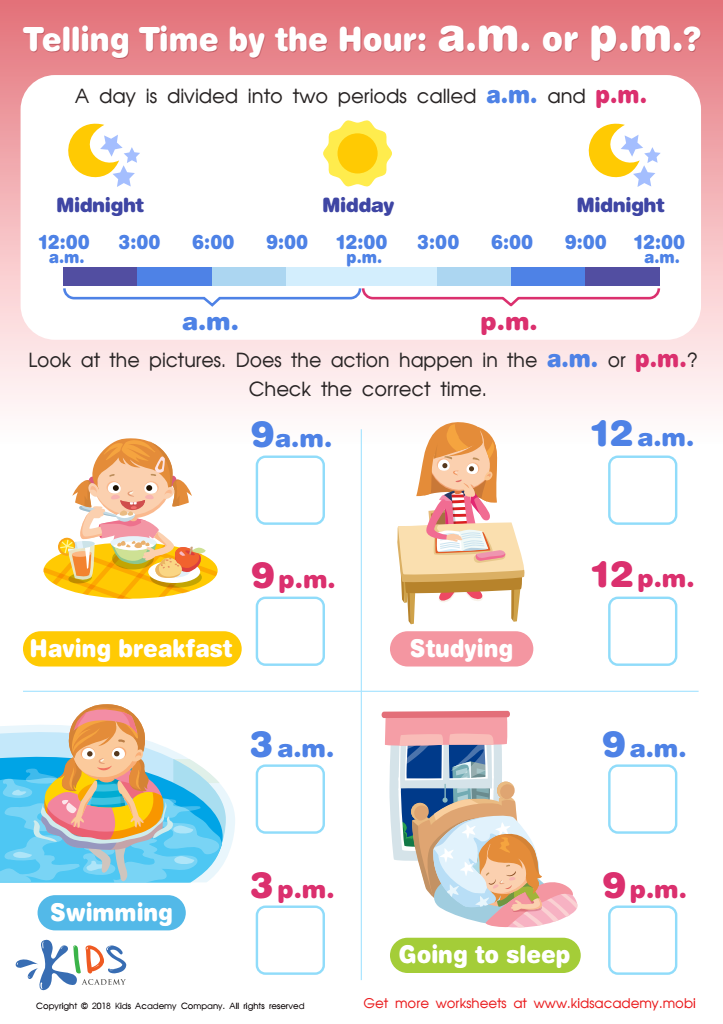
Tilling Time by the Hour: a.m. or p.m.? Worksheet
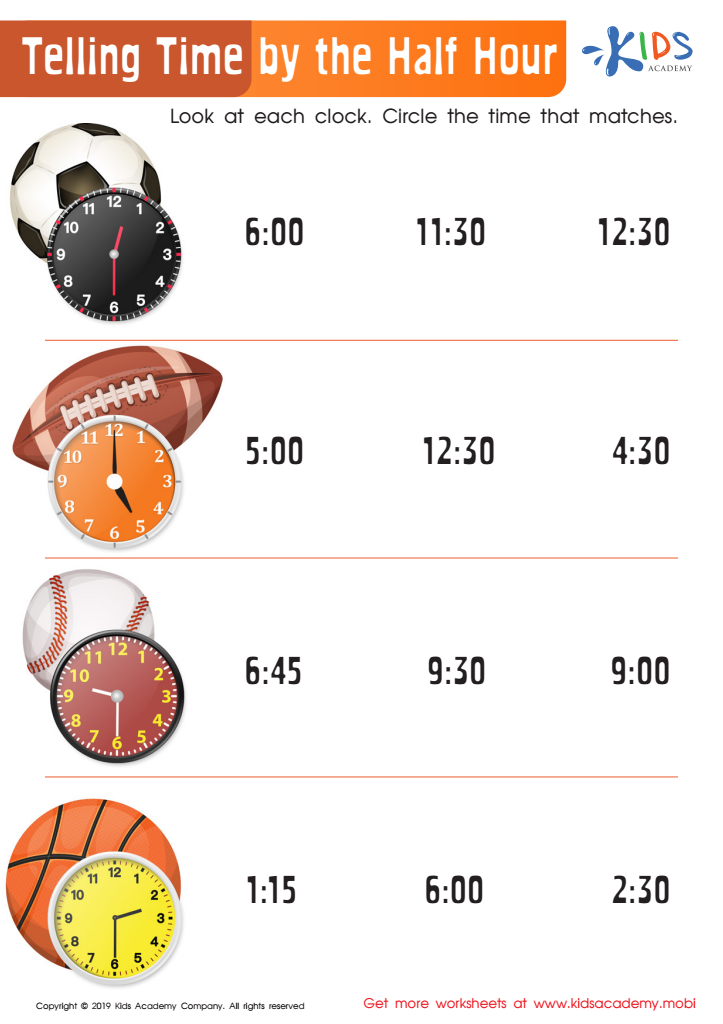
Telling Time by the Half Hour Worksheet








Teaching 6-year-olds to read analog clocks is essential for several reasons. First, it strengthens their sense of time, which is crucial for daily routines. Understanding how to read an analog clock helps children grasp concepts like punctuality, responsibility, and organization. These skills are foundational for their future success both academically and socially.
Second, analog clocks promote cognitive development. Learning to tell time involves visual-spatial reasoning and enhances critical thinking skills as children recognize the relationship between the clock hands and numeral positions. It also encourages the development of fine motor skills when they practice moving clock hands during activities.
Moreover, analog clocks are still prevalent in many environments, from schools to public spaces, making it practical for children to know how to read them. Familiarity with both digital and analog time-telling prepares children for real-world experiences.
Lastly, teaching children about time fosters meaningful conversations between parents and teachers, creating a collaborative learning atmosphere. Engaging in this process together not only strengthens their knowledge but also encourages family bonding. Therefore, understanding how to read analog clocks equips young learners with crucial life skills that go beyond just telling time.








