
Rhyming skills development Worksheets for 6-Year-Olds
4 filtered results
Difficulty Level
Grade
Age
-
From - To
Subject
Activity
Standards
Enhance your child's language skills with our Rhyming Skills Development Worksheets designed specifically for 6-year-olds! These engaging activities promote phonemic awareness and help young learners identify and generate rhymes, essential components of early literacy. With colorful illustrations and thoughtful prompts, your child will enjoy practicing sounds, vocabulary, and word patterns in a fun and interactive way. Our worksheets cater to various learning styles, ensuring that every child remains engaged and eager to learn. Perfect for parents and educators, these resources provide a solid foundation for reading readiness while fostering creativity and critical thinking. Start your child’s rhyming journey today!
Favorites
With answer key
Interactive
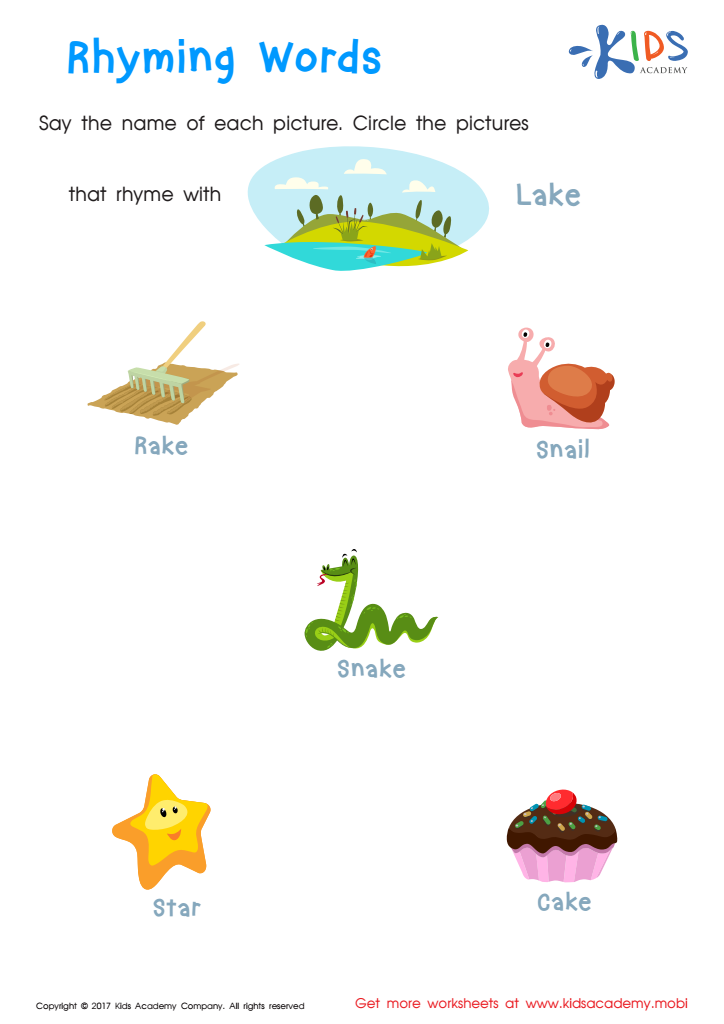
Rhyming Words Rhyming Worksheet
This worksheet is great for honing pre-reading skills. It helps kids make connections between pictures and written words, use problem-solving, and recognize sounds and words that rhyme. Have fun exploring rhyming words with your child, and they'll be rhyming in no time!
 Assign to My Students
Rhyming Words Rhyming Worksheet
Worksheet
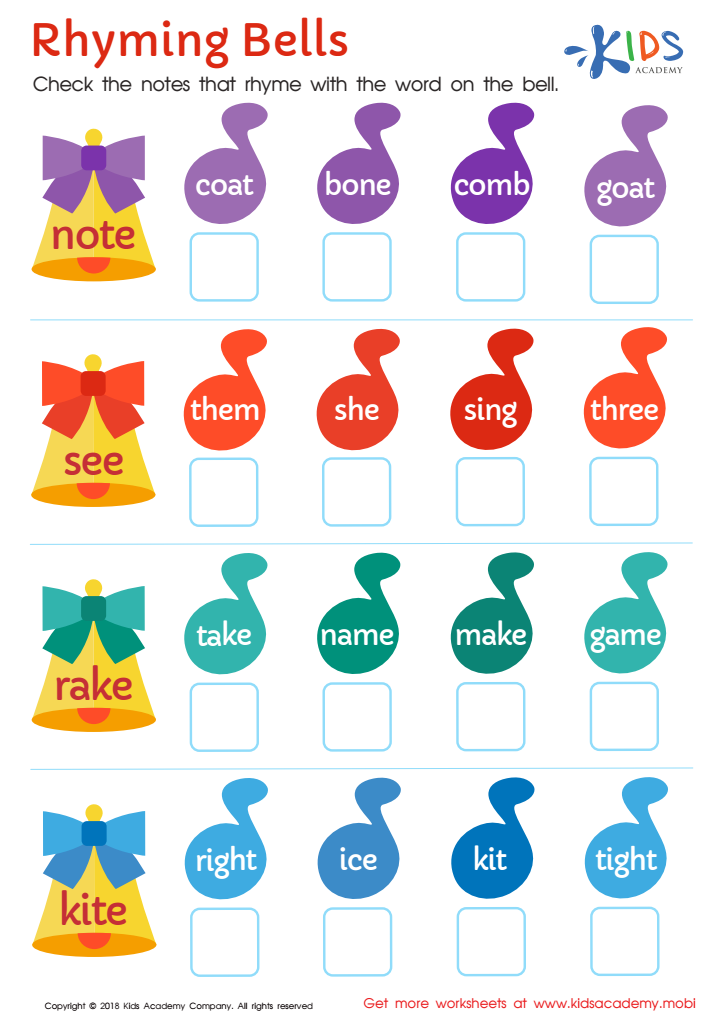
Rhyming Bells Worksheet
This printable worksheet helps students recognize rhyming words. Read a word, then pick the 4 words that rhyme. Look out for words with different spellings but same ending sound. It's a great exercise to improve understanding of rhyming words.
Rhyming Bells Worksheet
Worksheet
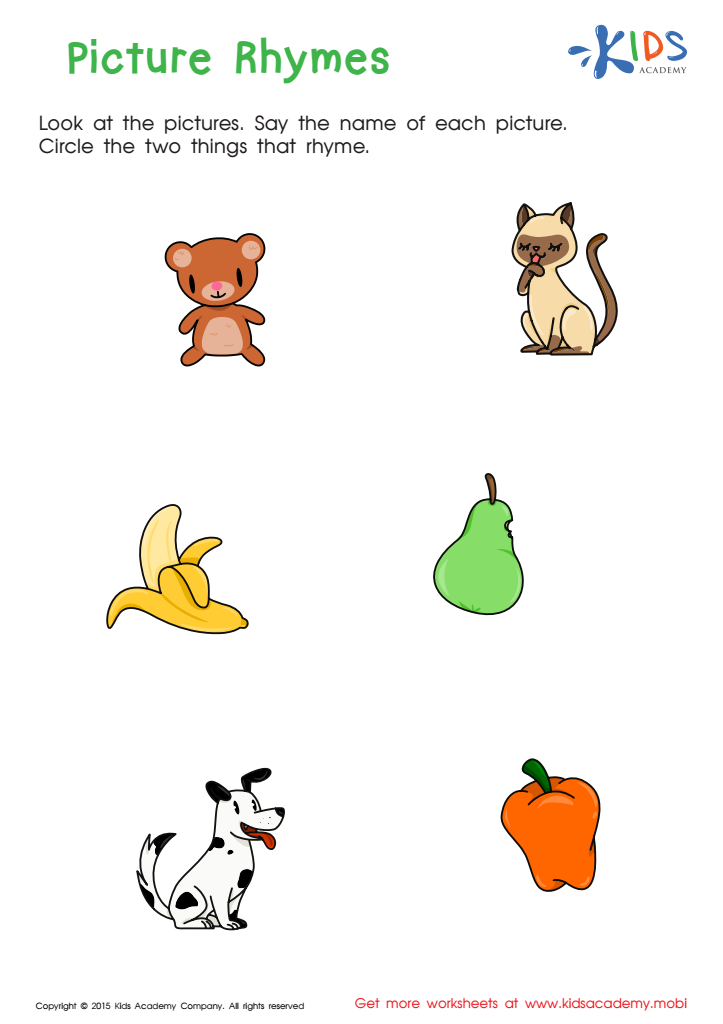
First Words: Picture Rhymes Worksheet
Rhyming helps kids understand language, read and write better. This printable worksheet boosts problem-solving and cognitive skills with vibrant pictures. It teaches kids to identify words, recognize rhymes, complete mental tasks and write words. An extra activity: show them how rhyming words share some of the same letters.
First Words: Picture Rhymes Worksheet
Worksheet
Join Kids Academy for Free
Who is primarily going to use this learning content?







Rhyming skills are a critical aspect of early literacy development, particularly for 6-year-olds. These skills contribute to phonemic awareness, which is the understanding of sounds in words. When children engage in rhyming, they practice distinguishing and manipulating sounds, which lays the foundation for reading and writing.
First, rhyming helps improve children's vocabulary. As they hear and play with words that sound similar, they become more aware of language patterns and develop a richer lexicon. This, in turn, enhances their comprehension and verbal expression.
Additionally, rhyming boosts memory and listening skills. Through songs, nursery rhymes, and poetry, children learn to pay attention to sound patterns, improving their ability to follow instructions and retain information.
Moreover, rhyming fosters a love for reading and literacy. When rhymes are fun and engaging, they encourage children to explore books and language more. This intrinsic motivation is essential in developing lifelong learners.
Finally, for parents and teachers, nurturing rhyming skills can support overall cognitive development. It opens doors to critical thinking and problem-solving as children explore language. Therefore, fostering rhyming skills should be a priority in early childhood education.








