Strategic thinking Worksheets for 6-Year-Olds
3 filtered results
-
From - To
Unlock your child's potential with our engaging Strategic Thinking Worksheets for 6-year-olds! Designed to foster critical thinking and problem-solving skills, these worksheets provide fun and interactive activities tailored for young learners. Through puzzles, games, and creative challenges, children will develop their ability to strategize and make decisions in a playful way. Our worksheets promote cognitive growth while ensuring that learning remains enjoyable and approachable. Help your child build a strong foundation in strategic thinking to enhance their academic journey. Perfect for both home and classroom settings, these resources are a valuable tool for teachers and parents alike. Let's inspire the thinkers of tomorrow!
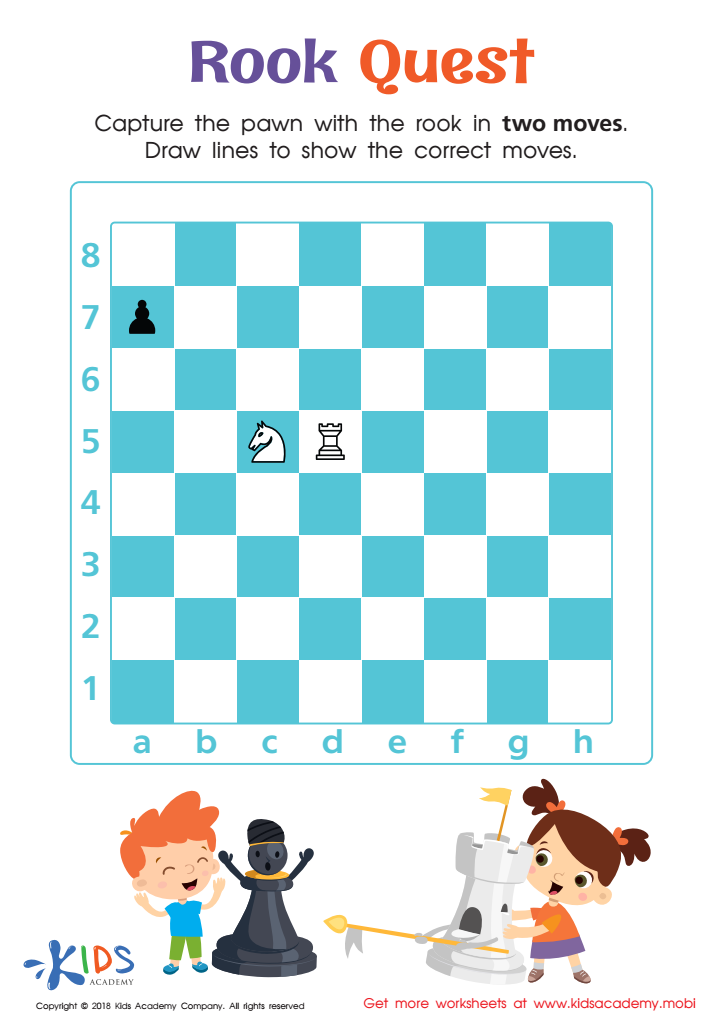
Rook Quest Worksheet
 Assign to My Students
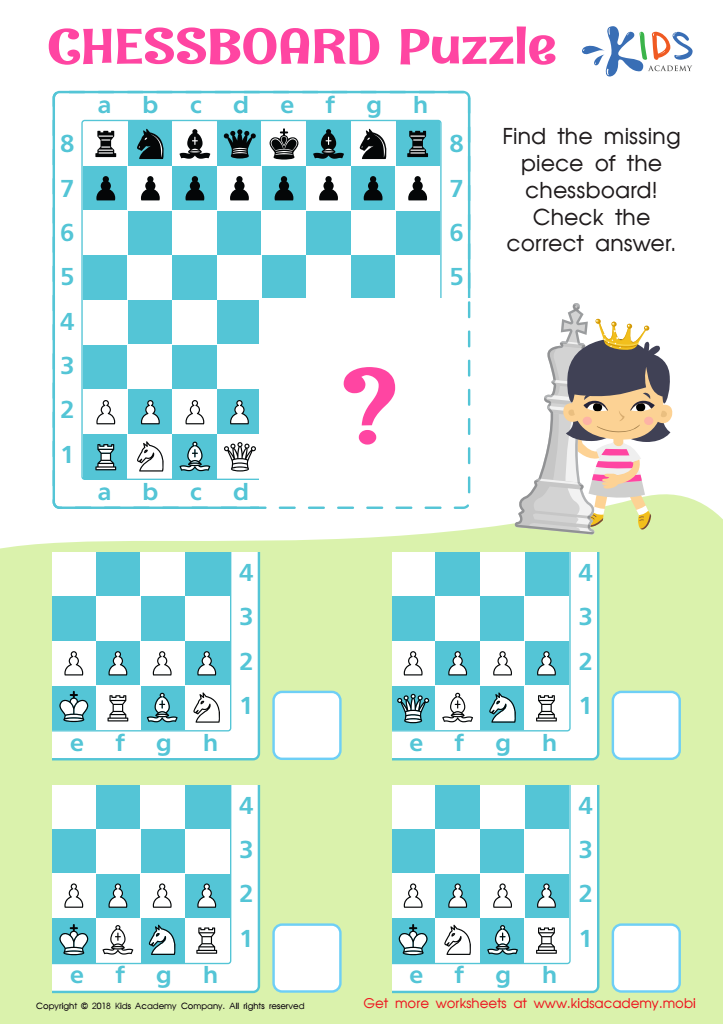
Chessboard Puzzle Worksheet
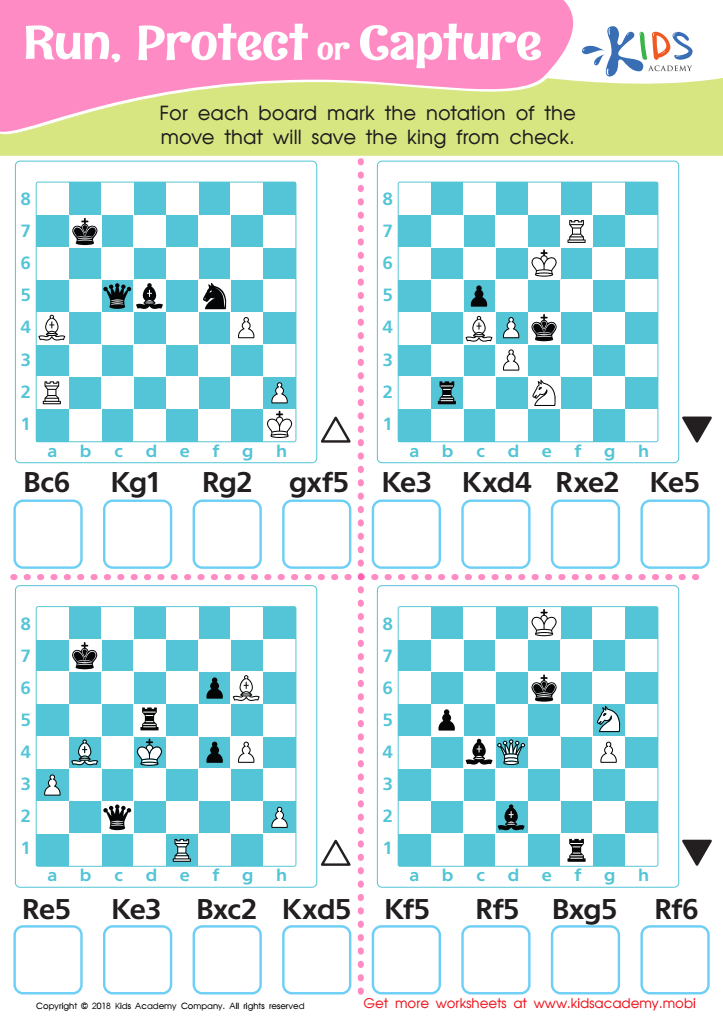
Run, Protect or Capture Worksheet








Strategic thinking is a vital skill to cultivate in 6-year-olds, and both parents and teachers play crucial roles in nurturing this ability. At this developmental stage, children are naturally curious and eager to explore their environments. Introducing strategic thinking helps them make connections, solve problems, and understand cause-and-effect relationships.
By engaging in activities that promote strategic thinking—like puzzles, games, or storytelling—children learn to anticipate outcomes, consider multiple perspectives, and plan for challenges. These activities not only sharpen cognitive skills but also enhance critical thinking, creativity, and decision-making abilities.
Moreover, strategic thinking fosters emotional intelligence as children learn to navigate social dynamics, work collaboratively, and evaluate their choices. Teachers can incorporate strategic play into the curriculum, while parents can encourage similar activities at home, reinforcing lessons learned in the classroom.
Ultimately, prioritizing strategic thinking in young learners equips them with lifelong skills that benefit their academic, social, and personal development. As these children grow, the ability to think ahead and devise plans will serve them well in more complex situations, making it essential for parents and educators to advocate for this crucial aspect of learning.








