Understanding chess rules Worksheets for 6-Year-Olds
7 filtered results
-
From - To
Explore our engaging "Understanding Chess Rules Worksheets for 6-Year-Olds" designed to introduce young learners to the exciting world of chess! These worksheets feature colorful illustrations and simple explanations that make learning the basic rules enjoyable. Tailored for early childhood education, our resources help children grasp essential concepts such as piece movements, game strategies, and how to win elegantly. Perfect for classroom use or at-home fun, these worksheets encourage cognitive development and critical thinking skills while promoting patience and focus. Unlock your child's potential in chess and set them on a path to becoming a confident player. Start their chess journey today!
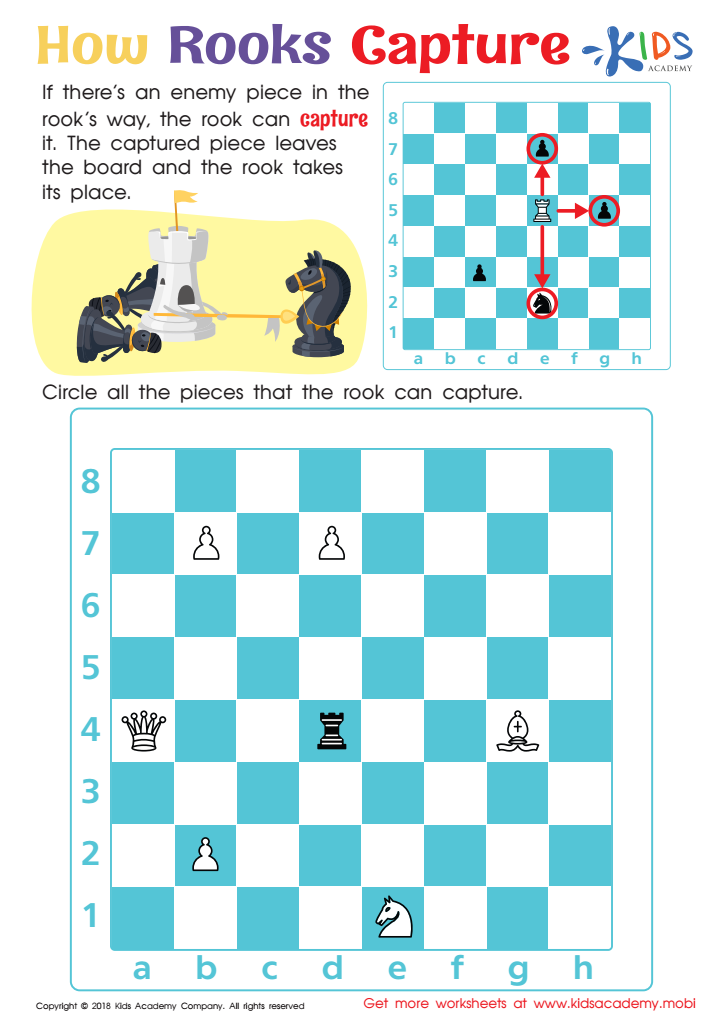
How Rooks Capture Worksheet
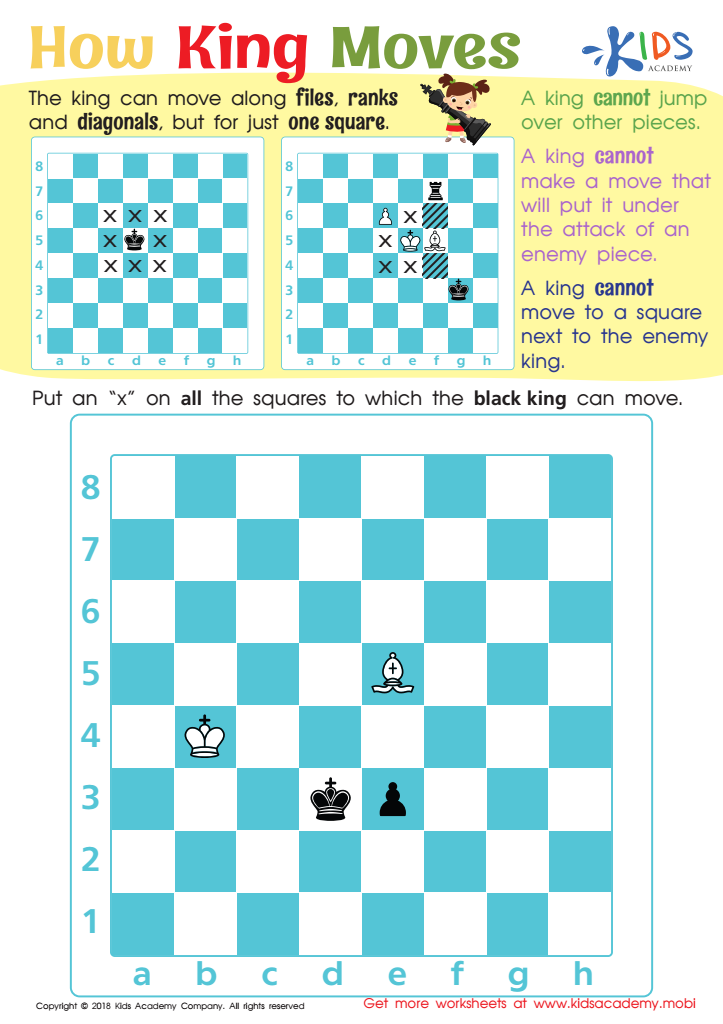
How King Moves Worksheet
 Assign to My Students
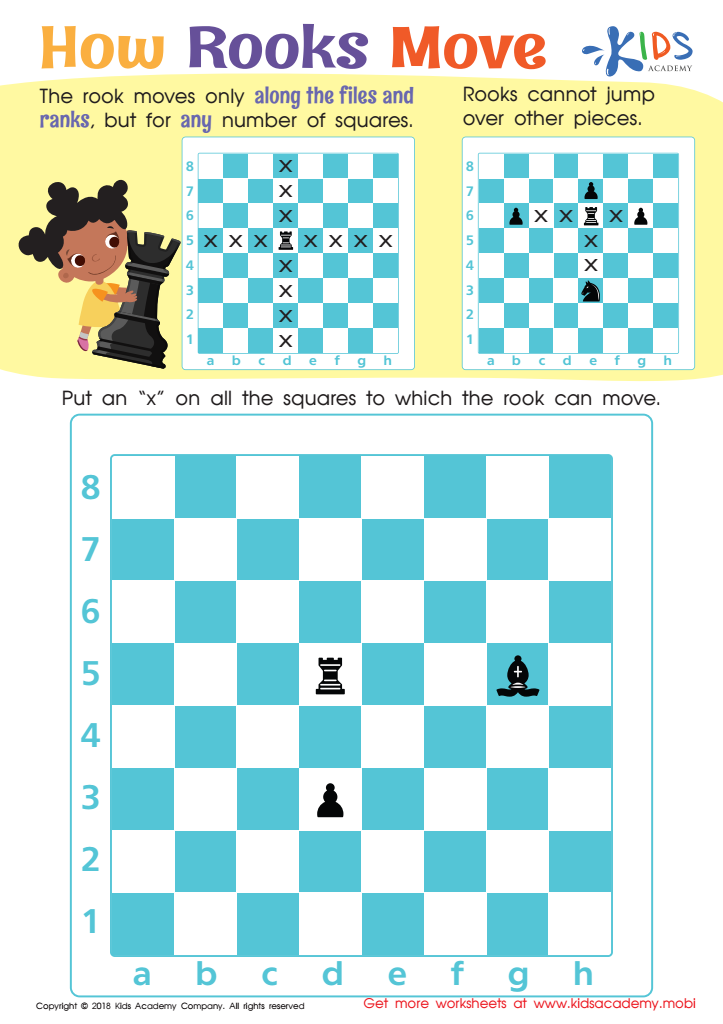
How Rooks Move Worksheet
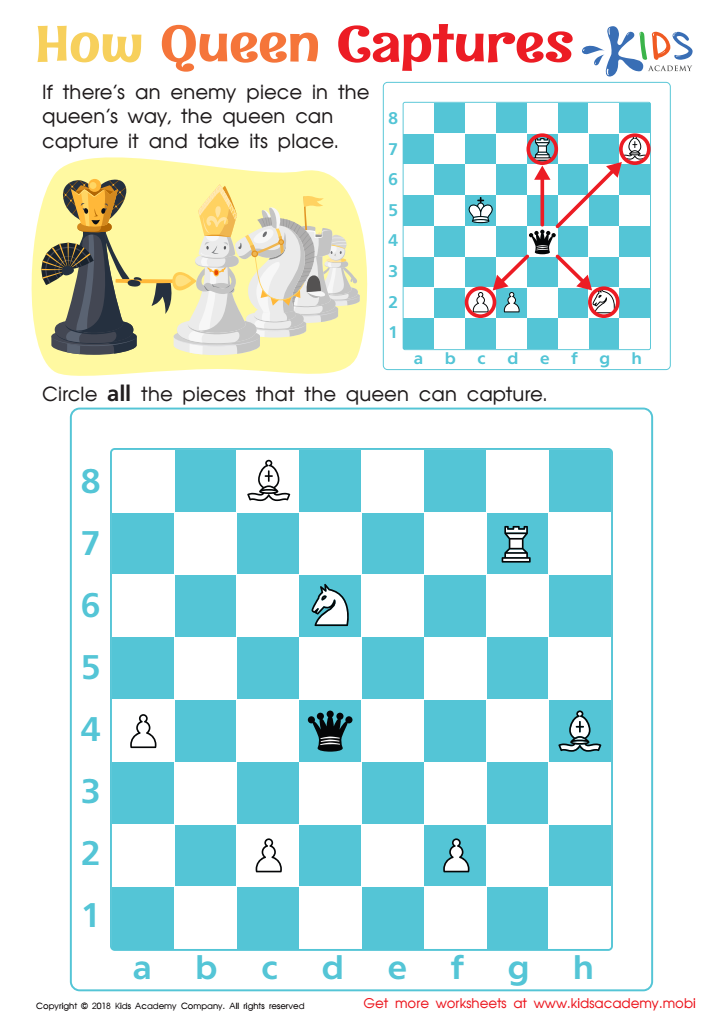
How Queen Captures Worksheet
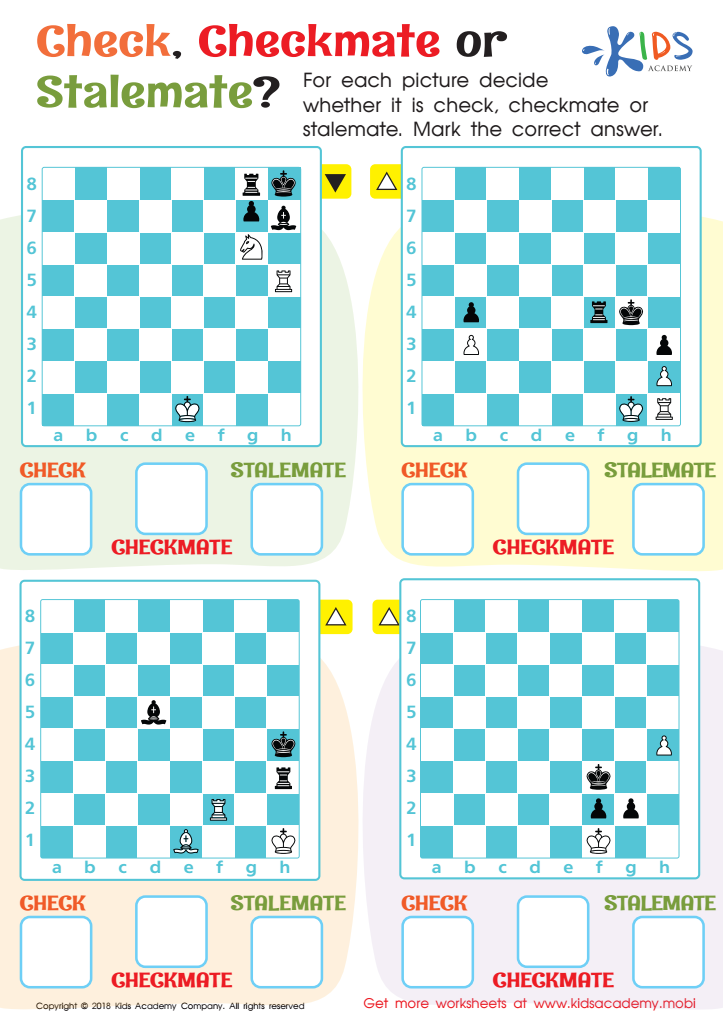
Check. Checkmate or Stalemate? Worksheet
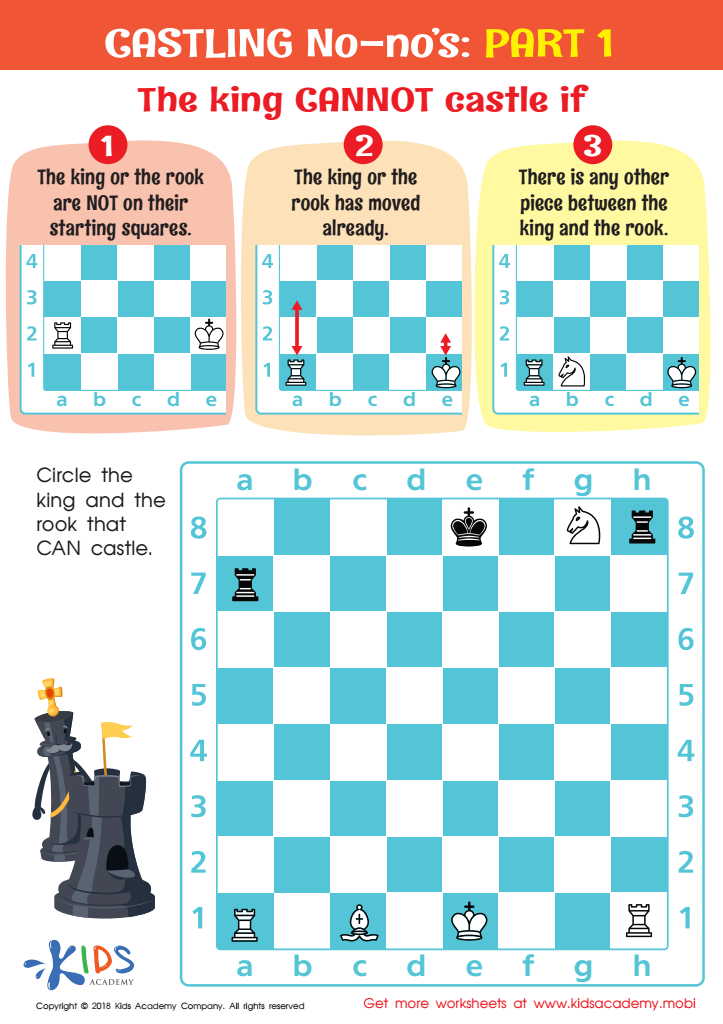
Castling No–no's: Part 1 Worksheet
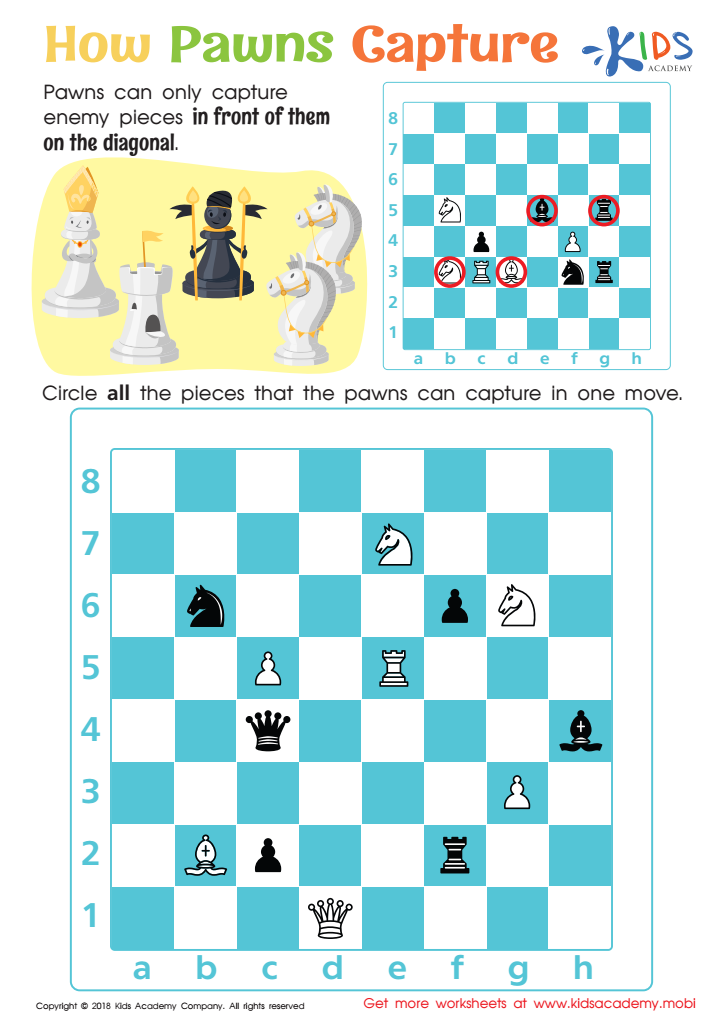
How Pawns Capture Worksheet




.jpg)

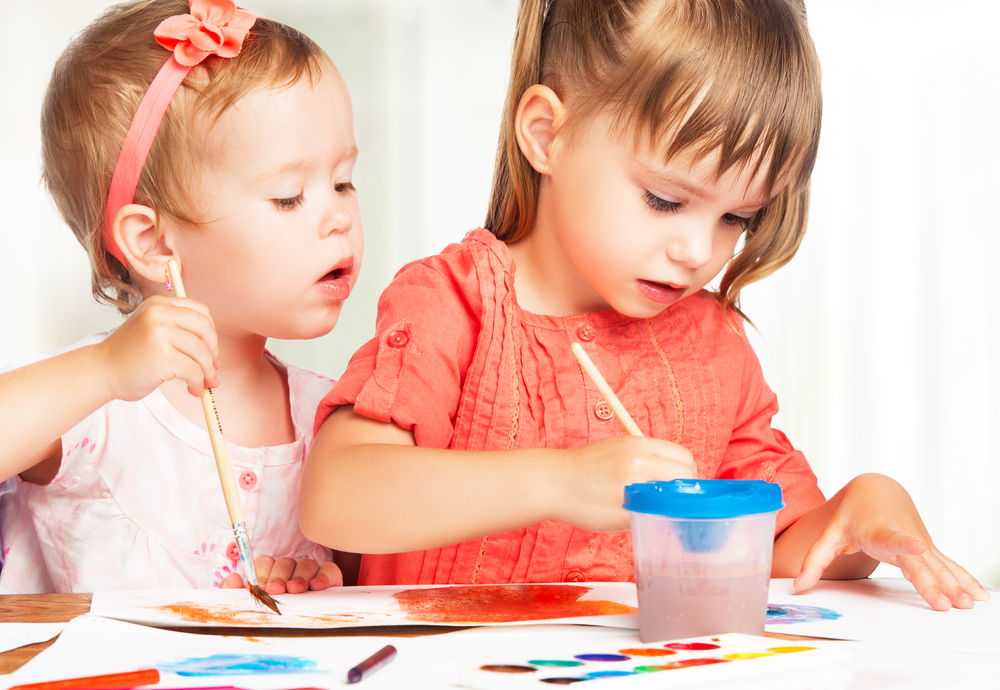
Understanding chess rules for 6-year-olds is essential for both parents and teachers as it nurtures cognitive, emotional, and social development. Chess is not just a game; it's a fantastic learning tool that helps children develop critical thinking, problem-solving, and decision-making skills. By grasping the basic rules of chess, young learners engage in strategic thinking, enhancing their cognitive abilities and promoting concentration.
Moreover, chess fosters important life skills such as patience, discipline, and respect for opponents. Children learn to think ahead, foresee consequences, and evaluate different scenarios, which translates to better academic performance and improved focus in other subjects.
Parents and teachers also play a vital role in making chess a fun and engaging experience. By understanding the rules, they can guide children in learning and practicing, creating opportunities for quality bonding time and constructive interactions. Socially, chess encourages sportsmanship, as players learn to celebrate wins gracefully and cope with losses respectfully.
In a world filled with distractions, introducing chess to young learners can be immensely beneficial. By caring about chess rules for 6-year-olds, adults contribute to a well-rounded education that builds essential skills for lifelong learning and personal development.








