Understanding graphs Worksheets for 6-Year-Olds
3 filtered results
-
From - To
Welcome to our "Understanding Graphs Worksheets for 6-Year-Olds" page, designed to introduce young learners to the fascinating world of graphs! Our engaging worksheets help children develop essential skills in data interpretation, comparison, and analysis. Through fun activities, kids will learn to read basic bar graphs, pictographs, and line graphs, enhancing their critical thinking and reasoning abilities. Each worksheet is crafted to cater specifically to 6-year-olds, featuring vibrant illustrations and simple instructions. These resources support early math education, making learning about graphs enjoyable and accessible. Explore our collection today and watch your child gain confidence in understanding data visuals!
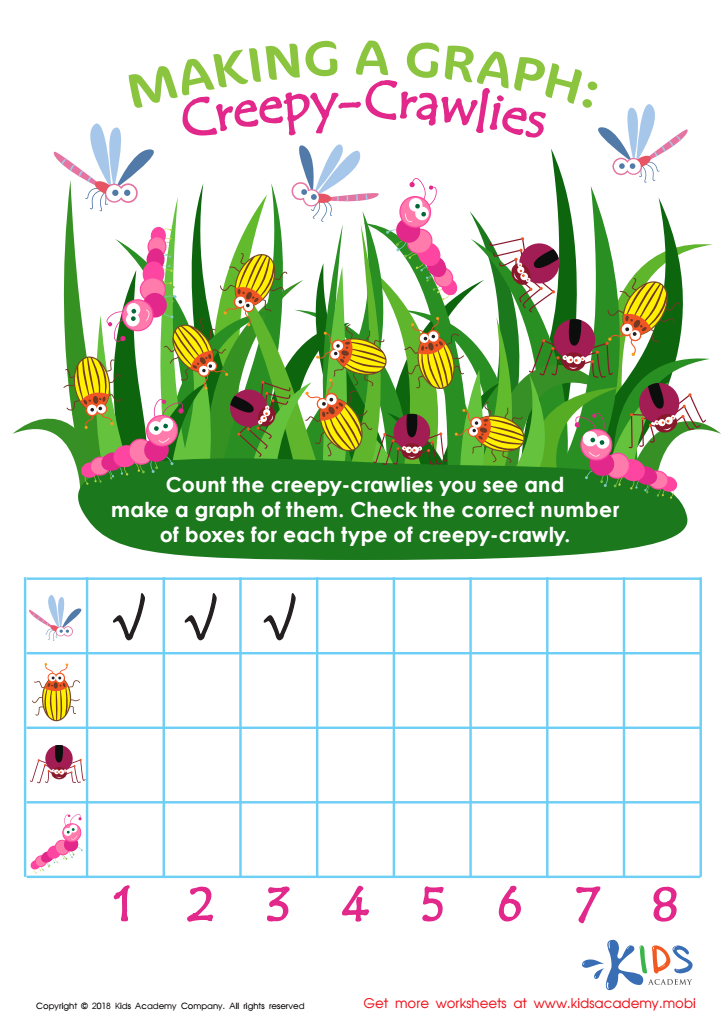
Making a Graph: Creepy Crawlies Worksheet
 Assign to My Students
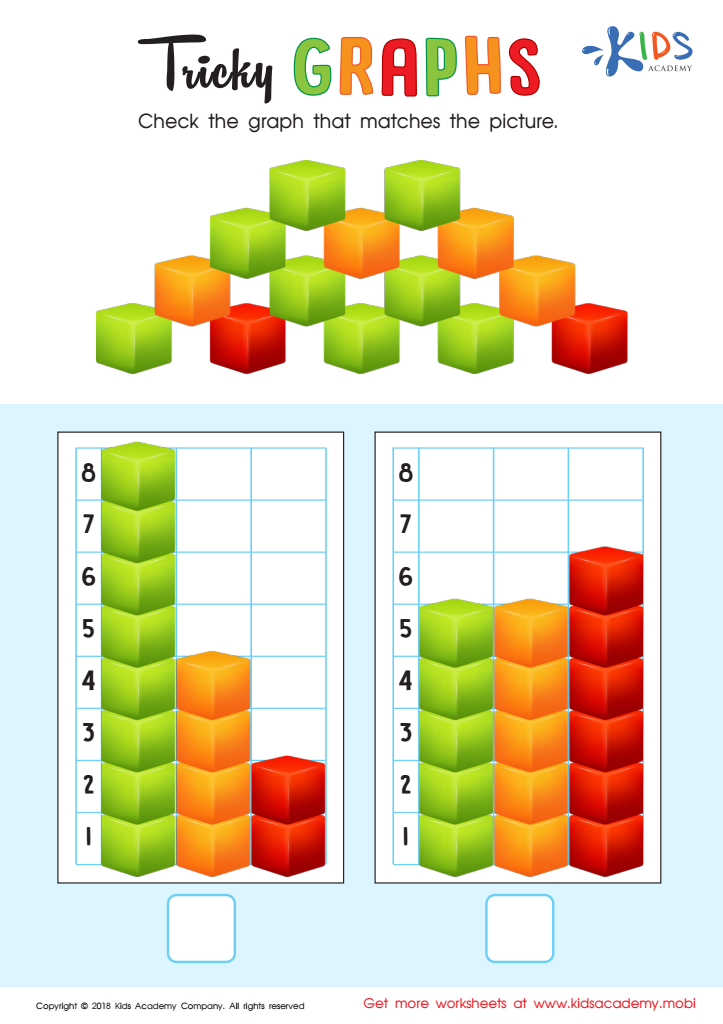
Tricky Graphs Worksheet
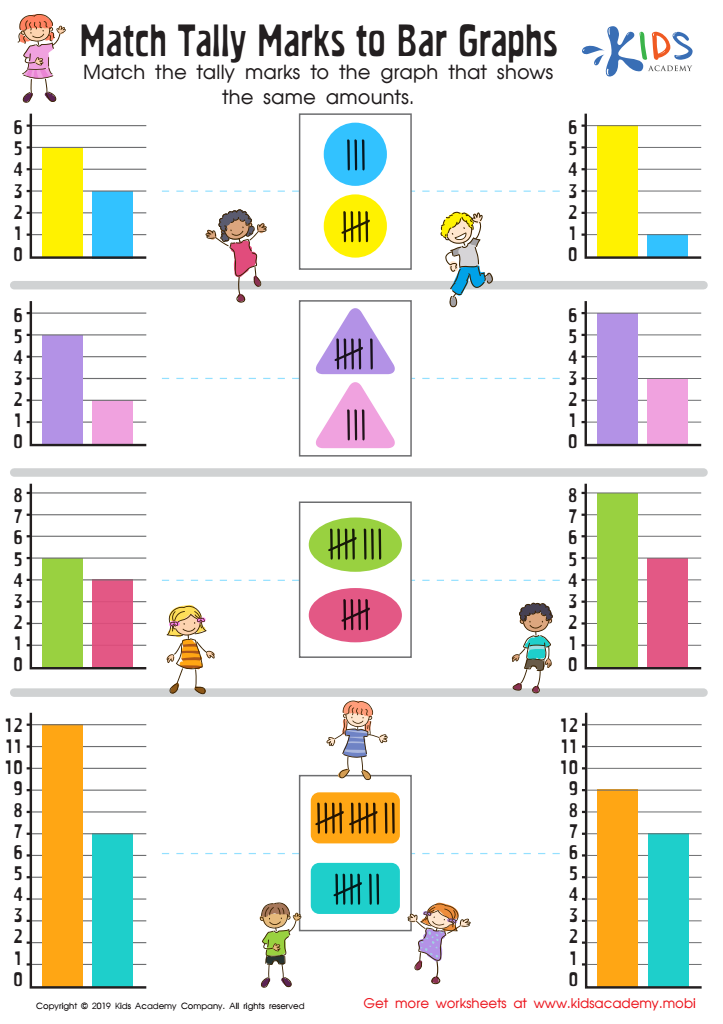
Match Tally Marks to Bar Graphs Worksheet






Understanding graphs is vital for 6-year-olds as it fosters critical thinking, analytical skills, and early numeracy. At this age, children are developing their ability to interpret visual information, and graphs provide a great medium for learning. When parents and teachers engage young learners with graphs, they help them make connections between numbers and real-world concepts. For instance, pie charts can illustrate fun topics like favorite fruits or pets, making learning relatable and enjoyable.
Furthermore, learning to read and create graphs encourages communication skills. Children learn to articulate their findings, discuss data trends, and present information clearly. This challenge enhances their vocabulary and comprehension.
In addition, the foundation built through understanding graphs supports future academic success, particularly in subjects like math and science. As they progress in their education, children will encounter more complex data visualizations, and early experiences with graphs will ease that transition.
Lastly, graph literacy is essential in today’s data-driven society. As children grow, they will increasingly interact with data in various forms—from school projects to informed civic participation. By nurturing this skill early, parents and teachers equip children with tools essential for life-long learning and informed decision-making.








