Understanding tally marks Worksheets for 6-Year-Olds
5 filtered results
-
From - To
Discover our "Understanding Tally Marks Worksheets for 6-Year-Olds" designed to introduce young learners to the basics of counting and recording data in an engaging way. These printable worksheets help children grasp the concept of tally marks through fun and interactive exercises. By incorporating visual aids and simple activities, kids will learn how to count, group, and represent numbers efficiently. Perfect for classroom use or homeschooling, these sheets promote early math skills and make learning both enjoyable and effective. Explore our page to download worksheets that turn math practice into an adventure for your little ones!
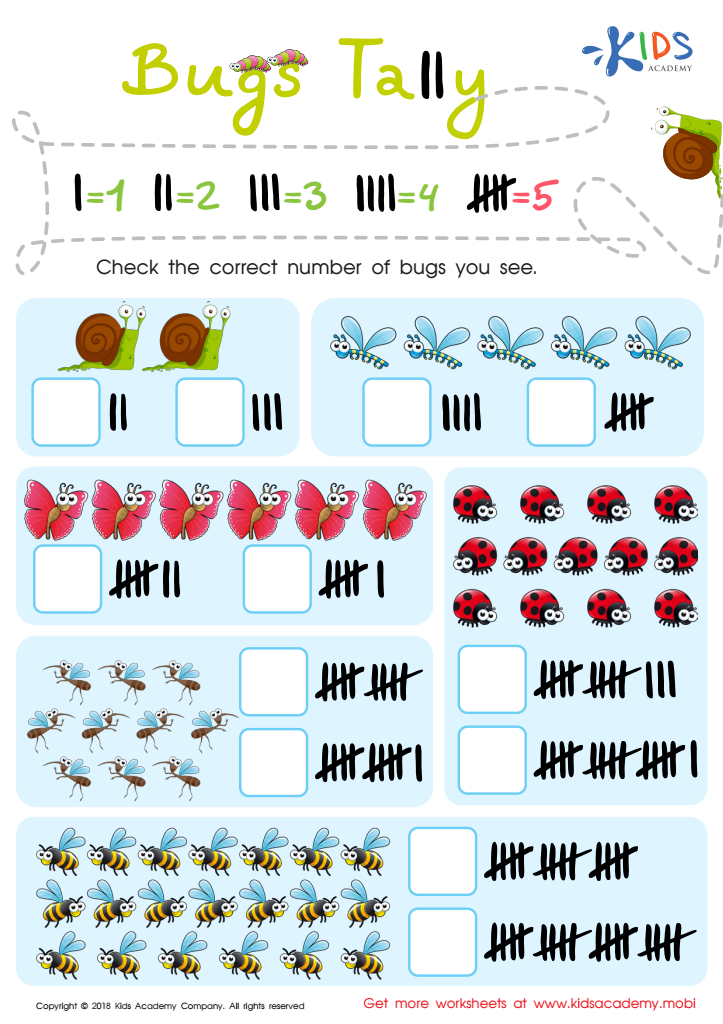
Bugs Tally Worksheet
 Assign to My Students
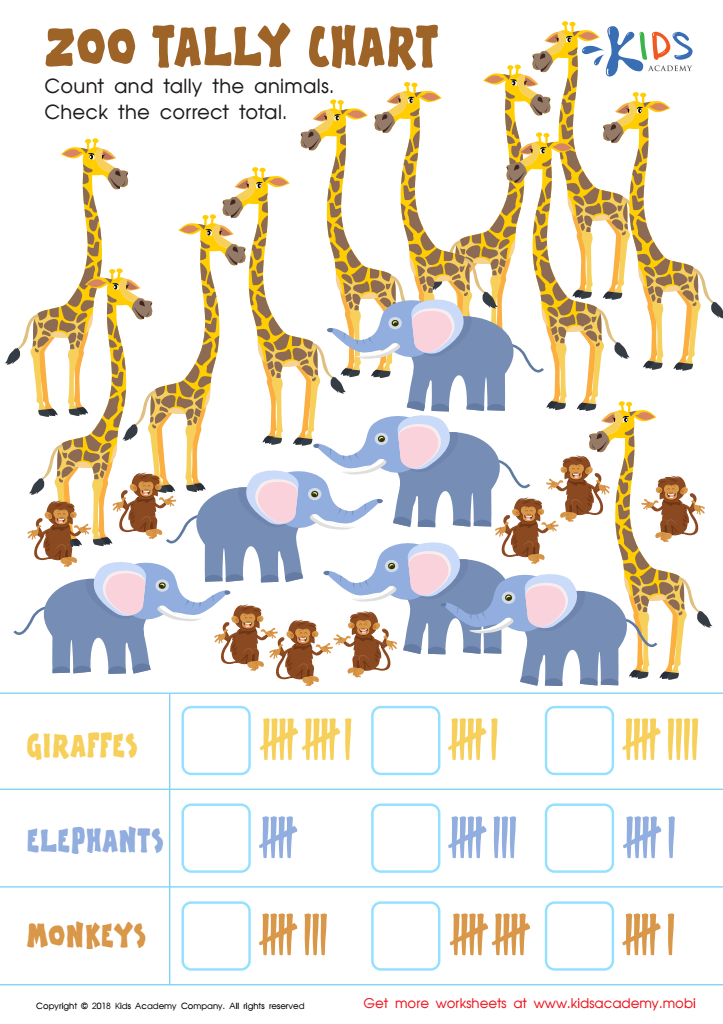
Zoo Tally Chart Worksheet
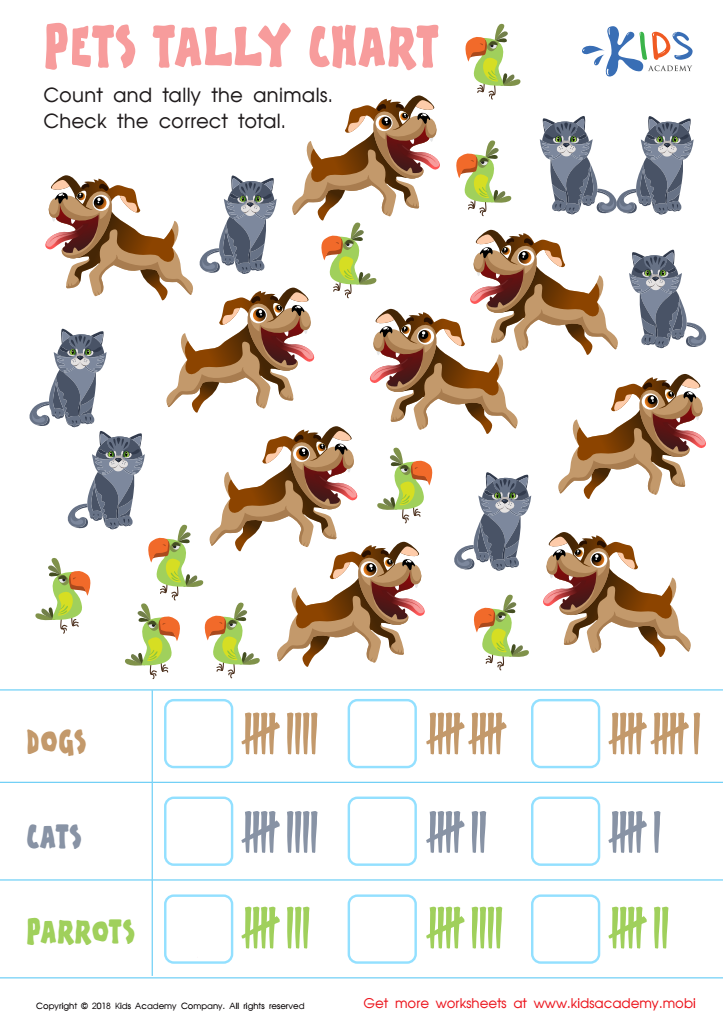
Pets Tally Chart Worksheet
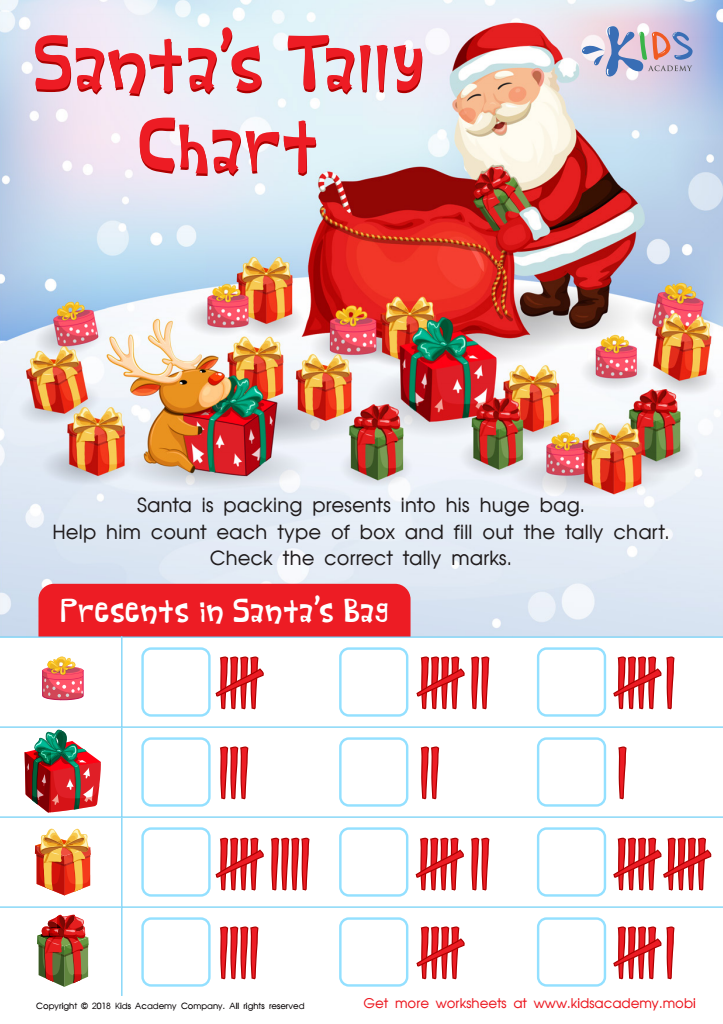
Santa Tally Chart Worksheet
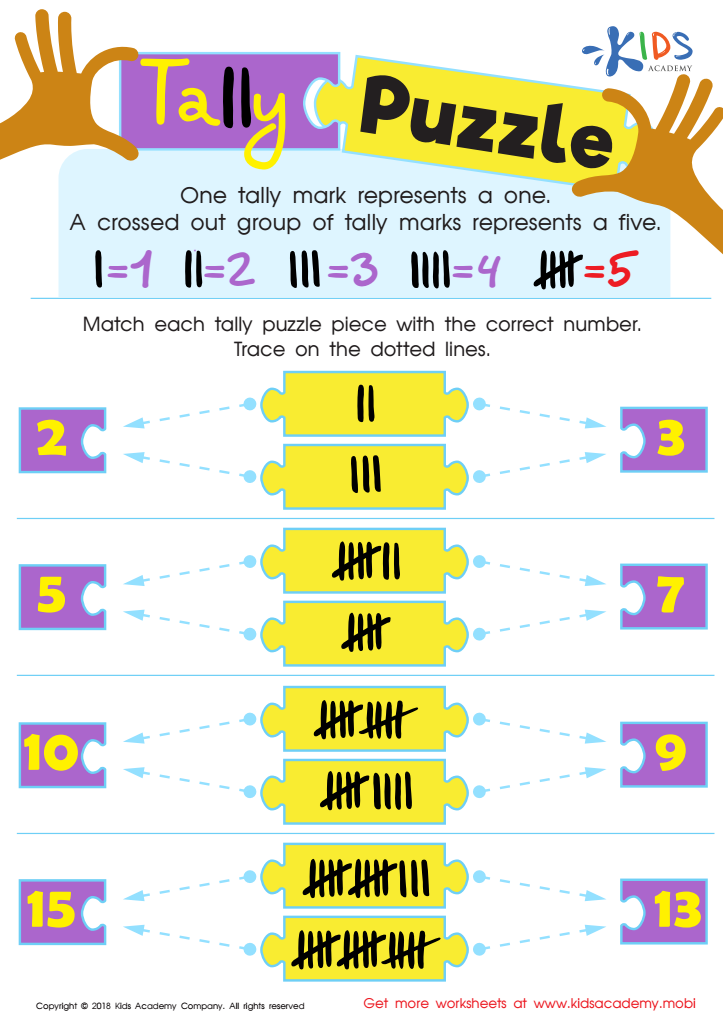
Tally Puzzle Worksheet







Understanding tally marks is a fundamental skill for 6-year-olds and is crucial for several reasons. Firstly, it introduces children to the concept of counting in groups, which simplifies large quantities into manageable segments, making basic arithmetic more intuitive. For instance, five tally marks form a recognizable bundle, aiding in swift comprehension and subtraction or addition.
Secondly, tally marks are a tactile and visual counting method. Young children often benefit from hands-on learning, and making tally marks allows them to physically engage with numbers. This engagement fosters a stronger connection to numerical concepts.
Moreover, learning tally marks enhances cognitive development by promoting pattern recognition, an essential skill in mathematics and problem-solving. Recognizing patterns supports future learning in more complex math topics, such as multiplication and division.
Tally marks also bolster organizational skills. As children learn to group and record their counts efficiently, they practice structure and order, valuable detriments in both academic settings and daily life.
Finally, it nurtures independence and confidence. As children master tally marks, they gain the ability to independently track and represent information, which is an important step in their cognitive and educational growth. Thus, teaching 6-year-olds tally marks is more than a math lesson; it's a foundation for broader developmental milestones.








