Reading comprehension 2D Shapes Worksheets for 6-Year-Olds
3 filtered results
-
From - To
Discover engaging Reading Comprehension 2D Shapes Worksheets tailored for 6-year-olds! These expertly designed printable activities from Kids Academy blend essential reading skills with fundamental mathematics concepts. Each worksheet provides young learners with opportunities to identify, differentiate, and describe 2D shapes, all while improving their reading comprehension. Perfect for supporting early education, these resources feature fun illustrations and simple texts that keep children motivated and interested. Ideal for both classroom and homeschool settings, our worksheets will help build a solid foundation in geometry and literacy. Unlock a world of learning by exploring our exciting collection today!
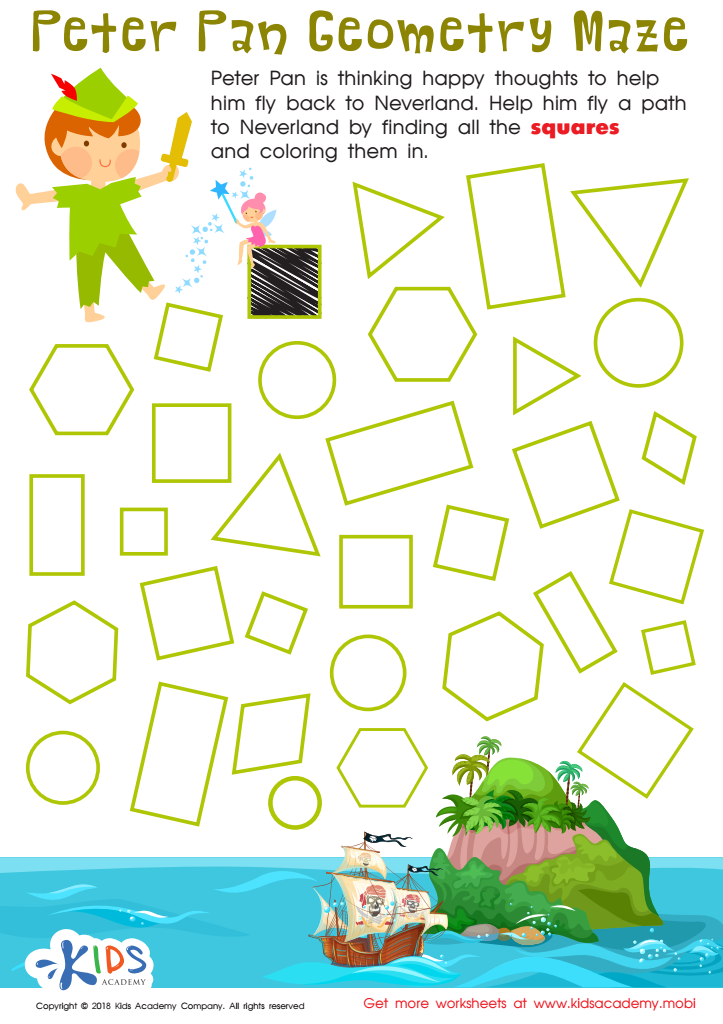
Peter Pan Worksheet
 Assign to My Students











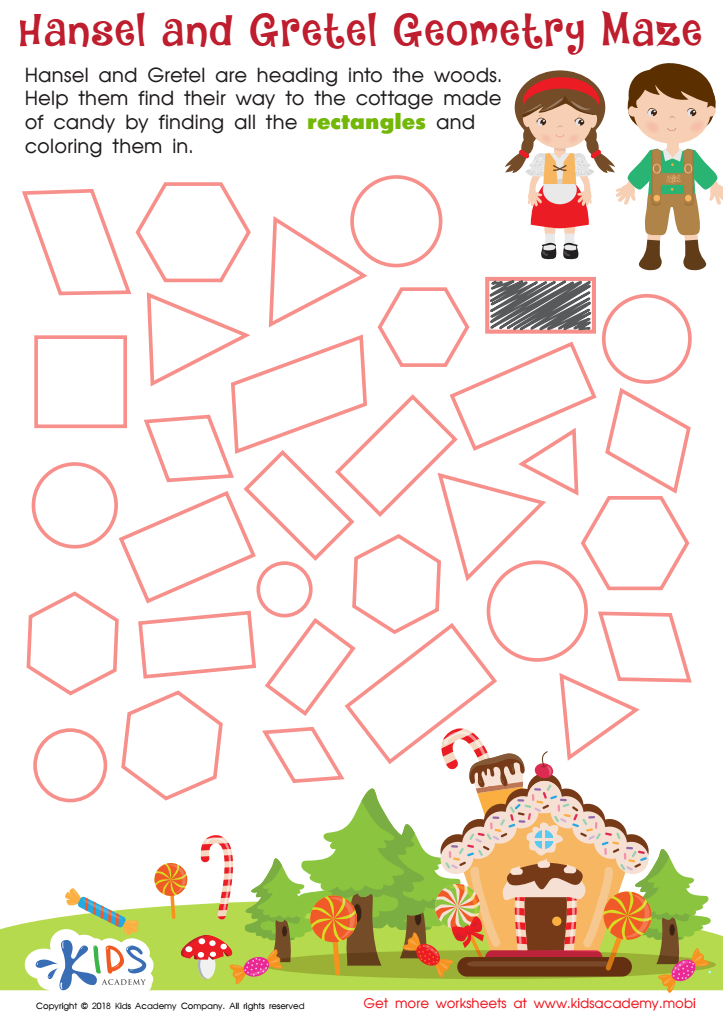
Hansel and Gretel Geometry Maze Worksheet
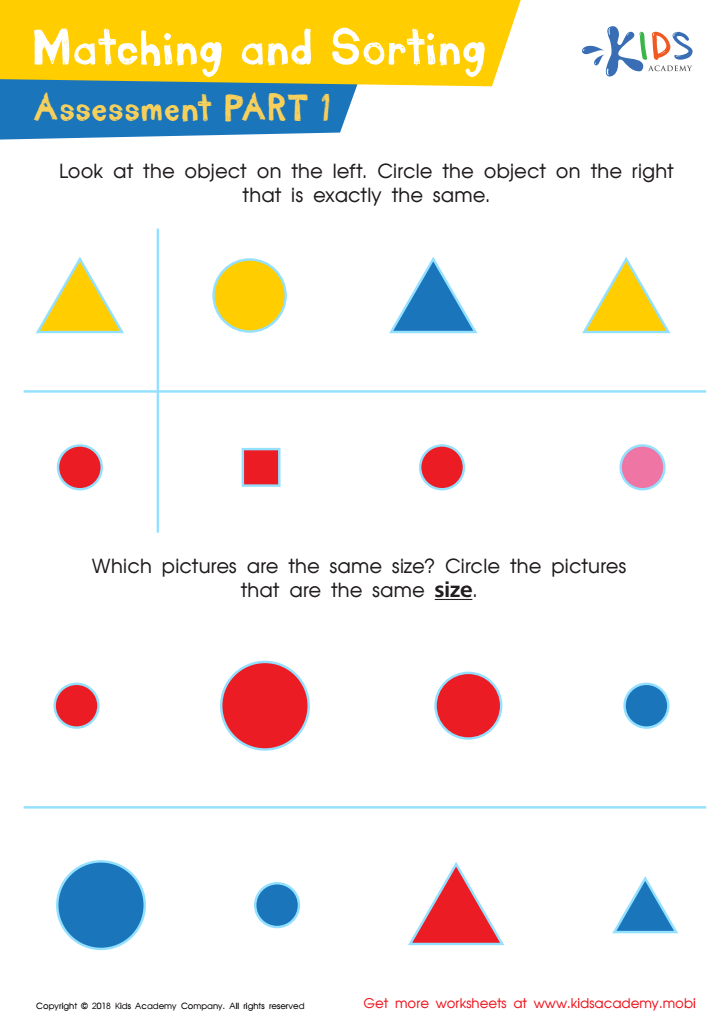
Matching and Sorting for Kindergarten: Assessment 1 Worksheet








Parents and teachers should prioritize reading comprehension and understanding of 2D shapes for 6-year-olds because these skills are foundational for future academic success and critical thinking. At this age, children are developing their literacy and mathematical abilities, which are interconnected. Engaging with reading comprehension helps children understand and interpret information, boosting their critical thinking, vocabulary, and ability to follow instructions. Children's stories often include descriptions and contexts that mention various shapes, enhancing their reading experience and comprehension skills.
Understanding 2D shapes, such as circles, squares, and triangles, lays the groundwork for geometry and spatial awareness. It helps children recognize patterns, sort objects, and develop problem-solving skills. Recognizing shapes is also a vital part of everyday life, aiding children in making sense of the world around them—such as reading signs, navigating spaces, and understanding visual information.
By integrating reading comprehension and 2D shapes into early education, parents and teachers ensure a holistic approach to learning. This balanced focus not only prepares children for more complex math and literacy concepts but also promotes curiosity, encourages exploration, and fosters confidence in their abilities to learn new and abstract ideas. Investing in these areas empowers students, builds strong educational foundations, and supports their overall development.








