Filters

30 filtered results

Clear all filters
Favorites
With answer key
Interactive

30 filtered results

Difficulty Level

Grade


Check out this FREE Trial Lesson on 2D Shapes for age 6!

Draw and Name Shapes up to 6 Sided Shapes & Cubes

Favorites
With answer key
Interactive
  • 6
  • Shape Recognition
  • 2D Shapes
Twin Shapes Dot-to-Dot Worksheet

Twin Shapes Dot-to-Dot Worksheet

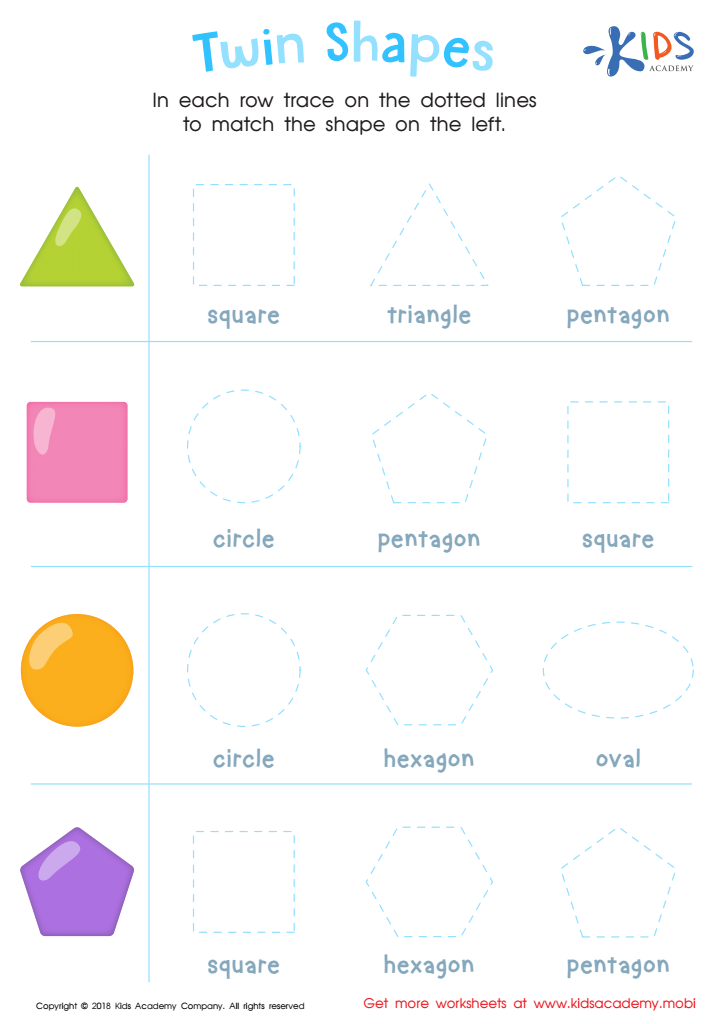
Test your child's ability to copy with this worksheet. Ask them to find and name the four shapes on the left. Then, they must match each with the dotted lines on the right. Help your child with all four shapes in this fun exercise.
Twin Shapes Dot-to-Dot Worksheet
Worksheet
Using Squares to Make Rectangles Worksheet

Using Squares to Make Rectangles Worksheet

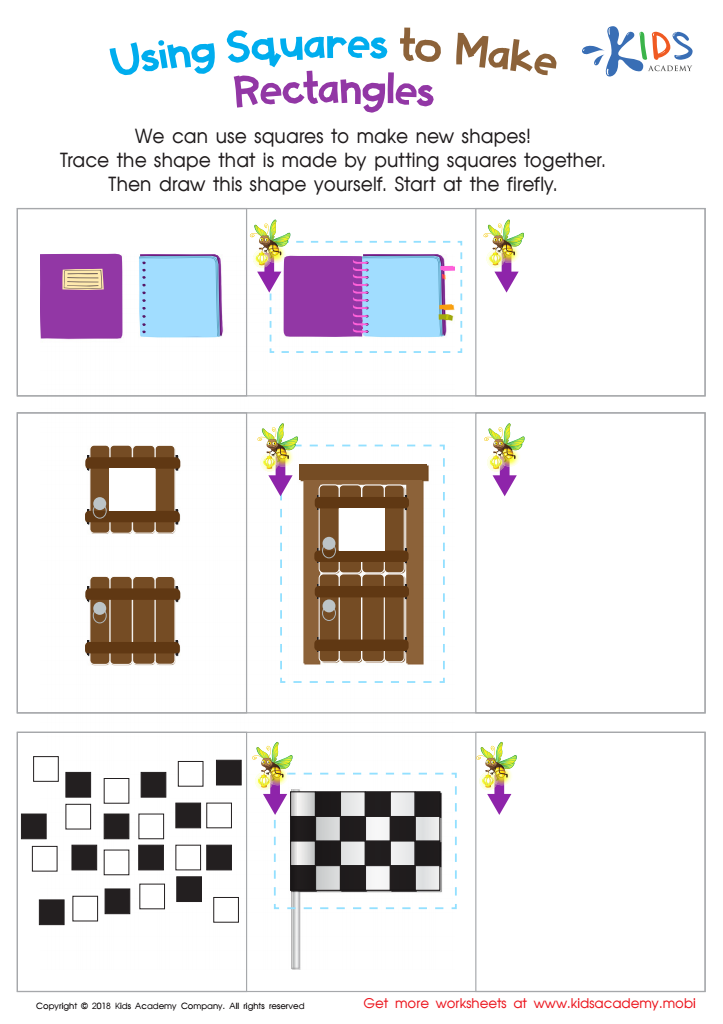
Creating shapes from other shapes (composing shapes) develops spatial skills, an essential geometry standard for young students. This worksheet introduces familiar square objects, then demonstrates how they create rectangles. Students practice tracing and then drawing the shape independently. Download this free math resource for the classroom today! (80 words)
Using Squares to Make Rectangles Worksheet
Worksheet
Shapes and Names Matchup Worksheet

Shapes and Names Matchup Worksheet

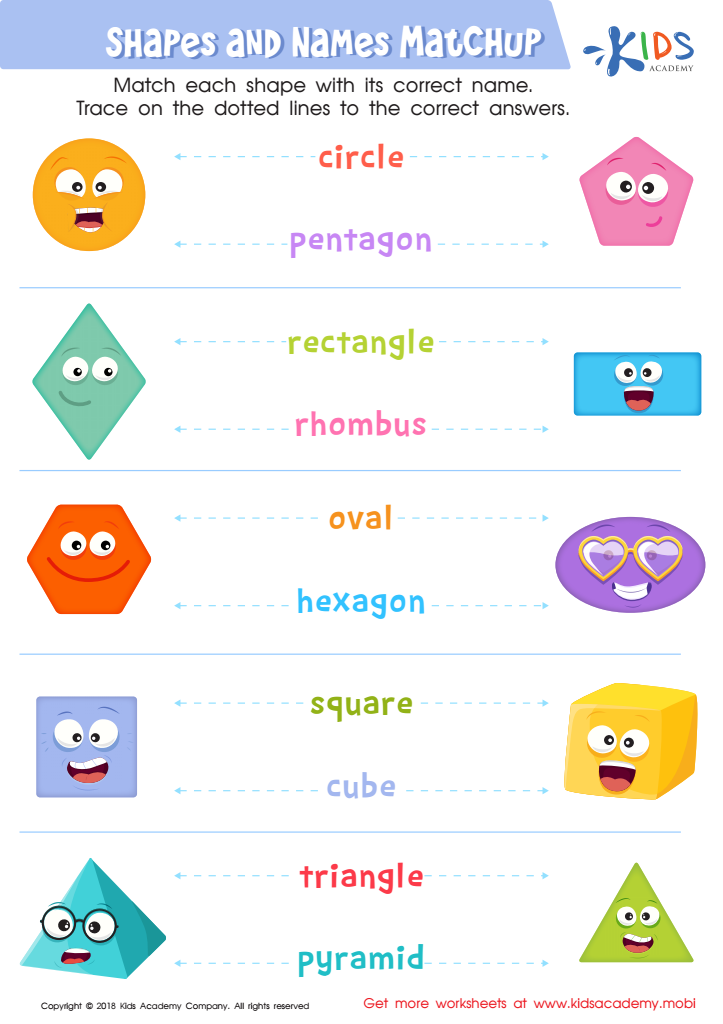
Introduce your students to shapes if they aren't familiar. Look at the sheet with them and ask them to identify shapes. Help them match each shape to its name, then trace the dotted lines to the answers. Even if they haven't seen shapes before, this exercise will be easy - with your help!
Shapes and Names Matchup Worksheet
Worksheet
Geometric Shapes for Kids: Drawing Ovals And Triangles with Fun

Drawing Ovals And Triangles with Fun Printable
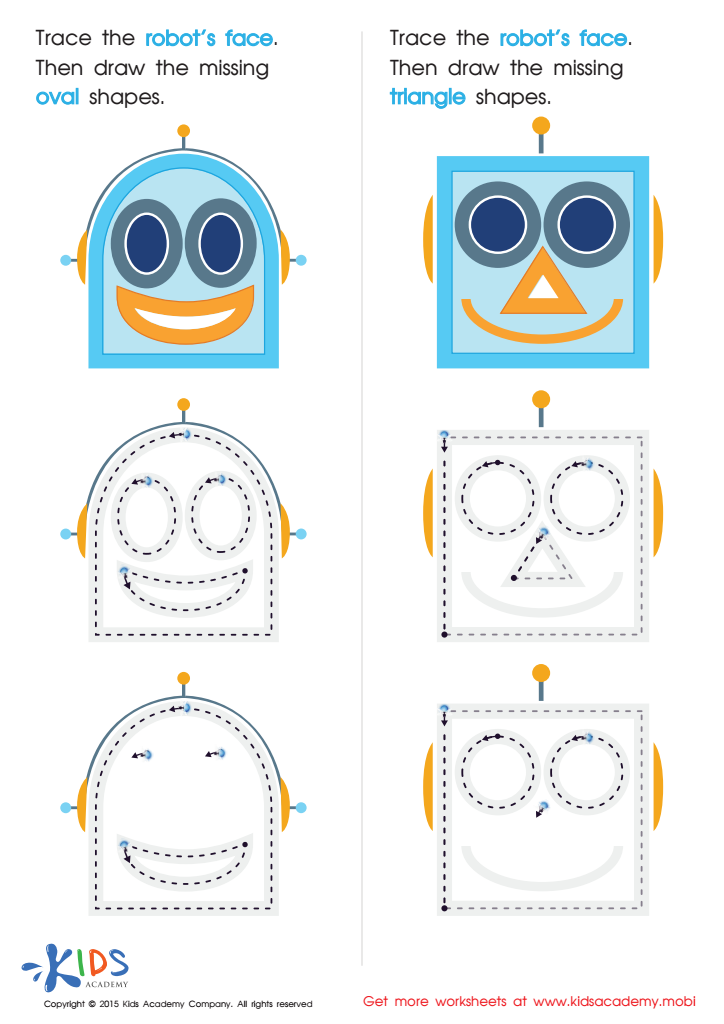
Trace the face and draw missing ovals and triangles. Test your memory and recall shapes' names. Check if you remember how to draw them!
Drawing Ovals And Triangles with Fun Printable
Worksheet
Shapes Matchup Worksheet

Shapes Matchup Worksheet

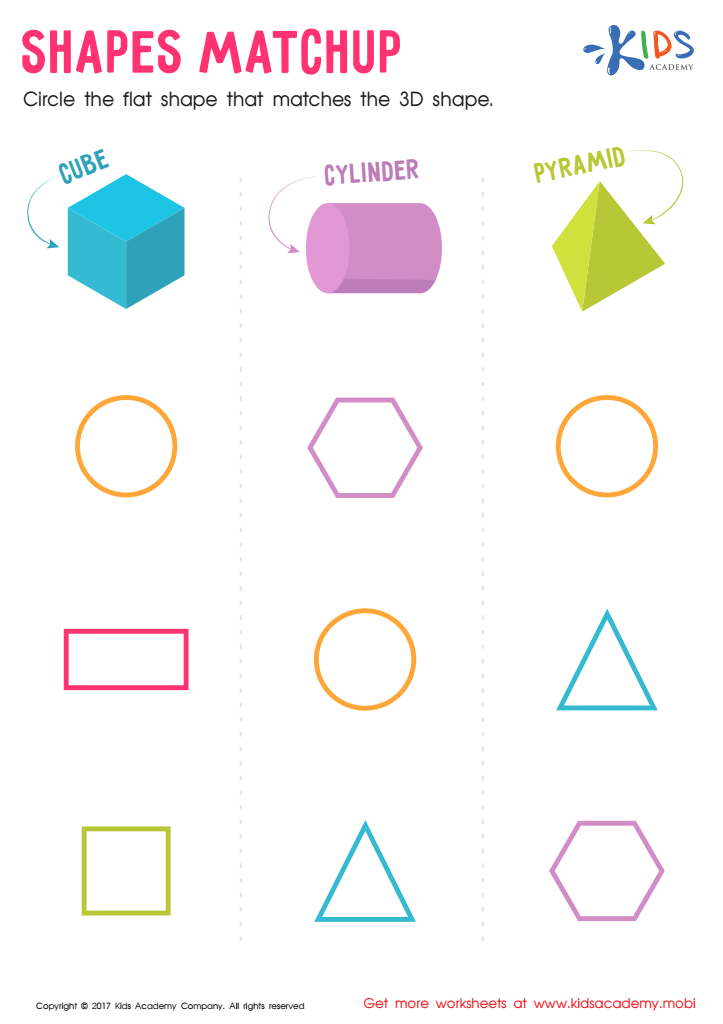
Explain to your kids that 3D shapes are the view from another angle, offering depth, height and width. This worksheet encourages them to match the 3D shapes to their 2D form. They can circle the flat shapes that match the 3D shapes in the printout.
Shapes Matchup Worksheet
Worksheet
Build and Match Worksheet


Build and Match Worksheet

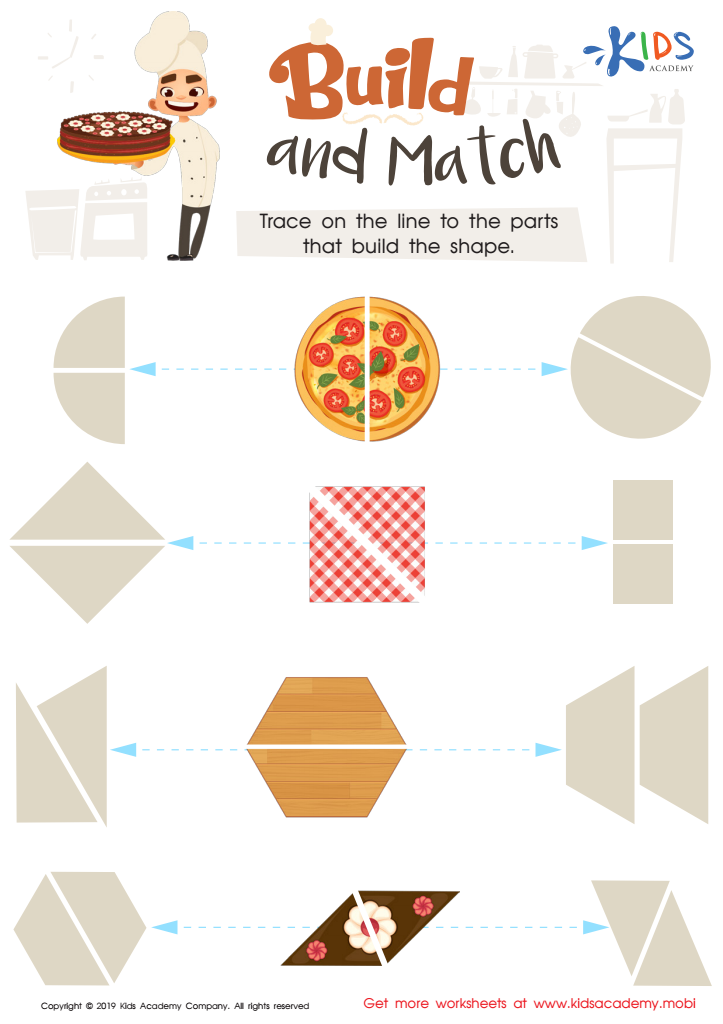
This bright worksheet will get your kids excited to learn more! Use the colorful images and shapes to engage them and have them trace the parts to build the shape. This fun exercise will help them retain the lessons and make it an enjoyable experience.
Build and Match Worksheet
Worksheet


Shape recognition is a critical foundational skill for 6-year-olds that supports their cognitive, mathematical, and spatial development. Parents and teachers should prioritize this learning because it serves as the building block for more advanced math concepts, such as geometry and measurement. Understanding 2D shapes—like squares, circles, triangles, and rectangles—encourages critical thinking and problem-solving abilities as children learn to identify, categorize, and compare shapes based on their attributes.

Moreover, shape recognition helps children develop their vocabulary and communication skills, as they learn to describe shapes and articulate their features. This skill also enhances fine motor development as children engage in activities like drawing, cutting, and constructing shapes.

Additionally, strong shape recognition skills contribute to better spatial awareness, which is essential for everyday tasks, such as navigating spaces and interpreting maps. By integrating shape recognition into play and daily activities, parents and teachers can foster a love of learning while reinforcing key concepts that will serve children well in their academic journey. Encouraging exploration through games and hands-on activities makes learning shapes engaging and enjoyable, illustrating the importance of this skill in educational development and everyday life.