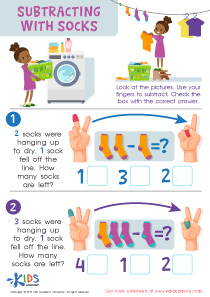
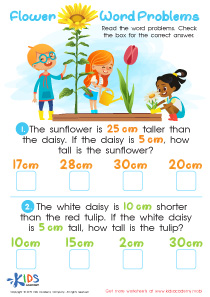
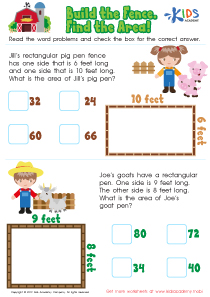
Cognitive Development Addition and Subtraction Word Problems Worksheets for 6-Year-Olds
4 filtered results
-
From - To
Enhance your 6-year-old's cognitive development with our engaging Addition and Subtraction Word Problems Worksheets! Designed to make learning fun, these worksheets provide real-life scenarios that challenge young minds and encourage critical thinking. Children will solve age-appropriate word problems that promote the understanding of basic math concepts while enhancing their reading comprehension and problem-solving skills. These interactive worksheets not only develop arithmetic abilities but also foster analytical thinking as kids apply their knowledge to everyday situations. Perfect for home or classroom use, our carefully crafted resources will help your child build a strong foundation in math while enjoying the learning process!
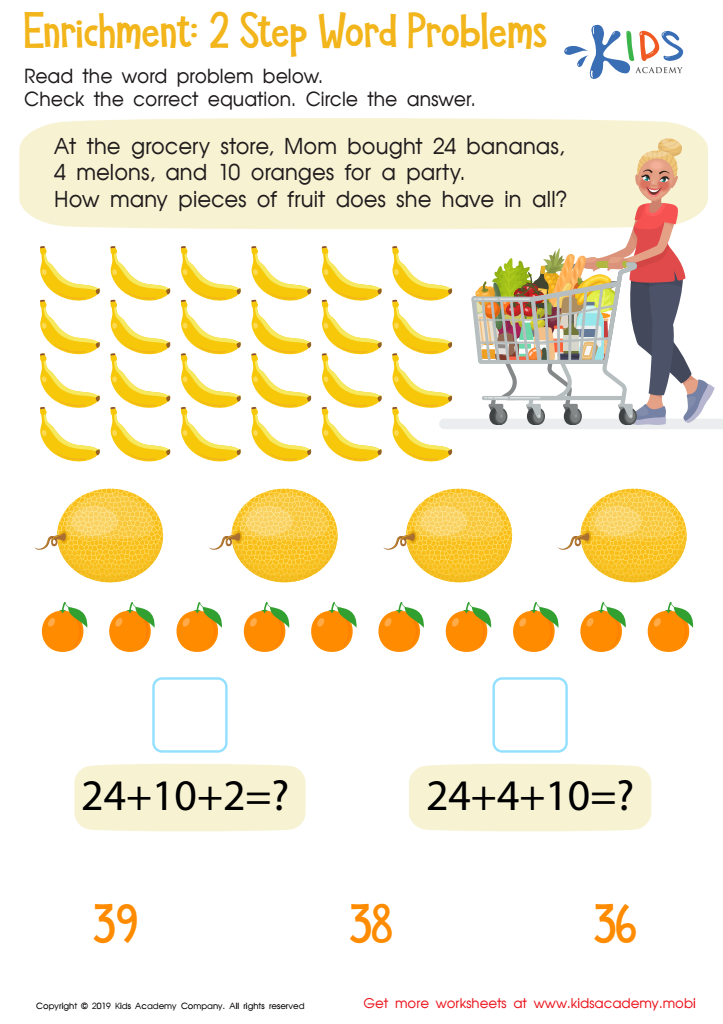
Enrichment -2 Step Word Problems Worksheet
 Assign to My Students
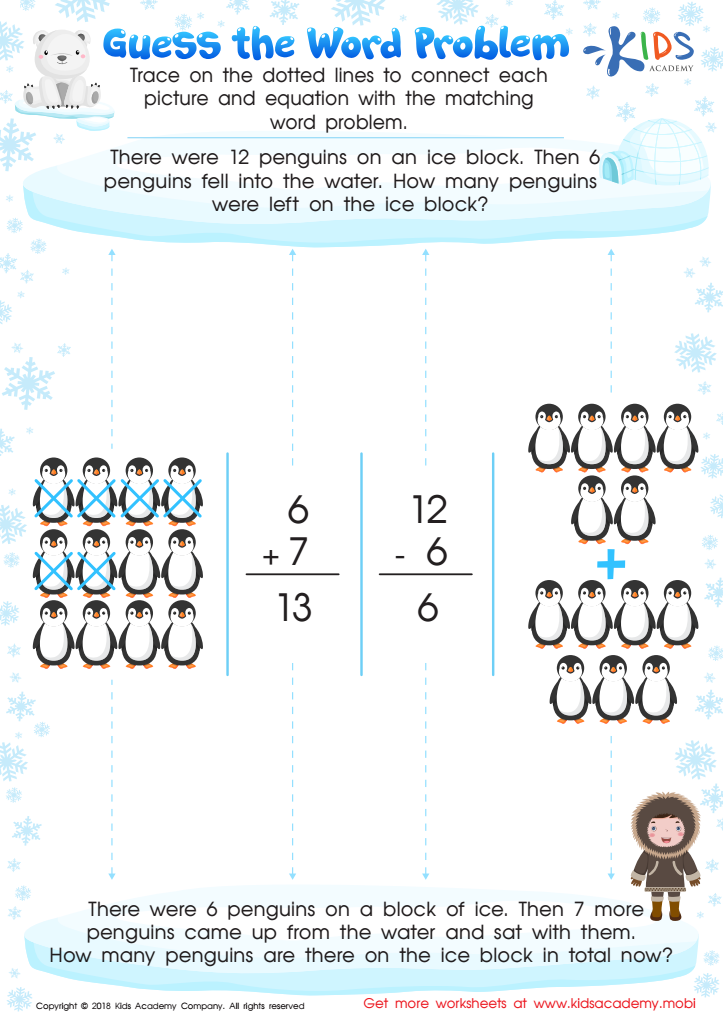
Guess the Word Problem Worksheet
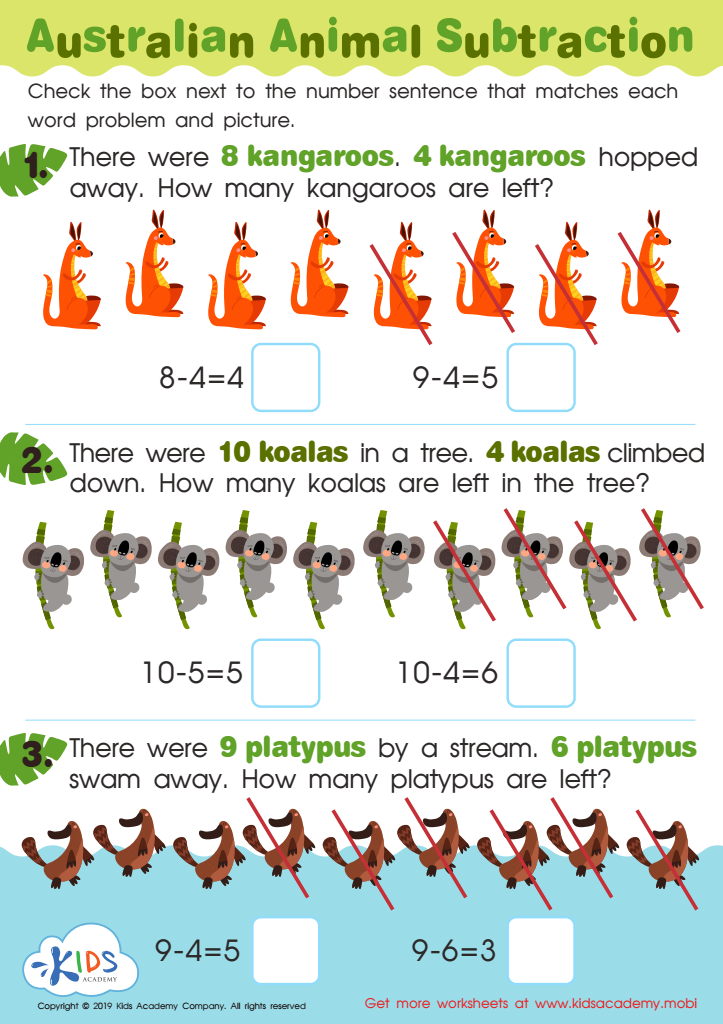
Australian Animal Subtraction Worksheet
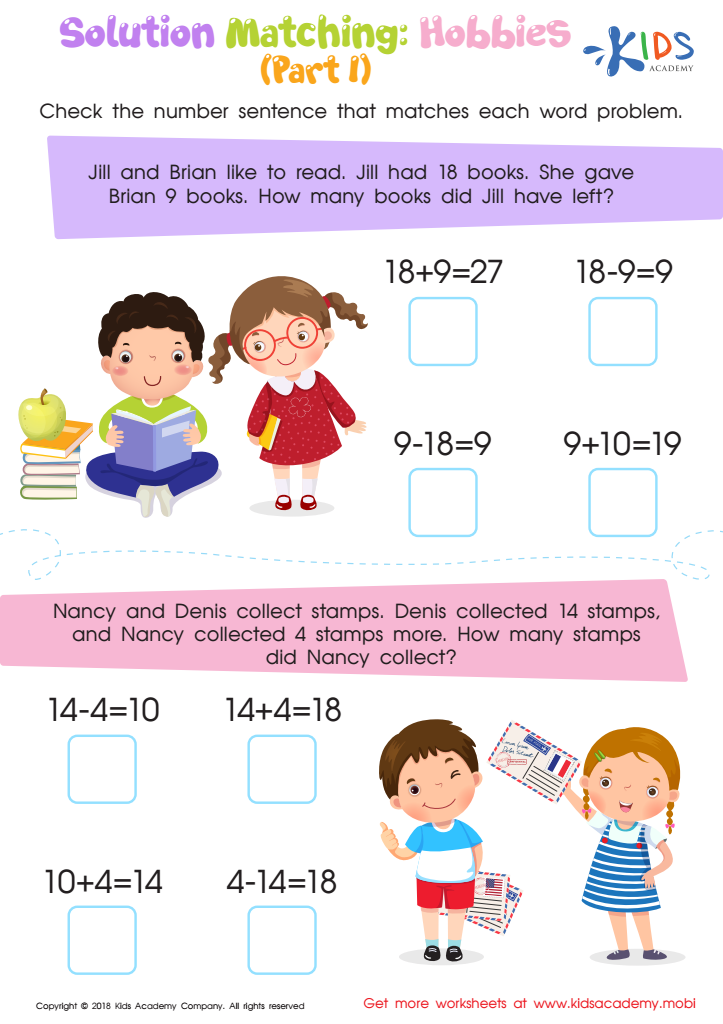
Solution Matching: Hobbies. Part 1 Worksheet








Cognitive development is a crucial aspect of early childhood learning, particularly when it comes to foundational skills like addition and subtraction. For 6-year-olds, solving word problems not only enhances their mathematical abilities but also promotes critical thinking and problem-solving skills. When parents and teachers prioritize these competencies, they lay the groundwork for future academic success.
Addition and subtraction word problems encourage children to transition from mere number recognition to understanding contextual mathematics. Engaging with word problems fosters comprehension as kids must interpret the scenario, identify relevant information, and determine the appropriate mathematical operations to find a solution. This process aids in developing logical reasoning, which is essential for tackling complex concepts later in life.
Moreover, understanding these mathematical concepts through real-life applications helps children connect their learning to everyday situations, fostering an appreciation for mathematics. It enhances language skills as they learn to read and interpret problems, which is also beneficial for their overall literacy development. By nurturing cognitive development through word problems, parents and teachers empower children, helping them gain confidence and competence in their abilities, setting the stage for lifelong learning. This combined interest is essential for creating well-rounded, capable thinkers.