Enhance counting skills Addition & Subtraction Worksheets for 6-Year-Olds
3 filtered results
-
From - To
Help your 6-year-old master counting, addition, and subtraction with our engaging worksheets! Specifically designed to boost early math skills, these worksheets make learning fun and effective. Each activity is crafted to challenge young minds while reinforcing essential counting abilities. From simple sums to beginner-level subtraction, our printables cater to children's educational needs, enhancing their numerical proficiency. Perfect for both classroom and at-home learning, these resources support your child's development with colorful illustrations and easy-to-understand instructions. Cultivate a strong math foundation and watch your little one progress with joy and confidence!
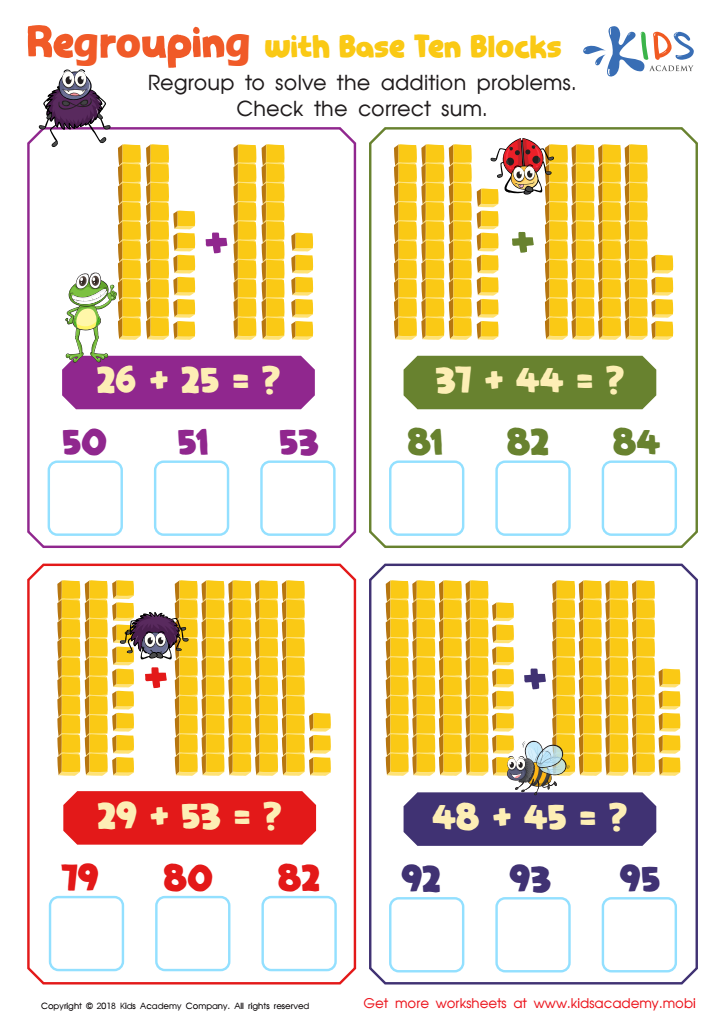
Regrouping With Base Ten Blocks Worksheet
 Assign to My Students
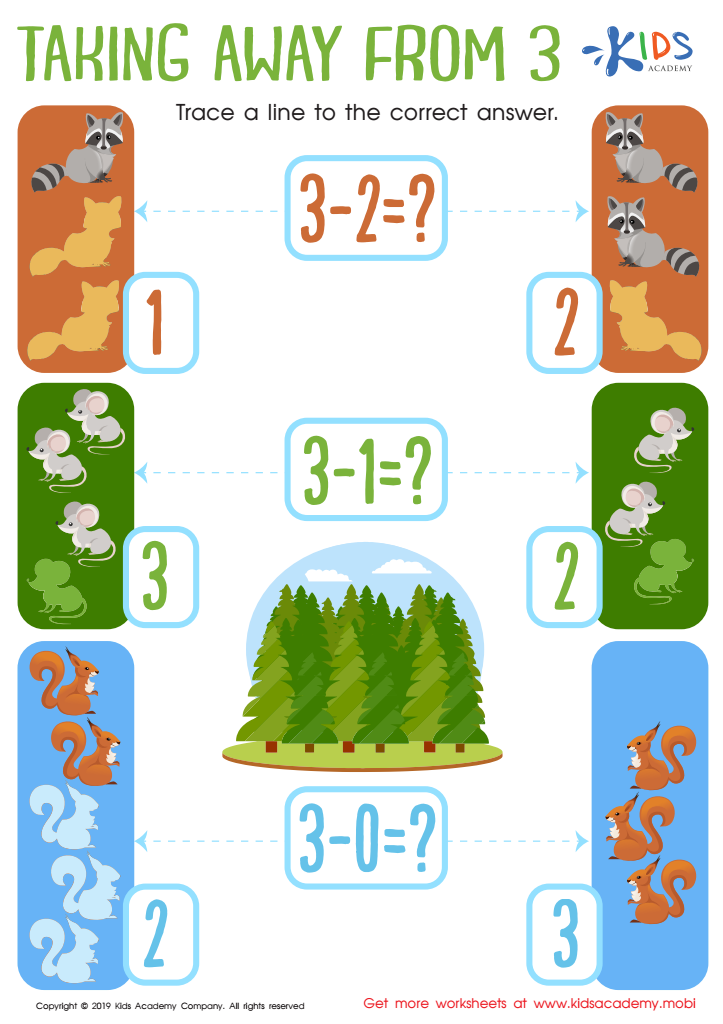
Taking Away From 3 Worksheet
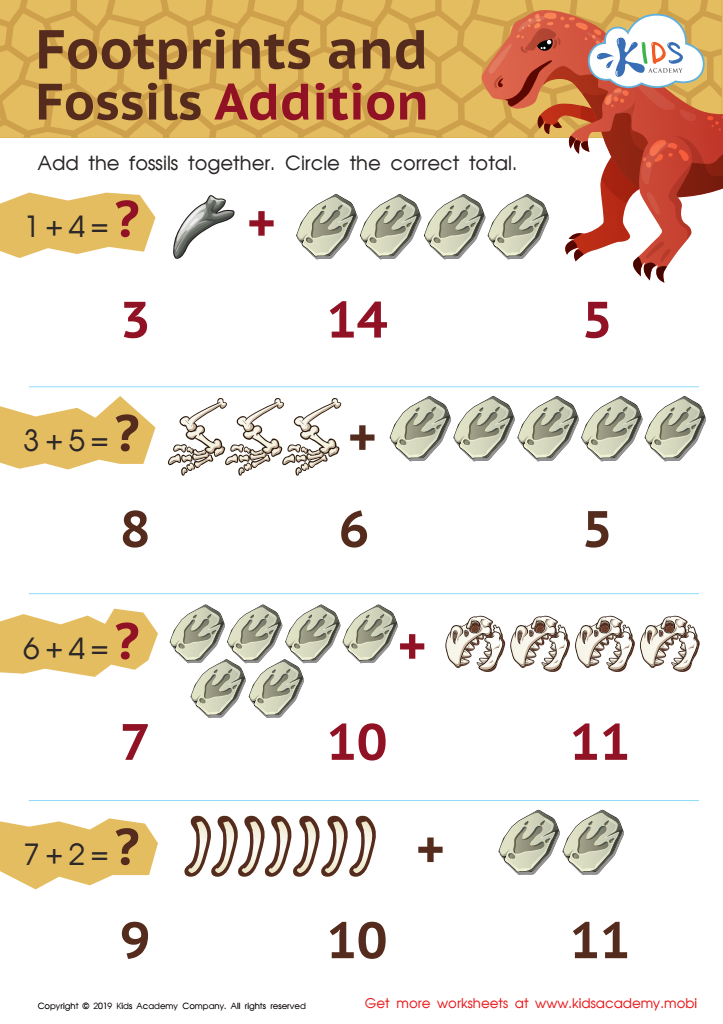
Footprints and Fossils Addition Worksheet








Fostering strong counting skills, addition, and subtraction in 6-year-olds is crucial for several reasons. Firstly, these fundamental math skills are the building blocks for future mathematical learning. By mastering counting, addition, and subtraction, children develop a solid foundation to understand more complex math concepts later, such as multiplication, division, and fractions.
Early proficiency in these areas aids cognitive development. Engaging children in counting, adding, and subtracting exercises boosts their problem-solving abilities and logical thinking. These activities challenge them to recognize patterns, develop strategies, and enhance memory, all of which are valuable cognitive skills applicable across various subjects.
These essential math skills are also crucial for everyday life. For instance, counting chairs for a classroom activity or determining if they have enough money to buy an item all rely on elementary arithmetic. By supporting their numerical proficiency, parents and teachers support children in becoming more confident and independent in their daily activities.
Moreover, fostering a positive attitude towards math at a young age is crucial. Children who achieve early success in math tend to develop a favorable disposition towards the subject, leading to sustained interest and motivation. Therefore, prioritizing these skills isn't just about learning numbers; it's about setting up children for long-term academic and personal success.








