Understanding Sequences Addition & Subtraction Worksheets for 6-Year-Olds
3 filtered results
-
From - To
Our "Understanding Sequences: Addition & Subtraction Worksheets for 6-Year-Olds" offer engaging activities designed to strengthen foundational math skills. Tailored for young learners, these printable worksheets guide children through simple sequences using addition and subtraction, fostering better number sense and problem-solving skills. Each worksheet presents colorful, fun exercises that gradually advance in complexity, ensuring comprehension and retention. By practicing regularly, children will build confidence and fluency in their math abilities. Perfect for both classroom and home use, these resources support early learning success for 6-year-olds. Explore and download our worksheets to ignite a love for math in your child today!
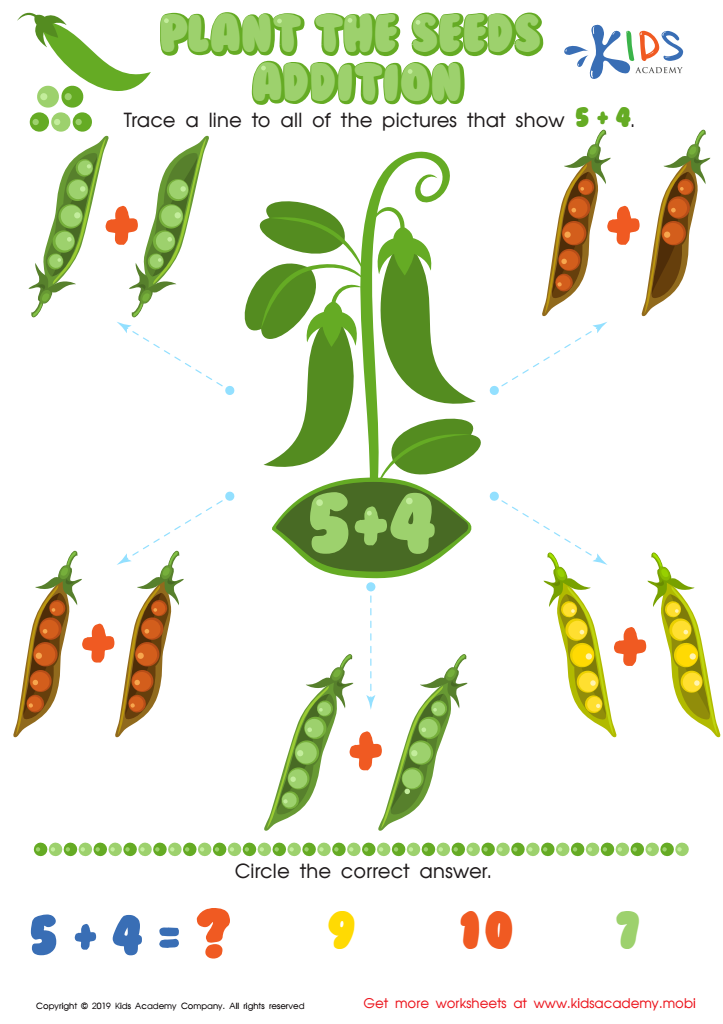
Plant the Seeds Addition Worksheet
 Assign to My Students
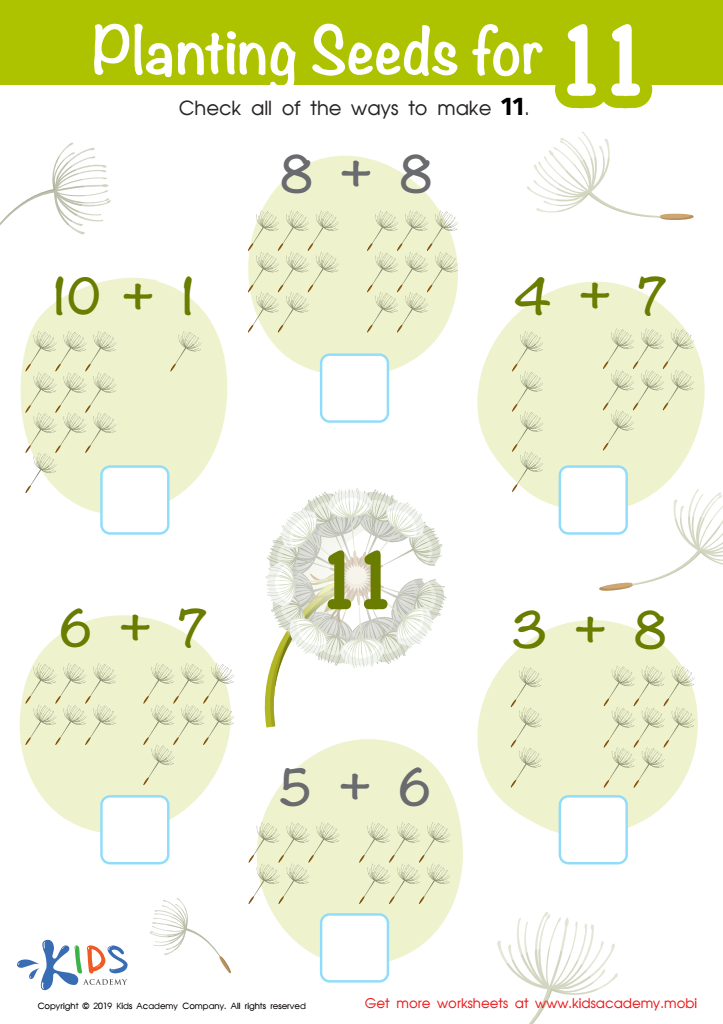
Planting Seeds for 11 Worksheet
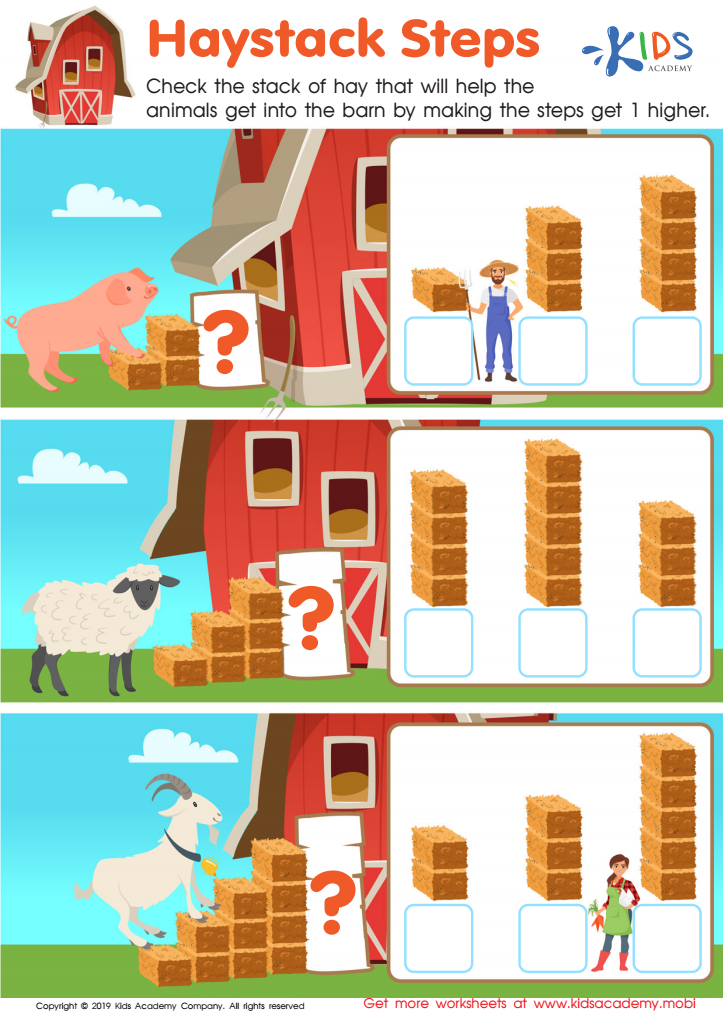
Haystack Steps Worksheet








Understanding sequences, addition, and subtraction is crucial for 6-year-olds as it lays the foundation for their mathematical skills and logical reasoning. At this age, children's brains are highly receptive, making it the ideal time to introduce basic numerical concepts which act as building blocks for more complex math problems they'll encounter in the future.
Teaching sequences helps children recognize patterns, which is essential for understanding the orderly nature of numbers and the world around them. Recognizing patterns also aids in developing prediction skills and problem-solving abilities. For instance, if a child can see that a sequence adds 2 each time (e.g., 2, 4, 6, 8), they can start predicting future numbers in the sequence.
Addition and subtraction are fundamental arithmetic operations. Proficiency in these enables children to manage everyday tasks, such as counting money, measuring ingredients, or understanding time. These skills also build confidence; as children succeed in these basic operations, their willingness and ability to tackle more complex problems grow.
Moreover, engaging with these concepts supports cognitive development, improves mental arithmetic, and enhances memory. It also nurtures a sense of achievement and positive attitude towards learning. Teachers and parents should focus on these areas to give children a strong mathematical foundation, promoting lifelong skills and academic success.








