Visual Learning Addition & Subtraction Worksheets for 6-Year-Olds
7 filtered results
-
From - To
Unlock the power of visual learning with our engaging addition and subtraction worksheets designed specifically for 6-year-olds! These interactive resources help young learners grasp essential math concepts through captivating visuals and hands-on activities. Each worksheet incorporates vibrant images and relatable scenarios, making math both fun and accessible. As children practice solving problems, they build confidence in their arithmetic skills and develop a strong foundation for future learning. Perfect for parents and teachers, our visual learning worksheets encourage collaboration and exploration. Dive into a world of math discovery and help your child thrive with our expertly crafted resources today!
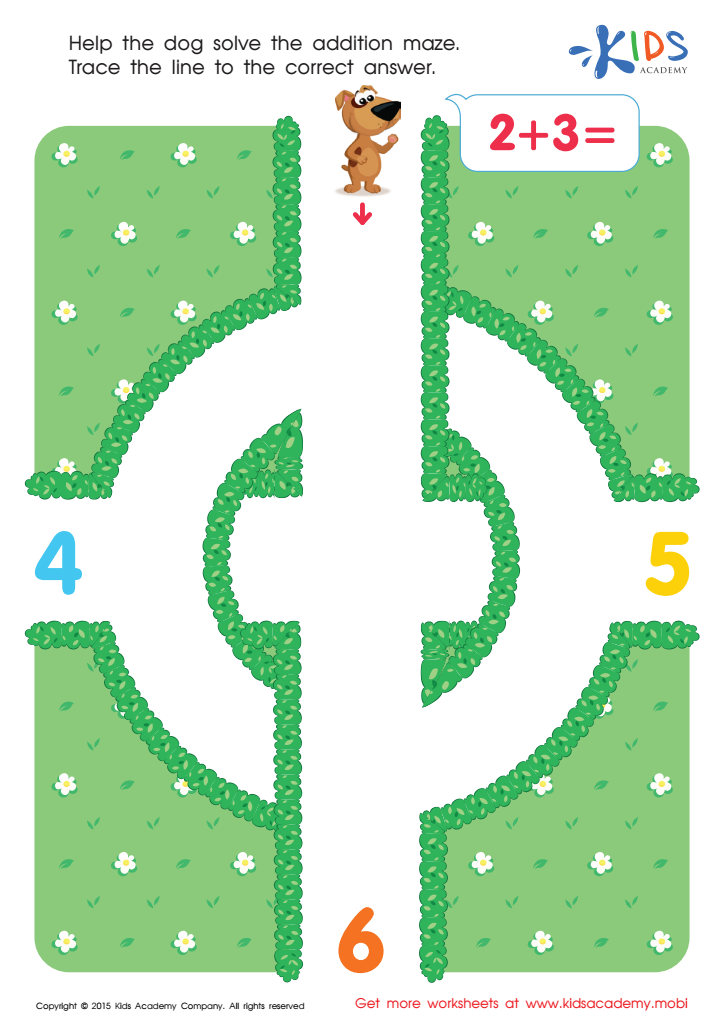
Two And Three Addition Worksheet
 Assign to My Students
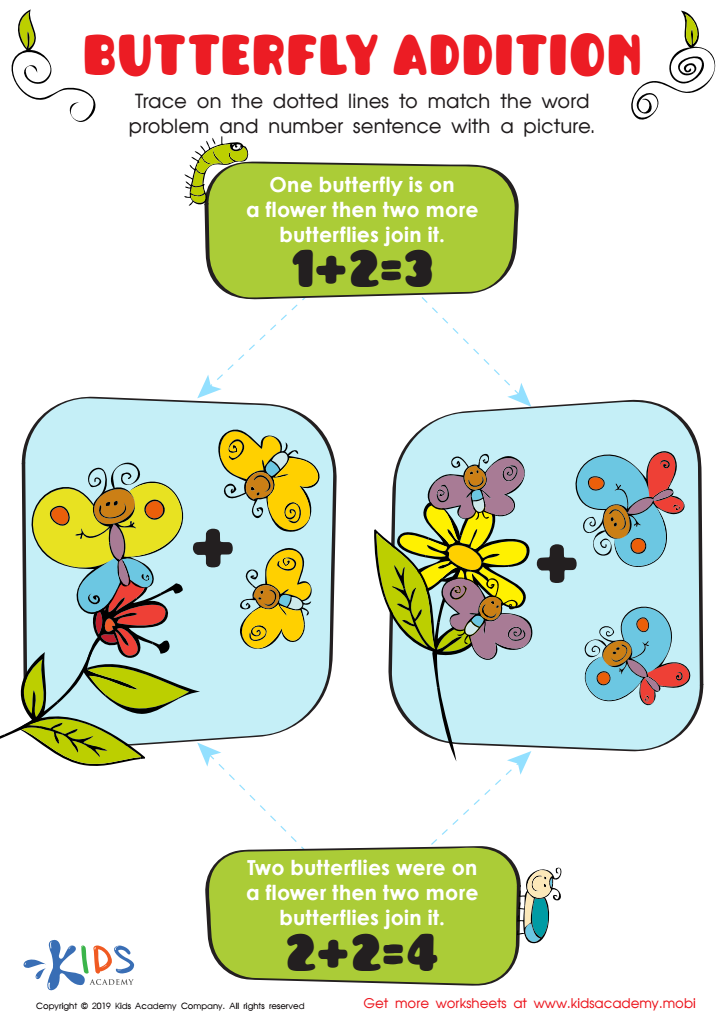
Butterfly Addition Worksheet
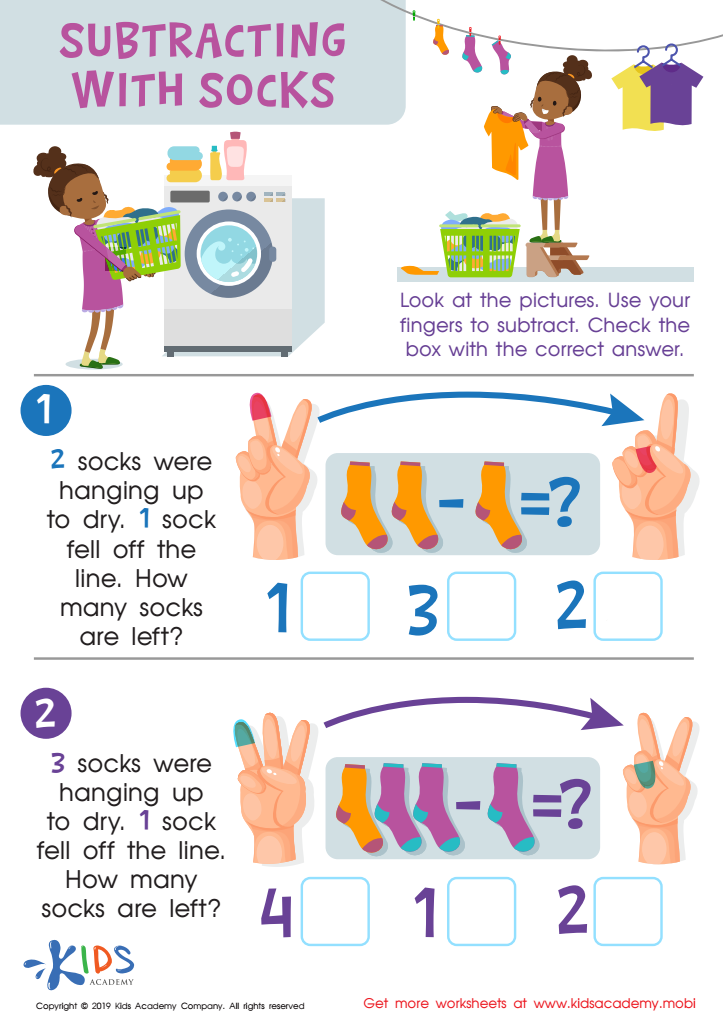
Subtracting Socks Worksheet
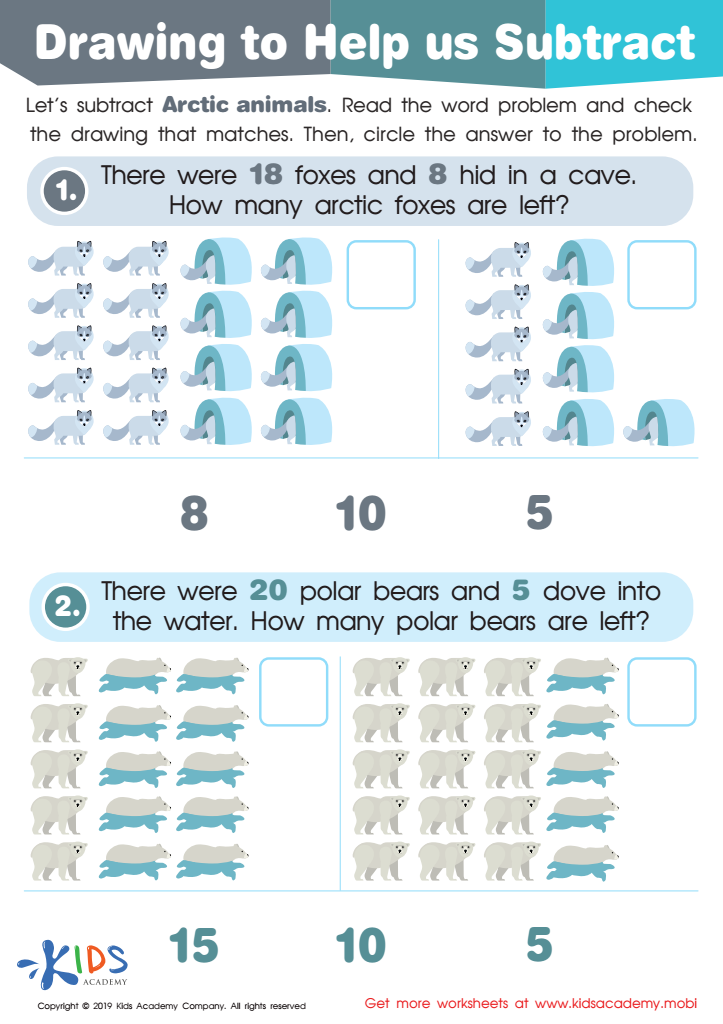
Drawing to Help Us Subtract Worksheet
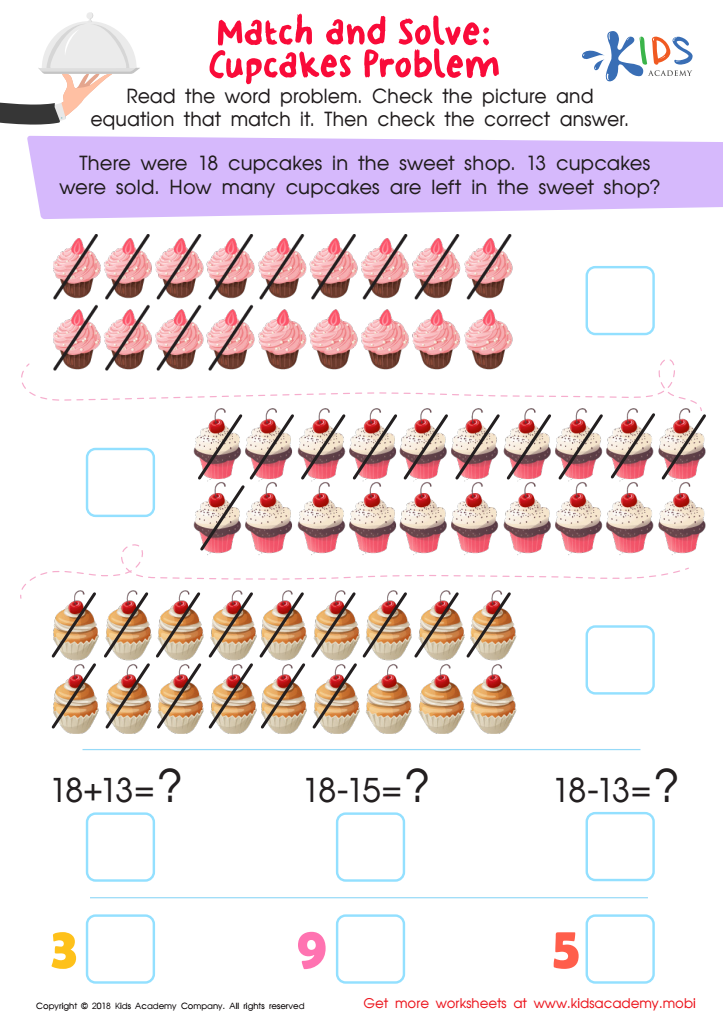
Match and Solve: Cupcakes Problem Worksheet
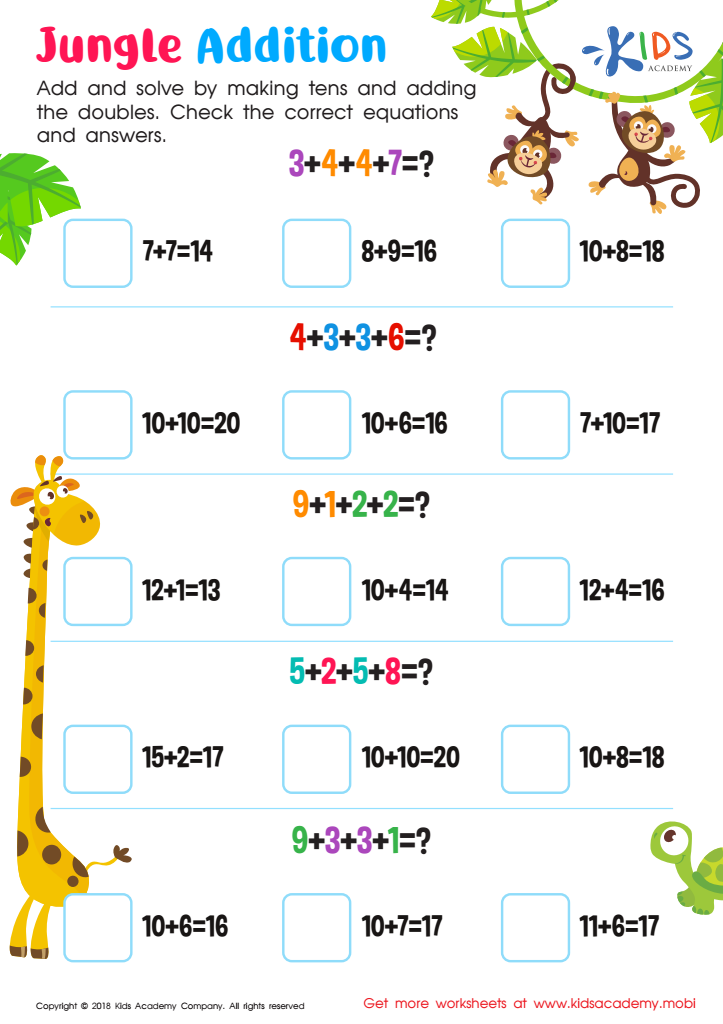
Jungle Addition Worksheet
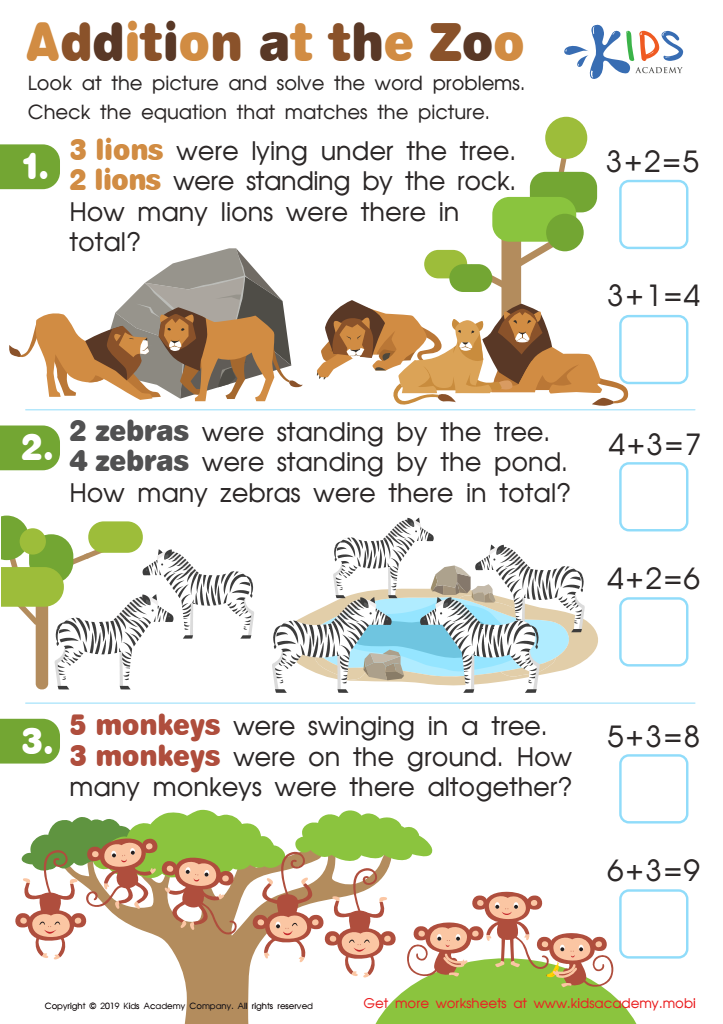
Addition at the Zoo Worksheet








Visual learning in addition and subtraction is crucial for 6-year-olds as it transforms abstract mathematical concepts into concrete experiences. Young children often find it challenging to grasp numbers and operations solely through auditory methods or written symbols. By incorporating visual strategies—such as using blocks, number lines, or drawing pictures—educators and parents help make these concepts tangible and relatable.
Visual learning caters to various cognitive styles, accommodating children who thrive with hands-on approaches. It enhances engagement and motivation, making math feel less daunting and more enjoyable. Visual aids also foster deeper understanding, as children can see the relationships between numbers and operations. For instance, using counters to solve a problem allows them to physically manipulate quantities, reinforcing the idea of addition as "putting together" and subtraction as "taking away."
Furthermore, early mastery of these skills builds a strong foundation for future mathematical learning, promoting confidence and competence. When parents and teachers understand the benefits of visual learning for addition and subtraction, they can collaborate to create enriching experiences that nurture young mathematicians, setting the stage for lifelong positive perceptions of math. Ultimately, this approach not only aids cognitive development but also lays the groundwork for academic success.








