Financial literacy Coins Worksheets for 6-Year-Olds
4 filtered results
-
From - To
Introducing our engaging Financial Literacy Coins Worksheets designed specifically for 6-year-olds! These interactive worksheets help young learners recognize and understand U.S. coins, such as pennies, nickels, dimes, and quarters. With fun activities and colorful illustrations, children will practice counting, sorting, and comparing different coins while building essential money management skills. Perfect for classroom use or at-home learning, these worksheets align with educational standards to ensure early financial literacy success. Explore our Financial Literacy Coins Worksheets and give your child a head start in understanding the value of money today!
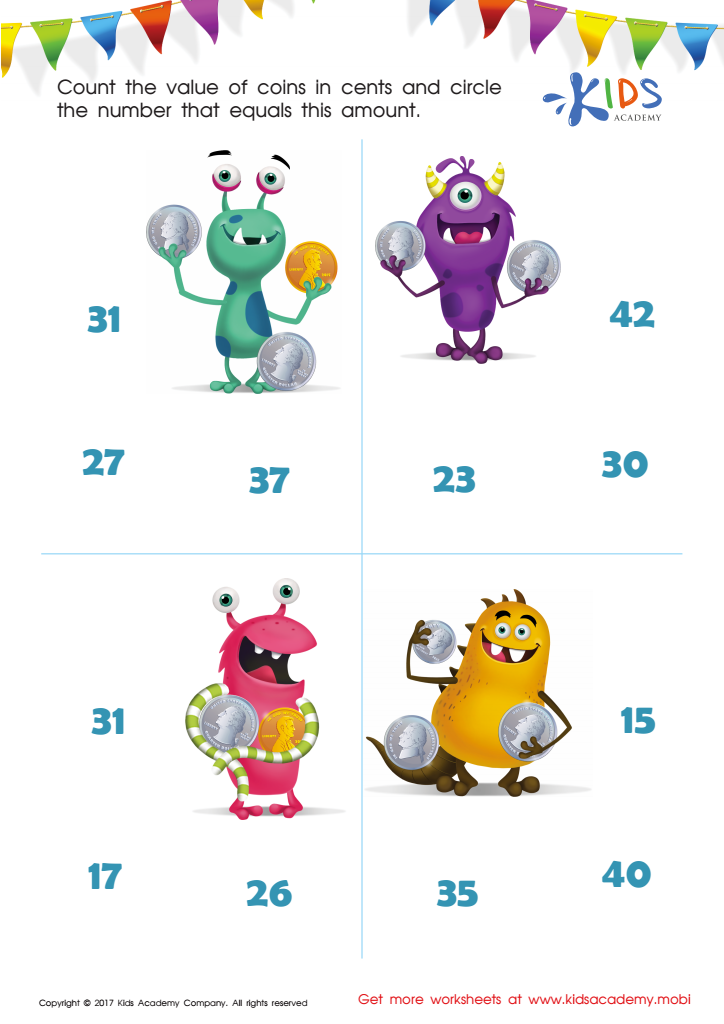
How Many Coins Money Worksheet
 Assign to My Students
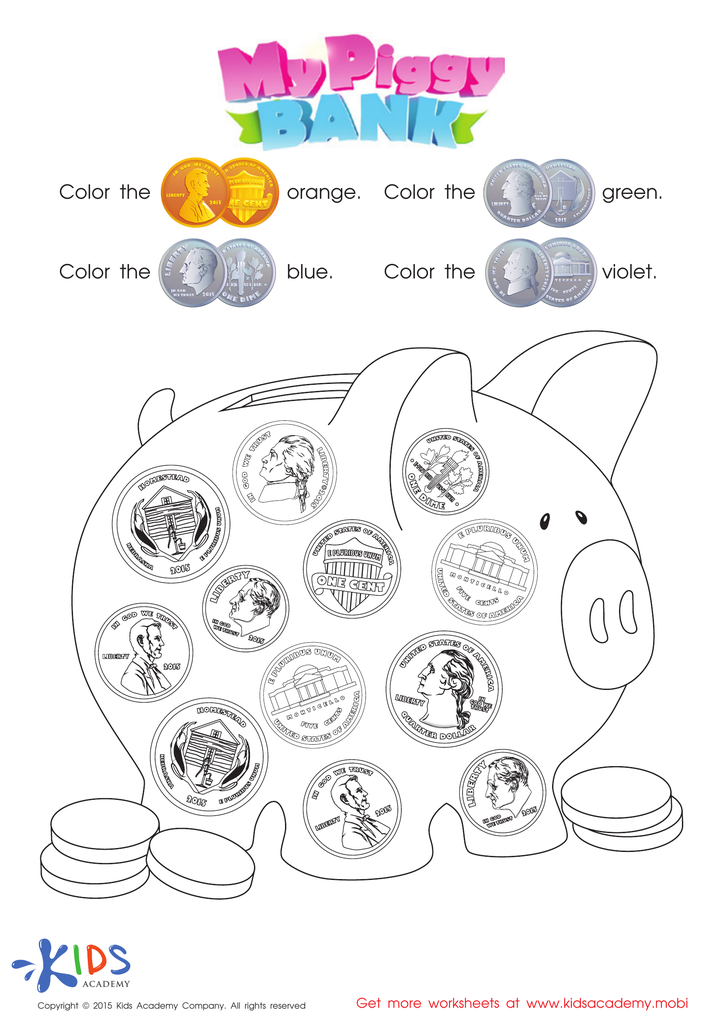
Recognizing Money Money Worksheet
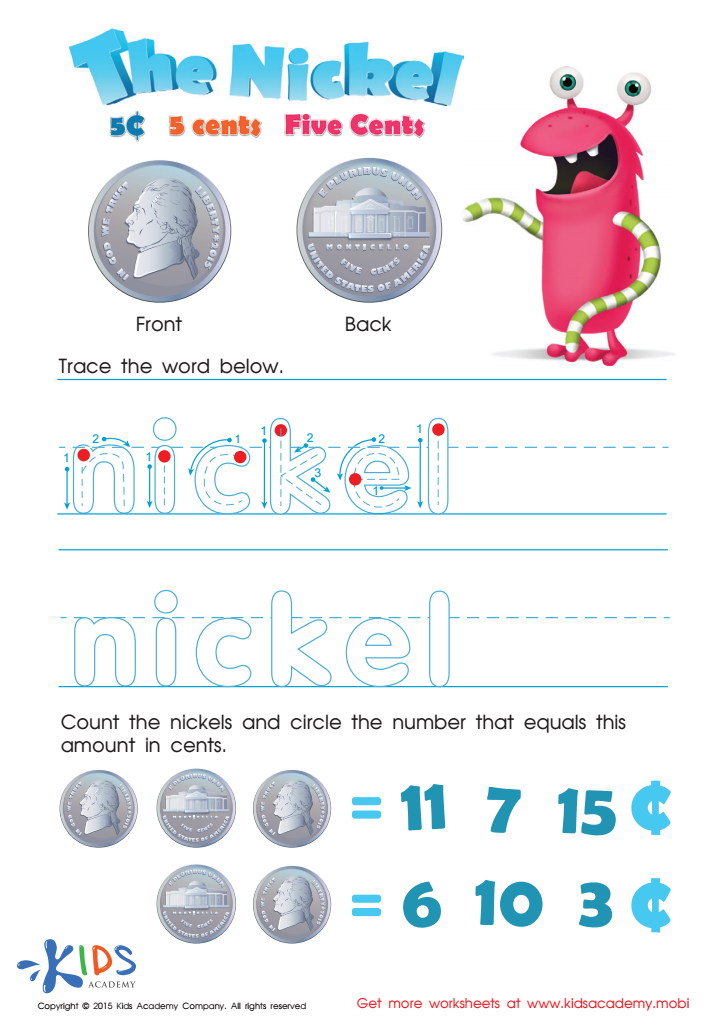
Five Cents or the Nickel Money Worksheet
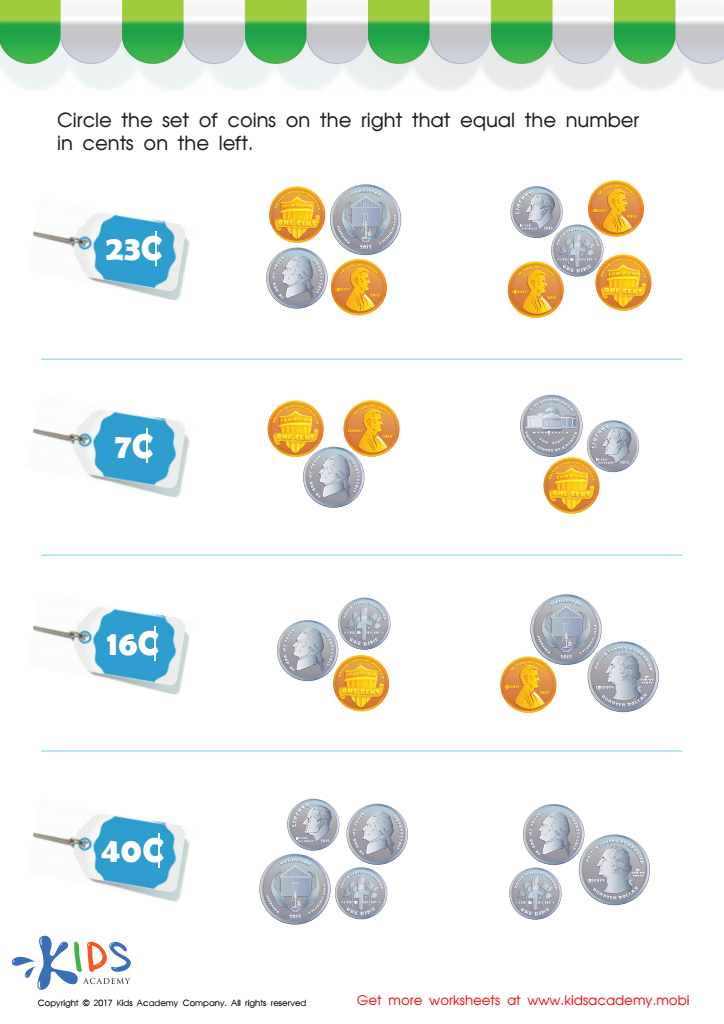
Picking the Coins You Need Money Worksheet








Financial literacy, even at the tender age of six, is a crucial skill that can set the foundation for responsible financial behavior throughout life. Parents and teachers who prioritize teaching young children about coins and financial concepts are paving the way for future financial security and savvy decision-making.
Firstly, introducing financial literacy at an early age helps children understand the value of money and basic transactions. Learning what coins are and their different values allows children to grasp simple addition and subtraction in a practical context. This not only enhances their math skills but also builds confidence in handling money.
Secondly, early financial education establishes positive habits. When young children learn to save rather than spend impulsively, they begin to develop a mindset geared towards financial responsibility. This can lead to better decision-making in adolescence and adulthood, such as saving for future goals, budgeting effectively, and understanding the importance of money management.
Furthermore, teaching 6-year-olds about coins and financial literacy also promotes important life skills such as patience, planning, and goal-setting. These can have far-reaching impacts, from academic achievements to overall well-being.
In summary, prioritizing financial literacy for 6-year-olds is an investment in their future, fostering essential skills that contribute to lifelong financial health and responsible living.








