Matching skills Geometry Worksheets for 6-Year-Olds
5 filtered results
-
From - To
Discover exciting and educational Matching Skills Geometry Worksheets designed specifically for 6-year-olds at Kids Academy. These engaging worksheets help young learners enhance their geometric understanding while developing crucial matching skills. Through fun, hands-on activities, children will practice recognizing and comparing various shapes and patterns, fostering critical thinking and visual discrimination skills. Our worksheets are thoughtfully crafted by experts to align with early childhood education standards, ensuring your child gains a solid foundation in geometry. Perfect for both classroom and home use, start your child's geometry adventure today with Kids Academy's premium printable worksheets.
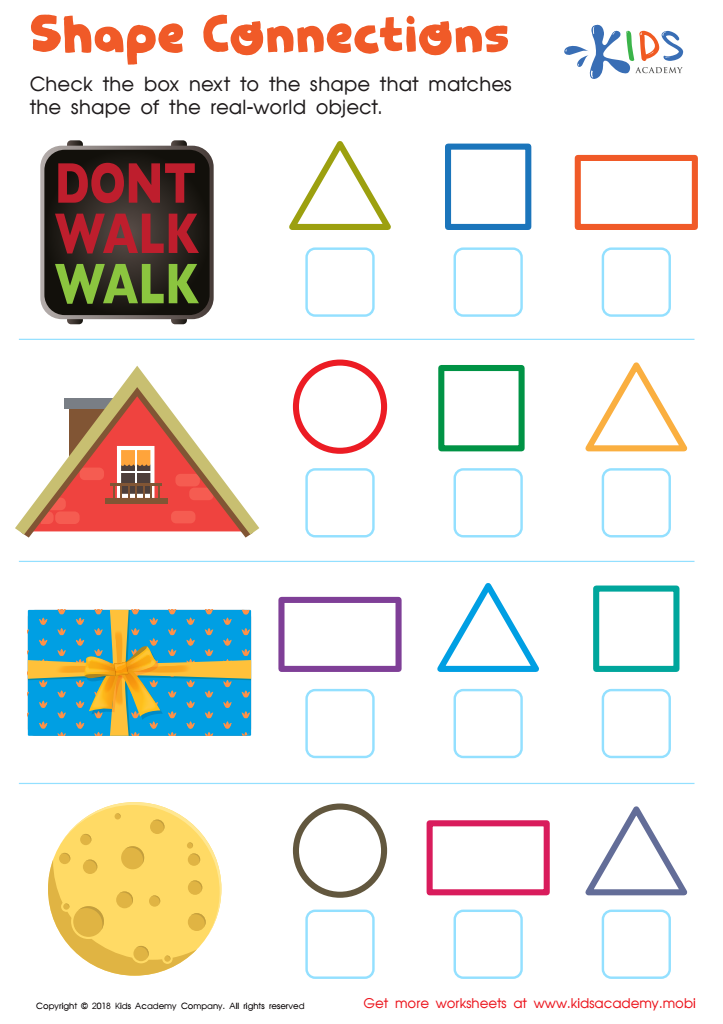
Shape Connections Worksheet
 Assign to My Students











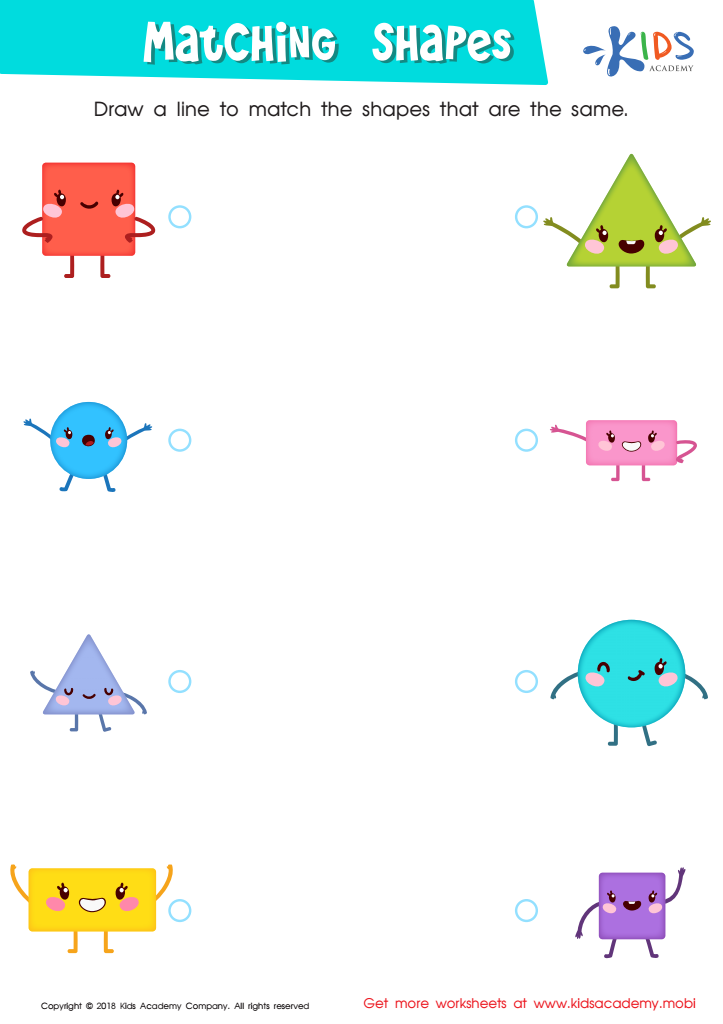
Matching Shapes Worksheet
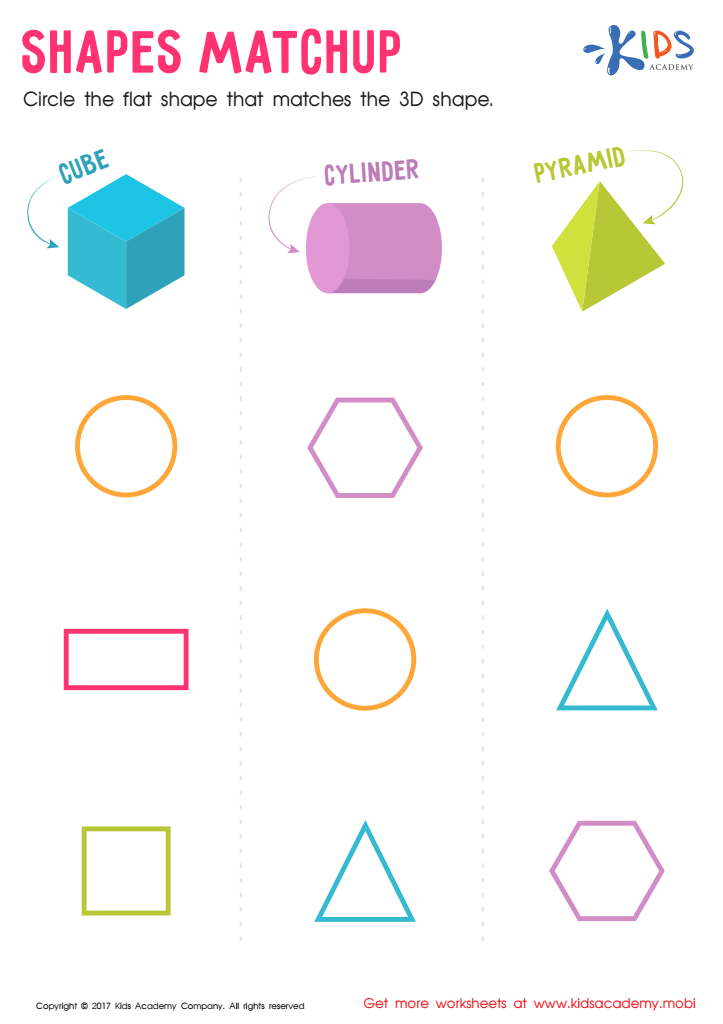
Shapes Matchup Worksheet
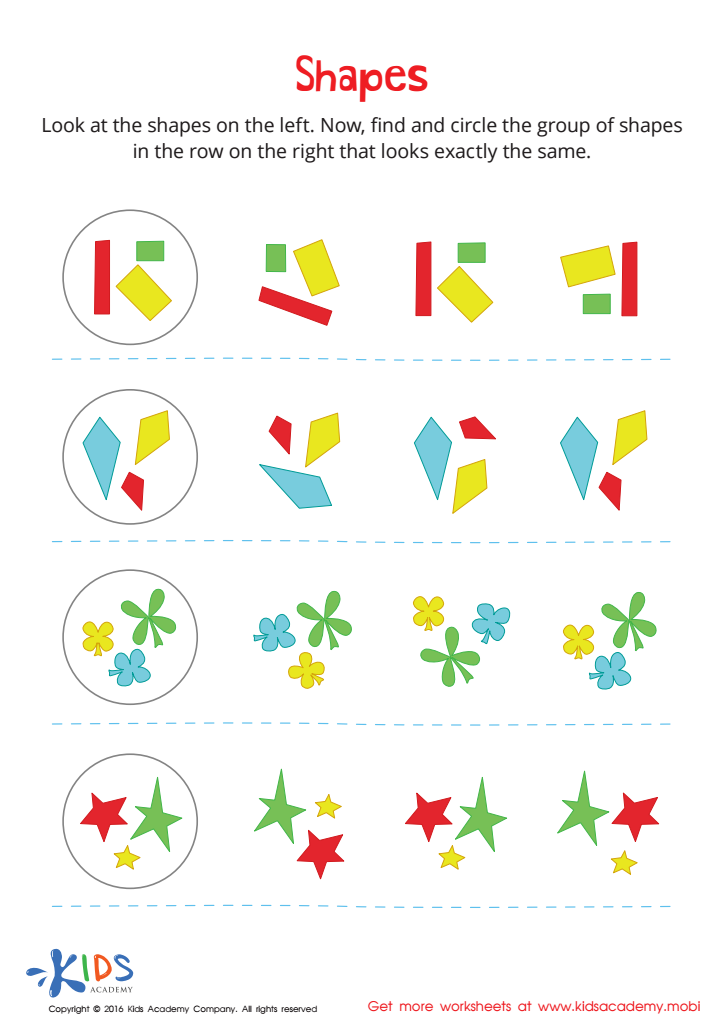
Shapes Worksheet
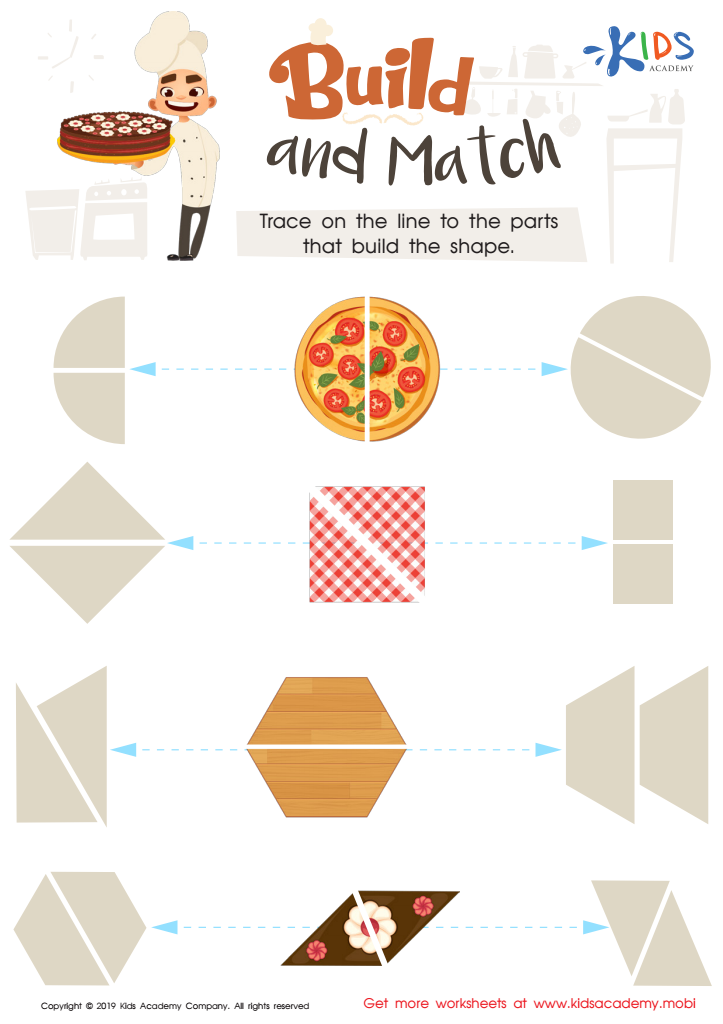
Build and Match Worksheet








Matching skills in geometry are essential for 6-year-olds as they help establish foundational cognitive and spatial awareness abilities. During early childhood, developing these skills enhances children's recognition and differentiation of various shapes and patterns, which is a crucial part of their overall cognitive development. When children learn to identify and match geometric shapes, they improve their visual-spatial reasoning, critical for comprehending math concepts and problem-solving throughout their education.
Moreover, matching skill activities foster fine motor skills, as children manipulate shapes and fit them into corresponding spaces. This practice aids in hand-eye coordination and precision, benefiting daily tasks and other areas of learning such as writing, drawing, and organizing objects. These exercises also bolster children's memory and concentration since they require remembering the properties of each shape and focusing on the task at hand.
For parents and teachers, integrating matching skills geometry into early learning helps promote a positive attitude toward learning and boosts confidence. Early success in these seemingly simple tasks provides children with a sense of accomplishment and encourages them to tackle more challenging tasks with enthusiasm. Ultimately, nurturing these skills among 6-year-olds lays a strong educational foundation, ensuring readiness for more complex math topics and general academic achievements in the future.








