
Spatial awareness Geometry Worksheets for 6-Year-Olds
6 filtered results
Difficulty Level
Grade
Age
-
From - To
Subject
Activity
Standards
Boost your child's spatial reasoning with our engaging Spatial Awareness Geometry Worksheets designed specifically for 6-year-olds! These carefully crafted worksheets from Kids Academy aid young learners in developing crucial spatial skills through fun and interactive activities. The exercises enhance their understanding of shapes, positions, and patterns, fostering a strong foundation in early geometry. Perfect for classroom or at-home learning, these printable resources make math both enjoyable and accessible. Help your child explore the world of geometry and improve their problem-solving abilities with our expert-created materials. Launch their love for learning today!
Favorites
With answer key
Interactive
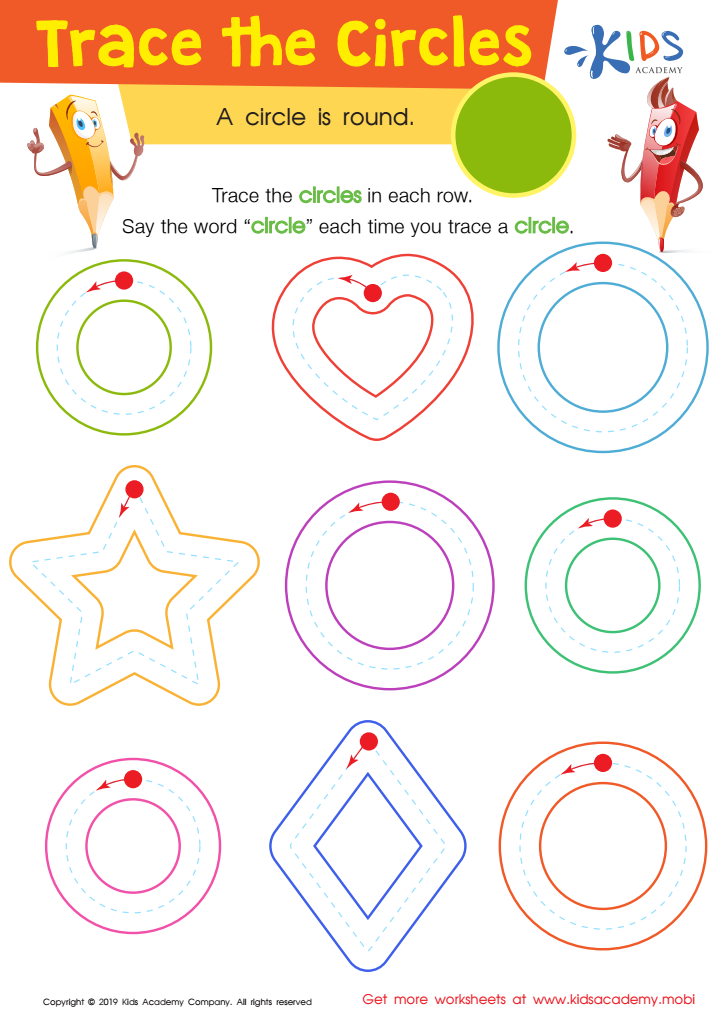
Trace The Circles Worksheet
Preschoolers and kindergarteners love learning shapes! This worksheet provides practice in naming and tracing circles. Students say "circle" each time they trace one. It's a fun way to help kids learn math vocabulary and develop fine motor skills. Enjoy this printable and get ready to master circles!
 Assign to My Students
Trace The Circles Worksheet
Worksheet











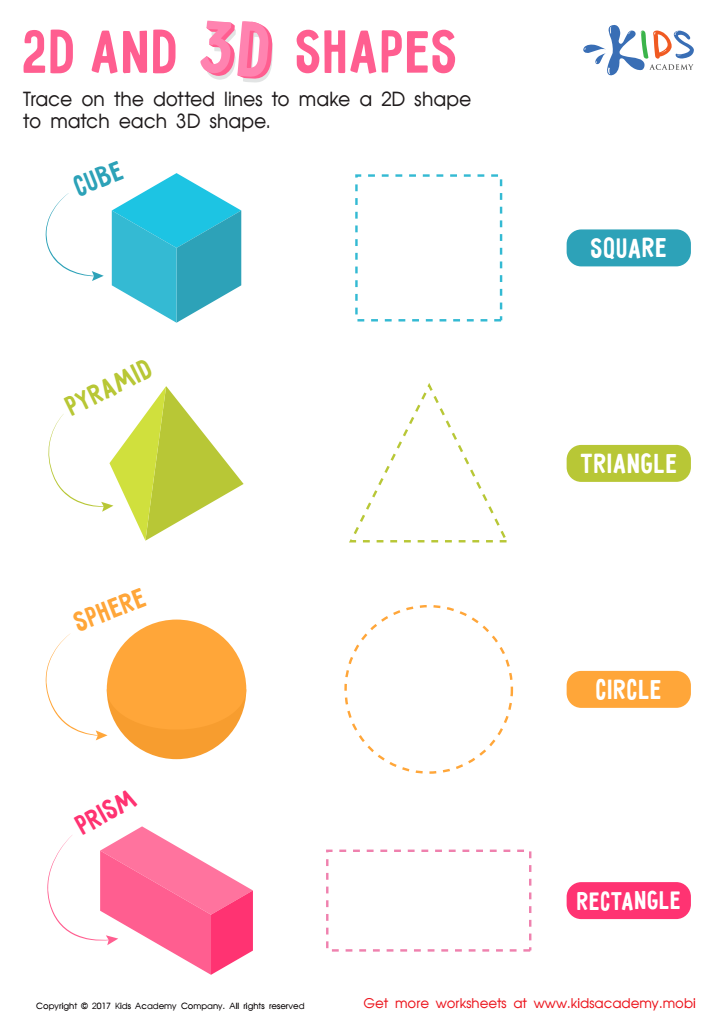
2D and 3D Shapes Worksheet
Introduce your child to 3D and 2D with this traceable worksheet. With dotted lines, help them trace and make a 2D shape for each 3D shape: square, triangle, rectangle, and circle. Show them there's more than one way to draw! You may have taken them to a 3D movie, or they've seen some fantastic 3D art. Now they can wonder no more.
2D and 3D Shapes Worksheet
Worksheet
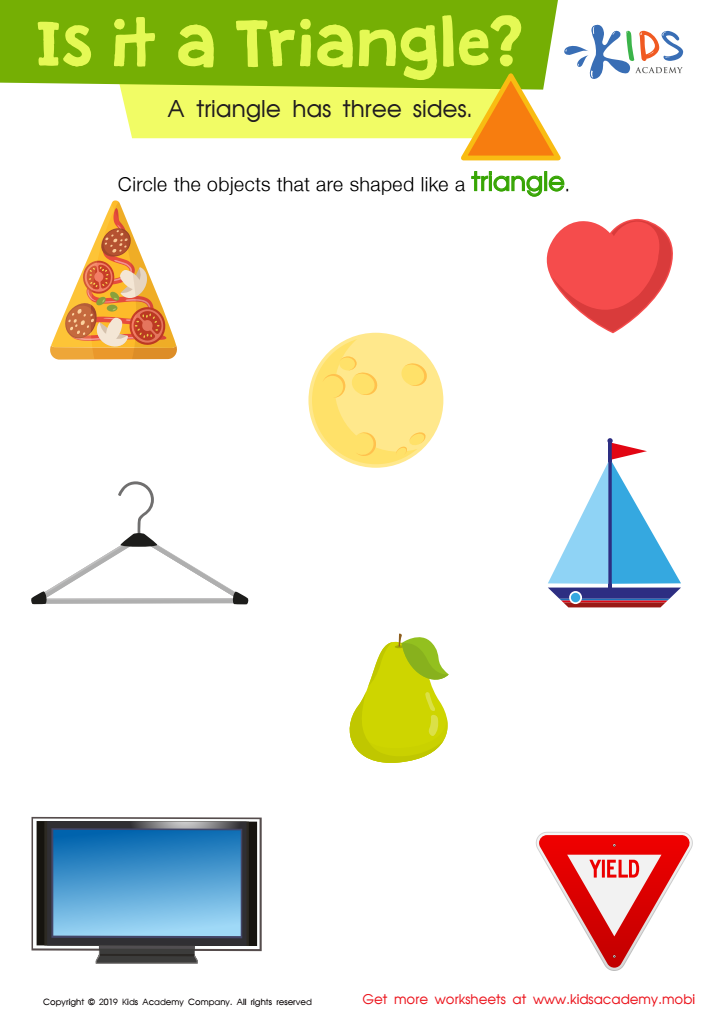
Is It a Triangle? Worksheet
Young kids need to learn to identify basic shapes for math. Show them what a triangle looks like with this fun worksheet. They can look around their environment for everyday objects shaped like a triangle and circle them on the sheet. Download now and start learning what a triangle is!
Is It a Triangle? Worksheet
Worksheet
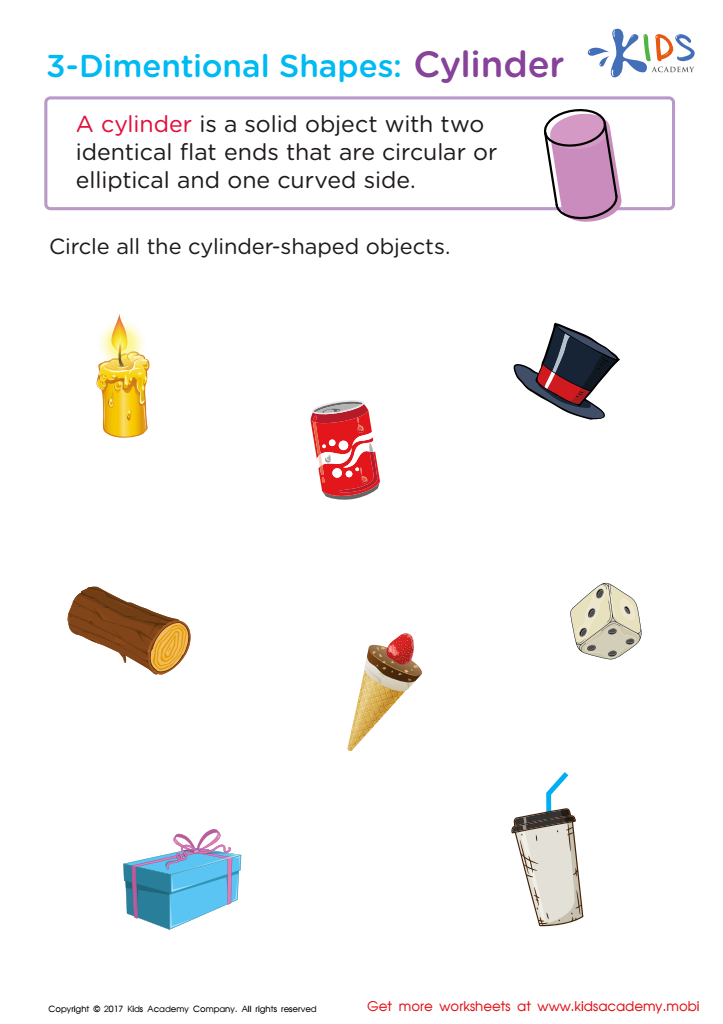
Three–Dimensional Shapes: Cylinder Worksheet
Introduce your toddler to geometry and 3D cylinders with this printable and watch their knowledge grow. It will help them recognize, define, and identify cylinders, as well as differentiate between 3D objects.
Three–Dimensional Shapes: Cylinder Worksheet
Worksheet
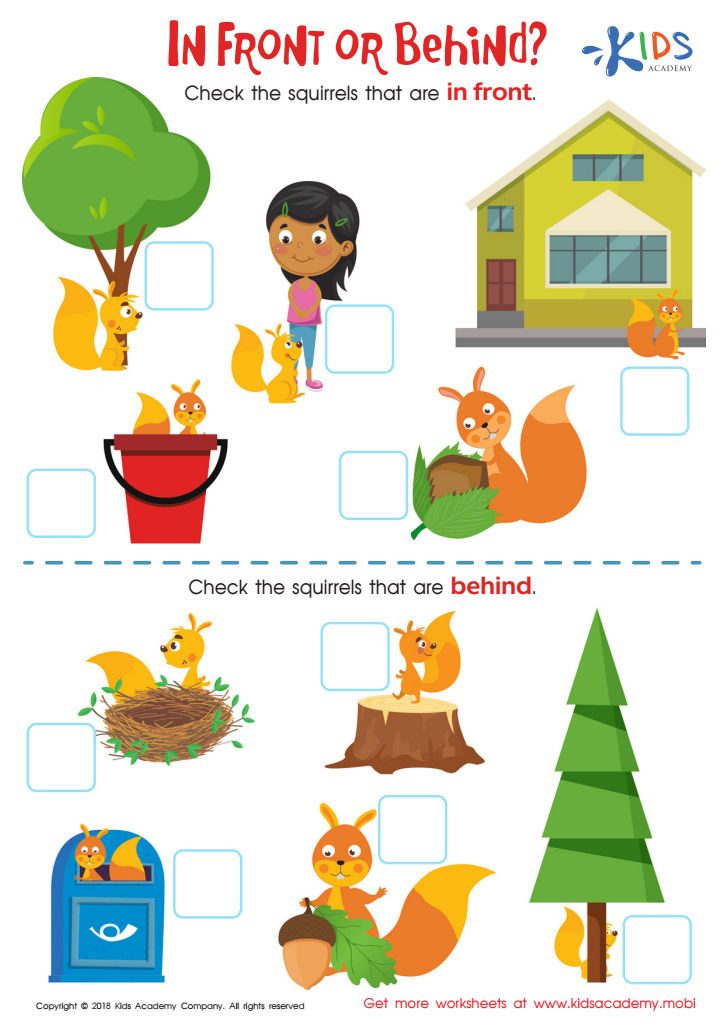
In Front or Behind: Part 2 Worksheet
Teach positional words "front" and "behind" with this fun worksheet! Students identify where the squirrel is in relation to the object - in front or behind. It's a great exercise to practice early geometry skills and understanding object movement.
In Front or Behind: Part 2 Worksheet
Worksheet
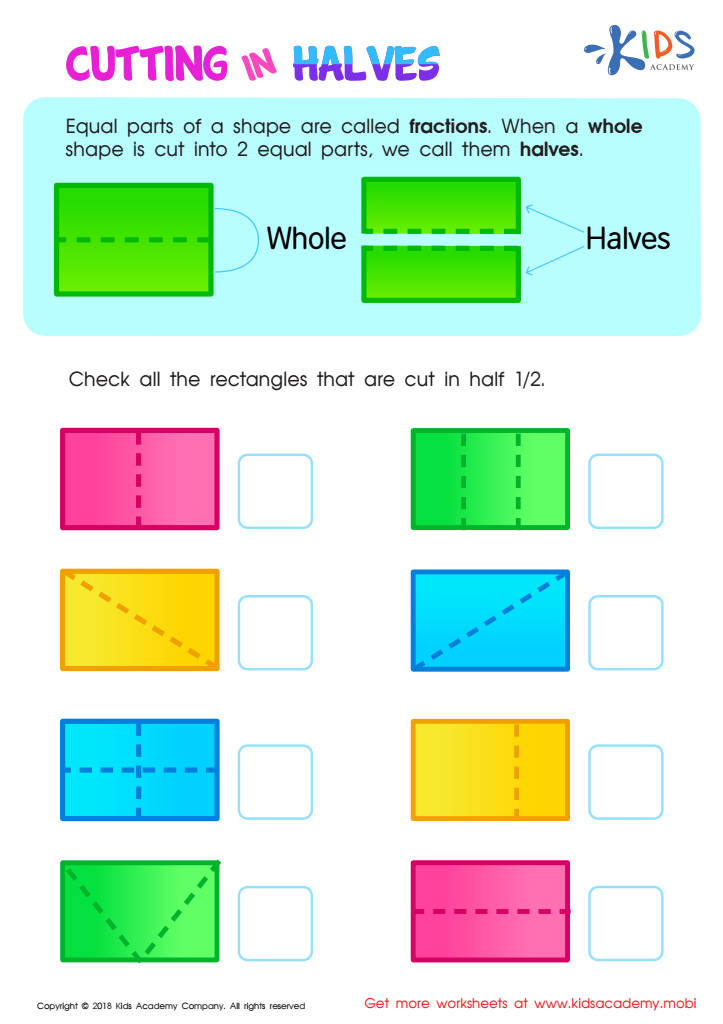
Cutting in Halves Worksheet
Show your child how to divide a whole shape, like a square, into smaller pieces to become fractions. Point out when a shape is divided into two equal parts, it's called a half. Look at the worksheet together, and identify all rectangles that are cut in half (½).
Cutting in Halves Worksheet
Worksheet
Join Kids Academy for Free
Who is primarily going to use this learning content?








Parents and teachers should prioritize spatial awareness and geometry for 6-year-olds because these skills are foundational to their cognitive and academic development. Spatial awareness is the ability to understand and interact with the space around us, which directly impacts a child’s ability to navigate their environment effectively and safely. Developing these skills early enhances problem-solving abilities, as children learn to interpret relationships between objects and their surroundings, fostering critical thinking.
Geometry, being a part of spatial awareness, introduces young children to shapes, sizes, patterns, and the properties of space, all of which are fundamental concepts in mathematics. Early exposure to geometry helps children recognize and categorize shapes, understand spatial relationships, and develop visualization skills, which are crucial in many areas of learning, from reading and writing (as they visualize letters and their orientation) to science and technology.
Moreover, research shows that strong spatial skills are linked to success in STEM (Science, Technology, Engineering, and Mathematics) fields later in life, encouraging logical reasoning and creativity. By engaging 6-year-olds in activities that promote spatial awareness and geometry, parents and teachers equip them with essential tools for academic achievement and everyday problem-solving, laying a strong foundation for future learning.








